Results by title
3 books match the query 'Kearney, Mary Celeste'
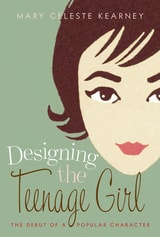
Designing the Teenage Girl
The Debut of a Popular CharacterMary Celeste Kearney
University of Texas Press, 2026
Explores the forgotten first wave of American teen-girl entertainment from the late 1920s through the early 1950s.
During the mid-twentieth century, American entertainment featuring teenage girls blossomed. From short stories to plays, films, comics, radio programs, and television shows, writers and other creative professionals developed a new character type that helped to define midcentury girlhood and teen culture. Designing the Teenage Girl uncovers the largely forgotten first wave of US teen-girl entertainment, tracing its emergence in the 1920s through a thirty-year production cycle that spanned all sectors of American popular culture.
Beginning with short stories such as Sally Benson’s Junior Miss and following their adaptations, Kearney reveals how teen-girl narratives circulated across industries. Drawing on archival research and analysis of visual, narrative, and sound design, Kearney situates these texts within the identity politics of the period. While midcentury teen-girl entertainment privileged white, middle-class femininity, it also contained alternative visions of girlhood that complicated heteronormative and patriarchal expectations. This study reframes the origins of teen-girl entertainment and demonstrates how its aesthetic strategies and industrial practices continue to shape representations of girlhood today.
The Girls' History and Culture Reader
The Twentieth CenturyEdited by Miriam Forman-Brunell and Leslie Paris
University of Illinois Press, 2011
Undead TV
Essays on Buffy the Vampire SlayerElana Levine and Lisa Parks, eds.
Duke University Press, 2007
In Undead TV, media studies scholars tackle the Buffy phenomenon and its many afterlives in popular culture, the television industry, the Internet, and academic criticism. Contributors engage with critical issues such as stardom, gender identity, spectatorship, fandom, and intertextuality. Collectively, they reveal how a vampire television series set in a sunny California suburb managed to provide some of the most biting social commentaries on the air while exposing the darker side of American life. By offering detailed engagements with Sarah Michelle Gellar’s celebrity image, science-fiction fanzines, international and “youth” audiences, Buffy tie-in books, and Angel’s body, Undead TV shows how this prime-time drama became a prominent marker of industrial, social, and cultural change.
Contributors. Ian Calcutt, Cynthia Fuchs, Amelie Hastie, Annette Hill, Mary Celeste Kearney, Elana Levine, Allison McCracken, Jason Middleton, Susan Murray, Lisa Parks