Results by title
7 books match the query 'Key Concepts'
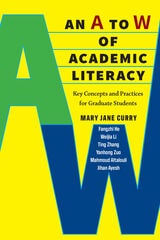
An A to W of Academic Literacy
Key Concepts and Practices for Graduate StudentsMary Jane Curry, Fangzhi He, Weijia Li, Ting Zhang, Yanhong Zuo, Mahmoud Altalouli, and Jihan Ayesh
University of Michigan Press, 2021
An A to W of Academic Literacy is designed for graduate students of all language backgrounds and at any level of study. It is created as a comprehensive reference for graduate students. As a glossary of terms, it can also be used as a supplemental textbook for graduate workshops and seminars and by writing consultants and instructors across the disciplines.
The guide includes 65 common academic literacy terms and explores how they relate to genres, writing conventions, and language use. Each entry briefly defines the term, identifies variations and tensions about its use across disciplines, provides examples, and includes reflection questions. An appendix lists further readings for each entry.
Unique to this volume are comments featuring the experiences of the graduate students who wrote the entries, comments that bring each entry to life and build a bridge to graduate student readers.
[more]
Key Concepts in Critical Cultural Studies
Edited by Linda Steiner and Clifford Christians
University of Illinois Press, 2010
This volume brings together sixteen essays on key and intersecting topics in critical cultural studies from major scholars in the field. Taking into account the vicissitudes of political, social, and cultural issues, the contributors engage deeply with the evolving understanding of critical concepts such as history, community, culture, identity, politics, ethics, globalization, and technology. The essays address the extent to which these concepts have been useful to scholars, policy makers, and citizens, as well as the ways they must be rethought and reconsidered if they are to continue to be viable. Each essay considers what is known and understood about these concepts. The essays give particular attention to how relevant ideas, themes, and terms were developed, elaborated, and deployed in the work of James W. Carey, the "founding father" of cultural studies in the United States. The contributors map how these important concepts, including Carey's own work with them, have evolved over time and how these concepts intersect. The result is a coherent volume that redefines the still-emerging field of critical cultural studies. Contributors are Stuart Allan, Jack Zeljko Bratich, Clifford Christians, Norman Denzin, Mark Fackler, Robert Fortner, Lawrence Grossberg, Joli Jensen, Steve Jones, John Nerone, Lana Rakow, Quentin J. Schultze, Linda Steiner, Angharad N. Valdivia, Catherine Warren, Frederick Wasser, and Barbie Zelizer.
[more]
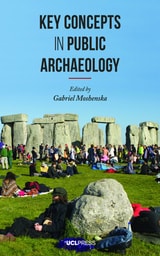
Key Concepts in Public Archaeology
Edited by Gabriel Moshenska
University College London, 2017
This book presents an overview of the key concepts in public archaeology—a field that examines the relationship between archaeology and the public—and seeks to clarify the discipline by adopting a socially and politically engaged vision. The individual chapters introduce the themes, theories, and controversies that connect archaeology to society by providing case studies that survey the trade in illicit antiquities and how digital media are used to promote public engagement with the field. Written for both students and practitioners alike, the book also will be an essential resource for pointing readers to further scholarship.
[more]
Key Concepts of Romanian History
Alternative Approaches to Socio-Political LanguagesVictor Neumann
Central European University Press, 2013
The theoretical analyses and interpretations contained in the studies of this volume focus on key-concepts such as: politics, politician, democracy, Europe, liberalism, constitution, property, progress, kinship, nation, national character and specificity, homeland, patriotism, education, totalitarianism, democracy, democratic, democratization, transition. The essays unveil specific aspects belonging to Romania's past and present. They also offer alternative perspectives on the Romanian culture through the relationship between the elite and society, and novel reflections on the delayed and unfinished modernization processes within the society and the state. The editors articulate the results coming from various sciences, such as history, linguistics, sociology, political sciences, and philosophy with the aim that the past and present profiles of Romania are better understood.
[more]
Understandable Electric Circuits
Key conceptsMeizhong Wang
The Institution of Engineering and Technology, 2019
In this digital age, as the role of electronic circuits becomes ever broader and more complex, a thorough understanding of the key concepts of circuits is a great advantage. This book offers a thorough reference guide to the theory, elements and design of basic electric circuits, providing a solid foundation for those who plan to move into the field of electronics engineering, and essential information for anyone who uses electric circuitry in their profession or research. The book is designed to be accessible to newcomers to the field while also providing a useful review for more advanced readers. It has been extensively revised and expanded for this new edition to provide a clear source of information on this complex topic. Materials are presented visually with less text and more outlines so that readers can quickly get to the heart of each topic, making studying and reviewing more effective.
[more]
Understandable Electronic Devices
Key concepts and circuit designMeizhong Wang
The Institution of Engineering and Technology, 2022
An electronic device is a physical component of an electronic circuit or system, which is used to affect electrons and their associated fields in accordance with the function of that system. Such systems have a very broad range of applications, the main ones being, Industrial automation and motion control, information processing, telecommunication, and signal processing.
[more]

Understandable Mathematics for Electrical Circuits, Electronics, and Computing Applications
Key conceptsMeizhong Wang
The Institution of Engineering and Technology, 2026
Electric circuits and electronics are vital to the functioning of modern technologies that we use every day, and the rise of computer technology has led to many different applications, for example artificial intelligence, robots, quantum computing, machine learning, and the internet of things (IoT).
[more]