Results by title
14 books match the query 'Kidnapping'
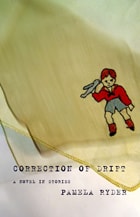
Correction of Drift
A Novel in StoriesPamela Ryder
University of Alabama Press, 2008
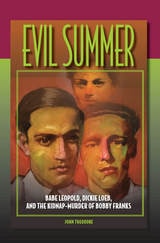
Evil Summer
Babe Leopold, Dickie Loeb, and the Kidnap-Murder of Bobby FranksJohn Theodore
Southern Illinois University Press, 2007
In 1924, fourteen-year-old Bobby Franks was abducted while walking home from school, killed by a chisel blow to his head, and later found stuffed in a culvert in a marshy wasteland at the Illinois-Indiana state line. Acid had been poured over his naked body. Evil Summer examines the shocking kidnapping and murder of Franks by two University of Chicago students, Nathan “Babe” Leopold and Richard “Dickie” Loeb, both from families of privilege.
In this new examination of the crime, author John Theodore takes readers into the minds of the two criminals as he focuses on three months in 1924. Theodore covers the killing, the confessions, the defense, and the sentencing surrounding the horrific murder, placing the killers’ actions and Clarence Darrow’s historic defense into the context of 1920s Chicago.
Theodore deftly investigates the psychological dimensions of the crime, revealing the murderers’ fantasies, relationships, sexuality, and motives. The author examines the killers’ past, outlining Loeb’s obsession with detective fiction and crime and his editorial on random killing—written at age nine—and Leopold’s nightly master-slave fantasies and fascination with Nietzsche.
Evil Summer, which includes twenty-three illustrations, meticulously traces the murder from inception to confession, including such details as the special-delivery ransom letter sent to Jacob Franks and the discovery of Leopold’s horn-rimmed eyeglasses lying on a railroad embankment near Bobby’s dead body. Theodore re-creates such scenes as the convergence of hundreds of people in front of the Franks home, Bobby’s body lying in a small white casket in the library, and Loeb being voyeuristically drawn to the home while Bobby’s classmates carry the casket to the hearse.
Worldwide press coverage reflected the public fascination with the case in what was then called “the trial of the century.” The story became a media circus: Chicago’s six daily newspapers battled vigorously for readers, two Daily News cub reporters became part of the story, and the Chicago Tribune carried a voting ballot asking readers whether radio station WGN should broadcast the courtroom spectacle. The changing drama was delivered to Chicagoans every morning and evening, and the public feasted on every press run.
More than a crime story, Evil Summer illuminates the dark side of American life in the 1920s, including the excesses of privileged youth, the troubled childhoods, the random victimization, the anti-Semitism, and the sexuality.
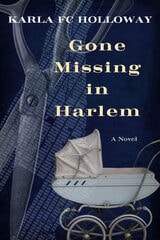
Gone Missing in Harlem
A NovelKarla FC Holloway
Northwestern University Press, 2021
The family arrives as Harlem staggers under the flu pandemic that follows the First World War. DeLilah Mosby and her daughter, Selma, meet difficulties with backbone and resolve to make a home for themselves in the city, and Selma has a baby, Chloe. As the Great Depression creeps across the world at the close of the twenties, however, the farsighted see hard times coming.
The panic of the early thirties is embodied in the kidnapping and murder of the infant son of the nation’s dashing young aviator, Charles Lindbergh. A transfixed public follows the manhunt in the press and on the radio. Then Chloe goes missing—but her disappearance does not draw the same attention. Wry and perceptive Weldon Haynie Thomas, the city’s first “colored” policeman, takes the case.
The urgent investigation tests Thomas’s abilities to draw out the secrets Harlem harbors, untangling the color-coded connections and relationships that keep company with greed, ghosts, and grief. With nuanced characters, lush historical detail, and a lyrical voice, Gone Missing in Harlem affirms the restoring powers of home and family.
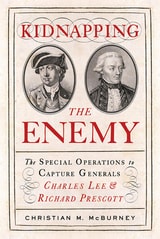
Kidnapping the Enemy
The Special Operations to Capture Generals Charles Lee and Richard PrescottChristian M. McBurney
Westholme Publishing, 2024

Patty's Got a Gun
Patricia Hearst in 1970s AmericaWilliam Graebner
University of Chicago Press, 2008
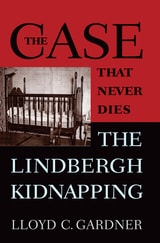
The Case That Never Dies
The Lindbergh KidnappingLloyd C. Gardner
Rutgers University Press, 2004
The Case That NeverDies places the Lindbergh kidnapping, investigation, and trial in the context of the Depression, when many feared the country was on the edge of anarchy. Gardner delves deeply into the aspects of the case that remain confusing to this day, including Lindbergh’s dealings with crime baron Owney Madden, Al Capone’s New York counterpart, as well as the inexplicable exploits of John Condon, a retired schoolteacher who became the prosecution’s best witness. The initial investigation was hampered by Colonel Lindbergh, who insisted that the police not attempt to find the perpetrator because he feared the investigation would endanger his son’s life. He relented only when the child was found dead.
After two years of fruitless searching, Bruno Richard Hauptmann, a German immigrant, was discovered to have some of the ransom money in his possession. Hauptmann was arrested, tried, and sentenced to death. Throughout the book, Gardner pays special attention to the evidence of the case and how it was used and misused in the trial. Whether Hauptmann was guilty or not, Gardner concludes that there was insufficient evidence to convict him of first-degree murder.
Set in historical context, the book offers not only a compelling read, but a powerful vantage point from which to observe the United States in the 1930s as well as contemporary arguments over capital punishment.
The Disappearances
A Story of Exploration, Murder, and Mystery in the American WestScott Thybony
University of Utah Press, 2016
Intrigued by this unusual string of coincidental disappearances, Scott Thybony set out to learn what happened. His investigations took him from Island in the Sky to Skeleton Mesa, from Texas to Tucson, and from the Green River to the Red. He traced the journey of Lucy Garrett from the murder of her father to her dramatic courtroom testimony. Using the pages of an old journal he followed the route of Dan Thrapp as he crossed an expanse of wildly rugged country with a pair of outlaws. Thrapp’s story of survival in an unforgiving land is a poignant counterpoint to the fate of the artist Everett Ruess, which the New York Times has called “one of the most enduring mysteries of the modern West.” Thybony draws on extensive research and a lifetime of exploration to create a riveting story of these three lives.
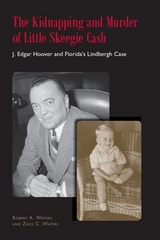
The Kidnapping and Murder of Little Skeegie Cash
J. Edgar Hoover and Florida's Lindbergh CaseRobert Alvin Waters
University of Alabama Press, 2014
In his long and storied career, J. Edgar Hoover investigated only one case personally, the 1938 kidnapping and murder of five-year-old Floridian James “Skeegie” Cash. What prompted the director himself to fly from Washington, DC, to a rain-drenched hamlet on the edge of the Everglades? Congress had slashed FBI funding, forcing Hoover to lay off half his agents. The combative Hoover believed if he could bring Skeegie’s killer to justice, the halo of positive publicity would revive the fortunes of the embattled FBI.
In The Kidnapping and Murder of Little Skeegie Cash, Robert A. Waters and Zack C. Waters bring to life the drama of the abduction, the payment of a $10,000 ransom, the heartbreaking manhunt for Skeegie and his kidnapper, the arrest and confession of Franklin Pierce McCall, and the killer’s trial and execution. Hordes of reporters swarmed into the little village south of Miami, and for thirteen days until McCall confessed, the case dominated national headlines. The authors capture the drama and the detail as well as the desperate and sometimes extralegal lengths to which Hoover went to crack the case.
Using the Freedom of Information Act, the authors obtained more than four thousand pages of FBI files and court documents to reconstruct this important but forgotten case. The tragedy that played out in the swamps of Dade County constituted the backdrop for a political struggle that would involve J. Edgar Hoover, the United States Congress, and even president Franklin Delano Roosevelt. Hoover and the president prevailed, and within two years the FBI grew from 680 employees to more than 14,000. No books and few articles have been published about this historic case.

The Lindbergh Case
A Story of Two LivesFisher, Jim
Rutgers University Press, 1987
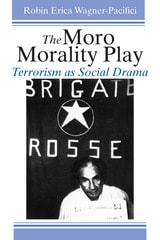
The Moro Morality Play
Terrorism as Social DramaRobin Wagner-Pacifici
University of Chicago Press, 1986

The Most Beautiful Girl in the World
Judy Doenges
University of Michigan Press, 2006
Trapped in a house scarily alive with a rogues gallery of hapless and often hilarious crooks, misfits, and hangers-on, Robin must look elsewhere for stability, befriending the son of the neighborhood's only African American family-a boy whose unimpeachable manners and flawless grades mask his own sexuality-while falling in love with the high school beauty.
Wry, edgy, and smart, The Most Beautiful Girl in the World offers a new kind of young heroine, one who stands fearlessly at the precipice of her family and her town's self-destruction, defiantly fighting to save herself.

The Parker Sisters
A Border KidnappingLucy Maddox
Temple University Press, 2016
In The Parker Sisters, Lucy Maddox gives an eloquent, urgent account of the tragic kidnapping of these young women. Using archival news and courtroom reports, Maddox tells the larger story of the disastrous effect of the Fugitive Slave Act on the small farming communities of Chester County and the significant, widening consequences for the state and the nation.
The Parker Sisters is also a story about families whose lives and fates were deeply embedded in both the daily rounds of their community and the madness and violence consuming all of antebellum America. Maddox’s account of this horrific and startling crime reveals the strength and vulnerability of the Parker sisters and the African American population.

The Year She Disappeared
A NovelBy Ann Harleman
University of Texas Press, 2008
Nan and her four-year-old granddaughter Jane are taking their first airplane trip together, flying from Seattle to the East Coast. But this is no ordinary excursion. Nan is abducting Jane.
Nan's own daughter, Alex, believes Jane's father has been sexually abusing her, and she's asked Nan to take her away, to hide her. But when she and Jane arrive in Providence, Rhode Island, things begin to go wrong. The old friend whom Nan expected to stay with has vanished. Her son-in-law is on her trail. And Alex disappears.
"I'm too old for this!" Nan thinks, in furious, self-pitying despair. She wasn't a good wife; she wasn't a good mother. Now she's stranded in a strange city, without friends or money or even her own identity, in sole charge of a very unhappy little girl. When her new life offers new friends, new work, and even a new lover, she must decide whom to trust.
The Year She Disappeared explores the possibility—and the price—of late blooming love. Will the trials Nan faces during her year on the lam break her? Or will she discover who she really is?

Writing for Justice
Victor Séjour, the Kidnapping of Edgardo Mortara, and the Age of Transatlantic EmancipationsElèna Mortara
Dartmouth College Press, 2015