Results by title
12 books match the query 'King, Martin Luther, Jr.'
Amid the Fall, Dreaming of Eden
Du Bois, King, Malcolm X, and Emancipatory CompositionBradford T. Stull
Southern Illinois University Press, 1999
Whom, or what, does composition—defined here as an intentional process of study, either oral or written—serve? Bradford T. Stull contends that composition would do well to articulate, in theory and practice, what could be called "emancipatory composition." He argues that emancipatory composition is radically theopolitical: it roots itself in the foundational theological and political language of the American experience while it subverts this language in order to emancipate the oppressed and, thereby, the oppressors.
To articulate this vision, Stull looks to those who compose from an oppressed place, finding in the works of W. E. B. Du Bois, Martin Luther King Jr., and Malcolm X radical theopolitical practices that can serve as a model for emancipatory composition. While Stull acknowledges that there are many sites of oppression, he focuses on what Du Bois has called the problem of the twentieth century: the color line, positing that the unique and foundational nature of the color line provides a fecund place in which, from which, a theory and practice of emancipatory composition might be elucidated.
By focusing on four key theopolitical tropes—The Fall, The Orient, Africa, and Eden—that inform the work of Du Bois, King, and Malcolm X, Stull discovers the ways in which these civil rights leaders root themselves in the vocabulary of the American experience in order to subvert it so that they might promote emancipation for African Americans, and thus all Americans.
In drawing on the work of Paulo Freire, Kenneth Burke, Edward Said, Christopher Miller, Ernst Bloch, and others, Stull also locates this study within the larger cultural context. By reading Du Bois, King, and Malcolm X together in a way that they have never before been read, Stull presents a new vision of composition practice to the African American studies community and a reading of African American emancipatory composition to the rhetoric and composition community, thus extending the question of emancipatory composition into new territory.
Dangerous Friendship
Stanley Levison, Martin Luther King Jr., and the Kennedy BrothersBen Kamin
Michigan State University Press, 2014
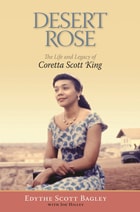
Desert Rose
The Life and Legacy of Coretta Scott KingEdythe Scott Bagley with Joe Hilley
University of Alabama Press, 2012
An intimate biography illuminating the life, leadership, and legacy of Coretta Scott King within the American Civil Rights Movement.
Coretta Scott King—noted author, human rights activist, and wife and partner of famed Civil Rights Movement leader Martin Luther King Jr.—grew up in the rural Alabama Black Belt with her older sister, Edythe Scott Bagley. Bagley chronicles the sisters’ early education together at the Crossroads School and later at the progressive Lincoln School in Marion. She describes Coretta’s burgeoning talent for singing and her devotion to musical studies, and the sisters’ experiences matriculating at Antioch College, an all-white college far from the rural South. Bagley provides vivid insights into Coretta’s early passion for racial and economic justice, which lead to her involvement in the Peace Movement and the National Association for the Advancement of Colored People.
As Coretta’s older sister, Edythe shared in almost all of Coretta’s many trials and tribulations. Desert Rose charts Coretta’s hesitance about her romance with Martin Luther King and the prospect of having to sacrifice her dream of a career in music to become a minister’s wife. Ultimately, Coretta chose to utilize her artistic gifts and singing voice for the Movement through the development and performance of Freedom Concerts. This book also charts Coretta’s own commitment and dedication, in the years that followed King’s death, to the causes of international civil rights, the antiapartheid movement, and the establishment of the King Center in Atlanta and the national King Holiday. Coretta’s devotion to activism, motherhood, and the movement led by her husband, and her courageous assumption of the legacy left in the wake of King’s untimely assassination, are wonderfully detailed in this intimate biography.
Disarming Manhood
Roots of Ethical ResistanceDavid A.J. Richards
Ohio University Press, 2005
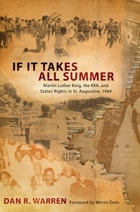
If It Takes All Summer
Martin Luther King, the KKK, and States' Rights in St. Augustine, 1964Dan R. Warren, with foreword by Morris Dees
University of Alabama Press, 2008
An insider’s record of the St. Augustine Civil Rights drama.
This memoir recounts the struggle against segregation in St. Augustine, Florida, in the early and mid-1960s. In the summer of 1964 the nation’s oldest city became the center of the civil rights movement as Martin Luther King Jr., encouraged by President Johnson, a southerner, who made the civil rights bill the center piece of his domestic policy, chose this tourism-driven community as an ideal location to demonstrate the injustice of discrimination and the complicity of southern leaders in its enforcement.
St. Augustine was planning an elaborate celebration of its founding, and expected generous federal and state support. But when the kick-off dinner was announced only whites were invited, and local black leaders protested. The affair alerted the national civil rights leadership to the St. Augustine situation as well as fueling local black resentment.
Ferment in the city grew, convincing King to bring his influence to the leadership of the local struggle. As King and his allies fought for the right to demonstrate, a locally powerful Ku Klux Klan counter-demonstrated. Conflict ensued between civil rights activists, local and from out-of-town, and segregationists, also home-grown and imported. The escalating violence of the Klan led Florida’s Governor to appoint State Attorney Dan Warren as his personal representative in St. Augustine. Warren’s crack down on the Klan and his innovative use of the Grand Jury to appoint a bi-racial committee against the intransigence of the Mayor and other officials, is a fascinating story of moral courage. This is an insider view of a sympathetic middleman in the difficult position of attempting to bring reason and dialog into a volatile situation.
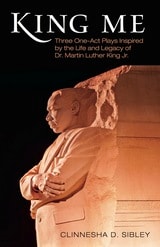
King Me
Three One-Act Plays Inspired by the Life and Legacy of Dr. Martin Luther King Jr.Clinnesha D. Sibley
University of Arkansas Press, 2013
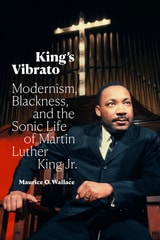
King's Vibrato
Modernism, Blackness, and the Sonic Life of Martin Luther King Jr.Maurice O. Wallace
Duke University Press, 2022
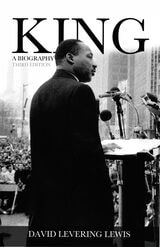
King
A BiographyDavid Levering Lewis
University of Illinois Press, 2013
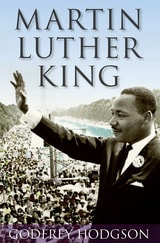
Martin Luther King
Godfrey Hodgson
University of Michigan Press, 2010
Dr. Martin Luther King Jr. is as relevant today as he was when he led civil rights campaigns in the 1950s and 1960s. He was an agent and a prophet of political change in this country, and the election of President Barack Obama is his direct legacy.
Now from one of Britain's most experienced political observers comes a new, accessible biography of the man and his works. The story of King is dramatic, and Godfrey Hodgson presents it with verve, clarity, and acute insight based in part on his own reporting on-scene at the time. He interviewed King half a dozen times or more; heard his speech at the March on Washington; was in Birmingham, Selma and Chicago; and met many of the characters in King's life story. Martin Luther King combines the best of his own reporting, plus the work of other biographers and researchers, to trace the iconic civil rights leader's career from his birth in Atlanta in 1929, through the campaigns that made possible the Civil Rights Act of 1964 and the Voting Rights Act of 1965, to his assassination in Memphis in 1968. Hodgson sheds light on every aspect of an extraordinary life: the Black Baptist culture in which King grew up, his theology and political philosophy, his physical and moral courage, his insistence on the injustice of inequality, his campaigning energy, his repeated sexual infidelities.
Hodgson describes the political minefield in which King operated; follows how he gradually persuaded President Kennedy that he could not stand by and allow the civil rights movement to be frustrated; and describes how, on the verge of success, his career was threatened by President Johnson's anger at King's principled decision to come out against the Vietnam War. He also puts King's career into the context of American history in the crisis of the 1960s. In his life, King was frustrated; but in death, he has been triumphant.
Martin Luther King allows the charisma and power of King's personality to shine through, showing in gripping narrative style exactly how one man helped America to progress toward its truest ideals. Hodgson's extensive research and detail help paint an accurate, complex portrait of one of America's most important leaders.
Godfrey Hodgson has worked in Britain and America as a newspaper and magazine journalist; as a television reporter, documentary maker and anchor; as a university teacher and lecturer; and as the author of a dozen well-received books about U.S. politics and recent history, including America in Our Time, a history of the United States in the 1960s; More Equal than Others, on politics and society in twentieth-century America; and most recently, a biography of Senator Daniel Patrick Moynihan, The Gentleman from New York. Hodgson met King on a number of occasions between 1956 and 1967. He recently retired as director of the Reuters Foundation Programme at Oxford University and is a visiting journalism professor at City University in London.
PRAISE FOR America in Our Time
"A critique so stimulating and compelling that I can only say read it."
---Richard Lingeman, The New York Times
"It simply gets right, without great fuss, the detail and proportion of things like the civil rights movement, student unrest, the stages of our Vietnam engagement."
---Garry Wills, The New York Review of Books
PRAISE FOR More Equal than Others
"The most thoughtful, thorough and sorrowful book imaginable on what has happened in these years."
---Bernard Crick, The Independent
Martin Luther King Jr. and the Sermonic Power of Public Discourse
Carolyn Calloway-Thomas
University of Alabama Press, 1993
Critical studies of the prophetic voice that reshaped a nation.
Martin Luther King Jr. and the Sermonic Power of Public Discourse presents a rich and illuminating examination of Dr. King’s rhetorical mastery, revealing how his most iconic speeches and writings drew deeply from African American sermonic traditions to articulate a moral vision capable of transforming public consciousness. Through nine incisive essays, the volume explores how King’s oratory fused theology, ethics, metaphor, and call‑and‑response patterns to mobilize audiences and frame the civil rights movement as a universal moral struggle.
The collection focuses on five pivotal works—“Death of Evil on the Seashore,” “Letter from Birmingham Jail,” “I Have a Dream,” “A Time to Break Silence,” and “I’ve Been to the Mountaintop”—each analyzed for its rhetorical structure, historical context, and thematic force. These pieces span the full arc of King’s public career, illustrating not only his evolving political and theological commitments but also his sustained effort to envision and communicate a “beloved community” rooted in justice, equality, and human dignity.
In addition to unpacking King’s metaphoric language, ethical appeals, and theological grounding, several essays highlight the ways his rhetoric bridged diverse audiences and invited collective participation in social change. Scholars examine how King re‑constructed the rhetorical situation in “Letter from Birmingham Jail,” framed equality as a universal ideal, and used orality and performance to elevate “I Have a Dream” into one of the most resonant speeches in American history.
Far more than an anthology of commentary, this volume provides a nuanced, interdisciplinary understanding of King as a rhetorician whose discourse transcended political advocacy to become a powerful form of moral persuasion. It is an essential resource for readers interested in rhetoric, communication, civil rights history, and the enduring power of prophetic speech.
Martin Luther King Jr., Heroism, and African American Literature
Trudier Harris
University of Alabama Press, 2023
Examines how representations of Martin Luther King Jr.’s character and persona in works of African American literature have evolved and reflect the changing values and mores of African American culture
African American writers have incorporated Martin Luther King Jr. into their work since he rose to prominence in the mid-1950s. Martin Luther King Jr., Heroism, and African American Literature is a study by award-winning author Trudier Harris of King’s character and persona as captured and reflected in works of African American literature continue to evolve.
One of the most revered figures in American history, King stands above most as a hero. His heroism, argues Harris, is informed by African American folk cultural perceptions of heroes. Brer Rabbit, John the Slave, Stackolee, and Railroad Bill—folk heroes all—provide a folk lens through which to view King in contemporary literature. Ambiguities and issues of morality that surround trickster figures also surround King. Nonconformist traits that define Stackolee and Railroad Bill also inform King’s life and literary portraits. Defiance of the law, uses of indirection, moral lapses, and bad habits are as much a part of the folk-transmitted biography of King as they are a part of writers’ depictions of him in literary texts.
Harris first demonstrates that during the Black Arts Movement of the 1960s, when writers such as Nikki Giovanni, Sonia Sanchez, and LeRoi Jones (Amiri Baraka) were rising stars in African American poetry, King’s philosophy of nonviolence was out of step with prevailing notions of militancy (Black Power), and their literature reflected that division.
In the quieter times of the 1970s and 1980s and into the twenty-first century, however, treatments of King and his philosophy in African American literature changed. Writers who initially rejected him and nonviolence became ardent admirers and boosters, particularly in the years following his assassination. By the 1980s, many writers skeptical about King had reevaluated him and began to address him as a fallen hero. To the most recent generation of writers, such as Katori Hall, King is fair game for literary creation, no matter what those portrayals may reveal, to a point where King has become simply another source of reference for creativity.
Collectively these writers, among many others, illustrate that Martin Luther King Jr. provides one of the strongest influences upon the creative worlds of multiple generations of African American writers of varying political and social persuasions.
Room 306
The National Story of the Lorraine MotelBen Kamin
Michigan State University Press, 2012