Results by title
10 books match the query 'Lévi-Strauss, Claude'
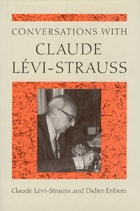
Conversations with Claude Levi-Strauss
Claude Lévi-Strauss and Didier Eribon
University of Chicago Press, 1991
At the age of eighty, one of the most influential yet reclusive intellectuals of the twentieth century consented to his first interviews in nearly thirty years. Hailed by Le Figaro as "an event," the resulting conversations between Claude Lévi-Strauss and Didier Eribon (a correspondent for Le Nouvel Observateur) reveal the great anthropologist speaking of his life and work with ease and humor.
Now available in English, the conversations are rich in Lévi-Strauss's candid appraisals of some of the best-known figures of the Parisian intelligentsia: surrealists André Breton and Max Ernst, with whom Lévi-Strauss shared a bohemian life in 1940s Manhattan; de Beauvoir, Sartre, and Camus, the stars of existentialism; Leiris, Foucault, Dumézil, Jacob, Lacan, and others. His long friendships with Jakobson and Merleau-Ponty are recalled, as well as his encounters with prominent figures in American anthropology: Lowie, Boas (who suddenly died in his chair beside Lévi-Strauss at a banquet at Columbia University), Benedict, Linton, Mead, and Kroeber.
Lévi-Strauss speaks frankly about how circumstances and his own inclinations, after his early fieldwork in Brazil, led him to embrace theoretical work. His straightforward answers to Eribon's penetrating questions—What is a myth? What is structuralism? Are you a philosopher?—clarify his intellectual motives and the development of his research; his influential role as an administrator, including the founding of the Laboratory of Social Anthropology and of the journal L'Homme; the course of his writings, from Elementary Structures of Kinship to The Jealous Potter; and his thoughts on the conduct of anthropology today.
Never before has Lévi-Strauss spoken so freely on so many aspects of his life: his initial failure to be elected to the Collège de France; his reaction to the events of May 1968; his regrets at not being a great investigative reporter or playwright; his deep identification with Wagner, Proust, and Rousseau. This is a rare opportunity to become acquainted with a great thinker in all his dimensions.
[more]
Structural Anthropology, Volume 2
Claude Lévi-Strauss
University of Chicago Press, 1983
The eighteen essays collected in this volume have been selected and ordered to give what Lévi-Strauss terms "a bird's-eye view of the problems of modern ethnology." As representative examples, these essays introduce readers to the methods of structural anthropology while affording a glimpse into the mind of one of the foremost anthropologists of our time.
"Structural Anthropology, Volume II is a diverse collection. [It is] a useful 'sampler' that gives a reader the full range of Lévi-Strauss's interests."—Daniel Bell, New York Times Book Review
"Structural Anthropology, Volume II is a diverse collection. [It is] a useful 'sampler' that gives a reader the full range of Lévi-Strauss's interests."—Daniel Bell, New York Times Book Review
[more]
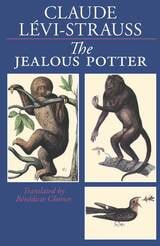
The Jealous Potter
Claude Lévi-Strauss
University of Chicago Press, 1988
As Lévi-Strauss freely explores the mythologies of the Americas, with occasional incursions into European and Japanese folklore, tales of sloths and squirrels interweave with discussions of Freud, Saussure, "signification," and plays by Sophocles and Labiche. Lévi-Strauss critiques psychoanalytic interpretation and defends the interpretive powers of structuralism.
"Electrifying. . . . A brilliant demonstration of structural analysis in action. . . . Can be read with pleasure and profit by anyone interested in that aspect of self-discovery that comes through knowledge of the universal and timeless myths that live on in all of us."—Jonathan Sharp, San Francisco Examiner-Chronicle
"A characteristic tour de force. . . . One remains awed by him."—Colin Thubron, Sunday Times
"With all its epistemological depth, the book reads at times like a Simenon or a Lewis Carroll, fusing concise methodology with mastery of style."—Bernadette Bucher, American Ethnologist
"[An] engagingly provocative exploration of mythology in the Americas. . . . Always a good read."—Choice
"A playful, highly entertaining book, fluently and elegantly translated by Bénédicte Chorier."—Wendy Doniger O'Flaherty, New York Times Book Review
[more]
The Naked Man
Mythologiques, Volume 4Claude Lévi-Strauss
University of Chicago Press, 1990
"The Naked Man is the fourth and final volume [of Mythologiques], written by the most influential and probably the most controversial anthropologist of our time. . . . Myths from North and South America are set side by side to show their transformations: in passing from person to person and place to place, a myth can change its content and yet retain its structural principles. . . . Apart from the complicated transformations discovered and the fascinating constructions placed on these, the stories themselves provide a feast."—Betty Abel, Contemporary Review
"Lévi-Strauss uses the structural method he developed to analyze and 'decode' the mythology of native North Americans, focusing on the area west of the Rockies. . . . [The author] takes the opportunity to refute arguments against his method; his chapter 'Finale' is a defense of structural analysis as well as the closing statement of this four-volume opus which started with an 'Ouverture' in The Raw and the Cooked."—Library Journal
"The culmination of one of the major intellectual feats of our time."—Paul Stuewe, Quill and Quire
[more]
The Origin of Table Manners
Mythologiques, Volume 3Claude Lévi-Strauss
University of Chicago Press, 1990
"The Origin of Table Manners is the third volume of a tetralogy devoted to American Indian mythology. Unlike the first two volumes (The Raw and the Cooked, From Honey to Ashes), which are devoted to South American myths, the present one establishes relations with North America, which is the subject of the fourth (The Naked Man). . . . In the course of the analysis, the myths link up with ideas of more general interest. Thus, we find discussions of numeration, of morals, and of the origin of the novel. . . . The Origin of Table Manners is thus of special interest to students of American Indian mythology, although it contains ideas of interest to other fields and even to the general reader."—Daniel C. Raffalovich, American Anthropologist
"An immense anthropological erudition is here wielded by one of the world's finest minds, and the myths themselves have never been taken more seriously. . . . [Lévi-Strauss] raises issues and then resolves them with the suspenseful cunning of a mystery novelist."—John Updike, New Yorker
"An immense anthropological erudition is here wielded by one of the world's finest minds, and the myths themselves have never been taken more seriously. . . . [Lévi-Strauss] raises issues and then resolves them with the suspenseful cunning of a mystery novelist."—John Updike, New Yorker
[more]
The Raw and the Cooked
Mythologiques, Volume 1Claude Lévi-Strauss
University of Chicago Press, 1983
"Lévi-Strauss is a French savant par excellence, a man of extraordinary sensitivity and human wisdom . . . a deliberate stylist with profound convictions and convincing arguments. . . . [The Raw and the Cooked] adds yet another chapter to the tireless quest for a scientifically accurate, esthetically viable, and philosophically relevant cultural anthropology. . . . [It is] indispensable reading."—Natural History
[more]
The Savage Mind
Claude Lévi-Strauss
University of Chicago Press, 1968
"Every word, like a sacred object, has its place. No précis is possible. This extraordinary book must be read."—Edmund Carpenter, New York Times Book Review
"No outline is possible; I can only say that reading this book is a most exciting intellectual exercise in which dialectic, wit, and imagination combine to stimulate and provoke at every page."—Edmund Leach, Man
"Lévi-Strauss's books are tough: very scholarly, very dense, very rapid in argument. But once you have mastered him, human history can never be the same, nor indeed can one's view of contemporary society. And his latest book, The Savage Mind, is his most comprehensive and certainly his most profound. Everyone interested in the history of ideas must read it; everyone interested in human institutions should read it."—J. H. Plumb, Saturday Review
"A constantly stimulating, informative and suggestive intellectual challenge."—Geoffrey Gorer, The Observer, London
[more]
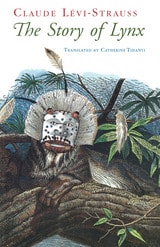
The Story of Lynx
Claude Lévi-Strauss
University of Chicago Press, 1995
"In olden days, in a village peopled by animal creatures, lived Wild Cat (another name for Lynx). He was old and mangy, and he was constantly scratching himself with his cane. From time to time, a young girl who lived in the same cabin would grab the cane, also to scratch herself. In vain Wild Cat kept trying to talk her out of it. One day the young lady found herself pregnant; she gave birth to a boy. Coyote, another inhabitant of the village, became indignant. He talked all of the population into going to live elsewhere and abandoning the old Wild Cat, his wife, and their child to their fate . . . "
So begins the Nez Percé myth that lies at the heart of The Story of Lynx, Claude Lévi-Strauss's most accessible examination of the rich mythology of American Indians. In this wide-ranging work, the master of structural anthropology considers the many variations in a story that occurs in both North and South America, but especially among the Salish-speaking peoples of the Northwest Coast. He also shows how centuries of contact with Europeans have altered the tales.
Lévi-Strauss focuses on the opposition between Wild Cat and Coyote to explore the meaning and uses of gemellarity, or twinness, in Native American culture. The concept of dual organization that these tales exemplify is one of non-equivalence: everything has an opposite or other, with which it coexists in unstable tension. In contrast, Lévi-Strauss argues, European notions of twinness—as in the myth of Castor and Pollux—stress the essential sameness of the twins. This fundamental cultural difference lay behind the fatal clash of European and Native American peoples.
The Story of Lynx addresses and clarifies all the major issues that have occupied Lévi-Strauss for decades, and is the only one of his books in which he explicitly connects history and structuralism. The result is a work that will appeal to those interested in American Indian mythology.
[more]
The View from Afar
Claude Lévi-Strauss
University of Chicago Press, 1992
This collection touches on a wide range of anthropological issues, including family and marriage, myths, and rites, the environment and its representation, and constraint and freedom. The essays encompass more than forty years of analysis and constrain arguments that are as relevant today as they were thirty years ago.
"Hardly a field remains untouched—sociobiology, linguistics, botany, genetics, psychiatry, esthetics, ecology, politics, neuroscience, education, morality, psychology. . . . It's all breathtaking and alarming, some of it wonderful, some of it ridiculous. . . . At times the experience is exhilarating."—Richard A. Shweder, New York Times Book Review
"Hardly a field remains untouched—sociobiology, linguistics, botany, genetics, psychiatry, esthetics, ecology, politics, neuroscience, education, morality, psychology. . . . It's all breathtaking and alarming, some of it wonderful, some of it ridiculous. . . . At times the experience is exhilarating."—Richard A. Shweder, New York Times Book Review
[more]

Wild Thought
A New Translation of “La Pensée sauvage”Claude Lévi-Strauss
University of Chicago Press, 2021
As the most influential anthropologist of his generation, Claude Lévi-Strauss left a profound mark on the development of twentieth-century thought. Through a mixture of insights gleaned from linguistics, sociology, and ethnology, Lévi-Strauss elaborated his theory of structural unity in culture and became the preeminent representative of structural anthropology. La Pensée sauvage, first published in French in 1962, was his crowning achievement. Ranging over philosophies, historical periods, and human societies, it challenged the prevailing assumption of the superiority of modern Western culture and sought to explain the unity of human intellection.
Controversially titled The Savage Mind when it was first published in English in 1966, the original translation nevertheless sparked a fascination with Lévi-Strauss’s work among Anglophone readers. Wild Thought rekindles that spark with a fresh and accessible new translation. Including critical annotations for the contemporary reader, it restores the accuracy and integrity of the book that changed the course of intellectual life in the twentieth century, making it an indispensable addition to any philosophical or anthropological library.
Controversially titled The Savage Mind when it was first published in English in 1966, the original translation nevertheless sparked a fascination with Lévi-Strauss’s work among Anglophone readers. Wild Thought rekindles that spark with a fresh and accessible new translation. Including critical annotations for the contemporary reader, it restores the accuracy and integrity of the book that changed the course of intellectual life in the twentieth century, making it an indispensable addition to any philosophical or anthropological library.
[more]