Results by title
12 books match the query 'Labor policy'
At Home and Abroad
U.S. Labor Market Performance in International PerspectiveFrancine D. Blau
Russell Sage Foundation, 2002
Broken Promise
The Subversion Of U.S. Labor RelationsJames A. Gross
Temple University Press, 2003
The Wagner Act of 1935 (later the Wagner-Taft-Hartley Act of 1947) was intended to democratize vast numbers of American workplaces: the federal government was to encourage worker organization and the substitution of collective bargaining for employers' unilateral determination of vital work-place matters. Yet this system of industrial democracy was never realized; the promise was "broken." In this rare inside look at the process of government regulation over the last forty-five years, James A. Gross analyzes why the promise of the policy was never fulfilled.
Gross looks at how the National Labor Relations Board's (NLRB) policy-making has been influenced by the President, the Congress, the Supreme Court, public opinion, resistance by organized employers, the political and economic strategies of organized labor, and the ideological dispositions of NLRB appointees. This book provides the historical perspective needed for a reevaluation of national labor policy. It delineates where we are now, how we got here, and what fundamental questions must be addressed if policy-makers are to make changes consistent with the underlying principles of democracy.

Comrade or Brother?
A History of the British Labour MovementMary Davis
Pluto Press, 2009
Critical and iconoclastic, Comrade or Brother? traces the history of the British Labour Movement from its beginnings at the onset of industrialisation through its development within a capitalist society, up to the end of the twentieth-century. Written by a leading activist in the labour movement, the book redresses the balance in much labour history writing. It examines the place of women and the influence of racism and sexism as well as providing a critical analysis of the rival ideologies which played a role in the uneven development of the labour movement.
Decolonizing Employment
Aboriginal Inclusion in Canada's Labour MarketShauna MacKinnon
University of Manitoba Press, 2015
How Policies Make Interest Groups
Governments, Unions, and American EducationMichael T. Hartney
University of Chicago Press, 2022
As most American labor organizations struggle for survival and relevance in the twenty-first century, teachers unions appear to be an exception. Despite being all but nonexistent until the 1960s, these unions are maintaining members, assets—and political influence. As the COVID-19 epidemic has illustrated, today’s teachers unions are something greater than mere labor organizations: they are primary influencers of American education policy. How Policies Make Interest Groups examines the rise of these unions to their current place of influence in American politics.
Michael Hartney details how state and local governments adopted a new system of labor relations that subsidized—and in turn, strengthened—the power of teachers unions as interest groups in American politics. In doing so, governments created a force in American politics: an entrenched, subsidized machine for membership recruitment, political fundraising, and electoral mobilization efforts that have informed elections and policymaking ever since. Backed by original quantitative research from across the American educational landscape, Hartney shows how American education policymaking and labor relations have combined to create some of the very voter blocs to which it currently answers. How Policies Make Interest Groups is trenchant, essential reading for anyone seeking to understand why some voices in American politics mean more than others.
Labor Histories
Class, Politics, and the Working-Class ExperienceEdited by Eric Arnesen, Julie Greene, and Bruce Laurie
University of Illinois Press, 1998
Labor'S War At Home
The Cio In World War IiNelson Lichtenstein
Temple University Press, 2003
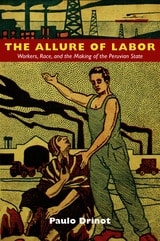
The Allure of Labor
Workers, Race, and the Making of the Peruvian StatePaulo Drinot
Duke University Press, 2011
Although the vast majority of laboring peoples in Peru were indigenous, in the minds of social reformers indigeneity was not commensurable with labor: Indians could not be workers and were therefore excluded from the labor policies enacted in the 1920s and 1930s and, more generally, from elite conceptions of industrial progress. Drinot shows how the incommensurability of indigeneity with labor was expressed in the 1920 constitution, in specific labor policies, and in the activities of state agencies created to oversee collective bargaining and provide workers with affordable housing, inexpensive food, and social insurance. He argues that the racialized assumptions of the modernizing Peruvian state are reflected in the enduring inequalities of present-day Peru.
The Pandemic and the Working Class
How US Labor Navigated COVID-19Edited by Nick Juravich and Steve Striffler
University of Illinois Press, 2025
Nick Juravich and Steve Striffler edit a collection that examines the effects of the pandemic on workers. Sections of the book focus on specific impacts and government efforts to restructure the economy; the dramatic effect of the pandemic on the hospitality industry; educators’ response on behalf of themselves and their students; frontline healthcare workers; and the innovative forms of labor organizing that emerged during and after COVID.
Contributors: Carlos Aramayo, Kathleen Brown, Sandrine Etienne, Ismael García-Colón, Puya Gerami, Maura Hagan, Connor Harney, Devan Hawkins, Leigh Howard, Marian Moser Jones, Doris Joy, Nick Juravich, Eric Larson, Kathryn M. Meyer, Samir Sonti, Steve Striffler, Lia Warner, Andrew B. Wolf, and Jennifer Zelnick
Uneasy Allies
Working for Labor Reform in Nineteenth-Century BostonDavid A. Zonderman
University of Massachusetts Press, 2011
In addition to analyzing what motivated these workers and reformers to create cross-class organizations, David Zonderman examines the internal tactical debates and external political pressures that fractured them, even as new alliances were formed, and shows how these influences changed over time. He describes what workers and reformers learned about politics and social change within these complex and volatile alliances, and speculates as to whether those lessons have relevance for activists and reformers today.
What emerges from this investigation is a narrative of progress and decline that spans nearly three-quarters of a century, as an ever-shifting constellation of associations debated the meaning of labor reform and the best strategy to secure justice for workers. But the quest for ideological consistency and organizational coherence was not easily achieved. By century's end, not only did Boston look dramatically different from its antebellum ancestor, but its labor reform alliances had lost some of their earlier openhearted optimism and stubborn resilience.
What Works for Workers?
Public Policies and Innovative Strategies for Low-Wage WorkersStephanie Luce
Russell Sage Foundation, 2014
Which Side Are You On?
The Harlan County Coal Miners, 1931-39John W. Hevener. Foreword by Robert Gipe
University of Illinois Press, 1978
Depression-era Harlan County, Kentucky, was the site of one of the most bitter and protracted labor disputes in American history. The decade-long conflict between miners and the coal operators who adamantly resisted unionization has been immortalized in folksong by Florence Reece and Aunt Molly Jackson, contemplated in prose by Theodore Dreiser and Sherwood Anderson, and long been obscured by popular myths and legends.
John W. Hevener separates the fact from the legend in his Weatherford Award-winning investigation of Harlan's civil strife, now available for the first time in paperback. In Which Side Are You On? Hevener attributes the violence–-including the deaths of thirteen union miners–-to more than just labor conflict, viewing Harlan's troubles as sectional economic conflict stemming from the county's rapid industrialization and social disorganization in the preceding decade.
Detailing the dimensions of unionization and the balance of power spawned by New Deal labor policy after government intervention, Which Side Are You On? is the definitive analysis of Harlan's bloody decade and a seminal contribution to American labor history.