Results by title
24 books match the query 'Landscape archaeology'
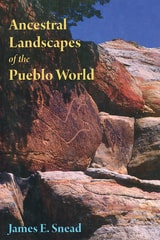
Ancestral Landscapes of the Pueblo World
James E. Snead
University of Arizona Press, 2008
Ancient Plants and People
Contemporary Trends in ArchaeobotanyEdited by Marco Madella, Carla Lancelotti, and Manon Savard
University of Arizona Press, 2014
Food has both a public and a private role, and it permeates the life of all people in a society. Food choice, production, and distribution probably represent the most complex indicators of social life, and thus a study of foods consumed by ancient peoples reveals many clues about their lifestyles. But in addition to yielding information about food production, distribution, preparation, and consumption, plant remains recovered from archaeological sites offer precious insights on past landscapes, human adaptation to climate change, and the relationship between human groups and their environment. Revealing important aspects of past human societies, these plant-driven insights widen the spectrum of information available to archaeologists as we seek to understand our history as a biological and cultural species.
Often answers raise more questions. As a result, archaeobotanists are constantly pushed to reflect on the methodological and theoretical aspects of their discipline. The contributors discuss timely methodological issues and engage in debates on a wide range of topics from plant utilization by hunter-gatherers and agriculturalists, to uses of ancient DNA. Ancient Plants and People provides a global perspective on archaeobotanical research, particularly on the sophisticated interplay between the use of plants and their social or environmental context.
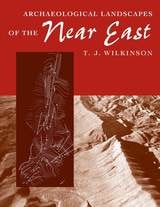
Archaeological Landscapes of the Near East
T. J. Wilkinson
University of Arizona Press, 2003
Many fundamental studies of the origins of states have built upon landscape data, but an overall study of the Near Eastern landscape itself has never been attempted. Spanning thousands of years of history, the ancient Near East presents a bewildering range of landscapes, the understanding of which can greatly enhance our ability to infer past political and social systems.
Tony Wilkinson now shows that throughout the Holocene humans altered the Near Eastern environment so thoroughly that the land has become a human artifact, albeit one that retains the power to shape human societies. In this trailblazing book—the first to describe and explain the development of the Near Eastern landscape using archaeological data—Wilkinson identifies specific landscape signatures for various regions and periods, from the early stages of complex societies in the fifth to sixth millennium B.C. to the close of the Early Islamic period around the tenth century A.D.
From Bronze Age city-states to colonized steppes, these signature landscapes of irrigation systems, tells, and other features changed through time along with changes in social, economic, political, and environmental conditions. By weaving together the record of the human landscape with evidence of settlement, the environment, and social and economic conditions, Wilkinson provides a holistic view of the ancient Near East that complements archaeological excavations, cuneiform texts, and other conventional sources.
Through this overview, culled from thirty years' research, Wilkinson establishes a new framework for understanding the economic and physical infrastructure of the region. By describing the basic attributes of the ancient cultural landscape and placing their development within the context of a dynamic environment, he breaks new ground in landscape archaeology and offers a new context for understanding the ancient Near East.
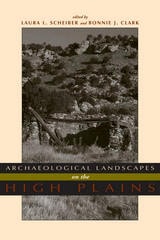
Archaeological Landscapes on the High Plains
Laura L. Scheiber
University Press of Colorado, 2008
Focusing on long-term change, this book considers ethnographic literature, archaeological evidence, and environmental data spanning thousands of years of human presence to understand human perception and construction of landscape. The contributors offer cohesive and synthetic studies emphasizing hunter-gatherers and subsistence farmers.
Using landscape as both reality and metaphor, Archaeological Landscapes on the High Plains explores the different and changing ways that people interacted with place in this transitional zone between the Rocky Mountains and the eastern prairies.
The contemporary archaeologists working in this small area have chosen diverse approaches to understand the past and its relationship to the present. Through these ten case studies, this variety is highlighted but leads to a common theme - that the High Plains contains important locales to which people, over generations or millennia, return. Providing both data and theory on a region that has not previously received much attention from archaeologists, especially compared with other regions in North America, this volume is a welcome addition to the literature. Contributors:
o Paul Burnett
o Oskar Burger
o Minette C. Church
o Philip Duke
o Kevin Gilmore
o Eileen Johnson
o Mark D. Mitchell
o Michael R. Peterson
o Lawrence Todd
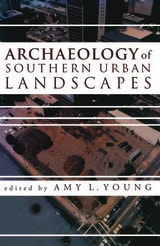
Archaeology of Southern Urban Landscapes
Amy L Young
University of Alabama Press, 2000
Groundbreaking essays in urban archaeology highlight the impact of towns and cities on the southern landscape.
The rapid growth and development of urban areas in the South have resulted in an increase in the number of urban archaeology projects required by federal and state agencies. These projects provide opportunities not only to investigate marginal areas between the town and countryside but also to recover information long buried beneath the earliest urban structures. Such projects have also created a need for a one-volume update on archaeology as it is practiced in the urban areas of the southeastern United States.
Archaeology of Southern Urban Landscapes will assist practitioners and scholars in the burgeoning fields of urban and landscape archaeology by treating the South as a distinctive social, geographic, and material entity and by focusing on the urban South rather than the stereotypical South of rural plantations. The case studies in this volume span the entire southeastern United States, from Annapolis to New Orleans and from colonial times to the 19th century. The authors address questions involving the function of cities, interregional diversity, the evolution of the urban landscape, and the impact of the urban landscape on southern culture. By identifying the relationship between southern culture and the South's urban landscapes, this book will help us understand the built landscape of the past and predict future growth in the region.
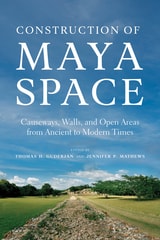
Construction of Maya Space
Causeways, Walls, and Open Areas from Ancient to Modern TimesThomas H. Guderjan
University of Arizona Press, 2023
Through fifteen engaging chapters, contributors examine the construction of spatial features by ancient, historic, and contemporary Maya elite and nonelite peoples to understand how they used spaces differently. Through cutting-edge methodologies and case studies, chapters consider how and why Maya people connected and divided the spaces they used daily in their homes, in their public centers, in their sacred places such as caves, and across their regions to inform us about the mental constructs they used to create their lives and cultures of the past.
Contributors
Elias Alcocer Puerto
Alejandra Alonso Olvera
Traci Ardren
Jaime J. Awe
Alejandra Badillo Sánchez
Nicolas C. Barth
Grace Lloyd Bascopé
Adolpho Iván Batún-Alpuche
Elizabeth Beckner
M. Kathryn Brown
Bernadette Cap
Miguel Covarrubias Reyna
Juan Fernandez Diaz
Alberto G. Flores Colin
Thomas H. Guderjan
C. Colleen Hanratty
Héctor Hernández Álvarez
Scott R. Hutson
Joshua J. Kwoka
Whitney Lytle
Aline Magnoni
Jennifer P. Mathews
Stephanie J. Miller
Shawn G. Morton
Holley Moyes
Shannon Plank
Dominique Rissolo
Patrick Rohrer
Carmen Rojas Sandoval
Justine M. Shaw
J. Gregory Smith
Travis W. Stanton
Karl A. Taube
Daniel Vallejo-Cáliz
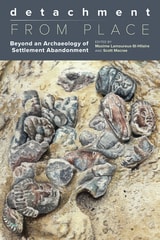
Detachment from Place
Beyond an Archaeology of Settlement AbandonmentMaxime Lamoureux-St-Hilaire
University Press of Colorado, 2019
Detachment from Place is the first comparative and interdisciplinary volume on the archaeology of settlement abandonment, with contributions focusing on materiality, ideology, the environment, and social construction of space. The volume sheds new light on an important but underexamined aspect of settlement abandonment wherein sedentary groups undergoing the process of abandonment leave behind many meaningful elements of their inhabited landscape. The process of detaching from place—which could last centuries—transformed inhabitants into migrants and transformed settled, constructed, and agricultural landscapes into imagined ones that continued to figure significantly in the identities of migrant groups.
Drawing on case studies from the Americas, Africa, and Asia, the volume explores how relationships between ancient peoples and the places they lived were transformed as they migrated elsewhere. Contributors focus on social structure, ecology, and ideology to study how people and places both disentangled from each other and remained tied together during this process. From Huron-Wendat villages and Classic Maya palaces to historical villages in Togo and the great Southeast Asian Medieval capital of Bagan, specific cultural, historical, and environmental factors led ancient peoples to detach from their homes and embark on migrations that altered social memory and cultural identity—as evidenced in the archaeological record.
Detachment from Place provides new insights into transfigurations of community identity, political organization, social and economic relations, religion, warfare, and agricultural practices and will be of interest to landscape archaeologists as well as researchers focused on collective memory, population movement, migratory patterns, and interaction.
Contributors:
Tomas Q. Barrientos, Jennifer Birch, Eduardo José Bustamante Luna, Catherine M. Cameron, Marcello A. Canuto, Jeffrey H. Cohen, Michael D. Danti, Phillip de Barros, Pete Demarte, Donna M. Glowacki, Gyles Iannone, Louis Lesage, Patricia A. McAnany, Asa R. Randall, Kenneth E. Sassaman
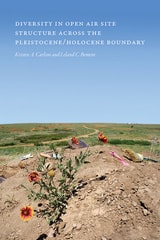
Diversity in Open-Air Site Structure across the Pleistocene/Holocene Boundary
Kristen A. Carlson
University Press of Colorado, 2021
Open-air sites are difficult for researchers to locate and, because of depositional processes, often more difficult to interpret; they contain many superimposed events but often show evidence of only the most recent. Working to overcome the limitations of data and poor preservation, using decades of prior research and new analytical tools, and diverging from a one-size-fits-all mode of interpretation, the contributors to this volume offer fresh insight into the formation and taphonomy of open-air sites.
Contributors: Douglas B. Bamforth, Ian Buvit, Brian J. Carter, Robin Cordero, Robert Dello-Russo, George C. Frison, Kelly E. Graf, Bruce B. Huckell, Michael A. Jochim, Joshua D. Kapp, Robert L. Kelly, Aleksander V. Konstantinov, Banks Leonard, Madeline E. Mackie, Christopher W. Merriman, Matthew J. O’Brien, Spencer Pelton, Neil N. Puckett, Beth Shapiro, Todd A. Surovell, Karisa Terry, Steve Teteak, Robert Yohe
Early State Formation in Central Madagascar
An Archaeological Survey of Western AvaradranoEdited by Henry T. Wright
University of Michigan Press, 2007
Ecology of Pastoralism
P. Nick Kardulias
University Press of Colorado, 2015
In The Ecology of Pastoralism, diverse contributions from archaeologists and ethnographers address pastoralism’s significant impact on humanity’s basic subsistence and survival, focusing on the network of social, political, and religious institutions existing within various societies dependent on animal husbandry.
Pastoral peoples, both past and present, have organized their relationships with certain animals to maximize their ability to survive and adapt to a wide range of conditions over time. Contributors show that despite differences in landscape, environment, and administrative and political structures, these societies share a major characteristic—high flexibility. Based partially on the adaptability of various domestic animals to difficult environments and partially on the ability of people to establish networks allowing them to accommodate political, social, and economic needs, this flexibility is key to the survival of complex pastoral systems and serves as the connection among the varied cultures in the volume.
In The Ecology of Pastoralism, a variety of case studies from a broad geographic sampling uses archaeological and contemporary data and offers a new perspective on the study of pastoralism, making this volume a valuable contribution to current research in the area.
Engineering Mountain Landscapes
An Anthropology of Social InvestmentLaura L. Scheiber and María N. Zedeño
University of Utah Press, 2015
Global Perspectives on Landscapes of Warfare
Hugo C. Ikehara-Tsukayama
University Press of Colorado, 2021
Global Perspectives on Landscapes of Warfare examines the effects of conflict on landscapes and the ways landscapes have shaped social and political boundaries over time. Contributors from different archaeological traditions introduce a variety of methodologies and theories to understand and explain how territories and geographies in antiquity were modified in response to threat.
Drawing from eleven case studies from periods ranging over eight thousand years in the Americas, Asia, and Europe, contributors consider how social groups moved and concentrated residences, built infrastructure, invested resources, created alliances and negotiated with human and nonhuman entities for aid, formed and reformed borders, and memorialized sites and territories. Because landscapes of warfare deal with built environments, chapters are presented with rich graphic documentation—detailed maps, site plans, and artifacts—to support the analysis and interpretations.
Territories that have been appropriated and transformed by communities at war illustrate how built landscapes not only reflect immediate events but also influence subsequent generations. With a diverse array of case studies and an explicit focus on landscapes, Global Perspectives on Landscapes of Warfare will be of great interest to students and scholars of conflict archaeology and the anthropology and history of violence across the globe.
Contributors: Elizabeth Arkush, Viktor A. Borzunov, Igor V. Chechushkov, Tiffany Earley-Spadoni, Nam C. Kim, Lauren Kohut, Takehiko Matsugi, Kerry Nichols, Russell S. Quick, Lizzie Scholtus, James T. Williams
Landscape and Interaction. The Troodos Archaeological and Environmental Survey Project, Cyprus. Volume 1. Methodology, Analysis and Interpretation
Michael Given
Council for British Research in the Levant, 2013
Landscapes of Warfare
Urartu and Assyria in the Ancient Middle EastTiffany Earley-Spadoni
University Press of Colorado, 2025
Tiffany Earley-Spadoni challenges traditional views by emphasizing warfare’s role in organizing ancient landscapes, suggesting that Urartu’s strength lay in its strategic optimization of terrain through fortified regional networks. Using an interdisciplinary approach that includes GIS-enabled studies and integrates archaeological, historical, and art-historical evidence, she illustrates how warfare was a generative force in structuring space and society in the ancient Middle East. Landscapes of Warfare situates Urartu’s developments within the broader context of regional empires, providing insights into the mechanisms of warfare, governance, and cultural identity formation.
Least Cost Analysis of Social Landscapes
Archaeological Case StudiesDevin A. White
University of Utah Press, 2012
A growing number of archaeologists are applying Geographic Information Science (GIS) technologies to their research problems and questions. Advances in GIS and its use across disciplines allows for collaboration and enables archaeologists to ask ever more sophisticated questions and develop increasingly elaborate models on numerous aspects of past human behavior. Least cost analysis (LCA) is one such avenue of inquiry. While least cost studies are not new to the social sciences in general, LCA is relatively new to archaeology; until now, there has been no systematic exploration of its use within the field.
This edited volume presents a series of case studies illustrating the intersection of archaeology and LCA modeling at the practical, methodological, and theoretical levels. Designed to be a guidebook for archaeologists interested in using LCA in their own research, it presents a wide cross-section of practical examples for both novices and experts. The contributors to the volume showcase the richness and diversity of LCA’s application to archaeological questions, demonstrate that even simple applications can be used to explore sophisticated research questions, and highlight the challenges that come with injecting geospatial technologies into the archaeological research process.
Political Landscapes of Capital Cities
Jessica Joyce Christie
University Press of Colorado, 2016
Political Landscapes of Capital Cities blends the historical, political, and cultural narratives of capital cities such as Bangkok, Cusco, Rome, and Tehran with a careful visual analysis, hinging on the methodological tools of not only architectural and urban design but also cultural, historiographical, and anthropological studies. The collection provides further ways to conceive of how processes of urbanization, monumentalization, ritualization, naturalization, and unification affected capitals differently without losing grasp of local distinctive architectural and spatial features. The essays also articulate the many complex political and ideological agendas of a diverse set of sovereign entities that planned, constructed, displayed, and performed their societal ideals in the spaces of their capitals, ultimately confirming that political authority is profoundly spatial.
Contributors: Jelena Bogdanović, Jessica Joyce Christie, Talinn Grigor, Eulogio Guzmán, Gregor Kalas, Stephanie Pilat, Melody Rod-ari, Anne Toxey, Alexei Vranich
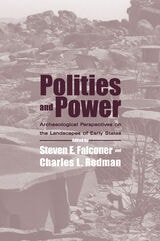
Polities and Power
Archaeological Perspectives on the Landscapes of Early StatesEdited by Steven E. Falconer and Charles L. Redman
University of Arizona Press, 2009
Polities and Power features detailed studies from an intentionally disparate array of regions, including Mesoamerica, Andean South America, southwestern Asia, East Africa, and the Indian subcontinent. Each chapter or pair of chapters is followed by a critical commentary. In concert, these studies strive to infer social, political, and economic meaning from archaeologically discerned landscapes associated with societies that incorporate some expression of state authority. The contributions engage a variety of themes, including the significance of landscapes as they condition and reflect complex polities; the interplay of natural and cultural elements in defining landscapes of state; archaeological landscapes as ever-dynamic entities; and archaeological landscapes as recursive structures, reflected in palimpsests of human activity.
Individually, many of these contributions are provocative, even controversial. Taken together, they reveal the contours of landscape archaeology at this particular evolutionary moment.
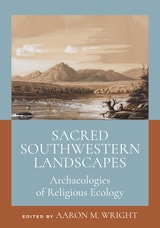
Sacred Southwestern Landscapes
Archaeologies of Religious EcologyEdited by Aaron M. Wright
University of Utah Press, 2024
Hailing from various academic and cultural backgrounds, contributors invoke a range of theoretical currents and methodological practices to examine how these relationships developed and evolved. Nearly all the places, people, and paradigms at play in contemporary southwestern scholarship find room among these pages, from the Sonoran and Chihuahuan Deserts to the Colorado Plateau; from diverse cultures, including Ancestral Pueblo, Mogollon, Hohokam, Pataya, Trincheras, Navajo (Diné), and Nuevomexicano; and from theoretical frameworks drawing upon phenomenology, materiality, bundling, and semiotics. This collective engagement showcases how religious ecologies can be studied from multiple perspectives and through sundry lines of evidence, leaving readers with appreciation and reverence for the rich and robust sacredness in southwestern landscapes.
Space-Time Perspectives on Early Colonial Moquegua
Prudence M. Rice
University Press of Colorado, 2024
Space-Time Perspectives on Early Colonial Moquegua looks at the encounters between existing populations and newcomers from successive waves of colonization, from indigenous expansion states (Wari, Tiwanaku, and Inka) to the foreign Spaniards, and the way each group “re-spatialized” the landscape according to its own political and economic ends. Viewing these spatializations from political, economic, and religious perspectives, Rice considers both the ideological and material occurrences.
Concluding with a special focus on the multiple space-time considerations involved in Spanish-inspired ceramics from the region, Space-Time Perspectives on Early Colonial Moquegua integrates the local and rural with the global and urban in analyzing the events and processes of colonialism. It is a vital contribution to the literature of Andean studies and will appeal to students and scholars of archaeology, historical archaeology, history, ethnohistory, and globalization.
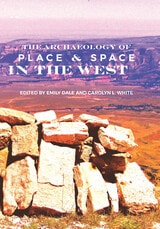
The Archaeology of Place and Space in the West
Edited by Emily Dale and Carolyn L. White
University of Utah Press, 2021
Contributors tackle questions of how historical archaeologists theoretically and methodologically define the West, conveying the historical, mythological, and physical manifestations of placemaking. They confront issues of community and how diverse ethnic, racial, gendered, labor-based, and other demographic populations expressed their identities on and in the Western landscape. Authors also address the continued creation and re-creation of the West today, exploring the impact of the past on people in the present and its influence on modern conceptions of the American West.
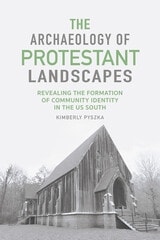
The Archaeology of Protestant Landscapes
Revealing the Formation of Community Identity in the US SouthKimberly Pyszka
University of Alabama Press, 2023
How religious institutions used landscapes and architecture to express their religious and social ideologies
The Archaeology of Protestant Landscapes focuses on three religious institutions in the US South in the eighteenth and nineteenth centuries: St. Paul’s Parish Church in coastal South Carolina, St. Luke’s Episcopal Church in central Alabama, and Cane Hill College in Northwest Arkansas. Drawing from archaeological surveys and excavations, artifact analysis, archival research, geophysical testing, and architectural information on religious structures, Kimberly Pyszka offers case studies of these institutions, which were located in developing communities that varied socially, politically, and economically.
Pyszka uses these case studies to demonstrate that select religious institutions used and modified natural landscape features to create cultural landscapes to express their ideology, identity, goals, and social, religious, and political power. She notes that where those structures were constructed, how they sat on the landscape, their architectural style, and their overall visual appearance were well-considered decisions made by religious leaders to benefit their organizations, communities, and, sometimes, themselves.
Pyszka also uses these case studies to highlight the social roles that religious organizations played in the development of communities. She points to landscape decisions—specifically to how the architectural design of religious structures was used, intentionally or not, to unite people, often those of differing religious backgrounds—as contributing to the creation of a common identity among people living in new and still-growing settlements, aiding in community development. This book contributes to the growing body of work within historical archaeology on churches, churchyards, and cemeteries and to the increasing awareness among archaeologists of how these sites contribute to questions of identity, consumerism, trade, and colonialism.
The Archaeology of Slavery
A Comparative Approach to Captivity and CoercionEdited by Lydia Wilson Marshall
Southern Illinois University Press, 2014
Plantation sites, especially those in the southeastern United States, have long dominated the archaeological study of slavery. These antebellum estates, however, are not representative of the range of geographic locations and time periods in which slavery has occurred. As archaeologists have begun to investigate slavery in more diverse settings, the need for a broader interpretive framework is now clear.
The Archaeology of Slavery: A Comparative Approach to Captivity and Coercion, edited by Lydia Wilson Marshall, develops an interregional and cross-temporal framework for the interpretation of slavery. Contributors consider how to define slavery, identify it in the archaeological record, and study it as a diachronic process from enslavement to emancipation and beyond.
Essays cover the potential material representations of slavery, slave owners’ strategies of coercion and enslaved people’s methods of resisting this coercion, and the legacies of slavery as confronted by formerly enslaved people and their descendants. Among the peoples, sites, and periods examined are a late nineteenth-century Chinese laborer population in Carlin, Nevada; a castle slave habitation at San Domingo and a more elite trading center at nearby Juffure in the Gambia; two eighteenth-century plantations in Dominica; Benin’s Hueda Kingdom in the seventeenth and eighteenth centuries; plantations in Zanzibar; and three fugitive slave sites on Mauritius—an underground lava tunnel, a mountain, and a karst cave.
This essay collection seeks to analyze slavery as a process organized by larger economic and social forces with effects that can be both durable and wide-ranging. It presents a comparative approach that significantly enriches our understanding of slavery.
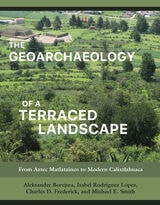
The Geoarchaeology of a Terraced Landscape
From Aztec Matlatzinco to Modern CalixtlahuacaAleksander Borejsza, Isabel Rodríguez López, Charles D. Frederick, and Michael E. Smith
University of Utah Press, 2021
Working at a settlement in the Toluca Valley of central Mexico, the authors used fieldwalking, excavation, soil and artifact analyses, maps, aerial photos, land deeds, and litigation records to reconstruct the changing landscape through time. Exploiting the methodologies and techniques of several disciplines, they bring context to eight centuries of the region’s agrarian history, exploring the effects of the Aztec and Spanish Empires, reform, and revolution on the physical shape of the Mexican countryside and the livelihoods of its people. Accessible to specialists and nonspecialists alike, this well-illustrated and well-organized volume provides a step-by-step guide that can be applied to the study of terraced landscapes anywhere in the world.
The four authors share an interest in terraced landscapes and have worked together and on their own on a variety of archaeological projects in Mesoamerica, the Mediterranean, Poland, and the United Kingdom.
Theoretical Approaches to the Archaeology of Ancient Greece
Manipulating Material CultureLisa C. Nevett, Editor
University of Michigan Press, 2017
An introductory section exploring the emergence and growth of theoretical approaches is followed by examinations of the potential insights these approaches provide. The authors probe some of the meanings attached to ancient objects, townscapes, and cemeteries, for those who created, and used, or inhabited them.
The range of contexts stretches from the early Greek communities during the eighth and seventh centuries BCE, through Athens between the eighth and fifth centuries BCE, and on into present day Turkey and the Levant during the third and second centuries BCE. The authors examine a range of practices, from the creation of individual items such as ceramic vessels and figurines, through to the construction of civic buildings, monuments, and cemeteries. At the same time they interrogate a range of spheres, from craft production, through civic and religious practices, to funerary ritual.