Results by title
18 books match the query 'Language, style'
Allusive Soundplay in the Hebrew Bible
Jonathan G. Kline
SBL Press, 2016
The first study to focus exclusively on the use in the Hebrew Bible of soundplay to allude to and interpret earlier literary traditions
This book focuses on the way the biblical writers used allusive soundplay to construct theological discourse, that is, in service of their efforts to describe the nature of God and God's relationship to humanity. By showing that a variety of biblical books contain examples of allusive soundplay employed for this purpose, Kline demonstrates that this literary device played an important role in the growth of the biblical text as a whole and in the development of ancient Israelite and early Jewish theological traditions.
Features:- Demonstrates that allusive soundplay was a productive compositional technique in ancient Israel
- Identifies examples of innerbiblical allusion that have not been identified before
- A robust methodology for identifying soundplay in innerbiblical allusions
An Answer Key to 'A Primer of Ecclesiastical Latin'
John R. Dunlap
Catholic University of America Press, 2006

An Introductory New Testament Greek Course, Revised Edition
Francis T. Gignac, SJ
Catholic University of America Press, 2015
Building Your Biblical Hebrew Vocabulary
Learning Words by Frequency and CognateGeorge M. Landes
SBL Press, 2001
A classic resource for beginning Hebrew students
First published over thirty years ago under the title A Student's Vocabulary of Biblical Hebrew, this classic work has been completely revised, updated, and expanded by the author to assist a new generation of students in naturally developing a basic Biblical Hebrew vocabulary. Designed to help beginning Hebrew readers acquire vocabulary quickly, this valuable teaching tool focuses on words that occur most frequently in the Hebrew Bible, while arranging them by roots and cognates allowing students to naturally expand their working vocabulary. Vocabulary lists have been kept to a manageable size; extensive cross-references document when words appear frequently with different meanings, and an index allows rapid location of every word encountered. As a result, students who master this volume will remember words more easily, consult a lexicon less frequently but more intelligently, and translate the Hebrew Bible at sight more readily and enjoyably.
Features
- Vocabulary groupings based on frequency, roots, and cognates
- Separate listing for nouns without verbal roots in the Hebrew Bible
- Appendices including proper names and the forms and meanings of pronominal suffixes
Building Your New Testament Greek Vocabulary, Third Edition
Robert E. Van Voorst
SBL Press, 2022

Disembodied Souls
The Nefesh in Israel and Kindred Spirits in the Ancient Near East, with anRichard C. Steiner
SBL Press, 2015
A reevaluation of the concept of the soul based on the latest evidence
Biblical scholars have long claimed that the Israelites “could not conceive of a disembodied nefesh [soul].” Steiner rejects that claim based on a broad spectrum of textual, linguistic, archaeological, and anthropological evidence spanning the millennia from prehistoric times to the present. The biblical evidence includes a prophecy of Ezekiel condemning women who pretend to trap the wandering souls of sleeping people. The extrabiblical evidence suggests that a belief in the existence of disembodied souls was part of the common religious heritage of the peoples of the ancient Near East.
Features
- A re-examination of the evidence for and against disembodied souls in the Hebrew Bible
- A new look at the nature and behavior of disembodied souls in the Hebrew Bible
- A new study of the meaning and sociolinguistic background of the Katumuwa inscription
Exploring Sublime Rhetoric in Biblical Literature
Roy R. Jeal
SBL Press, 2024
Hosea’s God
A Metaphorical TheologyMason D. Lancaster
SBL Press, 2023
The book of Hosea is a labyrinth of juxtaposed images for God and God’s people, with such disparate metaphors as God the devouring lion and God the reviving dew. In Hosea’s God: A Metaphorical Theology, Mason D. Lancaster demonstrates that recent advances in metaphor theory help untangle these divergent portrayals of God. He analyzes fifteen metaphor clusters in Hosea 4–14 individually, then discerns patterns and reversals between the clusters. Finally, respecting the ancient value for emphasizing individual aspects of a depiction over a homogenized picture of the whole, the book identifies five characteristics of God prominent among the metaphors of Hosea. Based on this analysis, Lancaster asserts that Hosea’s metaphorical depiction of Yahweh ultimately derives from the primacy of Yahweh’s fidelity to Israel.
Introduction to Classical and New Testament Greek
A Unified ApproachMichael Boler
Catholic University of America Press, 2020
NT Greek
A Systems ApproachJohn Clabeaux
University of Scranton Press, 2009
For many years now John Clabeaux has been perfecting his technique for teaching New Testament Greek—using his classrooms at St. John’s Seminary College, Harvard Divinity School, and the Pontifical College Josephinum as language laboratories. The comprehensive, meticulous, and user-friendly text NT Greek: A Systems Approach is the fruit of these efforts.
NT Greek is designed to be used both as a classroom text and as a reference manual for those students pursuing degrees in theological and biblical studies. The text includes a Greek index, an English index, a Greek-to-English glossary, verb maps, noun and adjective declension charts, and a list of helpful hints and rules. A digitally mastered CD of Greek recitations comes with every book to assist students with their pronunciations.
Ossa Ostensa
A proven system for demystifying Latin, Book OneLaura Pooley
Catholic University of America Press, 2021
Plant Metaphors in Prophetic Condemnations of Israel and Judah
Tina M. Sherman
SBL Press, 2023
Tina M. Sherman offers a first-of-its-kind, detailed analysis of prophetic passages that depict people as plants—from grasses and grains to fruit trees and grapevines—examining how the biblical authors exploited these metaphors to portray the condemnation and punishment of Israel and Judah in terms of the everyday work of crop farming and plant husbandry. Additionally, she explores how the prophetic authors employed plant imagery to construct national identities that emphasize the people’s collective responsibility for the kingdoms’ fate. Plant Metaphors in Prophetic Condemnations of Israel and Judah demonstrates the usefulness of combining conceptual metaphor theory with aspects of frame semantics in the analysis of patterns of thought and expression in biblical metaphor.
Rhetoric and Scripture
Collected Essays of Thomas H. OlbrichtThomas H. Olbricht
SBL Press, 2021
Supplement to Introduction to Classical and New Testament Greek
Michael Boler
Catholic University of America Press, 2024
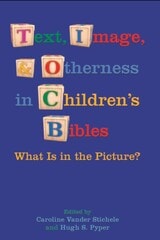
Text, Image, and Otherness in Children's Bibles
What is in the Picture.Caroline Vander Stichele
SBL Press, 2012
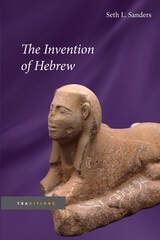
The Invention of Hebrew
Seth L. Sanders
University of Illinois Press, 2011
Seth L. Sanders connects the Bible's distinctive linguistic form--writing down a local spoken language--to a cultural desire to speak directly to people, summoning them to join a new community that the text itself helped call into being. Addressing the people of Israel through a vernacular literature, Hebrew texts reimagined their audience as a public. By comparing Biblical documents with related ancient texts in Hebrew, Ugaritic, and Babylonian, this book shows Hebrew's distinctiveness as a self-conscious political language. Illuminating the enduring stakes of Biblical writing, Sanders demonstrates how Hebrew assumed and promoted a source of power previously unknown in written literature: "the people" as the protagonist of religion and politics.

The Old Greek of Isaiah
An Analysis of Its Pluses and MinusesMirjam van der Vorm-Croughs
SBL Press, 2014
A concise study of a large number of examples of pluses and minus providing insight into translation from Hebrew to Greek
Van der Vorm-Croughs focuses this translation study on the processes leading to pluses and minuses including linguistic and stylistic aspects (i.e., cases in which elements have been added or omitted for the sake of a proper use of the Greek language), literary aspects (additions and omissions meant to embellish the Greek text), translation technical aspects (e.g., the avoidance of redundancy), and contextual and intertextual exegesis and harmonization. This work also covers the relation between the Greek Isaiah and its possible Hebrew Vorlage to try to determine which pluses and minuses may have been the result of the translator’s use of a different Hebrew text.
Features:
- Eleven categories for the pluses and minuses of the Greek Isaiah
- Examination of translation techniques and translator errors
- Use of Joseph Ziegler’s critical edition
Vertical Grammar of Parallelism in Biblical Hebrew
David Toshio Tsumura
SBL Press, 2023
An essential resource for sound exegesis of biblical poetry
While previous books on parallelism have focused almost exclusively on semantic classification, in his new book David Toshio Tsumura focuses on the grammatical and phonetic aspects as well. In particular, he defines and illustrates the vertical grammatical relationship between parallel lines. Readers will master how to read Biblical Hebrew poetry effectively by focusing on the basic linguistic features of word order, parallelistic structure, and rhetorical devices. For the benefit of nonspecialists, all Hebrew poems are given in accessible transliteration. This book is an indispensable companion to the Hebrew Bible for both beginners and experienced scholars.