Results by title
622 books match the query 'Language Study' and 96 start with a
A Brief History of the Spanish Language
David A. Pharies
University of Chicago Press, 2007
After introductory chapters on what it means to study the history of a language, the concept of linguistic change, and the nature of language families, Pharies traces the development of Spanish from its Latin roots, all with the minimum amount of technical language possible. In the core sections of the book, readers are treated to an engaging and remarkably succinct presentation of the genealogy and development of the language, including accounts of the structures and peculiarities of Latin, the historical and cultural events that deeply influenced the shaping of the language, the nature of Medieval Spanish, the language myths that have become attached to Spanish, and the development of the language beyond the Iberian Peninsula, especially in the Americas. Focusing on the most important facets of the language’s evolution, this compact work makes the history of Spanish accessible to anyone with a knowledge of Spanish and a readiness to grasp basic linguistic concepts.
Available in both English and Spanish editions, A Brief History of the Spanish Language provides a truly outstanding introduction to the exciting story of one of the world’s great languages.
A Brief History of the Spanish Language
Second EditionDavid A. Pharies
University of Chicago Press, 2015
A Brief History of the Spanish Language focuses on the most important aspects of the development of the Spanish language, eschewing technical jargon in favor of straightforward explanations. Along the way, it answers many of the common questions that puzzle native speakers and non-native speakers alike, such as: Why do some regions use tú while others use vos? How did the th sound develop in Castilian? And why is it la mesa but el agua?
David A. Pharies, a world-renowned expert on the history and development of Spanish, has updated this edition with new research on all aspects of the evolution of Spanish and current demographic information. This book is perfect for anyone with a basic understanding of Spanish and a desire to further explore its roots. It also provides an ideal foundation for further study in any area of historical Spanish linguistics and early Spanish literature.
A Brief History of the Spanish Language is a grand journey of discovery, revealing in a beautifully compact format the fascinating story of the language in both Spain and Spanish America.
A Casebook for Second Language Teacher Education
Reflecting on the Language ClassroomAmy B. Gooden and Maria N. Zlateva
University of Michigan Press, 2018
The cases represent a range of classroom contexts: K–12 ESL/sheltered English immersion, modern foreign language, and post-secondary EAP; private, charter, and public schools; and urban and suburban settings. The book is ideally suited to College/School of Education and MA TESOL courses but will also be useful in professional development workshops for all types of language teachers.
A Casebook of Decolonizing Pedagogical Practices for Second Language Teacher Education
Amy B. Gooden
University of Michigan Press, 2024
In this book, readers will find:
- practical tools and strategies for promoting awareness and reflexivity and for incorporating decolonizing and inclusive pedagogical practices.
- a rich array of viewpoints that encourages them to explore diverse perspectives within the realm of language education and decolonization.
- authentic, problem-based case studies that prompt critical reflection and a practical application of theoretical concepts.
- insights into navigating the evolving landscape of teaching, with a distinctive focus on decolonizing language education.
A Casebook of Inclusive Pedagogical Practices for Second Language Teacher Education
Amy B. Gooden
University of Michigan Press, 2021
Language teacher educators can use this text in their courses and workshops to build on and extend theoretical foundations, while making critical practical connections.
The 12 cases presented here cover a range of inclusive language teaching and learning issues that practitioners are likely to face in their respective teaching contexts. All the cases are based on real-life dilemmas faced by practitioners in the field and have been informed by discussions with pre-service and in-service student teachers. The cases represent a range of classroom contexts: K–12 ESL/sheltered English immersion, world foreign language, and post-secondary EAP; private, charter, and public schools; and urban and suburban settings. The cases are accompanied by pre- and post-problem sets and in-class discussion questions.
This volume applies the case-based pedagogy often used in some fields to that of second language teacher education to encourage pre- and in-service teachers to grapple with the types of dilemmas and decisions teachers confront every day. The cases here are not intended as exemplars of practice to be emulated or illustrations of existing theories; instead, they are problem-based narratives that resist clear-cut answers or solutions and remain open ended to stimulate further investigation and reflection. The goal is to mimic the complexity of the classroom where teachers confront a range of pedagogical and learning challenges, and the ensuing experience requires critical, real-time decisions that demand keen professional discernment.
A Commentary on Aristophanes' Knights
Carl Arne Anderson and T. Keith Dix
University of Michigan Press, 2020
In addition to the complete Greek text and commentary, this volume includes a substantial introduction to the playwright’s career and to the historical and political background of the play. It includes advice for students on grammar and syntax, meter, festivals and staging, as well as topical and literary references and allusions that will help guide students to a mature appreciation of the comedy’s humor, seriousness, and artistic quality. Priced and sized for classroom use, this is the first full commentary on Knights since 1901 and will be widely welcomed.
A Commentary on Cicero, De Natura Deorum II
Andrew R. Dyck
University of Michigan Press, 2025
A Concise Coptic-English Lexicon, Second Edition
Richard Smith
SBL Press, 1999

A Concise Elementary Grammar of the Sanskrit Language
Jan Gonda
University of Alabama Press, 1981
A Concise Elementary Grammar of the Sanskrit Language
Jan Gonda
University of Alabama Press, 2006
A Course on Words
Waldo E. Sweet and Glenn M. Knudsvig
University of Michigan Press, 1989
The book is unusual in that it offers both programmed and nonprogrammed material. Each type of material is designed to provide students with the maximum amount of involvement and practice. The students do not simply read definitions of words, as is the case with some courses. Rather, they engage in many different activities; not only defining words but analyzing and building them, and learning to use context to derive meaning. The programmed approach enables students to do the work on their own and receive immediate checks of their answers. Classroom time, therefore, is free for review, reinforcement of programmed activities, work on the nonprogrammed material, and attention to the needs of individual students. The book also includes at the end a set of Supplementary Exercises for each unit. The nonprogrammed materials include "Review Exercises," "Words of Interesting Origin," "Easily Confused Words," and "Latin Phrases." These provide practice in concepts learned in the unit and an opportunity to explore a wide variety of topics, such as eponymous words and the literal meanings of Latin expressions used in English.
A Dictionary of New Mexico and Southern Colorado Spanish
Revised and Expanded EditionRubén Cobos
Museum of New Mexico Press, 2011
Ruben Cobos spent a decade working on the revised and expanded edition of the dictionary, published in 2003. The Dictionary of New Mexico and Southern Colorado Spanish has assumed its place as the most authoritative reference on the archaic dialect of Spanish spoken in this region.
A Dictionary of Selected Synonyms in the Principal Indo-European Languages
Carl Darling Buck
University of Chicago Press, 1988
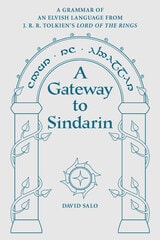
A Gateway to Sindarin
A Grammar of an Elvish Language from JRR Tolkien's Lord of the RingsDavid Salo
University of Utah Press, 2004
From the 1910s to the 1970s, author and linguist J. R. R. Tolkien worked at creating plausibly realistic languages to be used by the creatures and characters in his novels. Like his other languages, Sindarin was a new invention, not based on any existing or artificial language. By the time of his death, he had established fairly complete descriptions of two languages, the "elvish" tongues Quenya and Sindarin. He was able to compose poetic and prose texts in both, and he also constructed a lengthy sequence of changes for both from an ancestral "proto-language," comparable to the development of historical languages and capable of analysis with the techniques of historical linguistics.
In A Gateway to Sindarin, David Salo has created a volume that is a serious look at an entertaining topic. Salo covers the grammar, morphology, and history of the language. Supplemental material includes a vocabulary, Sindarin names, a glossary of terms, and an annotated list of works relevant to Sindarin. What emerges is an homage to Tolkien's scholarly philological efforts.

A Grammar Of Misantla Totonac
Carolyn Mackay
University of Utah Press, 1999
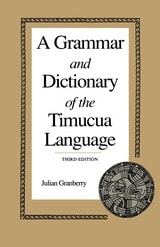
A Grammar and Dictionary of the Timucua Language
Julian Granberry
University of Alabama Press, 1993
Preserving the voice of a vanished people through language, history, and scholarship.
Taken from the surviving contemporary documentary sources, Julian Granberry's volume describes the grammar and lexicon for the extinct 17th-century Timucua language of Central and North Florida and traces the origins of the 17th-century Timucua speakers and their language. Originally privately published in 1987, with limited circulation, this is the only available publication on the Timucuan language. It provides full grammatical analysis and complete lexical data, and it synthesizes both linguistic and archaeological data in order to provide a coherent picture of the Timucua peoples. Granberry traces the probable historical origins of Timucua speakers to a central Amazonian homeland at approximately 2,500 B.C. and proposes that Timucua speakers were responsible for introducing ceramic wares into North America.

A Grammar of Boumaa Fijian
R. M. W. Dixon
University of Chicago Press, 1988
Fijian is an agglutinating language, one in which words are formed by the profligate combining of morphemes. There are no case inflections, and tense and aspect as shown by independent clitics or words within a predicate complex. Most verbs come in both transitive and intransitive forms, and nouns can be build up regularly from verbal parts and verbs from nouns. The language is also marked by a highly developed pronoun system and by a vocabulary rich in areas of social significance.
In the opening chapters, Dixon describes the Islands' political, social, and linguistic organization, outlines the main points of Fijian phonology, and presents an overview of the grammar. In succeeding chapters, he examines a number of grammatical topics in greater detail, including clause and phrase structure, verbal syntax, deictics, and anaphora. The volume also includes a full vocabulary of all forms treated in discussion and three of the fifteen texts recorded from monolingual village elders on which the grammar is based.

A Grammar of Epigraphic Hebrew
Sandra Landis Gogel
SBL Press, 1998
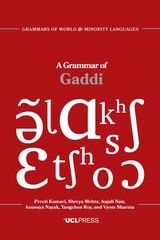
A Grammar of Gaddi
Preeti Kumari, Shreya Mehta, Anjali Nair, Anusuya Nayak, Yangchen Roy, and Vyom Sharma
University College London, 2026
The first comprehensive descriptive grammar of the understudied Indo-Aryan Pahari language, Gaddi.
A Grammar of Gaddi is the first long-form descriptive grammar of the Pahari Indo-Aryan language, Gaddi (also called Bharmauri), spoken by the Gaddi people, a traditionally pastoral community in India. The volume presents a meticulous linguistic analysis of Gaddi, showcasing its phonemic inventory, phonotactics, syllable structure, and its phonological and morpho-phonological processes.
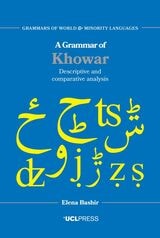
A Grammar of Khowar
Descriptive and Comparative AnalysisElena Bashir
University College London, 2025
Grammar of Khowar is the first comprehensive English-language study of Khowar, a unique Indo-Aryan language spoken in northern Pakistan. Drawing on over thirty years of field research, Elena Bashir provides a detailed snapshot of the language at a critical moment in its evolution, as increasing cultural and economic pressures accelerate linguistic change.
The book presents Khowar’s phonology, morphology, and syntax, alongside an in-depth analysis of how its grammatical structures shape the way speakers conceptualize the world. Rife with original example sentences—many sourced from oral texts recorded in multiple villages—this work preserves linguistic data that might otherwise be lost. A special appendix includes a thirty-page sample text in Khowar’s Perso-Arabic script, followed by a romanized transcription and English translation, offering an invaluable resource for scholars.
A critical contribution to South Asian linguistics, this book underscores the urgency of studying and preserving endangered mountain languages before they fade from use.
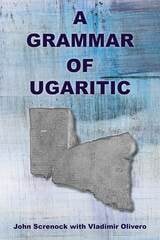
A Grammar of Ugaritic
John Screnock
SBL Press, 2022
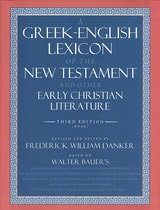
A Greek-English Lexicon of the New Testament and Other Early Christian Literature
Walter Bauer
University of Chicago Press, 2000
In this edition, Frederick W. Danker's broad knowledge of Greco-Roman literature, as well as papyri and epigraphs, provides a more panoramic view of the world of Jesus and the New Testament. Danker has also introduced a more consistent mode of reference citation, and has provided a composite list of abbreviations to facilitate easy access to this wealth of information.
Perhaps the single most important lexical innovation of Danker's edition is its inclusion of extended definitions for Greek terms. For instance, a key meaning of "episkopos" was defined in the second American edition as overseer; Danker defines it as "one who has the responsibility of safeguarding or seeing to it that something is done in the correct way, guardian." Such extended definitions give a fuller sense of the word in question, which will help avoid both anachronisms and confusion among users of the lexicon who may not be native speakers of English.
Danker's edition of Bauer's Wörterbuch will be an indispensable guide for Biblical and classical scholars, ministers, seminarians, and translators.
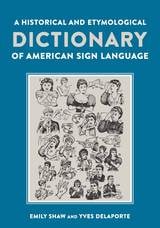
A Historical and Etymological Dictionary of American Sign Language
The Origin and Evolution of More Than 500 SignsEmily Shaw
Gallaudet University Press, 2014
Through rigorous study of historical texts, field research in communities throughout France and the U.S., and an in-depth analysis of the cultural groups responsible for the lexicon, authors Emily Shaw and Yves Delaporte present a compelling and detailed account of the origins of over 500 ASL signs, including regional variations. Organized alphabetically by equivalent English glosses, each sign is accompanied by a succinct description of its origin and an LSF sign where appropriate. Featuring an introductory chapter on the history of the development of ASL and the etymological methodology used by the authors, this reference resource breaks new ground in the study of America’s sign language.
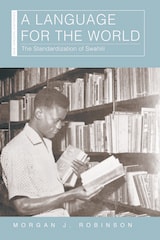
A Language for the World
The Standardization of SwahiliMorgan J. Robinson
Ohio University Press, 2022
This intellectual history of Standard Swahili explores the long-term, intertwined processes of standard making and community creation in the historical, political, and cultural contexts of East Africa and beyond.
Morgan J. Robinson argues that the portability of Standard Swahili has contributed to its wide use not only across the African continent but also around the globe. The book pivots on the question of whether standardized versions of African languages have empowered or oppressed. It is inevitable that the selection and promotion of one version of a language as standard—a move typically associated with missionaries and colonial regimes—negatively affected those whose language was suddenly deemed nonstandard. Before reconciling the consequences of codification, however, Robinson argues that one must seek to understand the process itself. The history of Standard Swahili demonstrates how events, people, and ideas move rapidly and sometimes surprisingly between linguistic, political, social, or temporal categories.
Robinson conducted her research in Zanzibar, mainland Tanzania, and the United Kingdom. Organized around periods of conversation, translation, and codification from 1864 to 1964, the book focuses on the intellectual history of Swahili’s standardization. The story begins in mid-nineteenth-century Zanzibar, home of missionaries, formerly enslaved students, and a printing press, and concludes on the mainland in the mid-twentieth century, as nationalist movements added Standard Swahili to their anticolonial and nation-building toolkits. This outcome was not predetermined, however, and Robinson offers a new context for the strong emotions that the language continues to evoke in East Africa.
The history of Standard Swahili is not one story, but rather the connected stories of multiple communities contributing to the production of knowledge. The book reflects this multiplicity by including the narratives of colonial officials and anticolonial nationalists; East African clerks, students, newspaper editors, editorialists, and their readers; and library patrons, academic linguists, formerly enslaved children, and missionary preachers. The book reconstructs these stories on their own terms and reintegrates them into a new composite that demonstrates the central place of language in the history of East Africa and beyond.
A Latin Reader for Colleges
H. L. Levy
University of Chicago Press, 1989
A Latin-Greek Index of the Vulgate New Testament
Theodore A. Bergren
SBL Press, 2003
A Lexical Approach to Italian Cliticization
Paola Monachesi
CSLI, 1999
A Life Teaching Languages
A Memoir from Mississippi to the BronxLinda Watkins-Goffman
University of Michigan Press, 2015
In this memoir of an educator, Watkins-Goffman offers insights she has gained from her years of traveling, teaching, and writing and shares how her experiences have shaped her teaching philosophy. According to Watkins-Goffman, teachers must communicate authentically to teach effectively and, to accomplish this, they must connect their own experiences in some way with those of their students. The stories she tells are sure to resonate with pre-service and practicing teachers alike. Her reflections about her own experiences will be useful to readers who plan to become ESL educators, or those who simply seek inspiration about teaching.

A Modern Ukranian Grammar
George S. N. Luckyj and Jaroslav B. Rudnyckyj
University of Minnesota Press, 1949
A Modern Ukranian Grammar was first published in 1949. Minnesota Archive Editions uses digital technology to make long-unavailable books once again accessible, and are published unaltered from the original University of Minnesota Press editions.
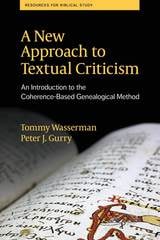
A New Approach to Textual Criticism
An Introduction to the Coherence-Based Genealogical MethodTommy Wasserman
SBL Press, 2017
An essential introduction for scholars and students of New Testament Greek
With the publication of the widely used 28th edition of Nestle-Aland’s Novum Testamentum Graece and the 5th edition of the United Bible Society Greek New Testament, a computer-assisted method known as the Coherence-Based Genealogical Method (CBGM) was used for the first time to determine the most valuable witnesses and establish the initial text. This book offers the first full-length, student-friendly introduction to this important new method. After setting out the method’s history, separate chapters clarify its key concepts, including genealogical coherence, textual flow diagrams, and the global stemma. Examples from across the New Testament are used to show how the method works in practice. The result is an essential introduction that will be of interest to students, translators, commentators, and anyone else who studies the Greek New Testament.
Features
- A clear explanation of how and why the text of the Greek New Testament is changing
- Step-by-step guidance on how to use the CBGM in textual criticism
- Diagrams, illustrations, and glossary of key terms
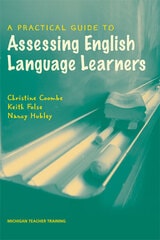
A Practical Guide to Assessing English Language Learners
Christine Coombe, Keith Folse, and Nancy Hubley
University of Michigan Press, 2007
Tips to improve students’ test-taking strategies are offered, and each chapter ends with a helpful list of Ten Things to Remember, as well as informative case studies featuring two teachers and their assessment decisions. Incorporating its own principles, A Practical Guide to Assessing English Language Learners opens with a short quiz for the reader called Are You Testwise? that quickly determines how each teacher will benefit from this indispensable guide.

A Practical Toolbox
Curricular Pathways in Iberian, Latin American, LatinX Studies, and BeyondEdited by Palmar Álvarez-Blanco, Christine Henseler, and Stephanie A. Mueller
Lever Press, 2027
With clear roadmaps for university faculty and administrators, A Practical Toolbox outlines engaging and impactful courses, programs, methodologies and partnerships emerging in Iberian, Latin American, and LatinX Studies. Contributors provide exploratory and pragmatic examples of how individuals, groups, and organizations are moving the fields of language, linguistics, and cultural production forward within the broader humanities and higher education landscapes. Many of the projects included in this volume exemplify how Spanish and Hispanic Studies programs can be ideally situated to meet the needs and draw on the strengths of these growing student populations. Chapters are organized into five broad approaches: navigating institutional structures through creative interdisciplinary models; connecting to local communities and organizations through public humanities, civically engaged partnerships, and social justice projects; asset-based pedagogies for Heritage, Latinx, Indigenous, and First Gen learners; innovations in Language and Area Studies for specific purposes; and expanding beyond textbooks to engage a new generation. Topics include enrollments, first-gen students, heritage learners, artificial intelligence, ecological perspectives, Spanish for specific purposes, civic engagement, public scholarship, community collaborations, public humanities, and more. By bringing students, educators, researchers, and communities into meaningful collaboration, it reimagines what the humanities can do.
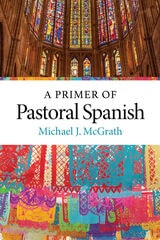
A Primer of Pastoral Spanish
Michael J. McGrath
Catholic University of America Press, 2022
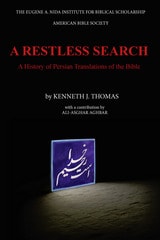
A Restless Search
A History of Persian Translations of the BibleKenneth J. Thomas
SBL Press, 2015
A literary detective story, a historical survey, and an important contribution to translation studies
This book from Kenneth J. Thomas is both a philological and linguistic analysis of Persian translations and a call for interfaith cooperation. Thomas appraises biblical translation efforts from the fifth to the twenty-first centuries of Persian history when successive translators and groups of translators, sometimes of different faiths, worked to reshape and refine versions of the Bible in the supple Persian language of their times. Restless, impelled, and wide-ranging, this is a story of translations commissioned by shahs, undertaken by Christian and Jewish communities, and produced by teams working outside the country.
Features
- Demonstration of the effects of the lack of a standard Persian vocabulary for key biblical terms on literary style and word choice
- Technical analyses and overviews of Persian biblical translations
- A careful examination of sixteen centuries' worth of Bible translations
A Sanskrit Grammar
Manfred Mayrhofer
University of Alabama Press, 1972
Translated for the benefit of Englishspeaking students of Sanskrit and students of comparative Indo-European linguistics. Mayrhofer's Sanskrit grammar can be used successfully in three different types of course: in elementary Sanskrit courses along with such an elementary text as Jan Gonda's A Concise Elementary Grammar of the Sanskrit Language, with exercises, reading selections, and a glossary, translated from the German by Gordon B. Ford, Jr.; in courses where the linguistic structure of Sanskrit is to be presented; and, finally, in comparative lndo-European courses together with such texts as Antoine Meillet's Introduction to the Comparative Study of the Inda-European Languages, translated from the French by Gordon B. Ford, Jr. All three groups of students should find this important book extremely useful, and I hope that its publication in an English edition will promote the study of Sanskrit in the English-speaking world.
A Sourcebook for Ancient Greek
Grammar, Poetry, and ProseJohn Tomarchio
Catholic University of America Press, 2022
A Student Commentary on Pausanias Book 2
Patrick Paul Hogan
University of Michigan Press, 2018
A Student Commentary on Plato’s Euthyphro
Charles Platter
University of Michigan Press, 2019
This accessible student commentary by Charles Platter presents an introduction to the Euthyphro, the full Greek text, and a commentary designed for undergraduates and selected graduate students. As part of the series Michigan Classical Commentaries, now edited by Josiah Osgood and Alexander Sens at Georgetown University, and K. Sara Myers at the University of Virginia, the volume is sized and priced for student use.

A Student-Friendly Guide to Move from Civil Law to U.S. Common Law
Nancy Daspit and Kirsten Schaetzel
University of Michigan Press, 2025
To help students who may feel overwhelmed adjusting to a new approach to legal education, this book focuses on these key differences between civil law and common law jurisdictions. It defines and demonstrates the application of key concepts with examples, illustrations, and exercises. While relatively brief, it provides numerous references to the other texts and sources for students wanting or needing more depth for some of the topics. The book also includes numerous examples illustrating the differences, with an emphasis on common law examples, of key documents and processes used in the practice of law. Further, it includes student-focused exercises and questions on the analytical and rhetorical skills needed for a successful law practice, whether the student will continue in a common law jurisdiction or merely needs to understand the common law for continued practice in their civil law jurisdiction.
Within this book, students will find
- a brief historical background regarding the development of the common law system;
- a description of the US government structure, with an emphasis on the judicial branch;
- key rhetorical and analytical differences between civil law and common law;
- numerous examples of differences between the two systems, with an emphasis on common law requirements;
- and exercises for practice with key concepts and terminology.

A Tohono O'odham Grammar
Ofelia Zepeda
University of Arizona Press, 1983
A Way With Words
Style in the Age of Artificial IntelligenceJohn Marsh
University of Michigan Press, 2026
Using examples from papers students might actually write, the book invites readers to apply what they have learned to quizzes that mix and match issues—vague pronouns, sentence fragments, punctuating quotations—from previous chapters. The book includes a thoughtful discussion about balancing the competing demands of writing well and fighting linguistic discrimination. Finally, A Way with Words prompts readers to consider what artificial intelligence programs like ChatGPT and Bard will mean for student writing. It offers advice about how writers can distinguish their writing from the assembly-line writing that artificial intelligence tends to generate, and how they can develop their style to stand out to their teachers, employers, and clients.
Abstracts and the Writing of Abstracts
John M. Swales and Christine B. Feak
University of Michigan Press, 2009
Today's research world demands a variety of different abstracts to serve different purposes. As a result, writing abstracts can be a difficult task for graduate and international students, researchers, and even practiced authors. Abstracts and the Writing of Abstracts is designed to demystify the construction of this essential writing form and to equip scholars with the skills to summarize their work in clear and compelling ways.
This volume represents a revision and expansion of the material on writing abstracts that appeared in English in Today's Research World.
The Abstracts volume focuses on abstracts for research articles before addressing abstracts for short communications, conferences, and PhD dissertations. It also covers keywords, titles, and author names. Wherever appropriate within the text, Language Focus sections discuss options and provide tips for meeting specific linguistic challenges posed by the writing of different types of abstracts.
Academic English
Skills for Success, Third EditionMiranda Legg, et al.
Hong Kong University Press, 2025
This book features five theme-based units on cross-disciplinary academic English skills, focusing on the needs of first-year undergraduate students. Each unit covers academic writing, reading, and speaking skills. The units progressively take students through the steps needed to complete three common academic assignments: the essay, report, and tutorial discussion. These steps include searching for quality sources, note-taking, establishing a critical stance, formulating evidence-based arguments, synthesizing information from multiple sources, and structuring academic texts. Each unit also provides opportunities for students to analyze texts, apply their critical thinking skills, practice what they have learned in productive tasks, and reflect upon their progress.
This book is aimed at first-time university students. Many of the readings are related to China and a broader Asian context. As such, it appeals to first-year university students in Hong Kong, Mainland China, and Taiwan.
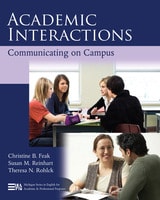
Academic Interactions
Communicating on CampusChristine B. Feak, Susan M. Reinhart, and Theresa N. Rohlck
University of Michigan Press, 2018
This version of the book matches 9780472033324 except it is not packaged with a DVD. All references to the DVD in the text have been replaced with "videos." Video access sold separately on Vitalsource, here: https://www.vitalsource.com/products/videos-to-accompany-academic-interactions-christine-b-feak-susan-m-v9780472003631?term=9780472003631.
The ability to understand and be understood when communicating with professors and with native speakers is crucial to academic success. Academic Interactions focuses on actual academic speaking events, particularly classroom interactions and office hours, and gives students practice improving the ways that they communicate in a college/university setting.
Academic Interactions addresses skills like using names and names of locations correctly on campus, giving directions, understanding instructors and their expectations, interacting during office hours, participating in class and in seminars, and delivering formal and informal presentations. In addition, advice is provided for communicating via email with professors and working in groups with native speakers (including negotiating tasks in groups).
The text uses transcripts from MICASE (the Michigan Corpus of Academic Spoken English) to ensure that students learn the vocabulary and communication strategies that will be most effective in their academic pursuits. Units also feature language use issues like ellipsis, hedging, and apologies.
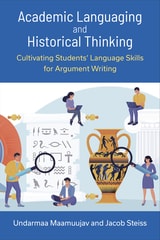
Academic Languaging and Historical Thinking
Cultivating Students' Language Skills for Argument WritingUndarmaa Maamuujav and Jacob Steiss
University of Michigan Press, 2026
Starting with a pedagogical approach, the book takes readers through research on the relationship between language and writing, the ways that historians make claims and the kinds of evidence they use, and how to successfully find and evaluate sources. It then offers instructional activities and strategies that center around key disciplinary practices in historical argumentation: making claims, sourcing and integrating evidence, presenting reasoning, and addressing counterarguments. These activities can be easily modified for different teaching and learning contexts, including supporting multilingual learners of English. Whether readers are practicing teachers, pre-service teachers, or instructional coaches, this book will help them learn how to integrate academic language skills with argument writing instruction in history to teach students to be confident academic writers and competent language users.

Academic Listening Strategies
A Guide to Understanding LecturesJulia Salehzadeh
University of Michigan Press, 2005
Unit 1 begins with a diagnostic exercise to help students identify areas of lecture comprehension that may be most difficult for them. In Unit 2, students are introduced to some key bottom-up features (sound or word-level patterns) in everyday speech and given helpful strategies to begin unscrambling the stream of language that they will encounter in lectures. Unit 3 gives students a detailed look at common patterns in lectures and presents additional strategies that will help them to understand definitions, opinions, and jokes.
By the end of the book, students will gain the skills necessary to:
" Prepare for lectures
" Listen more effectively during lectures
" Recognize what information may have been missed
" Compensate for missed information with methods other than reading and rereading the assigned texts.
The book is also sold packaged with the DVDs. The DVDs are NOT sold separately.
Academic Speaking and the Boundaries of Routinized Lexical Phrases
Susan M. Barone and Summer Dickinson
University of Michigan Press, 2022
Academic Vocabulary Building in English, Intermediate
Volume 2Betsy Davis, Alan Juffs, Dawn E. McCormick, Greg Mizera, M. Christine O'Neill, Stacy Ranson, Missy Slaathaug, Dorolyn Smith
University of Michigan Press, 2015
Each unit contains sections that emphasize various components of word learning. First, each chapter opens with a chart of target words and their various morphological forms. The next step establishes form-meaning mappings: Each word is listed with a definition and two example sentences. The lists and definitions are followed by exercises that concentrate students’ attention on establishing form-meaning links. These exercises consist of practice opportunities that require multiple retrievals in order to promote label-to-concept links and begin awareness of derivational and inflectional variations. Follow-up exercises focus on collocations related to the unit’s theme. Each chapter closes with exercises that can be used as quizzes. By the time students have finished a unit, they should have had both receptive and productive practice with the form, meaning, morphosyntax, and collocational properties of each lexical item.
Academic Word Lists
What Every Teacher Needs to KnowKeith S. Folse
University of Michigan Press, 2020
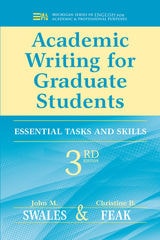
Academic Writing for Graduate Students, 3rd Edition
Essential Tasks and SkillsJohn M. Swales & Christine B. Feak
University of Michigan Press, 2012
Among the many changes in the third edition:
*newer, longer, and more authentic texts and examples
*greater discipline variety in texts (added texts from hard sciences and engineering)
*more in-depth treatment of research articles
*greater emphasis on vocabulary issues
*revised flow-of-ideas section
*additional tasks that require students to do their own research
*more corpus-informed content
*binding that allows the book to lay flat when open.
The Commentary (teacher's notes and key) (978-0-472-03506-9) has been revised expanded.