Results by title
15 books match the query 'Law reform'
A Century of Controversy
Constitutional Reform in AlabamaH. Bailey Thomson
University of Alabama Press, 2002
A timely examination of Alabama’s severely criticized state constitution
Alabama’s present constitution, adopted in 1901, is widely viewed as the source of many, if not most, of the state’s historic difficulties and inequities. Chief among these is a poorly funded school system, an imbalanced tax system that favors special business interests, legislated racism, and unchecked urban sprawl. Many citizens believe that, after 100 years of overburdening amendments and confusing addendums, the constitution urgently needs rewriting.
With this book, Bailey Thomson has assembled the best scholarship on the constitution, its history, and its implications for the future. Historian Harvey H. Jackson III details the degree to which the 1901 document was drafted as a legal tool to ensure white supremacy at the expense of poor whites and blacks, while Joe A. Sumners illustrates how the constitution ties the hands of elected civic leaders by handing authority for local decisions to state government in Montgomery. James W. Williams Jr. explores the impact of the state constitution on the beleaguered tax system and the three principal “revenue crises” it has engendered. Thomson’s own contribution explains how, in contrast to the previous failed attempts for constitutional change by past governors who appealed to their fellow power brokers, the current reform movement arose from the grassroots level.
As citizens and politicians in Alabama review the 1901 constitution for revision, as they navigate the pitfalls and opportunities inherent in change, it is incumbent that they inform themselves adequately on the controversies that have swirled around the constitution since its adoption. The future of Alabama’s government will depend upon it, as will the fortunes of Alabama’s business interests and the well-being of every citizen in the state for years to come.
Canon Law in the Age of Reforms (c. 1000 to c. 1150)
Christof Rolker
Catholic University of America Press, 2023
Covenant Marriage
The Movement to Reclaim Tradition in AmericaNock, Steven
Rutgers University Press, 2008
This book explores a movement that emerged over the past fifteen years, which aims to do just that. Guided by certain politicians and religious leaders who herald marriage as a solution to a range of longstanding social problems, a handful of state governments enacted "covenant marriage" laws, which require couples to choose between a conventional and a covenant marriage. While the familiar type of union requires little effort to enter and can be terminated by either party unilaterally, covenant marriage requires premarital counseling, an agreement bound by fault-based rules or lengthy waiting periods to exit, and a legal stipulation that divorce can be granted only after the couple has received counseling.
Drawing on interviews with over 700 couples-half of whom have chosen covenant unions-this book not only evaluates the viability of public policy in the intimate affairs of marriage, it also explores how growing public discourse is causing men and women to rethink the meaning of marriage.
Covering Accident Costs
Insurance, Liability, and Tort ReformsMark C. Rahdert
Temple University Press, 1995
Over the past century, tort law and insurance have developed deeply intertwined legal and economic roots. Insurance usually determines whether tort cases are brought to trial, whom plaintiffs sue, how much they claim, who provides the defense, how the case gets litigated, the dynamics of the settlement, and how much plaintiffs ultimately recover. But to what extent should liability rules be influenced by insurance? In this study, Mark Rahdert identifies the leading arguments both in favor of and against what he terms the "insurance rationale"—the idea that tort law should be structured to facilitate victim access to assured compensation.
The insurance rationale has been a leading force in the development of product liability law and, as a component of accident compensation, has significantly influenced pro-plaintiff advances in principal areas of tort law. However, the insurance rationale is also the source of great controversy. Critics charge that liability rules deliberately set to maximize plaintiffs' access to insurance funds have corrupted the system, causing insurance costs to spiral upward uncontrollably. Considering the strengths and weaknesses of both sides of the current debate, Rahdert develops a modified version of the insurance rationale that can become a tool for evaluating future tort reform proposals.
Crime and Justice, Volume 48
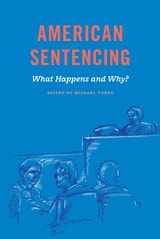
American SentencingEdited by Michael Tonry
University of Chicago Press Journals, 2019
This volume covers what students, scholars, practitioners, and policy makers need to know about how sentencing really works, what a half century’s “reforms” have and have not accomplished, how sentencing processes can be made fairer, and how sentencing outcomes can be made more just. Its writers are among America’s leading scholarly specialists—often the leading specialist—in their fields.
Clearly and accessibly written, American Sentencing is ideal for teaching use in seminars and courses on sentencing, courts, and criminal justice. Its authors’ diverse perspectives shed light on these issues, making it likely the single, most authoritative source of information on the state of sentencing in America today.

Gay Priori
A Queer Critical Legal Studies Approach to Law ReformLibby Adler
Duke University Press, 2018
Global Prescriptions
The Production, Exportation, and Importation of a New Legal OrthodoxyYves Dezalay and Bryant G. Garth, Editors
University of Michigan Press, 2002
Comprised of two sections, the volume first develops theoretical perspectives key to an understanding of the production and impact of new "global legal prescriptions." The second part shifts attention to the national importation of these legal orthodoxies. The scholars provide a diverse set of sophisticated approaches, both to the circumstances promoting the production of these prescriptions and to the limitations of the prescriptions in the different national settings. Thus, Global Prescriptions provides a unique treatment for readers interested in globalization generally or the potential spread of the "rule of law" in particular.
This volume will intrigue scholars and students interested in a political science, economics, history, anthropology, law, and sociology.
Contributors are Jeremy Adelman, Robert Boyer, Elizabeth Heger Boyle, Miguel Angel Centeno, Heinz Klug, Larissa Adler Lomnitz, John W. Meyer, Setsuo Miyazawa, Hiroshi Otsuka, Rodrigo Salazar, Kathryn Sikkink, Anne-Marie Slaughter, and Catalina Smulovitz.
Yves Dezalay is Director of Research, National Center for Scientific Research, Paris. Bryant G. Garth is Director of the American Bar Foundation.
Going to Court to Change Japan
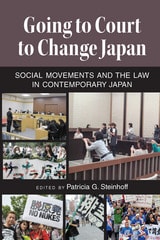
Social Movements and the Law in Contemporary JapanPatricia G. Steinhoff, Editor
University of Michigan Press, 2014
Making Rights Real
Activists, Bureaucrats, and the Creation of the Legalistic StateCharles R. Epp
University of Chicago Press, 2009
It’s a common complaint: the United States is overrun by rules and procedures that shackle professional judgment, have no valid purpose, and serve only to appease courts and lawyers. Charles R. Epp argues, however, that few Americans would want to return to an era without these legalistic policies, which in the 1970s helped bring recalcitrant bureaucracies into line with a growing national commitment to civil rights and individual dignity.
Focusing on three disparate policy areas—workplace sexual harassment, playground safety, and police brutality in both the United States and the United Kingdom—Epp explains how activists and professionals used legal liability, lawsuit-generated publicity, and innovative managerial ideas to pursue the implementation of new rights. Together, these strategies resulted in frameworks designed to make institutions accountable through intricate rules, employee training, and managerial oversight. Explaining how these practices became ubiquitous across bureaucratic organizations, Epp casts today’s legalistic state in an entirely new light.

Medicine, Law, and the State in Imperial Russia
Elisa M. Becker
Central European University Press, 2011
Reconstructing Justice
An Agenda for Trial ReformFranklin Strier
University of Chicago Press, 1996
Franklin Strier brings this critical look at trial reform up to date with a new preface in which he discusses how the inordinate amount of public attention of the O. J. Simpson trial, and the power the attorneys had over the court in that case, shed new light on the trial system's weaknesses and inequities.
"Anyone with an interest in courtroom trials will be fascinated by Strier's analysis of the game of law and suggestions for reforming the trail system to provide justice in a greater number of cases. . . . Highly recommended."—Choice

The Internationalization of Palace Wars
Lawyers, Economists, and the Contest to Transform Latin American StatesYves Dezalay and Bryant G. Garth
University of Chicago Press, 2002
Based on more than 300 extensive interviews with major players in governments, foundations, law firms, universities, and think tanks, Dezalay and Garth examine both the production of northern exports such as neoliberal economics and international human rights law and the ways they are received south of the United States. They find that the content of what is exported and how it fares are profoundly shaped by domestic struggles for power and influence—"palace wars"—in the nations involved. For instance, challenges to the eastern intellectual establishment influenced the Reagan-era export of University of Chicago-style neoliberal economics to Chile, where it enjoyed a warm reception from Pinochet and his allies because they could use it to discredit the previous regime.
Innovative and sophisticated, The Internationalization of Palace Wars offers much needed concrete information about the transnational processes that shape our world.

The Rule of Law in Latin America
The International Promotion of Judicial ReformEdited by Pilar Domingo and Rachel Sieder
University of London Press, 2001
Understanding Enterprise Liability
Rethinking Tort Reform for the Twenty-First CenturyVirginia Nolan and Edmund Ursin
Temple University Press, 1994
In recent years critics have assailed the cost, inefficiency, and unfairness of American tort law, including products liability and medical malpractice. Yet victims of accidental injury who look to the tort system for deserved compensation often find it a formidable obstacle. Those who seek to reform tort law find legislatures, particularly the United States Congress, paralyzed by the clash of powerful special interest groups.
Understanding Enterprise Liability sheds new light on the raging tort reform debate by challenging its fundamental assumptions. Offering historical insights and fresh perspectives on the politics and possibilities for sensible reform, Virginia Nolan and Edmund Ursin pragmatically assess alternative routes to a workable, balanced, and equitable system of compensation for personal injury. They offer a specific proposal, based on the precedent of strict products liability that incorporates the insights of no-fault compensation plan scholarship to create an enterprise liability doctrine that should appeal to courts and to tort reformers.

When Rules Change
The Economics of RetroactivityDaniel Shaviro
University of Chicago Press, 2000
Daniel Shaviro tackles these tough questions, bringing legal, economic, and political perspectives to bear on a persistent problem not often given serious attention. When Rules Change: An Economic and Political Analysis of Transition Relief and Retroactivity focuses on tax law changes to develop an in-depth understanding of the transitional issues inherent in any substantive rule change and also to advance a set of normative policy guidelines applicable to any such circumstance. Shaviro reframes traditional approaches to the problem of retroactivity and offers new insights into both the theory and policy of legislative transitions.