Results by title

5 books match the query 'Leader'
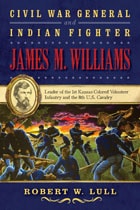
cover of Civil War General and Indian Fighter James M. Williams: Leader of the 1st Kansas Colored Volunteer Infantry and the 8th U.S. Cavalry

Civil War General and Indian Fighter James M. Williams

Leader of the 1st Kansas Colored Volunteer Infantry and the 8th U.S. Cavalry

Robert W. Lull

University of North Texas Press, 2013
[more]
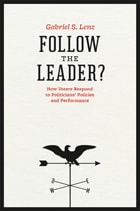
cover of Follow the Leader?: How Voters Respond to Politicians' Policies and Performance

Follow the Leader?

How Voters Respond to Politicians' Policies and Performance

Gabriel S. Lenz

University of Chicago Press, 2012
In a democracy, we generally assume that voters know the policies they prefer and elect like-minded officials who are responsible for carrying them out. We also assume that voters consider candidates' competence, honesty, and other performance-related traits. But does this actually happen? Do voters consider candidates’ policy positions when deciding for whom to vote? And how do politicians’ performances in office factor into the voting decision?
 
In Follow the Leader?, Gabriel S. Lenz sheds light on these central questions of democratic thought. Lenz looks at citizens’ views of candidates both before and after periods of political upheaval, including campaigns, wars, natural disasters, and episodes of economic boom and bust. Noting important shifts in voters’ knowledge and preferences as a result of these events, he finds that, while citizens do assess politicians based on their performance, their policy positions actually matter much less. Even when a policy issue becomes highly prominent, voters rarely shift their votes to the politician whose position best agrees with their own. In fact, Lenz shows, the reverse often takes place: citizens first pick a politician and then adopt that politician’s policy views. In other words, they follow the leader.
 
Based on data drawn from multiple countries, Follow the Leader? is the most definitive treatment to date of when and why policy and performance matter at the voting booth, and it will break new ground in the debates about democracy.
[more]
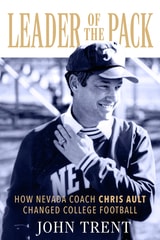
cover of Leader of the Pack: How Nevada Coach Chris Ault Changed College Football

Leader of the Pack

How Nevada Coach Chris Ault Changed College Football

John Trent

University of Nevada Press, 2027

Nevada Wolf Pack football coach Chris Ault is unlike any other college football coach in history. He spent his entire coaching career, from 1976 to 2012, at the University of Nevada, Reno, where he elevated a football program with very little notoriety onto the national stage, winning 234 games and earning a place in the College Football Hall of Fame. Ault’s innovative “Pistol” offense, established in the 2004–2005 season, revolutionized college football and ushered in its modern high-scoring offensive style. 

Yet perhaps beyond the offensive genius Ault brought to the college game, he was also a masterful showman. He built interest in a previously moribund program with publicity stunts like inviting military tanks into Mackay Stadium and having them blast non-live rounds into the sky whenever the Wolf Pack scored a touchdown. He wrote victory songs for the Wolf Pack to sing in the locker room following every win. His teams marched through downtown Reno in military formation while wearing full game uniforms. He delivered stirring halftime speeches that led to improbable comebacks, including the single greatest football comeback in NCAA history. He found common personal ground with young Wolf Pack athletes and developed talent like Colin Kaepernick, who developed into one of the greatest college quarterbacks the sport had ever seen. 

Through his unconventional coaching methods, his fervent belief that the University of Nevada, Reno, was the finest institution of higher learning in the land, and his innate, creative, and intuitive understanding of how a winning football program can unite people, Ault brought the people of Northern Nevada together in a way that no one has replicated since. Chris Ault was the rare college football coach who came to campus as a starting quarterback, stayed throughout his career as a coach, and left a mark that will never be equaled.
[more]
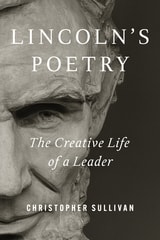
cover of Lincoln's Poetry: The Creative Life of a Leader

Lincoln's Poetry

The Creative Life of a Leader

Christopher Sullivan

University of Illinois Press, 2026

Drawn to poetry throughout his life, Abraham Lincoln read verse for comfort and pleasure, used it in his writings and speeches, and looked to it for insights into spiritual matters and politics, and spontaneously recited it in dark moments to lift his spirits.

Christopher Sullivan’s engaging exploration focuses on the role of poetry in Lincoln’s life and thought. As Sullivan shows, the poetic prose of Lincoln’s most famous writings and oratory drew on an ear for verse he began to cultivate during his frontier youth. Full versions of Lincoln’s own published and unpublished poetry provide fascinating context for his work before and during his political career while shedding light on his state of mind during the crisis of an existential war. Sullivan also considers Lincoln’s relationship with poetry against a backdrop of what poetry is, how it operates, and how it may resurface in prose.

A journalistic look at the crossroads of art and leadership, Lincoln’s Poetry adds a surprising yet vital dimension to our perceptions of the sixteenth president.
[more]
cover of The Besht: Magician, Mystic, and Leader

The Besht

Magician, Mystic, and Leader

Immanuel Etkes

Brandeis University Press, 2012

Founded in Eastern Europe in the eighteenth century, the Hasidic movement and its religious thinking have dramatically transformed modern Judaism. The figure of the Ba’al Shem Tov (known in acronym form as the BeSHT)—the purported founder of the Hasidic movement—has fascinated scholars, Jewish philosophers, and laypeople interested in popular Jewish mysticism in general and the contemporary Hasidic movement in all its variety. In this volume, Etkes enters a rich and heated debate over the origins of the movement, as well as the historicity of its mythic founder, Rabbi Israel Ba’al Shem Tov, who lived much of his life as a miracle worker. The eighteenth century, as Etkes vividly portrays, was the heyday of the kabbalists, who dabbled in the magical power of letters and words to solve personal and communal problems—and to earn a living. Etkes sheds light on the personality of the Besht, on his mysticism, and on his close circle of followers. But equally important, he challenges the popular myth of the Besht as a childlike mystic, wandering the fields in prayer, seeing visions and engaging in acts of godliness and piety. Although Etkes shows great empathy for his subject, the Besht who emerges in these pages is much more down to earth, much more a man of his times. Indeed, according to Etkes, it was never the intention of the Besht to found a religious movement. Etkes looks at the Besht’s mystical roots, examining him not only from the vantage point of a social historian, but as a religious figure. Moshe Rosman, author of Founder of Hasidism, a biography of the Besht, claims that In Praise of the Besht—a volume published about the Besht in 1814, many years after his death, which portrayed his character by means of stories told by his close followers—could not be a reliable source. Etkes, disputing this claim, shows definitively that this well-known text (translated and interpreted by, among others, Martin Buber) may indeed offer trustworthy accounts of the Besht’s life and thinking.
[more]