Results by title
36 books match the query 'Legacies'
(Post-)colonial Archipelagos
Comparing the Legacies of Spanish Colonialism in Cuba, Puerto Rico, and the PhilippinesHans-Jürgen Burchardt and Johanna Leinius, Editors
University of Michigan Press, 2022
The Puerto Rican debt crisis, the challenges of social, political, and economic transition in Cuba, and the populist politics of Duterte in the Philippines—these topics are typically seen as disparate experiences of social reality. Though these island territories were colonized by the same two colonial powers—by the Spanish Empire and, after 1898, by the United States—research in the fields of history and the social sciences rarely draws links between these three contexts.
Located at the intersection of Postcolonial Studies, Latin American Studies, Caribbean Studies, and History, this interdisciplinary volume brings together scholars from the US, Europe, Latin America, the Caribbean, and the Philippines to examine the colonial legacies of the three island nations of Cuba, Puerto Rico, and the Philippines. Instead of focusing on the legacies of US colonialism, the continuing legacies of Spanish colonialism are put center-stage. The analyses offered in the volume yield new and surprising insights into the study of colonial and postcolonial constellations that are of interest not only for experts, but also for readers interested in the social, political, economic, and cultural dynamics of Cuba, Puerto Rico, and the Philippines during Spanish colonization and in the present. The empirical material profits from a rigorous and systematic analytical framework and is thus easily accessible for students, researchers, and the interested public alike.
Beyond Little Rock
The Origins and Legacies of the Central High CrisisJohn A. Kirk
University of Arkansas Press, 2007
Burnt Cork
Traditions and Legacies of Blackface MinstrelsyStephen Johnson
University of Massachusetts Press, 2012
Beginning in the 1830s and continuing for more than a century, blackface minstrelsy—stage performances that claimed to represent the culture of black Americans—remained arguably the most popular entertainment in North America. A renewed scholarly interest in this contentious form of entertainment has produced studies treating a range of issues: its contradictory depictions of class, race, and gender; its role in the development of racial stereotyping; and its legacy in humor, dance, and music, and in live performance, film, and television. The style and substance of minstrelsy persist in popular music, tap and hip-hop dance, the language of the standup comic, and everyday rituals of contemporary culture. The blackface makeup all but disappeared for a time, though its influence never diminished—and recently, even the makeup has been making a comeback.
This collection of original essays brings together a group of prominent scholars of blackface performance to reflect on this complex and troublesome tradition. Essays consider the early relationship of the blackface performer with American politics and the antislavery movement; the relationship of minstrels to the commonplace compromises of the touring “show” business and to the mechanization of the industrial revolution; the exploration and exploitation of blackface in the mass media, by D. W. Griffith and Spike Lee, in early sound animation, and in reality television; and the recent reappropriation of the form at home and abroad.
In addition to the editor, contributors include Dale Cockrell, Catherine Cole, Louis Chude-Sokei, W. T. Lhamon, Alice Maurice, Nicholas Sammond, and Linda Williams.
Caribbean Migrations
The Legacies of ColonialismAnke Birkenmaier
Rutgers University Press, 2021
With mass migration changing the configuration of societies worldwide, we can look to the Caribbean to reflect on the long-standing, entangled relations between countries and areas as uneven in size and influence as the United States, Cuba, Hispaniola, Puerto Rico, and Jamaica. More so than other world regions, the Caribbean has been characterized as an always already colonial region. It has long been a key area for empires warring over influence spheres in the new world, and where migration waves from Africa, Europe, and Asia accompanied every political transformation over the last five centuries. In Caribbean Migrations, an interdisciplinary group of humanities and social science scholars study migration from a long-term perspective, analyzing the Caribbean's "unincorporated subjects" from a legal, historical, and cultural standpoint, and exploring how despite often fractured public spheres, Caribbean intellectuals, artists, filmmakers, and writers have been resourceful at showcasing migration as the hallmark of our modern age.

Civilian Internment in Canada
Histories and LegaciesRhonda Hinther
University of Manitoba Press, 2020
Culture in the Anteroom
The Legacies of Siegfried KracauerEdited by Gerd Gemünden and Johannes von Moltke
University of Michigan Press, 2012
Culture in the Anteroom introduces an English-speaking readership to the full range of Siegfried Kracauer's work as novelist, architect, journalist, sociologist, historian, exile critic, and theorist of visual culture. This interdisciplinary anthology---including pieces from Miriam Bratu Hansen, Andreas Huyssen, Noah Isenberg, Lutz Koepnick, Eric Rentschler, and Heide Schlüpmann---brings together literary and film scholars, historians and art historians, sociologists, and architects to address the scope and current relevance of a body of work dedicated to investigating all aspects of modernism and modernity. The contributors approach Kracauer's writings from a variety of angles, some by placing them in dialogue with his contemporaries in Weimar Germany and the New York Intellectuals of the 1940s and '50s; others by exploring relatively unknown facets of Kracauer's oeuvre by considering his contributions to architectural history, the history of radio as well as other new media, and museum and exhibition culture.

Curriculum Materials Collections and Centers
Legacies from the Past, Visions of the FutureRita Kohrman
Assoc of College & Research Libraries, 2012
Curriculum Materials Collections and Centers
Legacies from the Past, Visions of the FutureRita Kohrman
Assoc of College & Research Libraries, 2012
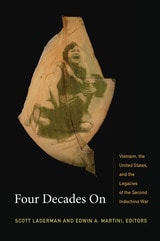
Four Decades On
Vietnam, the United States, and the Legacies of the Second Indochina WarScott Laderman and Edwin A. Martini, eds.
Duke University Press, 2013
Contributors. Alex Bloom, Diane Niblack Fox, H. Bruce Franklin, Walter Hixson, Heonik Kwon, Scott Laderman, Mariam B. Lam, Ngo Vinh Long, Edwin A. Martini, Viet Thanh Nguyen, Christina Schwenkel, Charles Waugh
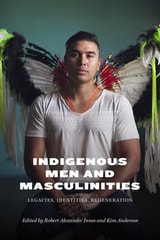
Indigenous Men and Masculinities
Legacies, Identities, RegenerationRobert Alexander Innes
University of Manitoba Press, 2015
Legacies Of Lynching
Racial Violence And MemoryJonathan Markovitz
University of Minnesota Press, 2004
Traces the changing meanings of lynching and examines the political power of lynching as metaphor
Between 1880 and 1930, thousands of African Americans were lynched in the United States. Beyond the horrific violence inflicted on these individuals, lynching terrorized whole communities and became a defining characteristic of Southern race relations in the Jim Crow era. As spectacle, lynching was intended to serve as a symbol of white supremacy. Yet, Jonathan Markovitz notes, the act's symbolic power has endured long after the practice of lynching has largely faded away.
Legacies of Lynching examines the evolution of lynching as a symbol of racial hatred and a metaphor for race relations in popular culture, art, literature, and political speech. Markovitz credits the efforts of the antilynching movement with helping to ensure that lynching would be understood not as a method of punishment for black rapists but as a terrorist practice that provided stark evidence of the brutality of Southern racism and as America’s most vivid symbol of racial oppression. Cinematic representations of lynching, from Birth of a Nation to Do the Right Thing, he contends, further transform the ways that American audiences remember and understand lynching, as have disturbing recent cases in which alleged or actual acts of racial violence reconfigured stereotypes of black criminality. Markovitz further reveals how lynching imagery has been politicized in contemporary society with the example of Clarence Thomas, who condemned the Senate's investigation into allegations of sexual harassment during his Supreme Court confirmation hearings as a “high-tech lynching.”Even today, as revealed by the 1998 dragging death of James Byrd in Jasper, Texas, and the national soul-searching it precipitated, lynching continues to pervade America's collective memory. Markovitz concludes with an analysis of debates about a recent exhibition of photographs of lynchings, suggesting again how lynching as metaphor remains always in the background of our national discussions of race and racial relations.
Legacies and Latitude in European Health Policy, Volume 30
Adam Oliver, Elias Mossialos, and David Wilsford, eds.
Duke University Press, 0

Legacies of Anti-Semitism in France
Jeffrey Mehlman
University of Minnesota Press, 1983
Legacies of Anti-Semitism in France was first published in 1983. Minnesota Archive Editions uses digital technology to make long-unavailable books once again accessible, and are published unaltered from the original University of Minnesota Press editions.
These four essays—on Blanchot, Lacan, Giraudoux, and Gide—have as their focus the barely imaginable coherence which the writings of four major contemporaries take on when read in the light of France's pre-World War II heritage of anti-Jewish thought. As the essays delve into such crucial topics as the inaugural silence in Blanchot's sense of literature, the "style" of Lacan, Giraudoux's relation to Racine, and the sexual politics of Gide, they engage a realm that at times seems—or seemed—anti-Semitic in its essence. Negotiating the complex ramifications of a lost tradition and the structure of its obliteration, Jeffrey Mehlman, in his conclusion, speculates on the emblematic value of Walter Benjamin's perpetually deferred "journey to Palestine via France" and its import for textual interpretation.
A French version of Mehlman's essay on Blanchot, published in Tel quel,spurred an impassioned journalistic debate in Paris and London. Broadening still further the context of that inquiry, Legacies will prove a source of provocation and insight to all who are interested in the intellectual history of contemporary France.
Legacies of Losing in American Politics
Jeffrey K. Tulis and Nicole Mellow
University of Chicago Press, 2017
With Legacies of Losing in American Politics, Jeffrey K. Tulis and Nicole Mellow rethink three pivotal moments in American political history: the founding, when anti-Federalists failed to stop the ratification of the Constitution; the aftermath of the Civil War, when President Andrew Johnson’s plan for restoring the South to the Union was defeated; and the 1964 presidential campaign, when Barry Goldwater’s challenge to the New Deal order was soundly defeated by Lyndon B. Johnson. In each of these cases, the very mechanisms that caused the initial failures facilitated their eventual success. After the dust of the immediate political defeat settled, these seemingly discredited ideas and programs disrupted political convention by prevailing, often subverting, and occasionally enhancing constitutional fidelity. Tulis and Mellow present a nuanced story of winning and losing and offer a new understanding of American political development as the interweaving of opposing ideas.
Legacies of Slavery
Shared History and Family Conversations with Myra Davis-Branic, Frye Gaillard, and Kern JacksonEdited by Frye Gaillard
University of Alabama Press, 2026
Documents conversations between two southern writers and friends whose families were intertwined in slavery
Legacies of Slavery commemorates a story of racial reconciliation in the South. Writers, educators, and friends Frye Gaillard and Myra Davis-Branic discovered a shared family history of slavery in Eutawville, South Carolina, where Davis-Branic’s family was enslaved by Gaillard’s family.
In 2024, the University of South Alabama’s Kern Jackson moderated three conversations with Davis-Branic and Gaillard in Mobile. These conversations are presented here in an edited format. Davis-Branic and Gaillard discussed their intertwined family history and what they each learned from research into their ancestors. They relay origin stories and the role of a key grandparent who greatly impacted their lives. They also talk about their own trajectories in a historical context, the issue of slavery in their families, and the legacy of slavery for their children and families.
The book concludes with short excerpts, one from Davis-Branic’s book Cornbread My Soul: The Davis Family of Eutawville, South Carolina, and one from Gaillard’s family history, Lessons from the Big House: One Family’s Passage Through the History of the South, a Memoir. Legacies of Slavery stands as a powerful and unique documentation for all who are interested in how two southern families, bound by slavery in the past and now by friendship and a degree of understanding, have found some measure of redemption.
Legacies of Space and Intangible Heritage
Archaeology, Ethnohistory, and the Politics of Cultural Continuity in the AmericasFernando Armstrong-Fumero
University Press of Colorado, 2017
Legacies of Space and Intangible Heritage is an interdisciplinary exploration of the intersections between the study and management of physical sites and the reproduction of intangible cultural legacies. The volume provides nine case studies that explore different ways in which place is mediated by social, political, and ecological processes that have deep historical roots and that continue to affect the politics of heritage management.
Spaces of human habitation are both historical records of the past and key elements in reproducing the knowledge and values that define lives in the present. Practices, knowledge, and skills that communities recognize as part of their culture—and that a range of legal statutes define as protected intangible heritages—are threatened by increased migration, the displacement of indigenous peoples, and limits on access to culturally or historically significant sites. This volume addresses how different physical environments contribute to the reproduction of cultural forms even in the wake of these processes of displacement and change. Case studies from North and South America reveal a pattern of abandonment and reestablishment of settlements and show how collective memory drives people back to culturally meaningful sites.
This tendency for communities to return to the sites that shaped their collective histories, along with the growing importance granted to intangible heritage, challenges archaeologists and other heritage workers to find new ways of incorporating the cultural legacies that link societies to place into the work of research and stewardship. By examining the politics of cultural continuity through the lenses of archaeology and ethnohistory, Legacies of Space and Intangible Heritage demonstrates this complex relationship between a people’s heritage and the landscape that affects the making of "place."
Contributors: Rani Alexander, Hannah Becker, Minette Church, Bonnie Clark, Chip Colwell, Winifred Creamer, Emiliana Cruz, T. J. Ferguson, Julio Hoil Gutierrez, Jonathan Haas, Saul Hedquist, Maren Hopkins, Stuart B. Koyiyumptewa, Christine Kray, Henry Marcelo Castillo, Anna Roosevelt, Jason Yaeger, Keiko Yoneda
Legacies of The Basin of Mexico
Carlos E. Cordova
University Press of Colorado, 2023
More than four decades after that book’s publication, the fourteen contributions in this volume review and analyze its theoretical and methodological influence in light of recent research across disciplines. Among a spectrum of authors representing several generations are those who participated directly in the Basin of Mexico surveys—including the late Jeffrey R. Parsons—as well as those who have been actively working on recent projects in the basin and neighboring regions.
Providing a broad and multidisciplinary perspective of the present and future state of research in the area, The Legacies of The Basin of Mexico will be of interest to Mesoamerican and Latin American archaeologists as well as geographers, geologists, historians, and specialists in the study of past environments.
Contributors: Guillermo Acosta Ochoa, Aleksander Borejsza, Destiny Crider, Charles Frederick, Raúl García-Chávez, Larry Gorenflo, Angela Huster, Georgina Ibarra Arzave, Charles Kolb, Frank Lehmkuhl, Abigail Meza Peñaloza, Emily McClung de Tapia, John K. Millhauser, Deborah Nichols, Jeffrey R. Parsons, Serafin Sánchez Pérez, Philipp Schulte, Sergey Sedov, Elizabeth Solleiro Rebolledo, Daisy Valera Fenández, Federico Zertuche

Legacies of War
Violence, Ecologies, and KinKimberly Theidon
Duke University Press, 2022
Legacies of the Stone Guest
The Don Juan Legend in Russian LiteratureAlexander Burry
University of Wisconsin Press, 2023
The story of Don Juan first appeared in writing in seventeenth-century Spain, reaching Russia about a century later. Its real impact, however, was delayed until Russia’s most famous poet, Alexander Pushkin, put his own, unique, and uniquely inspirational, spin on the tale. Published in 1830, TheStone Guest is now recognized, with other Pushkin masterpieces, as part of the Russian literary canon. Alexander Burry traces the influence of Pushkin’s brilliant innovations to the legend, which he shows have proven repeatedly fruitful through successive ages of Russian literature, from the Realist to the Silver Age, Soviet, and contemporary periods. Burry shows that, rather than creating a simple retelling of an originally religious tale about a sinful, consummate seducer, Pushkin offered open-ended scenes, re-envisioned and complicated characters, and new motifs that became recursive and productive parts of Russian literature, in ways that even Pushkin himself could never have predicted.
Legacies of the War on Poverty
Martha J. Bailey
Russell Sage Foundation, 2013
Legacies, Logics, Logistics
Essays in the Anthropology of the Platform EconomyJane I. Guyer
University of Chicago Press, 2016
Focusing on economic actors—whether ordinary consumers or financial experts—Guyer traces how people and institutions hold together past experiences (legacies), imagined scenarios and models (logics), and situational challenges (logistics) in a way that makes the performance of economic life (on platforms made of these legacies, logics, and logistics) work in practice. Individual essays explore a number of topics—including time frames and the future, the use of percentages in observations and judgments, the explanation of prices, the coexistence of different world currencies, the reapplication of longtime economic theories in new settings, and, crucially, how we talk about the economy, how we use stable terms to describe a turbulent system. Valuable as standalone pieces, the essays build into a cogent method of economic anthropology.
Lessons and Legacies I
The Meaning of the Holocaust in a Changing WorldPeter Hayes
Northwestern University Press, 1991
Lessons and Legacies, Volume XV
The Holocaust: Global Perspectives, National Narratives, Local ContextsErin McGlothlin; Avinoam Patt
Northwestern University Press, 2024
The contributions to this volume not only indicate the intellectual vibrancy and diversity of cutting-edge research in Holocaust studies but also reflect multiple approaches to the necessary work of expanding the canon of research in the field and of adopting varied disciplinary perspectives, engaging with global perspectives as well as local studies.
This collection’s chapters manifest three broad categories: history, literature, and memory; at the same time, however, as the interdisciplinary nature of these chapters indicate, these categories should not be regarded as mutually exclusive or discrete. On the contrary, they overlap and intersect in compelling ways, demonstrating the dynamic character of contemporary Holocaust studies, which views history, narrative representation, and commemoration as mutually informative. Further, the contributors continue the recent trend in Holocaust studies whereby specific regional and national narratives are integrated into a more global approach to the event: Newer studies have continued to incorporate what was once termed the periphery into a more global examination of the experiences of Jewish refugees in flight to Latin America, Africa, and the Soviet Union. At the same time, very specific local studies deepen our knowledge of the mechanics of genocide, along with the experiences of refugees in flight, and the subsequent dimensions of Holocaust memory and representation.
Lessons and Legacies, Volume XVI
Rethinking ParadigmsSarah Phillips Casteel and Jennifer V. Evans
Northwestern University Press, 2027
Bringing forth new perspectives previously unrepresented in Holocaust studies
Lessons and Legacies, Volume XVI: Rethinking Paradigms does the difficult but crucial work of thinking through new methods and modes of representation that speak to where we find ourselves in Holocaust studies today, responding to—and developing new tools to analyze—the shifting shape of Holocaust memory: spatially, temporally, and in and across diverse media. The collection foregrounds the challenges visual sources pose to how we think about the Holocaust, including how it is represented differently in visual media, from photography to graphic novels, and establishes translation as a crucial concept for reframing Holocaust testimony and memory. The contributing authors also model ethical, nuanced ways to conduct comparative, connective work that challenges Eurocentric narratives of the Holocaust. The volume concludes with a section on memory work and activism that approaches the subject of post-1945 memory through different lenses to surface lesser-known aspects of Holocaust history.

Ouida
Cosmopolitan Ethics, Aesthetics, and LegaciesFrankie Dytor and Helena Esser
Ohio University Press, 0
Outspoken, extravagant, and internationally celebrated in her lifetime, Ouida (Marie Louise de la Ramée, 1839–1908) was one of the nineteenth century’s most successful and controversial writers. Her fiction, essays, and cultural criticism captivated readers across Europe and beyond, yet her polemical politics, cosmopolitan outlook, and opulent style left her at odds with the modernist critical traditions that shaped later literary scholarship. As a result, despite her considerable influence, Ouida has remained on the margins of Victorian literary history. Ouida: Cosmopolitan Ethics, Aesthetics, and Legacies offers the first sustained examination of the ethical and aesthetic commitments that underpin Ouida’s work and its effect on nineteenth-century culture. Bringing together an international group of established and emerging scholars, the collection explores her writing through frameworks including psychogeography, ecocriticism, decadence studies, celebrity studies, and adaptation studies. Contributors reveal how Ouida challenged conventional boundaries of nation, gender, class, and species while shaping contemporary debates about art, politics, and society. Opening with a conversation between Victorian literary scholars Pamela K. Gilbert and Talia Schaffer, the volume traces Ouida’s influence across literary networks, media forms, and historical periods, from her impact on fellow authors and feminist modernists to her afterlives in adaptation, fandom, and participatory culture. Positioning Ouida as a profoundly cosmopolitan thinker and writer, the collection reconsiders the boundaries of Victorian studies itself, demonstrating how nineteenth-century literature can be understood through dynamic exchanges across genres, borders, media, and time. In doing so, it restores Ouida to a central place in literary history while highlighting the enduring relevance of her global legacy. Contributors Katja Anderson Natasha Anderson Joseph Bristow Lorraine Dubuisson Frankie Dytor Jesse R. Erickson Helena Esser Pamela K. Gilbert Andrew King Jane Jordan Crescent Rainwater Talia Schaffer Margaret D. Stetz Joanna Turner
Polarization and Democracy in Latin America
Legacies of the Left TurnSantiago Anria and Kenneth M. Roberts
University of Chicago Press, 2026
An insightful examination of Latin America’s contemporary democratic landscape and how it is marked by patterns of polarization and volatility.
Although Latin American democracies have shown considerable resilience, today they face new forms of political polarization and instability. These challenges are closely connected to the legacies of the region’s “left turn,” which sought to transform entrenched inequalities and social hierarchies in the early twenty-first century. Unprecedented in its scope and duration, the left turn reflected an underlying realignment of political contestation in a highly unequal region. Yet despite notable achievements in addressing social needs, leftist parties struggled to deepen democracy by empowering popular majorities, and they faced powerful elite backlashes.
Through a comparative analysis of seven South American countries, Santiago Anria and Kenneth M. Roberts trace the different origins and trajectories in power of the populist and social democratic currents that emerged within the left turn. Anria and Roberts argue that today’s democratic orders face intensifying polarization and institutional fragility, even where social democratic parties made explicit efforts to build broad coalitions and temper political conflict. They show how activist networks and social movements on the left and the right triggered latent political conflicts and are now reshaping democratic competition and the terms of social inclusion in South American politics.
Politics after Violence
Legacies of the Shining Path Conflict in PeruEdited by Hillel David Soifer and Alberto Vergara
University of Texas Press, 2019
Between 1980 and 1994, Peru endured a bloody internal armed conflict, with some 69,000 people killed in clashes involving two insurgent movements, state forces, and local armed groups. In 2003, a government-sponsored “Truth and Reconciliation Committee” reported that the conflict lasted longer, affected broader swaths of the national territory, and inflicted higher costs in both human and economic terms than any other conflict in Peru’s history. Of those killed, 75 percent were speakers of an indigenous language, and almost 40 percent were among the poorest and most rural members of Peruvian society. These unequal impacts of the violence on the Peruvian people revealed deep and historical disparities within the country.
This collection of original essays by leading international experts on Peruvian politics, society, and institutions explores the political and institutional consequences of Peru’s internal armed conflict in the long 1980s. The essays are grouped into sections that cover the conflict itself in historical, comparative, and theoretical perspectives; its consequences for Peru’s political institutions; its effects on political parties across the ideological spectrum; and its impact on public opinion and civil society. This research provides the first systematic and nuanced investigation of the extent to which recent and contemporary Peruvian politics, civil society, and institutions have been shaped by the country’s 1980s violence.
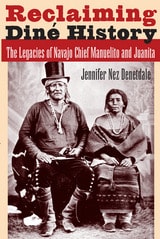
Reclaiming Diné History
The Legacies of Navajo Chief Manuelito and JuanitaJennifer Nez Denetdale
University of Arizona Press, 2007
Here she presents a thought-provoking examination of the construction of the history of the Navajo people (Diné, in the Navajo language) that underlines the dichotomy between Navajo and non-Navajo perspectives on the Diné past. Reclaiming Diné History has two primary objectives. First, Denetdale interrogates histories that privilege Manuelito and marginalize Juanita in order to demonstrate some of the ways that writing about the Diné has been biased by non-Navajo views of assimilation and gender. Second, she reveals how Navajo narratives, including oral histories and stories kept by matrilineal clans, serve as vehicles to convey Navajo beliefs and values.
By scrutinizing stories about Juanita, she both underscores the centrality of women’s roles in Navajo society and illustrates how oral tradition has been used to organize social units, connect Navajos to the land, and interpret the past. She argues that these same stories, read with an awareness of Navajo creation narratives, reveal previously unrecognized Navajo perspectives on the past. And she contends that a similarly culture-sensitive re-viewing of the Diné can lead to the production of a Navajo-centered history.

Red Hangover
Legacies of Twentieth-Century CommunismKristen Ghodsee
Duke University Press, 2017
Slavery's Slaughterhouse
Legacies of Animal Agriculture and Chattel SlaverySamantha Janaki Pergadia
Duke University Press, 2027

The Other Windrush
Legacies of Indenture in Britain's Caribbean EmpireMaria del Pilar Kaladeen
Pluto Press, 2021

The Other Windrush
Legacies of Indenture in Britain's Caribbean EmpireMaria del Pilar Kaladeen
Pluto Press, 2021
Between the arrival of the HMT Empire Windrush in 1948 and the passing of the 1971 Immigration Act, half a million people came to the UK from the Caribbean. In the aftermath of the 2018 Windrush Scandal, the story of the Windrush Generation is more widely known than ever. But is it the whole story?
Through a series of biographical essays, poems and articles, The Other Windrush shines a light on the hidden history of a 'minority within a minority': Caribbean migrants of Indian and Chinese descent - often the descendants of indentured labourers - who were the 'invisible passengers' of the Windrush generation.
Both highlighting the diversity of their lives and cultural backgrounds, and delving into the largely forgotten history of the system of indenture in the British Caribbean, The Other Windrush makes a unique addition to the literature on migration and the British Empire.
The Psychic Hold of Slavery
Legacies in American Expressive CultureSoyica Diggs Colbert, Robert J. Patterson, and Aida Levy-Hussen
Rutgers University Press, 2016
The Word Unheard
Legacies of Anti-Semitism in German Literature and CultureMartha B. Helfer
Northwestern University Press, 2011
The publication of Martha B. Helfer’s The Word Unheard: Legacies of Anti-Semitism in German Literature and Culture marks a stunningly original new direction in the interpretation of canonical works of eighteenth- and nineteenth-century German literature.
Between 1749 and 1850—the formative years of the so-called Jewish Question in Germany—the emancipation debates over granting full civil and political rights to Jews provided the topical background against which all representations of Jewish characters and concerns in literary texts were read. Helfer focuses sharply on these debates and demonstrates through close readings of works by Gotthold Lessing, Friedrich Schiller, Achim von Arnim, Annette von Droste- Hülshoff, Adalbert Stifter, and Franz Grillparzer how disciplinary practices within the field of German studies have led to systematic blind spots in the scholarship on anti-Semitism to date.
While all the authors discussed are well known and justly celebrated, the particular works addressed represent an effective mix of enduring classics and less recognized, indeed often scandalously overlooked, texts whose consideration leads to a reevaluation of the author’s more mainstream oeuvre. Although some of the works and authors chosen have previously been noted for their anti-Semitic proclivities, the majority have not, and some have even been marked by German scholarship as philo-Semitic—a view that The Word Unheard undertakes not so much to refute as to complicate, and in the process to question not only these texts but also the deafness of the German scholarly tradition. With implications that reach into many disciplines, The Word Unheard will be a foundational study for all scholars of modern Germany.
Unearthing Indian Land
Living with the Legacies of AllotmentKristin T. Ruppel
University of Arizona Press, 2008
Under the General Allotment Act of 1887, also known as the Dawes Act,individual Indians were issued title to land allotments while so-called “surplus”Indian lands were opened to non-Indian settlement. During the forty-seven years that the act remained in effect, American Indians lost an estimated 90 million acres of land—about two-thirds of the land they had held in 1887. Worse, the loss of control over the land left to them has remained an ongoing and insidious result.
Unearthing Indian Land traces the complex legacies of allotment, including numerous instructive examples of a policy gone wrong. Aside from the initial catastrophic land loss, the fractionated land ownership that resulted from the act’s provisions has disrupted native families and their descendants for more than a century. With each new generation, the owners of tribal lands grow in number and therefore own ever smaller interests in parcels of land. It is not uncommon now to find reservation allotments co-owned by hundreds of individuals.Coupled with the federal government’s troubled trusteeship of Indian assets,this means that Indian landowners have very little control over their own lands.
Illuminated by interviews with Native American landholders, this book is essential reading for anyone who is interested in what happened as a result of the federal government’s quasi-privatization of native lands.
Wastelanding
Legacies of Uranium Mining in Navajo CountryTraci Brynne Voyles
University of Minnesota Press, 2015
Wastelanding tells the history of the uranium industry on Navajo land in the U.S. Southwest, asking why certain landscapes and the peoples who inhabit them come to be targeted for disproportionate exposure to environmental harm. Uranium mines and mills on the Navajo Nation land have long supplied U.S. nuclear weapons and energy programs. By 1942, mines on the reservation were the main source of uranium for the top-secret Manhattan Project. Today, the Navajo Nation is home to more than a thousand abandoned uranium sites. Radiation-related diseases are endemic, claiming the health and lives of former miners and nonminers alike.
Traci Brynne Voyles argues that the presence of uranium mining on Diné (Navajo) land constitutes a clear case of environmental racism. Looking at discursive constructions of landscapes, she explores how environmental racism develops over time. For Voyles, the “wasteland,” where toxic materials are excavated, exploited, and dumped, is both a racial and a spatial signifier that renders an environment and the bodies that inhabit it pollutable. Because environmental inequality is inherent in the way industrialism operates, the wasteland is the “other” through which modern industrialism is established.
In examining the history of wastelanding in Navajo country, Voyles provides “an environmental justice history” of uranium mining, revealing how just as “civilization” has been defined on and through “savagery,” environmental privilege is produced by portraying other landscapes as marginal, worthless, and pollutable.