Results by title
3 books match the query 'Lesbians in mass media'

Lavender Sounds
From Lesbian Radio to Queer Feminist SoundworkStacey Copeland
University of Michigan Press, 2026
Stacey Copeland’s Lavender Sounds explores lesbian radio history and its evolution into queer feminist podcasting today, exploring the politics, aesthetics, and cultural activism embedded in queer feminist soundwork. Through deeply personal and archival explorations, Stacey Copeland traces the emergence of queer feminist soundwork—a unique blend of community-led storytelling, political resistance, and creative expression rooted in feminist and LGBTQ+ activism. At the heart of the book lies a powerful idea: sound is not just heard but felt, connecting generations through shared voices and struggles. In conversation with award-winning and cutting-edge queer and feminist podcast producers from across Canada and the U.S., Lavender Sounds invites us to turn a feminist-embodied ear to the past to uncover the ways gender, race, and sexual orientations are embedded in our everyday media listening practices. From pioneering Canadian radio shows like Vancouver's The Lesbian Show and Montreal's Dykes on Mykes to today’s queer chumcasts and audio documentary, Lavender Sounds is a journey through auditory landscapes where joy, protest, intimacy, and identity intersect. This book opens a vibrant conversation about how radio and podcasting are vital tools for marginalized communities to connect, create, and claim space in the media world.

Lesbians on Television
New Queer Visibility & the Lesbian NormalKate McNicholas Smith
Intellect Books, 2020
A look at the emergence of queer women characters in popular storytelling and the wide-ranging effects of this mainstream representation.
The twenty-first century has seen LGBTQ+ rights emerge at the forefront of public discourse and national politics in ways that would once have been hard to imagine. In Lesbians on Television, Kate McNicholas Smith maps concurrent contemporary shifts in lesbian visibility within popular media, focusing on the small screens of Europe and North America. Central to these shifts has been a re-imagining of queer lives—or a “new queer visibility”—as LGBTQ+ characters have become increasingly visible within popular culture. Kate McNicholas Smith explores this increased visibility through the lens of television, and in doing so, she identifies a “new lesbian normal”—a normalization of lesbian subjects that both helps and hinders those it represents.
Structured around five central case studies of popular British and American television shows featuring lesbian, bisexual, and queer women characters—The L Word, Skins, Glee, Coronation Street, and The Fosters—the book develops a detailed analysis of the shaping of a new “lesbian normal” through representations of LGBTQ+ figures and examines their televisual representation and reception. Presenting critical queer and feminist theory alongside empirical research that includes interviews and multi-platform media analyses, McNicholas Smith works to untangle the social, political, and cultural implications of new visibility in a period of significant social change in the LGBTQ+ experience.
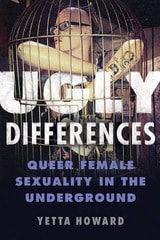
Ugly Differences
Queer Female Sexuality in the UndergroundYetta Howard
University of Illinois Press, 2018