Results by title
7 books match the query 'Literary Imagination'
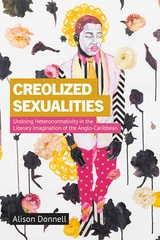
Creolized Sexualities
Undoing Heteronormativity in the Literary Imagination of the Anglo-CaribbeanAlison Donnell
Rutgers University Press, 2022
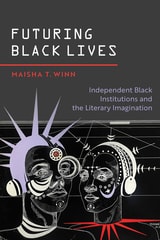
Futuring Black Lives
Independent Black Institutions and the Literary ImaginationMaisha T. Winn
Vanderbilt University Press, 2025
The rationale for establishing and valuing IBIs remains highly relevant, given the sociopolitical landscape of education today. In addition to persistent racial disparities in academic achievement and Black students’ highly disproportionate experiences of punishment and “discipline,” friction and legislation against critical examination of race, racism, and racist ideas in school settings are front and center, and children’s and young adult literature are under attack through censorship and outright book bans. Yet Black institution builders left useful maps of and for the educational future/s of Black children that remain available in journals, newspapers, pamphlets, and other ephemera. Author Maisha T. Winn demonstrates how and why the historiography-grounded futuring of Black education can and should inform current pursuits of equity, justice, and liberation through education.

Invented Truth
Soviet Reality and the Literary Imagination of Iurii TrifonovJosephine Woll
Duke University Press, 1991
Woll analyzes the aesthetic strategies Trifonov deployed to transmit his ideas and opinions to Soviet readers and elucidates the major themes of his late fiction: the moral climate that permitted the triumph of Stalinist immorality, the relationship between the Bolshevik revolutionary past and present-day Soviet amorality, and, finally, art's prismatic interpretation of reality. Drawing on both Western and Soviet scholarship, as well as interviews with many Soviet and emigre writers, literary critics, and personal acquaintances of Trifonov, Woll provides detailed background on the Soviet literary milieu and the rules governing literary production.
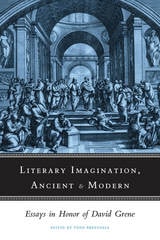
Literary Imagination, Ancient and Modern
Essays in Honor of David GreneEdited by Todd Breyfogle
University of Chicago Press, 1999
Ranging as widely as Grene's own interests in Greek and Roman antiquity, in drama, poetry, and the novel, in the art of translation, and in English history, these essays include discussions of the Odyssey and Ulysses, the Metamorphoses of Ovid and Apuleius, Mallarmé's English and T. S. Eliot's religion, and the mutually antipathetic minds of Edmund Burke and Thomas Jefferson. The introduction by Todd Breyfogle sketches for the first time the contours of Grene's own thought.
Classicists, political theorists, intellectual historians, philosophers, and students of literature will all find much of value in the individual essays here and in the juxtaposition of their themes.
Contributors: Saul Bellow, Seth Benardete, Todd Breyfogle, Amirthanayagam P. David, Wendy Doniger, Mary Douglas, Joseph N. Frank, Victor Gourevitch, Nicholas Grene, W. R. Johnson, Brendan Kennelly, Edwin McClellan, Françoise Meltzer, Stephanie Nelson, Conor Cruise O'Brien, Martin Ostwald, Robert B. Pippin, James Redfield, Sandra F. Siegel, Norma Thompson, and David Tracy
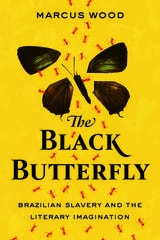
The Black Butterfly
Brazilian Slavery and the Literary ImaginationMarcus Wood
West Virginia University Press, 2019
The Black Butterfly focuses on the slavery writings of three of Brazil’s literary giants—Machado de Assis, Castro Alves, and Euclides da Cunha. These authors wrote in the late nineteenth and early twentieth centuries, as Brazil moved into and then through the 1888 abolition of slavery. Assis was Brazil’s most experimental novelist; Alves was a Romantic poet with passionate liberationist politics, popularly known as “the poet of the slaves”; and da Cunha is known for the masterpiece Os Sertões (The Backlands), a work of genius that remains strangely neglected in the scholarship of transatlantic slavery.
Wood finds that all three writers responded to the memory of slavery in ways that departed from their counterparts in Europe and North America, where emancipation has typically been depicted as a moment of closure. He ends by setting up a wider literary context for his core authors by introducing a comparative study of their great literary abolitionist predecessors Luís Gonzaga Pinto da Gama and Joaquim Nabuco. The Black Butterfly is a revolutionary text that insists Brazilian culture has always refused a clean break between slavery and its aftermath. Brazilian slavery thus emerges as a living legacy subject to continual renegotiation and reinvention.
The English Civil Wars in the Literary Imagination
Edited by Claude J. Summers & Ted-Larry Pebworth
University of Missouri Press, 1999
The English civil wars loom large in seventeenth-century history and literature. This period, which culminated in the execution of a king, the dismantling of the Established Church, the inauguration of a commonwealth, and the assumption of rule by a lord protector, was one of profound change and disequilibrium. Focusing on writers as major as Milton, Marvell, Herrick, and Vaughan, and as misunderstood as Fane, Overton, and the poet Eliza, the fifteen essays in this collection discuss not only the representation of the civil wars but also the ways in which the civil wars were anticipated, refigured, and refracted in the century's literary imagination.
Although all of the essays are historically grounded and critically based, they vary widely in their historical perspectives and critical techniques, as well as in their scope and area of concentration. Six of the essays are on Royalist literary figures, six are on figures traditionally associated with the Parliamentarian side of the civil wars, two consider both, and the remaining essay examines how Royalist writers refashioned a puritan literary trope.
Unified through the contributors' concentration on "moderate" voices and their recurrent concerns with the ambiguities of literary response, The English Civil Wars in the Literary Imagination provides an important understanding of the English civil wars' manifold and sometimes indirect presence in the literature of the period.
Writing Pancho Villa's Revolution
Rebels in the Literary Imagination of MexicoBy Max Parra
University of Texas Press, 2006
The 1910 Mexican Revolution saw Francisco "Pancho" Villa grow from social bandit to famed revolutionary leader. Although his rise to national prominence was short-lived, he and his followers (the villistas) inspired deep feelings of pride and power amongst the rural poor. After the Revolution (and Villa's ultimate defeat and death), the new ruling elite, resentful of his enormous popularity, marginalized and discounted him and his followers as uncivilized savages. Hence, it was in the realm of culture rather than politics that his true legacy would be debated and shaped.
Mexican literature following the Revolution created an enduring image of Villa and his followers. Writing Pancho Villa's Revolution focuses on the novels, chronicles, and testimonials written from 1925 to 1940 that narrated Villa's grassroots insurgency and celebrated—or condemned—his charismatic leadership. By focusing on works by urban writers Mariano Azuela (Los de abajo) and Martín Luis Guzmán (El águila y la serpiente), as well as works closer to the violent tradition of northern Mexican frontier life by Nellie Campobello (Cartucho), Celia Herrera (Villa ante la historia), and Rafael F. Muñoz (¡Vámonos con Pancho Villa!), this book examines the alternative views of the revolution and of the villistas. Max Parra studies how these works articulate different and at times competing views about class and the cultural "otherness" of the rebellious masses. This unique revisionist study of the villista novel also offers a deeper look into the process of how a nation's collective identity is formed.