Results by title
7 books match the query 'Literary Life'
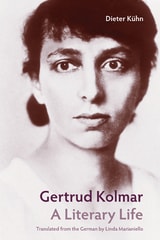
Gertrud Kolmar
A Literary LifeDieter Kühn
Northwestern University Press, 2013
Linda Marianiello here translates into English for the first time Dieter Kühn’s highly praised and definitive biography of one of Germany’s greatest poets, Gertrud Kolmar. Kolmar carried German-language poetry to new heights, speaking truth in a time when many poets collapsed in the face of increasing Nazi repression. Born Gertrud Käthe Chodziesner in Berlin in 1894, she completed her first collection, Poems, in 1917. She took her pen name, Kolmar, from the name of the town where her family originated.
Kolmar’s third collection of poems appeared in 1938 but soon disappeared in the wake of the overall repression of Jewish authors. At the time, she served as secretary to her father, Ludwig Chodziesner, a prominent lawyer. In 1941, the Nazis compelled her to work in a German armaments factory. Even as a forced laborer, the strength of her poetic voice grew, perhaps reaching its highest level before her deportation to Auschwitz. From gentle nature verses to stirring introspection, these are poems in which we can still find ourselves today. Both she and her father died in Nazi concentration camps, he in 1942, she the following year. The translation of Dieter Kühn’s biography conveys the tragic, yet courageous, life of a great poet to an English-speaking audience.
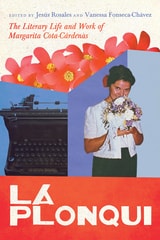
La Plonqui
The Literary Life and Work of Margarita Cota-CárdenasEdited by Jesús Rosales and Vanessa Fonseca-Chávez
University of Arizona Press, 2023
Nicknamed “La Plonky” by her family after a made-up childhood song, Cota-Cárdenas grew up in California, taught almost exclusively in Arizona, and produced five major works (two novels and three books of poetry) that offer an expansive literary production spanning from the 1960s to today. Her perspectives on Chicana identity, the Chicanx movement, and the sociopolitical climate of Arizona and the larger U.S.-Mexico border region represent a significant contribution to the larger body of Chicanx literature. Additionally, the volume explores her perspectives on issues of gender, sexuality, and identity related to the Chicanx experience over time.
Divided into three major parts, this collection begins with an introduction, followed by two testimonial essays written by the author herself and a longtime colleague, as well as an interview with the author. The second section contains nine essays by well-established literary critics that analyze Cota-Cárdenas’s literary output within a Chicano Movement literary context and offer new readings of Cota-Cárdenas’s fiction and poetry. The third part presents poetry and fiction from Cota-Cárdenas, including an excerpt from a work in progress. As a whole, the collection aims to affirm Margarita Cota-Cárdenas’s significant role in shaping the field of Chicana literature and emphasizes the importance of honoring a celebrated author who wrote a majority of her works in Spanish—one of the few Chicana writers to do so.
Contributors
Laura Elena Belmonte
Margarita Cota-Cárdenas
José R. Flores
Vanessa Fonseca-Chávez
Carolyn González
Gabriella Gutiérrez y Muhs
Manuel M. Martín-Rodríguez
Kirsten F. Nigro
Margarita E. Pignataro
Tey Diana Rebolledo
Jesús Rosales
Charles St-Georges
Javier Villarreal
Simms
A Literary LifeJohn C. Guilds
University of Arkansas Press, 0
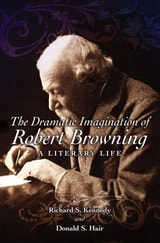
The Dramatic Imagination of Robert Browning
A Literary LifeRichard S. Kennedy & Donald S. Hair
University of Missouri Press, 2007
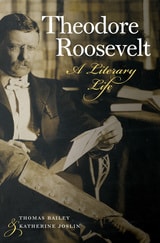
Theodore Roosevelt
A Literary LifeThomas Bailey and Katherine Joslin
University Press of New England, 2018
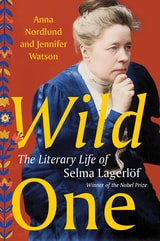
Wild One
The Literary Life of Selma LagerlöfAnna Nordlund
University of Minnesota Press, 2027
The definitive English-language biography of Sweden’s most celebrated novelist
Wild One details the captivating life of Selma Lagerlöf (1858–1940), the most celebrated Swedish novelist of her time and the first woman to win the Nobel Prize for Literature. Best known for her classic books The Saga of Gösta Berling and The Wonderful Adventures of Nils, Lagerlöf wrote dozens of acclaimed works and used her fame to advocate for women’s rights, humanitarian causes, and international peace. During her lifetime, however, even though she introduced Neo-Romanticism to Scandinavian literature, the male-dominated literary establishment strategically tried to downplay her as a modest spinster who reworked old stories and folktales from her rural Swedish province of Värmland.
Anna Nordlund and Jennifer Watson describe how, behind the old-fashioned public image placed on her, Lagerlöf was always on the front line, a forward-looking innovator whose writing is distinguished by inventive structures and a deep understanding of modern psychology. A savvy promoter of her own career, she utilized the new medium of radio, invested in the nascent Swedish film industry as adaptations of her novels became international sensations, and closely tracked translations of her work. After winning the Nobel Prize in 1909, Lagerlöf became even more vocal in her support for women’s rights and suffrage.
Drawing on a wide range of sources, including private letters, Nordlund and Watson offer new insights into Lagerlöf’s remarkable personal life, including her passionate love for her frequent traveling companion, Sophie Elkan, and for fellow suffragette Valborg Olander. As Wild One makes clear, through her written works and social activism Lagerlöf embodied her own famous quotation: “I want to set the world in motion.”
Retail e-book files for this title are screen-reader friendly with images accompanied by short alt text and/or extended descriptions.
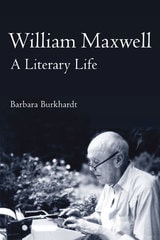
William Maxwell
A Literary LifeBarbara A. Burkhardt
University of Illinois Press, 2004
Known as a beloved, longtime fiction editor at The New Yorker, William Maxwell worked closely with such legendary writers as Vladimir Nabokov, John Updike, Mary McCarthy, and John Cheever. His own novels include They Came Like Swallows and the American Book Award-winning So Long, See You Tomorrow, and many consider him to be one of the twentieth century's most important writers. Barbara Burkhardt's William Maxwell: A Literary Life represents the first major critical study of this Illinois writer's life and work.
Writing with an economy and elegance befitting her subject, Burkhardt addresses Maxwell's highly autobiographical fiction by skillfully interweaving his biography with her own critical interpretations. She contextualizes his fiction in terms of events including his mother's early death from influenza, his marriage, and the role of his psychoanalysis under the guidance of Theodor Reik. Drawing on a wide range of previously unavailable material, Burkhardt includes letters Maxwell received from authors such as Eudora Welty and Louise Bogan, excerpts from his unpublished manuscripts and correspondence, and her own interviews with Maxwell and key figures from his life, including John Updike, Roger Angell, New Yorker fiction editor Robert Henderson, and Maxwell's family and friends.