Results by title
22 books match the query 'Literary style'
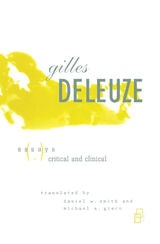
Essays Critical And Clinical
Gilles Deleuze
University of Minnesota Press, 1997
The final work of this essential thinker.
Essays Critical and Clinical is the final work of the late Gilles Deleuze, one of the most important and vital figures in contemporary philosophy. It includes essays, all newly revised or published here for the first time, on such diverse literary figures as Herman Melville, Walt Whitman, D. H. Lawrence, T. E. Lawrence, Samuel Beckett, Leopold von Sacher-Masoch, Alfred Jarry, and Lewis Carroll, as well as philosophers such as Plato, Spinoza, Kant, Nietzsche, and Heidegger.
For Deleuze, every literary work implies a way of living, a form of life, and must be evaluated not only critically but also clinically. As Proust said, great writers invent a new language within language, but in such a way that language in its entirety is pushed to its limit or its own “outside.” This outside of language is made up of affects and precepts that are not linguistic, but which language alone nonetheless makes possible. In Essays Critical and Clinical, Deleuze is concerned with the delirium-the process of Life-that lies behind this invention, as well as the loss that occurs, the silence that follows, when this delirium becomes a clinical state. Taken together, these eighteen essays present a profoundly new approach to literature by one of the greatest twentieth-century philosophers.
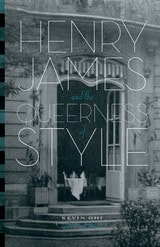
Henry James and the Queerness of Style
Kevin Ohi
University of Minnesota Press, 2010
For Ohi, there are many elements in the style that make James’s writing queer. But if there is a thematic marker, Ohi shows through his careful engagements with these texts, it is belatedness. The recurrent concern with belatedness, Ohi explains, should be understood not psychologically but stylistically, not as confessing the sad predicament of being out of sync with one’s life but as revealing the consequences of style’s refashioning of experience. Belatedness marks life’s encounter with style, and it describes an experience not of deprivation but of the rich potentiality of the literary work that James calls “freedom.” In Ohi’s reading, belatedness is the indicator not of sublimation or repression, nor of authorial self-sacrifice, but of the potentiality of the literary—and hence of the queerness of style.
Presenting original readings of a series of late Jamesian texts, the book also represents an exciting possibility for queer theory and literary studies in the future: a renewed attention to literary form and a new sounding—energized by literary questions of style and form—of the theoretical implications of queerness.
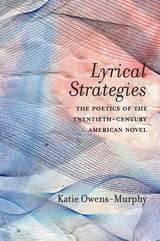
Lyrical Strategies
The Poetics of the Twentieth-Century American NovelKatie Owens-Murphy
Northwestern University Press, 2018
Owens-Murphy surveys a broad array of writers: poets from the lyrical transatlantic tradition, as well as American novelists including Gertrude Stein, Jean Toomer, William Faulkner, Toni Morrison, Louise Erdrich, and Cormac McCarthy. Through a masterful reexamination of canonical works of twentieth-century American fiction through the lens of lyric poetry, she reveals how many elements in these novels can be better understood as poetic and rhetorical figures (metaphysical conceit, polysyndeton, dramatic monologue, apostrophe, and so on) than as narrative ones.
Making fresh contributions to literary theory and American fiction, Lyrical Strategies will fascinate readers and scholars of the American novel, fiction, poetry, and poetics alike.
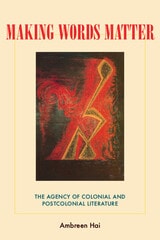
Making Words Matter
The Agency of Colonial and Postcolonial LiteratureAmbreen Hai
Ohio University Press, 2009
Why should Salman Rushdie describe his truth telling as an act of swallowing impure “haram” flesh from which the blood has not been drained? Why should Rudyard Kipling cast Kim, the imperial child–agent, as a body/text written upon and damaged by empire? Why should E. M. Forster evoke through the Indian landscape the otherwise unspeakable racial or homosexual body in his writing? In Making Words Matter: The Agency of Colonial and Postcolonial Literature, Ambreen Hai argues that these writers focus self–reflectively on the unstable capacity of words to have material effects and to be censored, and that this central concern with literary agency is embedded in, indeed definitive of, colonial and postcolonial literature.
Making Words Matter contends that the figure of the human body is central to the self–imagining of the text in the world because the body uniquely concretizes three dimensions of agency: it is at once the site of autonomy, instrumentality, and subjection. Hai’s work exemplifies a new trend in postcolonial studies: to combine aesthetics and politics and to offer a historically and theoretically informed mode of interpretation that is sophisticated, lucid, and accessible.
This is the first study to identify and examine the rich convergence of issues and to chart their dynamic. Hai opens up the field of postcolonial literary studies to fresh questions, engaging knowledgeably with earlier scholarship and drawing on interdisciplinary theory to read both well known and lesser–known texts in a new light. It should be of interest internationally to students and scholars in a variety of fields including British, Victorian, modernist, colonial, or postcolonial literary studies, queer or cultural studies, South Asian studies, history, and anthropology.
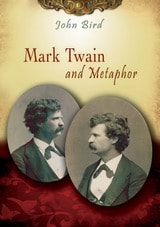
Mark Twain and Metaphor
John Bird
University of Missouri Press, 2007
Metaphor theory, observes John Bird, is like Mark Twain: both seem simple upon first introduction. Now, in the most complete study to date of Twain’s use of figurative language, a veteran Twain scholar tackles the core of his writing and explores it with theoretical approaches that have rarely been applied to Twain, providing new insights into how he imagined his world—and the singular ways in which he expressed himself.
From “The Jumping Frog” to the late dream narratives, Bird considers Twain’s metaphoric construction over his complete career and especially sheds new light on his central texts: Roughing It; The Adventures of Tom Sawyer; Adventures of Huckleberry Finn; A Connecticut Yankee in King Arthur’s Court; Pudd’nhead Wilson; and No. 44,The Mysterious Stranger. He reconsiders “Old Times on the Mississippi” as the most purely metaphorical of Twain’s writings, goes on to look at how Twain used metaphor and talked about it in a variety of works and genres, and even argues that Clemens’s pseudonym is not so much an alter ego as a metaphorized self.
By offering insight into how Twain handled figurative language during the composing process, Bird reveals not only hidden facets of his artistry but also new aspects of works that we think we know well—including some entirely new ideas regarding Huck Finn that draw on the recent discovery of the first half of the manuscript. In addition to dealing with issues currently central to Twain studies, such as race and gender, he also links metaphor to humor and dream theory to further illuminate topics central to his work.
More than a study of Twain’s language, the book delves into the psychological aspects of metaphor to reveal the writer’s attitudes and thoughts, showing how using metaphor as a guide to Twain reveals much about his composition process. Applying the insights of metaphor theorists such as Roman Jakobson and Colin M. Turbayne, Bird offers readers not only new insights into Twain but also an introduction to this interdisciplinary field.
In lively prose, Mark Twain and Metaphor provides a vital way to read Twain’s entire corpus, allowing readers to better appreciate his style, humor, and obsession with dreams. It opens new ground and makes old ground fresh again, offering ways to see and resee this essential American writer.
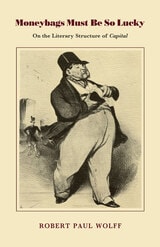
Moneybags Must Be So Lucky
On the Literary Structure of CapitalRobert P. Wolff
University of Massachusetts Press, 1988
Narrative Innovation and Incoherence
Ideology in Defoe, Goldsmith, Austen, Eliot, and HemingwayMichael M. Boardman
Duke University Press, 1992
Urgent innovations, in this account, can only be understood as unique, individual responses to crises in belief. Taking as a point of departure French theorist Althusser's conviction that ideology is intelligible only through structure, Boardman searches for an explanation of both form and ideology not in Marxist concepts of base and superstructure but in the particular structure of an individual artist's writing career. Narrative ideology here becomes more complex than is generally assumed.
Theoretically informed yet avoiding essentializing explanations of narrative invention, Narrative Innovation and Incoherence offers unexpected insights into the multifaceted relations between form and belief. It will encourage serious students of the novel to reexamine the importance of poetics as a mediating factor in the means of production.
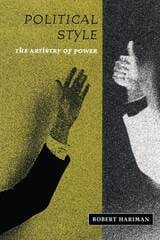
Political Style
The Artistry of PowerRobert Hariman
University of Chicago Press, 1995
In critical studies of classic texts, Hariman identifies four dominant political styles. The realist style, as found in Machiavelli's The Prince, creates a world of sheer power, constant calculation, and emotional control; this style is the common sense of modern political science. The courtly style, depicted in Kapuscinski's The Emperor, is characterized by high decorousness, hierarchies, and fixation on the body of the sovereign; this style infuses mass media coverage of the American presidency. The republican style, reflected in Cicero's letters to Atticus, promotes the art of oratory, consensus, and civility; it informs our ideal of democratic conversation. The bureaucratic style, as captured in Kafka's The Castle, emphasizes institutional procedures, official character, and the priority of writing; this style structures everday life.
Hariman looks at effective political artistry in figures from antiquity to modern politicians such as Vaclav Havel, Ronald Reagan, and Bill Clinton. He discusses the crises to which each style is susceptible, as well as the social and moral consequences of each style's success.
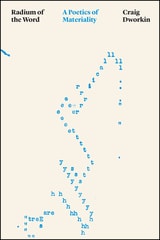
Radium of the Word
A Poetics of MaterialityCraig Dworkin
University of Chicago Press, 2020
Radium of the Word takes its title from Mina Loy’s poem for Gertrude Stein, which hails her as the Madame “Curie / of the laboratory / of vocabulary.” In this spirit, Dworkin considers prose as a dynamic literary form, characterized by experimentation. Dworkin draws on examples from writers as diverse as Lyn Hejinian, William Faulkner, and Joseph Roth. He takes up the status of the proper name in Modernism, with examples from Stein, Loy, and Guillaume Apollinaire, and he offers in-depth analyses of individual authors from the counter-canon of the avant-garde, including P. Inman, Russell Atkins, N. H. Pritchard, and Andy Warhol. The result is an inspiring intervention in contemporary poetics.
Retracing the Platonic Text
John Russon and John Sallis
Northwestern University Press, 1999
Senses of Style
Poetry before InterpretationJeff Dolven
University of Chicago Press, 2017
Shakespeare from the Margins
Language, Culture, ContextPatricia Parker
University of Chicago Press, 1996
Combining feminist and historical approaches with attention to the "matter" of language as well as of race and gender, Parker's brilliant "edification from the margins" illuminates much that has been overlooked, both in Shakespeare and in early modern culture. This book, a reexamination of popular and less familiar texts, will be indispensable to all students of Shakespeare and the early modern period.
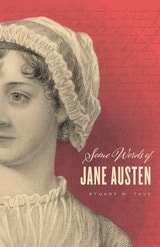
Some Words of Jane Austen
Stuart M. Tave
University of Chicago Press, 2019
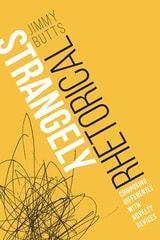
Strangely Rhetorical
Composing Differently With Novelty Devicesby Jimmy Butts
Utah State University Press, 2022
Using a new theoretical framework—that strangeness is inherent within all rhetorical interactions and is potentially useful—Butts demonstrates how rhetoric is always already coming from an Other, offering an ethical context for how defamiliarized texts work with different audiences. Applying examples of seven figures for composing in and across written, aural, visual, electronic, and spatial texts (the WAVES of media), Butts shows how divergence is possible in all sorts of refigured multimodal ways.
Strangely Rhetorical rethinks what exactly rhetoric is and does, considering the ways that strange compositions help rhetors connect across a broad range of networks in a world haunted by distance. This is a book about strange rhetoric for makers and creatives, for students and teachers, and for composers of all sorts.
Style and the Future of Composition Studies
Paul Butler
Utah State University Press, 2020
Many college writing teachers operate under the belief that style still refers primarily to the kinds of issues discussed in Strunk and White’s popular but outdated book The Elements of Style. This work not only challenges this view but also offers theories and pedagogies from diverse perspectives that help teachers and students develop strategic habits and mindsets to negotiate languages, genres, and discourse conventions. The chapters explore the ways in which style directly affects—and is affected by—multiple sources of shifting disciplinary inquiry, contributing new insights by drawing on research in cultural studies, sociolinguistics, discourse studies, translingualism, and writing across the curriculum, as well as new approaches to classical rhetorical theory.
The reemergence of stylistic inquiry can be used dynamically to produce new insights not only about emerging disciplinary interests but also about the study of style as a kind of language in and of itself. Style and the Future of Composition Studies demonstrates that style deserves to be a central focus of writing teaching. More than just the next style collection, the book advocates for style’s larger prominence in composition discussions generally. It will be of interest to a broad range of students and scholars of writing studies, as well as a wider set of readers in academe.
Contributors:
Cydney Alexis, Laura Aull, Anthony Box, Jimmy Butts, Mike Duncan, William FitzGerald, Melissa Goldthwaite, Eric House, TR Johnson, Almas Khan, Zak Lancaster, Eric Leake, Andrea Olinger, Thomas Pace, Jarron Slater, Jonathan Udelson
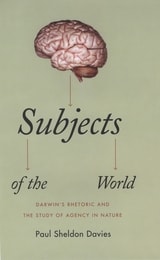
Subjects of the World
Darwin's Rhetoric and the Study of Agency in NaturePaul Sheldon Davies
University of Chicago Press, 2009
Being human while trying to scientifically study human nature confronts us with our most vexing problem. Efforts to explicate the human mind are thwarted by our cultural biases and entrenched infirmities; our first-person experiences as practical agents convince us that we have capacities beyond the reach of scientific explanation. What we need to move forward in our understanding of human agency, Paul Sheldon Davies argues, is a reform in the way we study ourselves and a long overdue break with traditional humanist thinking.
Davies locates a model for change in the rhetorical strategies employed by Charles Darwin in On the Origin of Species. Darwin worked hard to anticipate and diminish the anxieties and biases that his radically historical view of life was bound to provoke. Likewise, Davies draws from the history of science and contemporary psychology and neuroscience to build a framework for the study of human agency that identifies and diminishes outdated and limiting biases. The result is a heady, philosophically wide-ranging argument in favor of recognizing that humans are, like everything else, subjects of the natural world—an acknowledgement that may free us to see the world the way it actually is.
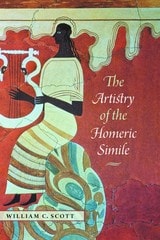
The Artistry of the Homeric Simile
William C. Scott
Dartmouth College Press, 2009
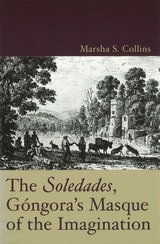
The Soledades, Góngora's Masque of the Imagination
Marsha S. Collins
University of Missouri Press, 2002
Prince of Darkness or Angel of Light? The pastoral masterpiece the Soledades garnered both titles for its author, Luis de Góngora, one of Spain's premier poets. In The Soledades, Góngora's Masque of the Imagination, Marsha S. Collins focuses on the brilliant seventeenth-century Spanish poet's contentious work of art. The Soledades have sparked controversy since they were first circulated at court in 1612-1614 and continue to do so even now, as Góngora has become for some critics the poster child of postmodernism. These perplexing 2,000-plus line pastoral poems garnered endless debates over the value and meaning of the author's enigmatic, challenging poetry and gave rise to his reputation, causing his very name to become an English term for obscurity.
Collins views these controversial poems in a different light, as a literary work that is a product of European court culture. She shows that the Soledades are in essence a court masque, an elaborate theatrical genre that combines a variety of cultural forms and that unfolds in the mind of the reader. Collins maintains that far from serving as an example of "art for art's sake," the Soledades represent Góngora's bid to transform poetic language into a new kind of visionary discourse that allows readers to access secret truths invisible to the average member of the reading public.
Each of Collins's four chapters analyzes a different facet of the Soledades, offering readers varied means of approaching Góngora's great work and helping the audience read the poems with greater understanding and appreciation.
The Soledades, Góngora's Masque of the Imagination demystifies the daunting, hermetic language of the Soledades to make this masterpiece of imperial Spain accessible to a new, and wider, circle of modern readers. Collins's book transports readers to the court of Habsburg Spain, offering a window to court culture—art, music, alchemy, emblems, garden architecture—and revealing the remarkable beauty of one of Spain's greatest literary masterpieces. Interdisciplinary and cross-cultural in approach, this book will appeal to all Hispanists, including those interested in the current "New Baroque" vogue in Hispanic scholarship, as well as specialists in Renaissance and Baroque English and European literature.
The War on Words
Slavery, Race, and Free Speech in American LiteratureMichael T. Gilmore
University of Chicago Press, 2010
How did slavery and race impact American literature in the nineteenth century? In this ambitious book, Michael T. Gilmore argues that they were the carriers of linguistic restriction, and writers from Frederick Douglass to Stephen Crane wrestled with the demands for silence and circumspection that accompanied the antebellum fear of disunion and the postwar reconciliation between the North and South.
Proposing a radical new interpretation of nineteenth-century American literature, The War on Words examines struggles over permissible and impermissible utterance in works ranging from Thoreau’s “Civil Disobedience” to Henry James’s The Bostonians. Combining historical knowledge with groundbreaking readings of some of the classic texts of the American past, The War on Words places Lincoln’s Cooper Union address in the same constellation as Margaret Fuller’s feminism and Thomas Dixon’s defense of lynching. Arguing that slavery and race exerted coercive pressure on freedom of expression, Gilmore offers here a transformative study that alters our understanding of nineteenth-century literary culture and its fraught engagement with the right to speak.
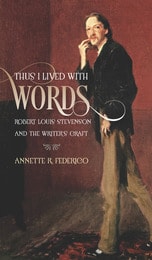
Thus I Lived with Words
Robert Louis Stevenson and the Writer's CraftAnnette R. Federico
University of Iowa Press, 2017
Stevenson belonged to a newly commercial literary world, an era of mass readership, marketing, and celebrity. He had plenty of practical advice for writers who wanted to enter the profession: study the best authors, aim for simplicity, strike a keynote, work on your style. He also held that a writer should adhere to the truth and utter only what seems sincere to his or her heart and experience of the world. Writers have messages to deliver, whether the work is a tale of Highland adventure, a collection of children’s verse, or an essay on umbrellas. Stevenson believed that an author could do no better than to find the appetite for joy, the secret place of delight that is the hidden nucleus of most people’s lives. His remarks on how to write, on style and method, and on pleasure and moral purpose contain everything in literature and life that he cared most about—adventuring, persisting, finding out who you are, and learning to embrace “the romance of destiny.”
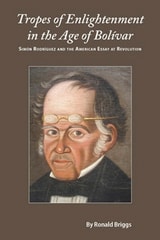
Tropes of Enlightenment in the Age of Bolivar
Simon Rodriguez and the American Essay at RevolutionRonald Briggs
Vanderbilt University Press, 2010
The book, released during the bicentennial of the early wars for Latin American independence, boldly places Rodriguez in the pantheon of important writers who influenced philosophical thought during the upheavals of the eighteenth and nineteenth centuries, including Ralph Waldo Emerson, Noah Webster, and Tom Paine. Beyond merely providing the first in-depth analysis of Rodriguez's writings and life work, Briggs also reveals an innovator of style as Rodriguez shaped the utility and vitality of the essay as an emerging form of argument.
Tropes of Enlightenment in the Age of Bolivar is an essential study of a unique and playful writer who is finally revealed as a foundational figure in Spanish American independence and an influential thinker in the larger field of hemispheric studies.
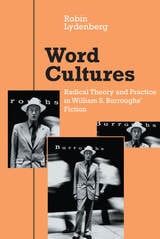
Word Cultures
Radical Theory and Practice in William S. Burroughs' FictionRobin Lydenberg
University of Illinois Press, 1987
Lydenberg focuses upon the stylistic accomplishments of this controversial and
experimental writer. In doing so, she skillfully demonstrates that the ideas
we now recognize as characteristic of post-structuralism and deconstruction
were being developed independently by Burroughs long ago.