Results by title
19 books match the query 'Literature and anthropology'
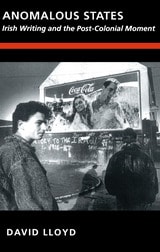
Anomalous States
Irish Writing and the Post-Colonial MomentDavid Lloyd
Duke University Press, 1993
Beginning with Heaney and Beckett, Lloyd shows how in these authors the question of identity connects with the dominance of conservative cultural nationalism and argues for the need to understand Irish culture in relation to the wider experience of colonized societies. A central essay reads Yeats's later works as a profound questioning of the founding of the state. Final essays examine the gradual formation of the state and nation as one element in a cultural process that involves conflict between popular cultural forms and emerging political economies of nationalism and the colonial state. Modern Ireland is thus seen as the product of a continuing process in which, Lloyd argues, the passage to national independence that defines Ireland's post-colonial status is no more than a moment in its continuing history.
Anomalous States makes an important contribution to the growing body of work that connects cultural theory with post-colonial historiography, literary analysis, and issues in contemporary politics. It will interest a wide readership in literary studies, cultural studies, anthropology, and history.
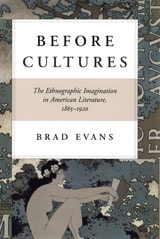
Before Cultures
The Ethnographic Imagination in American Literature, 1865-1920Brad Evans
University of Chicago Press, 2005
In this work, Brad Evans weaves together the histories of American literature and anthropology. His study brings alive not only the regionalist and ethnographic fiction of the time but also revives a range of neglected materials, including the Zuni sketchbooks of anthropologist Frank Hamilton Cushing; popular magazines such as Century Illustrated Monthly, which published Cushing's articles alongside Henry James's; the debate between Joel Chandler Harris, author/collector of the Uncle Remus folktales, and John Wesley Powell, perhaps the most important American anthropologist of the time; and Du Bois's polemics against the culture concept as it was being developed in the early twentieth century.
Written with clarity and grace, Before Cultures will be of value to students of American literature, history, and anthropology alike.
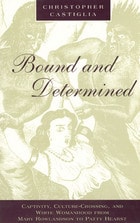
Bound and Determined
Captivity, Culture-Crossing, and White Womanhood from Mary Rowlandson to Patty HearstChristopher Castiglia
University of Chicago Press, 1996
Examining more than sixty accounts by women captives, as well as novels ranging from Susanna Rowson's eighteenth-century classic Rueben and Rachel to today's mass-market romances, Castiglia investigates paradoxes central to the genre. In captivity, women often find freedom from stereotypical roles as helpless, dependent, sexually vulnerable, and xenophobic. In their condemnations of their non-white captors, they defy assumptions about race that undergird their own societies. Castiglia questions critical conceptions of captivity stories as primarily an appeal to racism and misogyny, and instead finds in them an appeal of a much different nature: as all-too-rare stories of imaginative challenges to rigid gender roles and racial ideologies.
Whether the women of these stories resist or escape captivity, endure until they are released, or eventually choose to live among their captors, they end up with the power to be critical of both cultures. Castiglia shows that these compelling narratives, with their boundary crossings and persistent explorations of cultural divisions and differences, have significant implications for current critical investigations into the construction of gender, race, and nation.
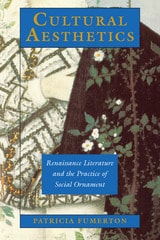
Cultural Aesthetics
Renaissance Literature and the Practice of Social OrnamentPatricia Fumerton
University of Chicago Press, 1991
Culture Concept
Writing and Difference in the Age of RealismMichael A. Elliott
University of Minnesota Press, 2002
Examines the prehistory of the American struggle to address cultural difference.
"Culture" is a term we commonly use to explain the differences in our ways of living. In this book Michael A. Elliott returns to the moment this usage was first articulated, tracing the concept of culture to the writings-folktales, dialect literature, local color sketches, and ethnographies-that provided its intellectual underpinnings in turn-of-the-century America.
The Culture Concept explains how this now-familiar definition of "culture" emerged during the late nineteenth century through the intersection of two separate endeavors that shared a commitment to recording group-based difference-American literary realism and scientific ethnography. Elliott looks at early works of cultural studies as diverse as the conjure tales of Charles Chesnutt, the Ghost Dance ethnography of James Mooney, and the prose narrative of the Omaha anthropologist-turned-author Francis La Flesche. His reading of these works-which struggle to find appropriate theoretical and textual tools for articulating a less chauvinistic understanding of human difference-is at once a recovery of a lost connection between American literary realism and ethnography and a productive inquiry into the usefulness of the culture concept as a critical tool in our time and times to come.
Dancing Ghosts
Native American And Christian Syncretism In Mary Austin's WorkMark T. Hoyer
University of Nevada Press, 1998
A significant and innovative contribution to Austin studies. How did an Illinois Methodist homesteader in the West come to create one of the most significant cosmological syntheses in American literature? In this study, Hoyer draws on his own knowledge of biblical religion and Native American cultures to explore Austin's creation of the "mythology of the American continent" she so valued. Austin lived in and wrote about "the land of little rain," semiarid and arid parts of California and Nevada that were home to the Northern Paiute, Shoshone, Interior Chumash, and Yokut peoples. Hoyer makes new and provocative connections between Austin and spiritual figures like Wovoka, the prophet of the Ghost Dance religion, and writers like Zitkala-sa and Mourning Dove, and he provides a particularly fine reading of Cogowea.
Far Afield
French Anthropology between Science and LiteratureVincent Debaene
University of Chicago Press, 2014
The relationship between anthropology and literature in France is one of careful curiosity. Literary writers are wary about anthropologists’ scientific austerity but intrigued by the objects they collect and the issues they raise, while anthropologists claim to be scientists but at the same time are deeply concerned with writing and representational practices. Debaene elucidates the richness that this curiosity fosters and the diverse range of writings it has produced, from Proustian memoirs to proto-surrealist diaries. In the end he offers a fascinating intellectual history, one that is itself located precisely where science and literature meet.
Fictionalizing Anthropology
Encounters and Fabulations at the Edges of the HumanStuart J. McLean
University of Minnesota Press, 2017
What might become of anthropology if it were to suspend its sometime claims to be a social science? What if it were to turn instead to exploring its affinities with art and literature as a mode of engaged creative practice carried forward in a world heterogeneously composed of humans and other than humans? Stuart McLean claims that anthropology stands to learn most from art and literature not as “evidence” to support explanations based on an appeal to social context or history but as modes of engagement with the materiality of expressive media—including language—that always retain the capacity to disrupt or exceed the human projects enacted through them.
At once comparative in scope and ethnographically informed, Fictionalizing Anthropology draws on an eclectic range of sources, including ancient Mesopotamian myth, Norse saga literature, Hesiod, Lucretius, Joyce, Artaud, and Lispector, as well as film, multimedia, and performance art, along with the concept of “fabulation” (the making of fictions capable of intervening in and transforming reality) developed in the writings of Bergson and Deleuze. Sharing with proponents of anthropology’s recent “ontological turn,” McLean insists that experiments with language and form are a performative means of exploring alternative possibilities of collective existence, new ways of being human and other than human, and that such experiments must therefore be indispensable to anthropology’s engagement with the contemporary world.

Imaginative Horizons
An Essay in Literary-Philosophical AnthropologyVincent Crapanzano
University of Chicago Press, 2003
Indian Nation
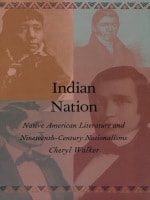
Native American Literature and Nineteenth-Century NationalismsCheryl Walker
Duke University Press, 1997
Walker examines the rhetoric and writings of nineteenth-century Native Americans, including William Apess, Black Hawk, George Copway, John Rollin Ridge, and Sarah Winnemucca. Demonstrating with unique detail how these authors worked to transform venerable myths and icons of American identity, Indian Nation chronicles Native American participation in the forming of an American nationalism in both published texts and speeches that were delivered throughout the United States. Pottawattomie Chief Simon Pokagon’s "The Red Man’s Rebuke," an important document of Indian oratory, is published here in its entirety for the first time since 1893.
By looking at this writing through the lens of the best theoretical work on nationality, postcoloniality, and the subaltern, Walker creates a new and encompassing picture of the relationship between Native Americans and whites. She shows that, contrary to previous studies, America in the nineteenth century was intercultural in significant ways.
The Anthropological Imagination in Latin American Literature
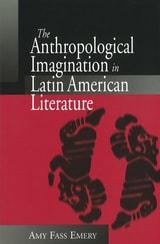
Amy Fass Emery
University of Missouri Press, 1996
In this examination of the cross between anthropology and literature in contemporary Latin America, Amy Fass Emery studies how Latin American writers' experiences and studies in the field of anthropology have shaped their representations of cultural Others in fiction. She approaches her subject first in broad terms and then in close textual readings of important writers such as Alejo Carpentier, José María Arguedas, and Miguel Barnet.
Emery develops the concept of an "anthropological imagination"--that is, the conjunction of anthropology and literature in twentieth-century Latin American literary texts. While exploring the uses of anthropology in contemporary narrative and fiction, Emery also gives consideration to documentary and testimonial writings.
The major focus of this engaging work is the study of the novel. Analyzing fictions by authors from Cuba, Argentina, Brazil, and Peru, Emery covers a wide geographical region, as well as a diverse group of topics. Subjects such as surrealist primitivism, the testimonio, the transcultural novel, and the relation of the anthropological imagination to the vexed question of postmodernism in the Latin American context are all given insightful deliberation.
As the first extended study of interrelations between anthropology and literature in Latin America, Emery's work will prove invaluable to a wide spectrum of Latin Americanists and to those with comparative interests in anthropology, twentieth-century literature, and postmodernism.
The Drunken Duchess of Vassar
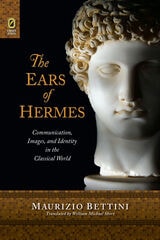
Communication, Images, and Identity in the Classical WorldMaurizio Bettini
The Ohio State University Press, 2011
The Frontiers of Women's Writing
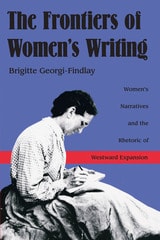
Women's Narratives and the Rhetoric of Westward ExpansionBrigitte Georgi-Findlay
University of Arizona Press, 1996
Brigitte Georgi-Findlay presents a range of writings that reflects the diversity of the western experience. Beginning with the narratives of Caroline Kirkland and other women of the early frontier, she reviews the diaries of the overland trails; letters and journals of the wives of army officers during the Indian wars; professional writings, focusing largely on travel, by women such as Caroline Leighton from the regional publishing cultures that emerged in the Far West during the last quarter of the century; and late-nineteenth- and early-twentieth-century accounts of missionaries and teachers on Indian reservations. Most of the writers were white, literate women who asserted their own kind of cultural authority over the lands and people they encountered. Their accounts are not only set in relation to a masculine frontier myth but also investigated for clues about their own involvement with territorial expansion. By exploring the various ways in which women writers actively contributed to and at times rejected the development of a national narrative of territorial expansion based on empire building and colonization, the author shows how their accounts are implicated in expansionist processes at the same time that they formulate positions of innocence and detachment.
Georgi-Findlay has drawn on American studies scholarship, feminist criticism, and studies of colonial discourse to examine the strategies of women's representation in writing about the West in ways that most theorists have not. She critiques generally accepted stereotypes and assumptions--both about women's writing and its difference of view in particular, and about frontier discourse and the rhetoric of westward expansion in general--as she offers a significant contribution to literary studies of the West that will challenge scholars across a wide range of disciplines.
The Primitive, the Aesthetic, and the Savage
An Enlightenment ProblematicTony C. Brown
University of Minnesota Press, 2012
Tony C. Brown examines “the inescapable yet infinitely troubling figure of the not-quite-nothing” in Enlightenment attempts to think about the aesthetic and the savage. The various texts Brown considers—including the writings of Addison, Rousseau, Kant, and Defoe—turn to exotic figures in order to delimit the aesthetic, and to aesthetics in order to comprehend the savage.
In his intriguing exploration Brown discovers that the primitive introduces into the aesthetic and the savage an element that proves necessary yet difficult to conceive. At its most profound, Brown explains, this element engenders a loss of confidence in one’s ability to understand the human’s relation to itself and to the world. That loss of confidence—what Brown refers to as a breach in anthropological security—traces to an inability to maintain a sense of self in the face of the New World. Demonstrating the impact of the primitive on the aesthetic and the savage, he shows how the eighteenth-century writers he focuses on struggle to define the human’s place in the world. As Brown explains, these authors go back again and again to “exotic” examples from the New World—such as Indian burial mounds and Maori tattooing practice—making them so ubiquitous that they come to underwrite, even produce, philosophy and aesthetics.
The Sign of the Cannibal
Melville and the Making of a Postcolonial ReaderGeoffrey Sanborn
Duke University Press, 1998
Sanborn focuses on the representations of cannibalism in three of Melville’s key texts—Typee, Moby-Dick, and “Benito Cereno.” Drawing on accounts of Pacific voyages from two centuries and virtually the entire corpus of the post-Enlightenment discourse on cannibalism, he shows how Melville used his narratives to work through the ways in which cannibalism had been understood. In so doing, argues Sanborn, Melville sought to move his readers through stages of possible responses to the phenomenon in order to lead them to consider alternatives to established assumptions and conventions—to understand that in the savage they see primarily their own fear and fascination. Melville thus becomes a narrator of the postcolonial encounter as he uncovers the dynamic of dread and menace that marks the Western construction of the “non-savage” human.
Extending the work of Slavoj Zizek and Homi Bhabha while providing significant new insights into the work of Melville, The Sign of the Cannibal represents a breakthrough for students and scholars of postcolonial theory, American literary history, critical anthropology, race, and masculinity.
The View From On the Road
The Rhetorical Vision of Jack KerouacOmar Swartz
Southern Illinois University Press, 2000
Through careful analysis of Jack Kerouac’s On the Road, Omar Swartz argues that Kerouac’s influence on American society is largely rhetorical. Kerouac’s significance as a cultural icon can be best understood, Swartz asserts, in terms of traditional rhetorical practices and principles.
To Swartz, Kerouac is a rhetor who symbolically reconstructs his world and offers arguments and encouragements for others to follow. Swartz proposes that On the Road constitutes a “rhetorical vision,” a reality-defining discourse suggesting alternative possibilities for growth and change. Swartz asserts that the reader of Kerouac’s On theRoadbecomes capable of responding to the larger, confusing culture in a strategic manner. Kerouac's rhetorical vision of an alternative social and cultural reality contributes to the identity of localized cultures within the United States.
Theories of Africans
Francophone Literature and Anthropology in AfricaChristopher L. Miller
University of Chicago Press, 1990
". . . a superb cross-disciplinary analysis."—Y. Mudimbe
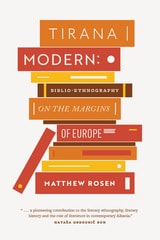
Tirana Modern
Biblio-Ethnography on the Margins of EuropeMatthew Rosen
Vanderbilt University Press, 2022
Drawing on material collected through fieldwork with a community of readers, writers, and translators attached to the independent Albanian publisher Pika pa sipërfaqe (Point without Surface), Tirana Modern provides a tightly focused ethnography of literary culture in Albania that brings into relief the more general dialectic between social imagination and social reality as mediated by reading and literature.
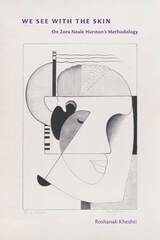
We See with the Skin
On Zora Neale Hurston's MethodologyRoshanak Kheshti
Duke University Press, 2026