Results by title
25 books match the query 'Little Rock'

A Capital Idea
An Illustrated History of the Capital HotelSteven Weintz
University of Arkansas Press, 2002
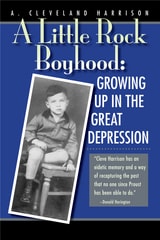
A Little Rock Boyhood
Growing Up in the Great DepressionA. Cleveland Harrison
Butler Center for Arkansas Studies, 2010
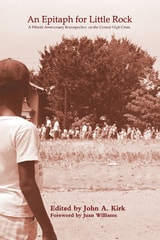
An Epitaph for Little Rock
A Fiftieth Anniversary Retrospective on the Central High CrisisJohn A. Kirk
University of Arkansas Press, 2008
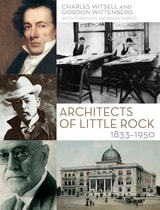
Architects of Little Rock
1833-1950Charles Witsell
University of Arkansas Press, 2014
Published in collaboration with the Fay Jones School of Architecture.
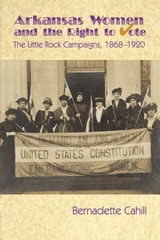
Arkansas Women and the Right to Vote
The Little Rock Campaigns: 1868-1920Bernadette Cahill
Butler Center for Arkansas Studies, 2015
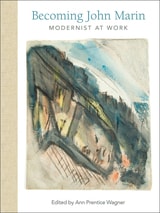
Becoming John Marin
Modernist at WorkAnn Prentice Wagner
University of Arkansas Press, 2018
John Marin was a major figure among the cutting-edge circle of American modernist artists who showed his work in Alfred Stieglitz’s New York galleries from 1909 until 1950. A new collection of the artist’s work at the Arkansas Arts Center, given by Marin’s daughter-in-law, forms the basis of this first book of essays and images to concentrate on Marin’s drawings in the context of Marin’s life, his watercolors, and his etchings.
We follow Marin to his most famous subject matter: New York City and the coast of Maine. Foundational drawings and an unfinished watercolor of the towering Woolworth Building, still under construction when they were made in 1912, begin the story of a renowned group of watercolors first exhibited in 1913 at Alfred Stieglitz’s 291 Gallery and then at the ground-breaking 1913 Armory Show. Other images take us to lesser-known locales, such as the Ramapo Mountains in New York and New Jersey where Marin often painted when he couldn’t get to Maine. More obscure aspects of the artist’s career explored in this collection include portraits of friends and family, charming drawings of animals, and circus scenes.
Becoming John Marin invites readers to look over this important artist’s shoulder as he created and honed the sketches he would interpret into completed watercolors and etchings, illustrating the evolution of his style and methods as he transformed from intuitive draftsman to innovative modernist watercolorist and etcher.
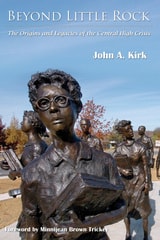
Beyond Little Rock
The Origins and Legacies of the Central High CrisisJohn A. Kirk
University of Arkansas Press, 2007
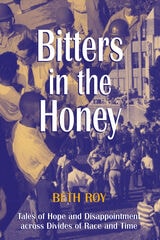
Bitters in the Honey
Tales of Hope and Disappointment across Divides of Race and TimeBeth Roy
University of Arkansas Press, 1999
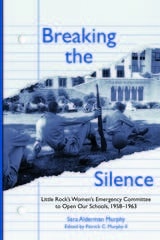
Breaking the Silence
The Little Rock Women's Emergency Committee to Open Our Schools, 1958–1963Sara Murphy
University of Arkansas Press, 1997
The Little Rock Central High School integration crisis did not end in1957 when President Eisenhower sent a portion of the first Airborne Division to protect nine black students. The turmoil was entering its second year in 1958 when Arkansas governor Orval Faubus invoked a hastily passed state law to close the high schools rather than obey the federal court orders that would integrate them.
A group of respectable, middle-class white women, faced with the prospect of no schools as well as the further loss of their city’s good name, turned militant. Led by Adolphine Fletcher Terry, a prominent, “old family” civic leader in her seventies, the women quickly put together the Women’s Emergency Committee to Open Our Schools (WEC), a highly effective organization that bombarded the city with ads, fliers, and statements challenging Faubus’s action. At peak membership, the WEC mustered two thousand to their cause. Largely inexperienced in politics when they joined the WEC, these women became articulate, confident promoters of public schools and helped others to understand that those schools must be fully integrated.
Forty years later, Sara Murphy, a key member of the WEC, recounts the rarely told sto1y of these courageous women who formed a resistance movement. With passion and sensitivity, she reconstructs the challenges and triumphs of that battle, which issued from the mutual link Southern white women shared with disfranchised African Americans in their common goal for full citizenship.
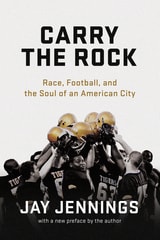
Carry the Rock
Race, Football, and the Soul of an American CityJay Jennings
University of Arkansas Press, 2023
Carry the Rock tells the story of the dramatic ups and downs of a high school football season and reveals a city struggling with its legacy of racial discrimination and the complex issues of contemporary segregation. In the season Jennings masterfully chronicles, Cox finds his ideas sorely tested in his attempts to unify the team, and the result is an account brimming with humor, compassion, frustration, and honesty. What Friday Night Lights did for small-town Texas, Carry the Rock does for the urban South and for any place like Little Rock where sports, race, and community intersect.
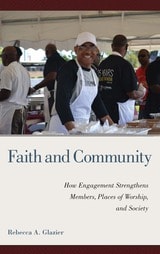
Faith and Community
How Engagement Strengthens Members, Places of Worship, and SocietyRebecca A. Glazier
Temple University Press, 2024
Faith and Community shows the benefits of religious people taking action in their communities. Through more than a decade of multi-method data collection, Rebecca Glazier surveyed over 4,000 congregants and nearly 500 clergy in Little Rock, Arkansas to gather opinions from members and leaders on community issues and engagement. Together with interviews and case studies, her findings indicate that active congregants are happier and more civically involved.
Faith and Community provides valuable insights into the relationship between religion and community engagement. The data illustrates how community engagement benefits individuals, congregations, and democracy and offers one solution to what ails religion in America today.
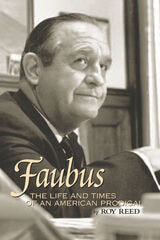
Faubus
The Life and Times of an American ProdigalRoy Reed
University of Arkansas Press, 1999
New York Times Book Review Notable Book for 1997
1998 Certificate of Commendation, American Association for State and Local History
Finding the Lost Year
What Happened When Little Rock Closed Its Public SchoolsSondra Gordy
University of Arkansas Press, 2009
Much has been written about the Little Rock School Crisis of 1957, but very little has been devoted to the following year—the Lost Year, 1958–59—when Little Rock schools were closed to all students, both black and white. Finding the Lost Year is the first book to look at the unresolved elements of the school desegregation crisis and how it turned into a community crisis, when policymakers thwarted desegregation and challenged the creation of a racially integrated community and when competing groups staked out agendas that set Arkansas’s capital on a path that has played out for the past fifty years.
In Little Rock in 1958, 3,665 students were locked out of a free public education. Teachers’ lives were disrupted, but students’ lives were even more confused. Some were able to attend schools outside the city, some left the state, some joined the military, some took correspondence courses, but fully 50 percent of the black students went without any schooling. Drawing on personal interviews with over sixty former teachers and students, black and white, Gordy details the long-term consequences for students affected by events and circumstances over which they had little control.
“Fifty years ago segregationists trying to keep black students out of Little Rock Central High inadvertently broke up one of the country’s greatest football dynasties. . . . Wait a minute. . . . Who said you can’t have a high school football team just because you don’t have a high school? Canceling football, Faubus decreed, would be ‘a cruel and unnecessary blow to the children.’ O.K. then, everyone agreed. Play ball!”
—“Blinded by History,” Sports Illustrated

It's Official!
The Real Stories behind Arkansas’s State SymbolsDavid Ware
Butler Center for Arkansas Studies, 2015
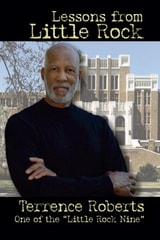
Lessons from Little Rock
Terrance Roberts
Butler Center for Arkansas Studies, 2009
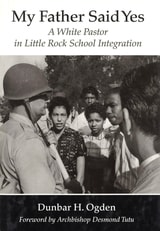
My Father Said Yes
A White Pastor in Little Rock School IntegrationDunbar H. Ogden
Vanderbilt University Press, 2008
My Father Said Yes is the untold story of the Reverend Dunbar Ogden, who became the pro-integration leader in Little Rock's white community. He responded to a call for support from Daisy Bates, co-owner of the town's black newspaper. Both faced fierce opposition from within as well as from outside. Reverend Ogden lost his church and Daisy Bates lost her newspaper.
This memoir is also a moving father-son story. In this frank account, the author discusses the depression his father battled for most of his life, as well as the family tragedy of his brother's suicide.
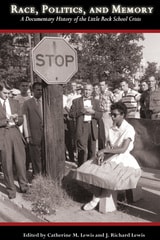
Race, Politics, and Memory
A Documentary History of the Little Rock School CrisisCatherine M. Lewis
University of Arkansas Press, 2007
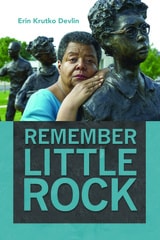
Remember Little Rock
Erin Krutko Devlin
University of Massachusetts Press, 2017
In Remember Little Rock Erin Krutko Devlin explores public memories surrounding the iconic Arkansas school desegregation crisis of 1957 and shows how these memories were vigorously contested and sometimes deployed against the cause. Delving into a wide variety of sources, from memoirs to televised docudramas, commemoration ceremonies, and the creation of Little Rock High museums, Devlin reveals how many white moderates proclaimed Little Rock a victory for civil rights and educational equality even as segregation persisted. At the same time, African American activists, students, and their families asserted their own stories in the ongoing fight for racial justice.
Devlin also demonstrates that public memory directly bears on law and policy. She argues that the triumphal narrative of civil rights has been used to stall school desegregation, support tokenism, and to roll back federal court oversight of school desegregation, voter registration, and efforts to promote diversity in public institutions. Remember Little Rock examines the chasm between the rhetoric of the “post–civil rights” era and the reality of enduring racial inequality.
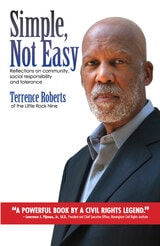
Simple Not Easy
Reflections on community social responsibility and toleranceTerrence Roberts
Parkhurst Brothers, Inc., 2010
HE MADE HISTORY. HE TELLS THE TRUTHS HE KNOWS.
LEAD TITLE/Our National Conversation Series
----Margot Stern Strom, Executive Director, Facing History and Ourselves, Inc.
"Terrence Roberts challenges all of us to make the world more inclusive by adjusting our 'mental maps.' He reminds us that we will not achieve that long-sought beloved community until we recognize the value of each individual-until we affirm each other. Simple, NotEasy is one trailblazer's mingling of history and contemporary mattersto engage a new conversations on community, social responsibility and tolerance. A powerful book by a civil rights legend."
--- Lawrence J. Pijeaux, Jr., Ed.D.,
The Boy from Altheimer
From the Depression to the BoardroomWilliam H. Bowen
University of Arkansas Press, 2006
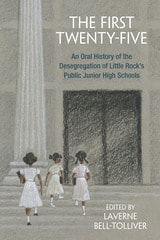
The First Twenty-Five
An Oral History of the Desegregation of Little Rock’s Public Junior High SchoolsLaVerne Bell-Tolliver
University of Arkansas Press, 2018
“It was one of those periods that you got through, as opposed to enjoyed. It wasn’t an environment that . . . was nurturing, so you shut it out. You just got through it. You just took it a day at a time. You excelled if you could. You did your best. You felt as though the eyes of the community were on you.”—Glenda Wilson, East Side Junior High
Much has been written about the historical desegregation of Little Rock Central High School by nine African American students in 1957. History has been silent, however, about the students who desegregated Little Rock’s five public junior high schools—East Side, Forest Heights, Pulaski Heights, Southwest, and West Side—in 1961 and 1962.
The First Twenty-Five gathers the personal stories of these students some fifty years later. They recall what it was like to break down long-standing racial barriers while in their early teens—a developmental stage that often brings emotional vulnerability. In their own words, these individuals share what they saw, heard, and felt as children on the front lines of the civil rights movement, providing insight about this important time in Little Rock, and how these often painful events from their childhoods affected the rest of their lives.
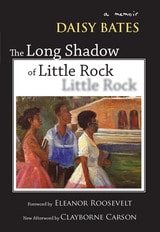
The Long Shadow of Little Rock
A MemoirDaisy Bates
University of Arkansas Press, 2007

Trails of Little Rock
Hiking, Biking, and Kayaking Trails in Little RockJohnnie Chamberlin
Parkhurst Brothers, Inc., 2009
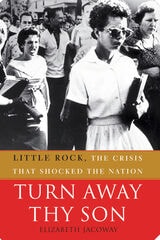
Turn Away Thy Son
Little Rock, The Crisis that Shocked the NationElizabeth Jacoway
University of Arkansas Press, 2007
“This is a mesmerizing and brave book, a story with complicated layers and meaning for all Americans, a heroic saga of progress and its consequences.”
—Ken Burns, director of Jazz and The War
In September 1957 nine black children tried to integrate Arkansas’s Little Rock Central High School in accordance with the Supreme Court’s decision in Brown v. Board of Education. Claiming he was acting to keep the peace, Gov. Orval Faubus used the Arkansas National Guard to keep them out of the school. After a lengthy standoff, President Eisenhower called in the 101st Airborne and reluctantly, slowly, but forcibly began to integrate the school. The standoff became a rallying cry for Southern segregationists and a marker of the country’s shame.
The accounts that have been so mythologized over the years leave people embarrassed and angry, yet the myth is a cardboard cutout of the full story. Turn Away Thy Son, told from the point of view of sixteen key participants, brings the nine students, their tormentors, the school administration, the governor, and the press to vivid life. It shows the truth about Little Rock, beyond the caricatures to the fundamental driving forces that made school desegregation the hottest of hot-button issues in the Jim Crow South.
Turn Away Thy Son was originally published by Free Press in 2007.
Winner of the 2008 Booker Worthen Literary Prize.
Understanding the Little Rock Crisis
An Exercise in Remembrance and ReconciliationElizabeth Jacoway
University of Arkansas Press, 1999