Results by title
9 books match the query 'Long-term care'
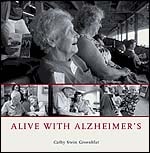
Alive with Alzheimer's
Cathy Stein Greenblat
University of Chicago Press, 2004
This small, tender volume of 85 photographs and accompanying discussion powerfully shows the limitations of this view. Cathy Stein Greenblat, an internationally respected sociologist and photographer, demonstrates in Alive with Alzheimer's that, while the ravages of the disease are real, Alzheimer's sufferers can do more than survive, they can thrive. Her images, interviews, and observations attest to the possibility of their being "alive" with Alzheimer's far beyond the expectations of the general public and even of many physicians with long experience with the disease.
Greenblat offers a new vision, taking us into a world of life-enhancing institutional care. Nursing homes and similar facilities don't have to be a last resort; as Greenblat shows, with a dedicated and experienced staff and an enriched environment (that includes respect, choices, pets, and music), extraordinary changes can be effected in Alzheimer's patients. Alive with Alzheimer's, the first photographic book on the disease, offers hope and inspiration. Moreover, its vivid, impressive evidence that ongoing stimulation in a good institutional setting can sustain Alzheimer's patients at a far higher level than is generally believed has significant implications for personal and policy decisions.
The new standard of care chronicled in Alive with Alzheimer's will provide hope and inspiration to those touched by the disease. As Dr. Enid Rockwell writes in her Afterword to Greenblat's moving book, "These photographs are extraordinary for practitioners, for family members, for everyone to see what's going on with these people. The stimulation pictured in this book is more powerful than any medication that we will have in our lifetime. . . . They so vividly show us that there are people inside these bodies, people with personalities, who experience emotion, and they show that there is life after Alzheimer's."

Growing Older in World Cities
New York, London, Paris, and TokyoVictor G. Rodwin
Vanderbilt University Press, 2006
New York, London, Paris, and Tokyo are the four largest cities among the wealthiest, most developed nations of the world. The essays commissioned for this volume compare what it is like to grow older in these cities with respect to health care, quality of life, housing, and long-term care. The contributors look beyond aggregate national data to highlight the importance of how local authorities implement policies.
Individual and Social Responsibility
Child Care, Education, Medical Care, and Long-Term Care in AmericaEdited by Victor R. Fuchs
University of Chicago Press, 1995
Four in-depth studies of human-service sectors—child care, education, medical care, and long-term care for the elderly—are followed by six cross-sector studies that stimulate new ways of thinking about human services through the application of economic theory, institutional analysis, and the history of social policy.
The contributors include Kenneth J. Arrow, Martin Feldstein, Victor Fuchs, Alan M. Garber, Eric A. Hanushek, Christopher Jencks, Seymour Martin Lipset, Glenn Loury, Roger G. Noll, Paul M. Romer, Amartya Sen, and Theda Skocpol.
This timely study sheds important light on the tension between individual and social responsibility, and will appeal to economists and other social scientists and policymakers concerned with social policy issues.

It Shouldn't Be This Way
The Failure of Long-Term CareRobert L. Kane
Vanderbilt University Press, 2005
Part memoir, part practical guide, part prescription for change, It Shouldn't Be This Way is a unique look at the problems of long-term care. Robert L. Kane, a highly experienced physician and gerontologist, and his sister, Joan C. West, tell the painful story of what happened to their mother after she suffered a debilitating stroke and spent the last years of her life in rehabilitation, assisted-living facilities, and finally a nursing home. Along the way, her adult children encountered some professionals who were kind and considerate but also many frustrations—inadequate care and the need to hire private duty aides, as well as poor communication and lack of coordination throughout the system. The situation, they found, proved far more difficult than it needed to be.
As the authors recount their mother's story, they impart various lessons they learned from each phase of the experience. They alert those who are confronting such situations for the first time about what they will likely face and how to approach the problems. Closing with a broader look at why long-term care is the way it is, they propose steps to make necessary reforms, including the development of national organizations to work for change. Their message to families, care professionals, and policy-makers could not be more urgent.

Long-Term Care around the World
Edited by Jonathan Gruber and Kathleen McGarry
University of Chicago Press, 2025
A comparative analysis of both formal and informal long-term care in ten of the world’s wealthiest countries.
Nations throughout the world are in the midst of an enormous demographic transition, with life expectancy increasing and fertility falling, leading to a rapidly aging population and critical implications for long-term care around the world. This volume documents and compares long-term care programs in ten wealthy countries.
Analyses of survey data and government statistics show that the costs of long-term care are beyond the financial means of a large fraction of the elderly population in most countries, particularly the oldest and most disabled. As a result, public systems bear most of the cost of formal long-term care, such as care in an institution or paid home care. Most countries spend more on nursing homes than on home care, but this relationship varies widely as does the mix of care needs and resources used to define eligibility for public funding. At the same time, most care is provided informally through family or unpaid caregivers. The costs of informal care, including the foregone earnings of caregivers, are estimated to account for at least one-third of all long-term care spending in every country. Thus, any estimate of the social costs of long-term care must account for the implicit costs of informal care.
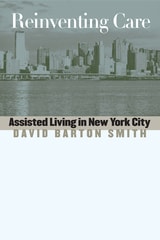
Reinventing Care
Assisted Living in New York CityDavid Barton Smith
Vanderbilt University Press, 2003
In Reinventing Care, David Barton Smith offers brilliant insights into those questions by examining the realities of assisted living in New York City. Encompassing the largest, most concentrated population of elderly in the United States, New York spends more per person caring for its seniors than any other urban center. Yet, while the size of the city's care system boggles the mind, it nevertheless contains the same elements that exist in other metropolitan areas and thus provides valuable lessons for the nation as a whole.
Smith's study draws on twenty-five years of research, including hundreds of interviews and visits to representative facilities. He provides a succinct overview of how care is presently organized for New York's aging population and traces the history of the system up to the present. Among the key issues he addresses are the role of market forces and government regulation, the impact of class differences on access to quality care, and the ways in which perceptions of community affect the creation and management of assisted living programs. At the heart of the book are ten fascinating case studies, half of them focused on private-pay facilities and the other half on public-pay institutions.
While finding that the actualities of assisted living rarely match the rhetoric of its proponents, Smith sees much to admire in its goals. He suggests tactics and strategies--such as promoting family- and community-based models of assisted living and adopting a standard of licensure for certain facilities--that could point the way to a better future.

The Coming Health Crisis
Who Will Pay for Care for the Aged in the 21st Century?John R. Wolfe
University of Chicago Press, 1993
In previous decades, when younger Americans far outnumbered older ones, retirees could depend on financial support through taxes from the population at large. But as "Boomers" retire and the work force begins to shrink, there will be a disproportionately large population of retirees to workers. With such a big jump in the percentage of older Americans in the population, fewer workers will be able to to transfer funds, through taxes, to retirees. Moreover, other traditionally reliable sources of financial assistance—Social Security, Medicare, and Medicaid—have faced serious financial difficulties in recent years. Who will the aged turn to for assistance?
The Coming Health Crisis suggests that as funds from all quarters dwindle, older Americans will have to look to alternative programs for financial assistance. Wolfe urges immediate action to develop new saving programs and increase existing transfer schemes to head off an imminent crisis. Although tax increases might provide some resources, he demonstrates that it is more important to accumulate capital to create solid reserves for the future. Wolfe also explores two roles for government: prefunding new or existing social insurance programs and promoting private insurance options. By exempting insurance fund income from corporate taxation and permitting people at all income levels to defer income tax on accounts earmarked for long-term care, he shows how government could greatly encourage and expand personal saving.
Finally, this work assesses the value of other recent health and long-term-care innovations: social/health maintenance organizations, long-term-care individual retirement accounts, and reverse annuity mortgages, in addition to vouchers, care rationing, mandatory public insurance, and expanded private coverage. Through this wide-ranging survey, Wolfe demonstrates that, through a combination of these programs, we can care for the aging "Baby Boom" generation by anticipating their needs and saving now.

The Complete Cardinal Guide to Planning for and Living in Retirement
Hans "John" Scheil
Tupelo Press, 2016

Universal Coverage of Long-Term Care in the United States
Can We Get There from Here?Douglas A. Wolfe
Russell Sage Foundation, 2013