Results by title
6 books match the query 'Lost architecture'
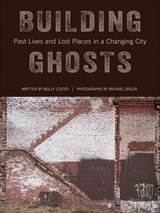
Building Ghosts
Past Lives and Lost Places in a Changing CityWritten by Molly Lester, Photographs by Michael Bixler
Temple University Press, 2024
Building Ghosts features more than 100 striking contemporary color photographs and a deeply researched narrative about Philadelphia’s buildings, neighborhoods, and the ghosts that reveal new truths and provocations about the changing city. The text and images in this lavish volume illuminate these lost buildings and found ghosts. Building Ghosts is an invitation to see the city differently, with the past clinging visibly to the present.
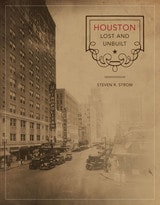
Houston Lost and Unbuilt
By Steven R. Strom
University of Texas Press, 2010
Winner, San Antonio Conservation Society Citation, 2011
Good Brick Award, Greater Houston Preservation Alliance, 2011
Julia Ideson Award, Friends of the Texas Room, 2011
Driven by an almost fanatical desire for whatever is new, "modern," and likely to make money, Houston is constantly in the process of remaking itself. Few structures remain from the nineteenth century, and even much of the twentieth-century built environment has fallen before the wrecking ball of "progress." Indeed, the demolition of older buildings in Houston can be compared to the destruction of cityscapes such as Berlin, Warsaw, and Tokyo in World War II. But because this wholesale restructuring of Houston's built environment has happened in peacetime, historically minded people have only recently sounded an alarm over what is being lost and the toll this destruction is taking on Houstonians' sense of place.
Houston Lost and Unbuilt presents an extensive catalogue of twentieth-century public and commercial buildings that have been lost forever, as well as an intriguing selection of buildings that never made it off the drawing board. The lost buildings (or lost interiors of buildings) span a wide range, from civic gathering places such as the Houston Municipal Auditorium and the Astrodome to commercial enterprises such as the Foley Brothers, Sears Roebuck, and Sakowitz department stores to "Theatre Row" downtown to neighborhoods such as Fourth Ward/Freedmen's Town. Steven Strom's introductions and photo captions describe each significant building's contribution to the civic life of Houston. The "unbuilt" section of the book includes numerous previously unpublished architectural renderings of proposed projects such as a multi-building city center, monorail, and people mover system, all which reflect Houston's fascination with the future and optimism that technology will solve all of the city's problems.
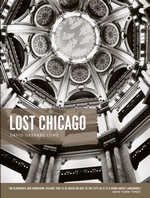
Lost Chicago
David Garrard Lowe
University of Chicago Press, 2010
The City of Big Shoulders has always been our most quintessentially American—and world-class—architectural metropolis. In the wake of the Great Fire of 1871, a great building boom—still the largest in the history of the nation—introduced the first modern skyscrapers to the Chicago skyline and began what would become a legacy of diverse, influential, and iconoclastic contributions to the city’s built environment. Though this trend continued well into the twentieth century, sour city finances and unnecessary acts of demolishment left many previous cultural attractions abandoned and then destroyed.
Lost Chicago explores the architectural and cultural history of this great American city, a city whose architectural heritage was recklessly squandered during the second half of the twentieth century. David Garrard Lowe’s crisp, lively prose and over 270 rare photographs and prints, illuminate the decades when Gustavus Swift and Philip D. Armour ruled the greatest stockyards in the world; when industrialists and entrepreneurs such as Cyrus McCormick, Potter Palmer, George Pullman, and Marshall Field made Prairie Avenue and State Street the rivals of New York City’s Fifth Avenue; and when Louis Sullivan, Daniel Burnham, and Frank Lloyd Wright were designing buildings of incomparable excellence. Here are the mansions and grand hotels, the office buildings that met technical perfection (including the first skyscraper), and the stores, trains, movie palaces, parks, and racetracks that thrilled residents and tourists alike before falling victim to the wrecking ball of progress.
“Lost Chicago is more than just another coffee table gift, more than merely a history of the city’s architecture; it is a history of the whole city as a cultural creation.”—New York Times Book Review
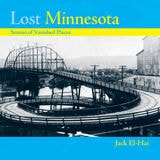
Lost Minnesota
Stories of Vanished PlacesJack El-Hai
University of Minnesota Press, 2000
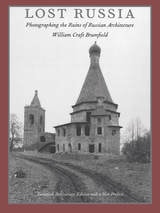
Lost Russia
Photographing the Ruins of Russian ArchitectureWilliam Craft Brumfield
Duke University Press, 1995
The twentieth century in Russia has been a cataclysm of rare proportions, as war, revolution, famine, and massive political terror tested the limits of human endurance. The results of this assault on Russian culture are particularly evident in ruined architectural monuments, some of which are little known even within Russia itself. Over the past four decades William Craft Brumfield, noted historian and photographer of Russian architecture, has traveled throughout Russia and photographed many of these neglected, lost buildings, poignant and haunting in their ruin. Lost Russia provides a unique view of Brumfield’s acclaimed work, which illuminates Russian culture as reflected in these remnants of its distinctive architectural traditions.
Capturing the quiet, ineffable beauty that graces these buildings, these photographs are accompanied by a text that provides not only a brief historical background for Russian architecture, but also Brumfield’s personal impressions, thoughts, and insights on the structures he views. Churches and monasteries from the fifteenth to the twentieth century as well as abandoned, ruined manor houses are shown—ravaged by time, willful neglect, and cultural vandalism. Brumfield also illustrates examples of recent local initiatives to preserve cultural landmarks from steady decline and destruction.
Concluding with photographs of the remarkable log architecture found in Russia’s far north, Lost Russia is a book for all those concerned with the nation’s cultural legacy, history, and architecture, and with historic and cultural preservation generally. It will also interest those who appreciate the fine art of exceptional photography.
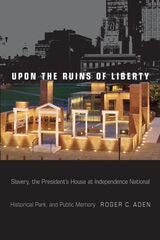
Upon the Ruins of Liberty
Slavery, the President's House at Independence National Historical Park, and Public MemoryRoger C. Aden
Temple University Press, 2014
In Upon the Ruins of Liberty, Roger Aden offers a compelling account that explores the development of this important historic site and how history, space, and public memory intersected with contemporary racial politics. Aden constructs this engrossing tale by drawing on archival material and interviews with principal figures in the controversy-including historian Ed Lawler, site activist Michael Coard, and site designer Emanuel Kelly.
Upon the Ruins of Liberty chronicles the politically-charged efforts to create a fitting tribute to the place where George Washington (and later, John Adams) shaped the presidency while denying freedom to the nine enslaved Africans in his household. From design to execution, the plans prompted advocates to embrace stories informed by race, and address difficulties that included how to handle the results of the site excavation. As such, this landmark project raised concerns and provided lessons about the role of public memory and how places are made to shape the nation's identity.