Results by title

8 books match the query 'Love & Marriage'
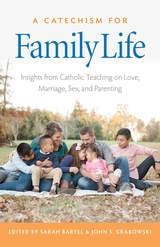
cover of A Catechism for Family Life

A Catechism for Family Life

Sarah Bartel

Catholic University of America Press, 2018

The purpose of A Catechism for Family Life: Insights from Catholic Teaching on Love, Marriage, Sex, and Parenting is to present the teachings of the Catholic Church as they relate to specific questions in marriage and family life. Many Catholics are under-catechized and have trouble both understanding and articulating Church teaching on sexuality and marriage to an increasingly challenging culture. Pope Francis, along with the fathers of the two recent Synods on the Family, have called for better formation for those who work in the area of marriage and family life (see Amoris Laetitia, 202).

To address this need, we gathered pertinent questions facing men, women, and pastoral workers in marriage and family life. We then found passages relevant to these questions by researching Church documents on marriage and family from the past one hundred years. These include papal encyclicals, apostolic exhortations, and addresses, Vatican II documents, and the Catechism of the Catholic Church.

Mainstream media coverage of Church events and Church teaching leads many to misunderstand Catholic positions on marriage and family life. While the Catholic Church has developed a rich, detailed, and positive teaching on marriage, family, and sexuality, many Catholics do not have access to this teaching, buried as it is in lengthy Church documents which many find intimidating. Finding the relevant teaching to address specific questions is not always a simple task, either. This book’s main contribution is to present Church teaching relevant to marriage and family in one volume clearly organized by topic and question.
[more]
cover of Awesome Families: The Promise of Healing Relationships in the International Churches of Christ

Awesome Families

The Promise of Healing Relationships in the International Churches of Christ

Kathleen Jenkins

Rutgers University Press, 2005

Denounced by some as a dangerous cult and lauded by others as a miraculous faith community, the International Churches of Christ was a conservative evangelical Christian movement that grew rapidly in the 1980s and 1990s.

Among its followers, promises to heal family relationships were central to the group's appeal. Members credit the church for helping them develop so-called "awesome families"-successful marriages and satisfying relationships with children, family of origin, and new church "brothers and sisters." The church engaged an elaborate array of services, including round-the-clock counseling, childcare, and Christian dating networks-all of which were said to lead to fulfilling relationships and exciting sex lives. Before the unified movement's demise in 2003-2004, the lure of blissful family-life led more than 100,000 individuals worldwide to be baptized into the church.

In Awesome Families, Kathleen Jenkins draws on four years of ethnographic research to explain how and why so many individuals-primarily from middle- to upper-middle-class backgrounds-were attracted to this religious group that was founded on principles of enforced community, explicit authoritative relationships, and therapeutic ideals. Weaving classical and contemporary social theory, she argues that members were commonly attracted to the structure and practice of family relationships advocated by the church, especially in the context of contemporary society where gender roles and family responsibilities are often ambiguous.

Tracing the rise and fall of this fast-growing religious movement, this timely study adds to our understanding of modern society and offers insight to the difficulties that revivalist movements have in sustaining growth.
 

[more]
cover of Before Amoris Laetitia: The Sources of the Controversy

Before Amoris Laetitia

The Sources of the Controversy

Jaroslaw Kupczak

Catholic University of America Press, 2021
The publication of Pope Francis’ post-synodal apostolic exhortation, Amoris Laetitia started the most important theological debate in the Catholic Church since the end of the Second Vatican Council. The cardinals, bishops, theologians, priests, lay Catholics found themselves on the opposite sides of this crucial and complicated discussion. This book attempts to shed some light on this debate by tracing its genealogy. Since Amoris Laetitia is a post-synodal document, the large part of the book is devoted to the theological analysis of the two Synods of Bishops convoked by Pope Francis in the first years of his pontificate: the extraordinary in October 2014 and the ordinary that took place a year later. The main topics for the two synods were determined, however, in the speech given by Cardinal Walter Kasper during the cardinals consistory in February 2014 whose main aim was to prepare the possibility of admitting divorced persons who live in second unions to Holy Communion. The arguments of Cardinal Kasper are presented in the first chapter of the book and confronted with the most significant statements of the Magisterium of the Church on the issue of admittance to the Holy Communion. This book is a study at the intersection of Church history, the history of theology, and systematic theology: dogmatic and moral. Kupczak is interested in the chronology of the events connected to the two synods on the family but in the context of theological problems discussed therein: the theological significance of contemporary cultural changes; the relation of the Church to the world; the understanding of the indissolubility of the sacramental marriage and the Eucharist; the methods of ethically assessing human acts, particularly the concept of so-called intrinsically evil acts (intrinsece malum); and the relation of conscience to the general moral norm. The non-partisan ambition of this book is to serve as a “road map”— a help in navigation for the reader in the complicated discussions leading to publication of Amoris Laetitia. The uniqueness of this book consists in combining the historical analysis of the events leading to the publication of Amoris Laetitia with research of the theological discussion that ensued. Since Amoris Laetitia is a post-synodal exhortation, this book rests on the assumption that crucial for its understanding is a thorough analysis of its genealogy. Only in the light of this historical and theological perspective the debates surrounding Amoris Laetitia may be understood.
[more]
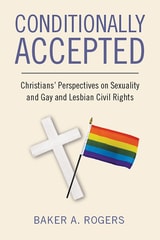
cover of Conditionally Accepted: Christians' Perspectives on Sexuality and Gay and Lesbian Civil Rights

Conditionally Accepted

Christians' Perspectives on Sexuality and Gay and Lesbian Civil Rights

Baker A. Rogers

Rutgers University Press, 2020
This book explores Mississippi Christians’ beliefs about homosexuality and gay and lesbian civil rights and whether having a gay or lesbian friend or family member influences those beliefs. Beliefs about homosexuality and gay and lesbian rights vary widely based on religious affiliation. Despite having gay or lesbian friends or family members, evangelical Protestants believe homosexuality is sinful and oppose gay and lesbian rights. Mainline Protestants are largely supportive of gay and lesbian rights and become more supportive after getting to know gay and lesbian people. Catholics describe a greater degree of uncertainty and a conditional acceptance of gay and lesbian rights; clear differences between conservative and liberal Catholics are evident. Overall, conservative Christians, both evangelical Protestants and conservative Catholics, hold a religious identity that overshadows their relationships with gay and lesbian friends or family. Conservative religion acts as a deterrent to the positive benefits of relationships with gay and lesbian people. 

 
[more]
cover of Humanae Vitae, 50 Years Later: Embracing God's Vision for Marriage, Love, and Life; A Compendium

Humanae Vitae, 50 Years Later

Embracing God's Vision for Marriage, Love, and Life; A Compendium

Preface by Most. Rev. Charles J. Chaput, OFM, Cap.

Catholic University of America Press, 2019
In the life of the Catholic Church, the papal encyclical Humanae vitae represents a deepening of understanding regarding the nature of married love and the transmission of life. Despite fifty years (1968-2018) since it’s promulgation, many Catholics have yet to discover the treasure of these rich teachings. This volume therefore seeks to elucidate the encyclical’s reaffirmation of the divine plan. It does this in a unique way by providing essays from experts of various disciplines that include history, theology, science, medicine, law, and governmental policy. The occasion of the fiftieth anniversary of Humanae vitae offers a teaching moment. In this compendium, experts representing a variety of disciplines including history, culture, theology, medicine, law, and psychology present their reflections upon God’s divine plan as described in Humanae vitae. The authors first presented this work in an abbreviated form at a symposium held at The Catholic University of America (April 4-6, 2018). Here, their presentations are substantively developed and hopefully will encourage further scholarly work. Ultimately, their purpose is to help the reader arrive at a more positive understanding of the teachings found in Humanae vitae. Although designed for the educated reader, the essays presume that when the teachings of Humanae vitae are embraced by men and women, they can contribute to the healing of the wounds of a world broken by sin but redeemed by Christ.
[more]
cover of Sacred Divorce: Religion, Therapeutic Culture, and Ending Life Partnerships

Sacred Divorce

Religion, Therapeutic Culture, and Ending Life Partnerships

Jenkins, Kathleen E

Rutgers University Press, 2014

 Even in our world of redefined life partnerships and living arrangements, most marriages begin through sacred ritual connected to a religious tradition. But if marriage rituals affirm deeply held religious and secular values in the presence of clergy, family, and community, where does divorce, which severs so many of these sacred bonds, fit in?  Sociologist Kathleen Jenkins takes up this question in a work that offers both a broad, analytical perspective and a uniquely intimate view of the role of religion in ending marriages.

For more than five years, Jenkins observed religious support groups and workshops for the divorced and interviewed religious practitioners in the midst of divorces, along with clergy members who advised them. Her findings appear here in the form of eloquent and revealing stories about individuals managing emotions in ways that make divorce a meaningful, even sacred process. Clergy from mainline Protestant denominations to Baptist churches, Jewish congregations, Unitarian fellowships, and Catholic parishes talk about the concealed nature of divorce in their congregations.  Sacred Divorce describes their cautious attempts to overcome such barriers, and to assemble meaningful symbols and practices for members by becoming compassionate listeners, delivering careful sermons, refitting existing practices like Catholic annulments and Jewish divorce documents (gets), and constructing new rituals.          

With attention to religious, ethnic, and class variations, covering age groups from early thirties to mid-sixties and separations of only a few months to up to twenty years, Sacred Divorce offers remarkable insight into individual and cultural responses to divorce and the social emotions and spiritual strategies that the clergy and the faithful employ to find meaning in the breach.  At once a sociological document, an ethnographic analysis, and testament of personal experience, Sacred Divorce provides guidance, strategies and answers to readers looking for answers and those looking to heal.
[more]
cover of The Bible on the Question of Homosexuality

The Bible on the Question of Homosexuality

Innocent Himbaza

Catholic University of America Press, 2012
The Bible on the Question of Homosexuality addresses the hotly debated topic of whether the Bible condemns homosexuality by a close reading of the biblical texts without taboo or prejudice, without personal or church interpretation
[more]
cover of What Binds Marriage Forever?

What Binds Marriage Forever?

Ida Friederike Gorres

Catholic University of America Press, 2025

What Binds Marriage Forever is a collection of texts written from 1956 to 1971 by Ida Friederike Görres, herself a married lay woman. Her main focus is the indissolubility of marriage. n the Preface, Görres observes the emergence of a marriage crisis in the West. “Each passing day,” she writes, “the conversation about marriage grows in gravity and urgency.” She wrote this in 1956; she could have written this and the other parts of this book in 2023. The centerpiece of the book is Chapter 1, written in 1971. She argues against Catholics who are trying to reframe marriage a mere love-bond that ceases when love ceases. She mounts a defense of the Catholic teaching on marriage against her counterparts’ calls to allow divorce and remarriage. She exposes the central role modern individualism plays in their arguments. She demon­strates how their arguments are ahistorical, a recipe for relational instability, and harmful to those who suffer when their spouses are adulterous, especially when the adulterous spouse is cheered on for acting out of “love.” Her core argument is that what binds marriage forever is a combination of “covenant, law, and grace, that is, sacrament.” Chapters 2 and 3 explore the topic of marriages between Catholics and bap­tized non-Catholics or non-Christians. Görres discusses the difficulties that such marriages can generate, not least of all the decision of which faith the children should be raised in. Chapter 4 is an overview of the sacramentality of marriage. She explains how marriage relates to the indissoluble bond between God and creation and she explains how the three traditional goods of marriage (fidelity, sacrament, off­spring) are reflected in the marriage liturgy.
[more]