Results by title
13 books match the query 'Made'
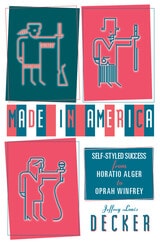
Made In America
Self-Styled Success from Horatio Alger to Oprah WinfreyJeffrey Louis Decker
University of Minnesota Press, 1997
The first look at self-made men and women from a multicultural perspective.
Brings gender, race, and ethnicity to bear on the myth of the “self-made man.”
Made in America presents the first look at self-made men and women from a multicultural perspective. Jeffrey Louis Decker discusses the emergence of self-starters like Andrew Carnegie, Booker T. Washington, Madam C. J. Walker, Younghill Kang, and Lee Iacocca in relation to the changing consumer markets of the twentieth century.Decker locates the new breed of entrepreneurs within the changing rhetoric of personal success, which shifted its emphasis over the past century from religious “character” to psychological “personality” to celebrity “image.” The book concludes by surveying the life stories of enterprising celebrities such as Oprah Winfrey and Arnold Schwarzenegger.Decker analyzes the autobiographical expressions of famous entrepreneurs, from Carnegie to Ross Perot, alongside more marginal ones in order to examine how mainstream society shapes and is shaped by the cultures of subordinate groups. In addition, he looks at the link between self-making and nation-building, and in doing so discovers the origins of another pervasive myth: the “American dream.”Underlying Decker’s study are these questions: What happened to the myth of self-making in America? If it is dead, what caused its demise? If it lives on, what form has it taken? Written in a lucid and engaging style, Made in America uncovers the richness, complexity, and diversity of self-styled success in our time. By bringing gender, race, and ethnicity to bear on the myth of the “self-made man,” this book provides a timely and fascinating reexamination of a traditional area of inquiry in American cultural studies.200 pages Translation rights: University of Minnesota Press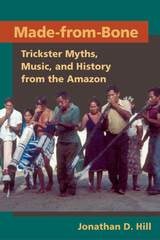
Made from Bone
Trickster Myths, Music, and History from the AmazonJonathan D. Hill
University of Illinois Press, 2008
Made-from-Bone is the first work to provide a complete set of English translations of narratives about the mythic past and its transformations from the indigenous Arawak-speaking people of South America. Among the Arawak-speaking Wakuénai of southernmost Venezuela, storytellers refer to these narratives as "words from the primordial times," and they are set in an unfinished space-time before there were any clear distinctions between humans and animals, men and women, day and night, old and young, and powerful and powerless. The central character throughout these primordial times and the ensuing developments that open up the world of distinct peoples, species, and places is a trickster-creator, Made-from-Bone, who survives a prolonged series of life-threatening attacks and ultimately defeats all his adversaries.
Carefully recorded and transcribed by Jonathan D. Hill, these narratives offer scholars of South America and other areas the only ethnographically generated cosmogony of contemporary or ancient native peoples of South America. Hill includes translations of key mythic narratives along with interpretive and ethnographic discussion that expands on the myths surrounding this fascinating and enigmatic character with broad appeal throughout various folkloric traditions.
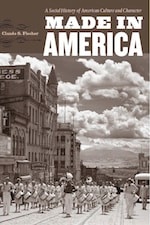
Made in America
A Social History of American Culture and CharacterClaude S. Fischer
University of Chicago Press, 2010
Our nation began with the simple phrase, “We the People.” But who were and are “We”? Who were we in 1776, in 1865, or 1968, and is there any continuity in character between the we of those years and the nearly 300 million people living in the radically different America of today?
With Made in America, Claude S. Fischer draws on decades of historical, psychological, and social research to answer that question by tracking the evolution of American character and culture over three centuries. He explodes myths—such as that contemporary Americans are more mobile and less religious than their ancestors, or that they are more focused on money and consumption—and reveals instead how greater security and wealth have only reinforced the independence, egalitarianism, and commitment to community that characterized our people from the earliest years. Skillfully drawing on personal stories of representative Americans, Fischer shows that affluence and social progress have allowed more people to participate fully in cultural and political life, thus broadening the category of “American” —yet at the same time what it means to be an American has retained surprising continuity with much earlier notions of American character.
Firmly in the vein of such classics as The Lonely Crowd and Habits of the Heart—yet challenging many of their conclusions—Made in America takes readers beyond the simplicity of headlines and the actions of elites to show us the lives, aspirations, and emotions of ordinary Americans, from the settling of the colonies to the settling of the suburbs.
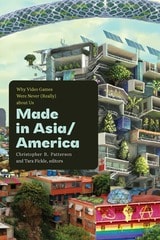
Made in Asia/America
Why Video Games Were Never (Really) about UsChristopher B. Patterson and Tara Fickle, editors
Duke University Press, 2024
Contributors. Matthew Seiji Burns, Edmond Y. Chang, Naomi Clark, Miyoko Conley, Toby Đỗ, Anthony Dominguez, Tara Fickle, Sarah Christina Ganzon, Yuxin Gao, Domini Gee, Melos Han-Tani, Huan He, Matthew Jungsuk Howard, Rachael Hutchinson, Paraluman (Luna) Javier, Sisi Jiang, Marina Ayano Kittaka, Minh Le, Haneul Lee, Rachel Li, Christian Kealoha Miller, Patrick Miller, Keita C. Moore, Souvik Mukherjee, Christopher B. Patterson, Pamela (Pam) Punzalan, Takeo Rivera, Yasheng She, D. Squinkifer, Lien B. Tran, Prabhash Ranjan Tripathy, Emperatriz Ung, Gerald Voorhees, Yizhou (Joe) Xu, Robert Yang, Mike Ren Yi
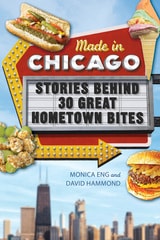
Made in Chicago
Stories Behind 30 Great Hometown BitesMonica Eng and David Hammond
University of Illinois Press, 2023
A BookRiot Most Anticipated Travel Book of 2023
Italian beef and hot dogs get the headlines. Cutting-edge cuisine and big-name chefs get the Michelin stars. But Chicago food shows its true depth in classic dishes conceived in the kitchens of immigrant innovators, neighborhood entrepreneurs, and mom-and-pop visionaries.
Monica Eng and David Hammond draw on decades of exploring the city’s food landscape to serve up thirty can’t-miss eats found in all corners of Chicago. From Mild Sauce to the Jibarito and from Taffy Grapes to Steak and Lemonade, Eng and Hammond present stories of the people and places behind each dish while illuminating how these local favorites reflect the multifaceted history of the city and the people who live there. Each entry provides all the information you need to track down whatever sounds good and selected recipes even let you prepare your own Flaming Saganaki or Akutagawa.
Generously illustrated with full-color photos, Made in Chicago provides locals and visitors alike with loving profiles of a great food city’s defining dishes.
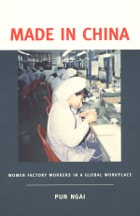
Made in China
Women Factory Workers in a Global WorkplacePun Ngai
Duke University Press, 2005
Pun Ngai conducted ethnographic work at an electronics factory in southern China’s Guangdong province, in the Shenzhen special economic zone where foreign-owned factories are proliferating. For eight months she slept in the employee dormitories and worked on the shop floor alongside the women whose lives she chronicles. Pun illuminates the workers’ perspectives and experiences, describing the lure of consumer desire and especially the minutiae of factory life. She looks at acts of resistance and transgression in the workplace, positing that the chronic pains—such as backaches and headaches—that many of the women experience are as indicative of resistance to oppressive working conditions as they are of defeat. Pun suggests that a silent social revolution is underway in China and that these young migrant workers are its agents.
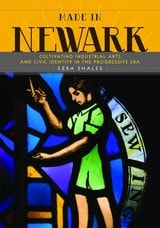
Made in Newark
Cultivating Industrial Arts and Civic Identity in the Progressive EraShales, Ezra
Rutgers University Press, 2010
This is the story of experimental exhibitions in the library and the founding of the Newark Museum Associationùa project in which cultural literacy was intertwined with civics and consumption. Local artisans demonstrated crafts, connecting the cultural institution to the department store, school, and factory, all of which invoked the ideal of municipal patriotism. Today, as cultural institutions reappraise their relevance, Made in Newark explores precedents for contemporary debates over the ways the library and museum engage communities, define heritage in a multicultural era, and add value to the economy.
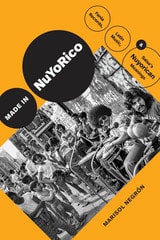
Made in NuYoRico
Fania Records, Latin Music, and Salsa’s Nuyorican MeaningsMarisol Negrón
Duke University Press, 2024
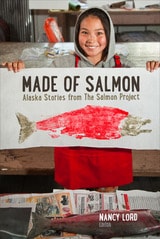
Made of Salmon
Alaska Stories from the Salmon ProjectEdited by Nancy Lord
University of Alaska Press, 2016
Made of Salmon brings together more than fifty diverse Alaska voices to celebrate the salmon and its place in Alaska life. A mix of words and images, the book interweaves longer works by some of Alaska’s finest writers with shorter, more anecdotal accounts and stunning photographs of Alaskans fishing for, catching, preserving, and eating salmon throughout the state. A love letter to a fish that has been central to Alaska life for centuries, Made of Salmon is a reminder of the stakes of this great, ongoing conservation battle.
Made to Be Seen
Perspectives on the History of Visual AnthropologyEdited by Marcus Banks and Jay Ruby
University of Chicago Press, 2011
Made to be Seen brings together leading scholars of visual anthropology to examine the historical development of this multifaceted and growing field. Expanding the definition of visual anthropology beyond more limited notions, the contributors to Made to be Seen reflect on the role of the visual in all areas of life. Different essays critically examine a range of topics: art, dress and body adornment, photography, the built environment, digital forms of visual anthropology, indigenous media, the body as a cultural phenomenon, the relationship between experimental and ethnographic film, and more.
The first attempt to present a comprehensive overview of the many aspects of an anthropological approach to the study of visual and pictorial culture, Made to be Seen will be the standard reference on the subject for years to come. Students and scholars in anthropology, sociology, visual studies, and cultural studies will greatly benefit from this pioneering look at the way the visual is inextricably threaded through most, if not all, areas of human activity.
Made to Hear
Cochlear Implants and Raising Deaf ChildrenLaura Mauldin
University of Minnesota Press, 2016
A mother whose child has had a cochlear implant tells Laura Mauldin why enrollment in the sign language program at her daughter’s school is plummeting: “The majority of parents want their kids to talk.” Some parents, however, feel very differently, because “curing” deafness with cochlear implants is uncertain, difficult, and freighted with judgment about what is normal, acceptable, and right. Made to Hear sensitively and thoroughly considers the structure and culture of the systems we have built to make deaf children hear.
Based on accounts of and interviews with families who adopt the cochlear implant for their deaf children, this book describes the experiences of mothers as they navigate the health care system, their interactions with the professionals who work with them, and the influence of neuroscience on the process. Though Mauldin explains the politics surrounding the issue, her focus is not on the controversy of whether to have a cochlear implant but on the long-term, multiyear undertaking of implantation. Her study provides a nuanced view of a social context in which science, technology, and medicine are trusted to vanquish disability—and in which mothers are expected to use these tools. Made to Hear reveals that implantation has the central goal of controlling the development of the deaf child’s brain by boosting synapses for spoken language and inhibiting those for sign language, placing the politics of neuroscience front and center.
Examining the consequences of cochlear implant technology for professionals and parents of deaf children, Made to Hear shows how certain neuroscientific claims about neuroplasticity, deafness, and language are deployed to encourage compliance with medical technology.

Made with Words
May Swenson
University of Michigan Press, 1998
Made with Words includes a rich assortment of Swenson's prose, including several short stories, by turns amusing, provocative, and poetic, and inextricably bound with her poetic oeuvre; a one-act play entitled The Floor, produced in New York in the mid-sixties; interviews and book reviews that shed light on Swenson's poetic development as well as her literary and artistic tastes; and finally, a collection of Swenson's letters to the poet Elizabeth Bishop that reveal the intricacies of three decades of their personal and professional relationship. The critical and biographical introduction provides an engaging glimpse into the creative life and prose work of an important contemporary American poet.
Gardner McFall is Assistant Professor of Literature, Cooper Union for the Advancement of Science and Art. She is the author of The Pilot's Daughter; Naming the Animals; and Jonathan's Cloud.
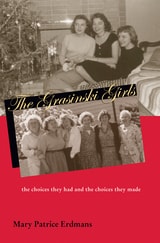
The Grasinski Girls
The Choices They Had and the Choices They MadeMary Patrice Erdmans
Ohio University Press, 2004
The Grasinski Girls were working-class Americans of Polish descent, born in the 1920s and 1930s, who created lives typical of women in their day. They went to high school, married, and had children. For the most part, they stayed home to raise their children. And they were happy doing that. They took care of their appearance and their husbands, who took care of them. Like most women of their generation, they did not join the women’s movement, and today they either reject or shy away from feminism.
Basing her account on interviews with her mother and aunts, Mary Erdmans explores the private lives of these white, Christian women in the post-World War II generation. She compares them, at times, to her own postfeminist generation. Situating these women within the religious routines that shaped their lives, Professor Erdmans explores how gender, class, ethnicity, and religion shaped the choices the Grasinski sisters were given as well as the choices they made. These women are both acted upon and actors; they are privileged and disadvantaged; they resist and surrender; they petition the Lord and accept His will.
The Grasinski Girls examines the complexity of ordinary lives, exposing privileges taken for granted as well as nuances of oppression often overlooked. Erdmans brings rigorous scholarship and familial insight to bear on the realities of twentieth-century working-class white women in America.