Results by title
3 books match the query 'Madison County'

Buckeye Schoolmaster
A Chronicle of Midwestern Rural Life, 1853–1865J. Merton England
University of Wisconsin Press, 1996
The journals and diaries of John M. Roberts provide an intimate view of the life and dthoughts of a young schoolmaster, miller, itenerant bookseller, and farmer in centreal Ohio in a time of rising sectional crisis and Civil War.

Murder in Their Hearts
The Fall Creek MassacreDavid Thomas Murphy
Indiana Historical Society Press, 2010
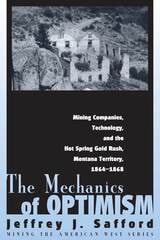
The Mechanics of Optimism
Mining Companies, Technology, and the Hot Spring Gold Rush, Montana Territory, 1864-1868Jeffrey J. Safford
University Press of Colorado, 2004
Historian Jeffrey J. Safford examines how gold mining ventures were developed and financed during and after the Civil War, and how men, primarily Easterners with scant knowledge of mining, were willing to invest large sums in gold mines that promised quick and lucrative returns.
Safford explains how these mining companies were organized and underwritten, and why a little-known district in southwestern Montana was chosen as a center of operations. Relying on extensive primary sources, Safford addresses the mind-set of the businessmen, the expectations and realities of new mining technology, the financial strategies, and the universality of the Hot Spring experience.