Results by title
24 books match the query 'Make'
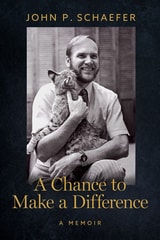
A Chance to Make a Difference
A MemoirJohn P. Schaefer
University of Arizona Press, 2025
Southwest Books of the Year Top Pick
John P. Schaefer was only thirty-six years old when he assumed the role of fifteenth president of the University of Arizona in 1971. The son of hardworking German immigrants, Schaefer grew up in Queens, New York, where childhood centered on sports, academics, and the great outdoors.
Earning a PhD in chemistry in 1958, Dr. Schaefer’s career skyrocketed through the ranks of academia, moving him from junior faculty to university president in a mere decade. As president, he led the University of Arizona through a transformational period of growth and is credited with securing the university’s status as a top-tier research institution.
A Chance to Make a Difference recounts poignant, eye-opening, and often humorous stories from childhood to presidency, revealing the characteristics of an inspiring university leader.

Developing a Make or Buy Strategy for Manufacturing Business
David Probert
The Institution of Engineering and Technology, 1997
Fair Not Flat
How to Make the Tax System Better and SimplerEdward J. McCaffery
University of Chicago Press, 2002
In clear, easy-to-understand language, Edward J. McCaffery proposes a straightforward and fair alternative. A "fair not flat" tax that is consistent and progressive would tax spending, not income and savings. And if it were collected at its lower levels through a national sales tax, most people would not have to file a return. A supplemental tax on spending for the wealthiest individuals would make the national sales tax progressive. Under McCaffery's system, a family of four would pay no tax on their first $20,000 in spending, and 15 percent on the next $60,000. Only the few families who spend more than $80,000 a year would be subject to the supplemental tax. Necessities would be taxed less than ordinary and luxury items. No one would be taxed directly on savings. The estate and gift or so-called death tax would be abolished, for the simple reason that dead people don't spend. The "fair not flat" tax would fall on heirs when and as they spend their good fortune. Perhaps best of all, most Americans would not have to fill out tax returns.
Simpler, more efficient, fairer, and more reflective of America's current social values, McCaffery's "fair not flat" tax could help get us out of the tax mess that politicians and special interests have gotten us into, improving the whole country in the process. Read Fair Not Flat to find out how.
“In Fair Not Flat, Mr. McCaffery lays out the case for a consumption tax. He does so in a reader-friendly way, presenting his argument with very few footnotes, equations or technical terms. The consumption of the book, so to speak, is not at all taxing. And its argument is well worth pondering.”—Bruce Bartlett, Wall Street Journal
Genomes and What to Make of Them
Barry Barnes and John Dupré
University of Chicago Press, 2008
For the nonscientist, the claims and counterclaims are dizzying—what does it really mean to understand the genome? Barry Barnes and John Dupré offer an answer to that question and much more in Genomes and What to Make of Them, a clear and lively account of the genomic revolution and its promise. The book opens with a brief history of the science of genetics and genomics, from Mendel to Watson and Crick and all the way up to Craig Venter; from there the authors delve into the use of genomics in determining evolutionary paths—and what it can tell us, for example, about how far we really have come from our ape ancestors. Barnes and Dupré then consider both the power and risks of genetics, from the economic potential of plant genomes to overblown claims that certain human genes can be directly tied to such traits as intelligence or homosexuality. Ultimately, the authors argue, we are now living with a new knowledge as powerful in its way as nuclear physics, and the stark choices that face us—between biological warfare and gene therapy, a new eugenics or a new agricultural revolution—will demand the full engagement of both scientists and citizens.
Written in straightforward language but without denying the complexity of the issues, Genomes and What to Make of Them is both an up-to-date primer and a blueprint for the future.
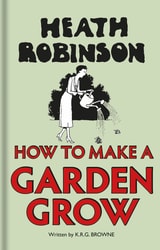
Heath Robinson
How to Make a Garden GrowW. Heath Robinson (1872-1944) is best known for his hilarious drawings of outlandish contraptions, though his work ranged across a wide variety of topics covering many aspects of British life.
Bodleian Library Publishing, 2016
How Not to Make a Human
Pets, Feral Children, Worms, Sky Burial, OystersKarl Steel
University of Minnesota Press, 2019
From pet keeping to sky burials, a posthuman and ecocritical interrogation of and challenge to human particularity in medieval texts
Mainstream medieval thought, like much of mainstream modern thought, habitually argued that because humans alone had language, reason, and immortal souls, all other life was simply theirs for the taking. But outside this scholarly consensus teemed a host of other ways to imagine the shared worlds of humans and nonhumans. How Not to Make a Human engages with these nonsystematic practices and thought to challenge both human particularity and the notion that agency, free will, and rationality are the defining characteristics of being human.
Recuperating the Middle Ages as a lost opportunity for decentering humanity, Karl Steel provides a posthuman and ecocritical interrogation of a wide range of medieval texts. Exploring such diverse topics as medieval pet keeping, stories of feral and isolated children, the ecological implications of funeral practices, and the “bare life” of oysters from a variety of disanthropic perspectives, Steel furnishes contemporary posthumanists with overlooked cultural models to challenge human and other supremacies at their roots.
By collecting beliefs and practices outside the mainstream of medieval thought, How Not to Make a Human connects contemporary concerns with ecology, animal life, and rethinkings of what it means to be human to uncanny materials that emphasize matters of death, violence, edibility, and vulnerability.

How to Make a Life
A Tibetan Refugee Family and the Midwestern Woman They AdoptedMadeline Uraneck
Wisconsin Historical Society Press, 2018
When Madeline Uraneck said hello to the Tibetan woman cleaning her office cubicle, she never imagined the moment would change her life. After learning that Tenzin Kalsang had left her husband and four children behind in a Tibetan refugee settlement in India to try to forge a better life for them, Madeline took on the task of helping her apply for US visas. When the family reunited in their new Midwestern home, Madeline became swept up in their lives, from homework and soccer games to family dinners and shared holiday traditions. By reaching out, she found more than she bargained for—a family who welcomed her as their own and taught her more than she offered them.
An evocative blend of immersion journalism and memoir, How to Make a Life shares the immigration story of a Tibetan refugee family who crossed real and cultural bridges to make a life in Madison, Wisconsin, with the assistance of the Midwestern woman they befriended. From tales of escaping Tibet over the Himalayas, to striking a balance between old traditions with new, to bridging divides one friendly gesture at a time, readers will expand their understanding of family, culture, and belonging.
How to Make a Revolution
Raymond Postgate
Westholme Publishing, 2018
The first third of the twentieth century saw a seismic upheaval in global politics and society that still reverberates today. Communism and fascism toppled both traditional monarchies and representative democracies, while trade unions and other factions effectively challenged existing governments to adopt reforms or face crippling economic or social upheaval. Given these extraordinary events, Raymond Postgate set forth in How to Make a Revolution to objectively discuss revolutionary methods, and which tactics or strategies are the most effective. Drawing on his own idealistic experience as a young labor agitator and editor of a communist newspaper and more than fifteen years of close study of past revolutionary history and theories, the author dispassionately discusses Marxism, fascism, anarchism, and Blanquism (a doctrine within socialism), as well as syndicalism and industrial unionism. He then reviews revolutionary practice, including general strikes, financial pressure, armed revolution, and communist tactics, and ends with a prescient and frightening conclusion: without general consensus and determination, a peaceful revolution is impossible, and “if no action is taken, action of another kind will be taken for us. . . . The continuance of uncertainty will mean that the disillusioned will drift steadily across to a Fascist organization. Fascism means war; the character of a Fascist State is fairly well known. Once it is established, those who read, who write, who publish or who print, books like this are likely to be dead or in concentration camps.” Originally published in 1934, Postgate’s book was heralded for its clarity and scholarship.
How to Make a Slave and Other Essays
Jerald Walker
The Ohio State University Press, 2020
Winner, 2021 Massachusetts Book Award, Nonfiction Category
A Book of the Year pick from Kirkus, BuzzFeed, and Literary Hub
“The essays in this collection are restless, brilliant and short. . . . The brevity suits not just Walker’s style but his worldview, too.…Keeping things quick gives him the freedom to move; he can alight on a truth without pinning it into place.” —Jennifer Szalai, the New York Times
For the black community, Jerald Walker asserts in How to Make a Slave, “anger is often a prelude to a joke, as there is broad understanding that the triumph over this destructive emotion lay in finding its punchline.” It is on the knife’s edge between fury and farce that the essays in this exquisite collection balance. Whether confronting the medical profession’s racial biases, considering the complicated legacy of Michael Jackson, paying homage to his writing mentor James Alan McPherson, or attempting to break free of personal and societal stereotypes, Walker elegantly blends personal revelation and cultural critique. The result is a bracing and often humorous examination by one of America’s most acclaimed essayists of what it is to grow, parent, write, and exist as a black American male. Walker refuses to lull his readers; instead his missives urge them to do better as they consider, through his eyes, how to be a good citizen, how to be a good father, how to live, and how to love.
How to Make a Soul
The Wisdom of John KeatsEric G. Wilson
Northwestern University Press, 2015
In this innovative hybrid of biography, memoir, and criticism, Eric G. Wilson describes how John Keats gave him solace during a bout of mental illness in spring 2012. While on a tour of the principal sites in Keats’s life—ranging from his London medical school to the small room in Rome where he died—Wilson discovered analogies between the poet’s troubles and his own. He was most struck by Keats’s enlivening vision of the soul.
For Keats, we don’t possess but rather make a soul. We do this by imaginatively transforming our suffering into empathy toward humans and nature alike. Tracking this idea in Keats’s tumultuous yet exhilarating life and work, Wilson struggles to envision his depression anew, desperate to overcome the apathy alienating him from his family.
How to Make a Soul offers fresh perspectives on Keats’s pragmatism, irony, comedy, ethics, and aesthetics, but is above all a lyrical celebration of those galvanizing instances when life springs into art.

How to Make a Vaccine
An Essential Guide for COVID-19 and BeyondJohn Rhodes
University of Chicago Press, 2021
As the COVID-19 pandemic has affected every corner of the world, changing our relationship to our communities, to our jobs, and to each other, the most pressing question has been—when will it end? Researchers around the globe are urgently trying to answer this question by racing to test and distribute a vaccine that could end the greatest public health threat of our time. In How to Make a Vaccine, an expert who has firsthand experience developing vaccines tells an optimistic story of how three hundred years of vaccine discovery and a century and a half of immunology research have come together at this powerful moment—and will lead to multiple COVID-19 vaccines.
Dr. John Rhodes draws on his experience as an immunologist, including working alongside a young Anthony Fauci, to unravel the mystery of how vaccines are designed, tested, and produced at scale for global deployment. Concise and accessible, this book describes in everyday language how the immune system evolved to combat infection, how viruses responded by evolving ways to evade our defenses, and how vaccines do their work. That history, and the pace of current research developments, make Rhodes hopeful that multiple vaccines will protect us. Today the complex workings of the immune system are well understood. The tools needed by biomedical scientists stand ready to be used, and more than 160 vaccine candidates have already been produced. But defeating COVID-19 won’t be the end of the story: Rhodes describes how discoveries today are also empowering scientists to combat future threats to global health, including a recent breakthrough in the development of genetic vaccines, which have never before been used in humans.
As the world prepares for a vaccine, Rhodes offers a current and informative look at the science and strategies that deliver solutions to the crisis.
How to Make an Algorithm in the Microwave
Maya Salameh
University of Arkansas Press, 2022
“We need a new poetry lexicon—a new way of moleculing the poem on the page, even—and Maya Salameh brings it. We need all the strange Arabic-diasporic ways we can find for being in this terrible and joyful and often frighteningly banalizing world, and Salameh’s poems are a generous find. Her writing is an unexpected cousin in the colonized and capitalism-razed city, bewildering and divining things you’ve never heard but want to learn. . . . Prepare to be stretched and delighted.”
—Mohja Kahf, from the Foreword
The divine and the digital achieve a distinct corporality in Maya Salameh’s HOW TO MAKE AN ALGORITHM IN THE MICROWAVE, winner of the 2022 Etel Adnan Poetry Prize. Layering prayer with code, Salameh brings supposedly unassailable technological constructs like algorithm, recursion, and loop into conversation with the technologies of womanhood, whether liner, lipstick, or blood. Exploring the relationships we have with our devices, she speaks back to the algorithm (“a computer’s admission to blood”), which acts simultaneously as warden, confidant, and data thief.
Here Salameh boldly examines how an Arab woman survives the digitization of her body—experimenting with form to create an intimate collage of personal and neocolonial histories, fearlessly insinuating herself into the scripts that would otherwise erase her, and giving voice to the full mess of ritual.
Inspiring Teens, Tweens, and Families to Make a Difference in the World
Programming to Advance the Sustainable Development GoalsAmanda Moss Struckmeyer
American Library Association, 2025
- programs and activities related to such topics as good health and well-being, ending poverty, peace and justice, responsible consumption and production, decent work, and clean water and sanitation;
- ideas perfect for multi-age audiences (families), tweens, and teens that can be tailored for different group sizes, programming spaces, budgets, and time frames;
- a plethora of flexible, cost-effective passive programs that patrons can engage in at any time;
- guidance on outreach opportunities for fostering partnerships with local experts and guest speakers; and
- pointers on additional and supporting resources including books, videos, and websites.
Make a Wish
Judy Soloway Kay
University of Michigan Press, 2005
Genre: Romance
Length: about 15,000 words
Level: 4th grade
Make the Connection
Improve Your Communication at Work and at HomeAdubato, Steve
Rutgers University Press, 2006
In this collection of compelling and practical essays, Emmy Award–winning broadcaster, newspaper columnist, and motivational speaker Steve Adubato shares concrete tips and tools that will help you connect more effectively at work, at home, under pressure, in leadership roles, and in high-tech environments. From avoiding unnecessary arguments with your spouse to coaching a valuable, yet difficult employee, Adubato’s essays delve into the key factors that motivate people to act and respond the way that they do.
You will find answers to some of the most common questions about public speaking as well as advice on overcoming its anxieties. Whether the forum is a PTA meeting or a large professional function, essays explore topics such as:
- Why even practiced speakers sometimes experience stage fright
- How to keep your audience awake and interested in what you are saying
You will learn essential skills for interacting in the workplace, including:
- How to negotiate a good deal and still be honest and straight
- How to keep team projects from falling apart
- How to conduct yourself in confrontational situations, such as receiving a public insult
Drawing on examples set by public figures, including Bill Clinton, Rudy Giuliani, Mario Cuomo, Martha Stewart, Jack Welch, Joe Torre, and many others, Adubato addresses the unique communication challenges that those in leadership positions face. Essays examine:
· What ordinary people can learn from leaders in high-profile positions
· Why so many leaders have difficulty taking responsibility and apologizing for their actions
As technology continues to provide opportunities for quicker and more visual communication, Adubato also lets you know when hi-tech bells and whistles get in the way of making a more personal and human connection. For instance,
· Why do we hide behind e-mail messages when we have something very difficult to say?
· How does communication deteriorate when cell phones and e-mail are competing for our attention?
Finally, Adubato reminds us that communicating at home is no less important or any less difficult than communicating in public or at work. From contemporary challenges to age-old questions, essays explore:
· How you can more effectively talk with your kids about war and terrorism
· What forms of persuasion are more effective than nagging
Filled with timely examples and practical suggestions, Make the Connection is a must-read for everyone looking to improve their professional and personal relationships.
Notes to Make the Sound Come Right
Four Innovators of Jazz PoetryT.J. Anderson III
University of Arkansas Press, 2004
On the Make
The Hustle of Urban NightlifeDavid Grazian
University of Chicago Press, 2007
David Grazian’s riveting tour of downtown Philadelphia and its newly bustling nightlife scene reveals the city as an urban playground where everyone dabbles in games of chance and perpetrates elaborate cons. Entertainment in the city has evolved into a professional industry replete with set designers, stage directors, and method actors whose dazzling illusions tempt even the shrewdest of customers. As entertaining and illuminating as the confessional stories it recounts, On the Make is a fascinating exposé of the smoke and mirrors employed in the city at night.
The Problem with Personalization
How Advertisers Learned to Make and Break Us from Ancient Times to the AI AgeJoseph Turow
University of Chicago Press, 2026
A respected voice on technology shows how seemingly simple ads help dismantle democracy and public discourse.
Whether you’re intentionally shopping or casually browsing social media, something is following you: ads. Their creators seem to know your income bracket, politics, age, location, medical conditions, and tastes in clothing, food, and romantic partners. As advertising firms use predictive AI to discover your hot buttons and generative AI to push them, your online world becomes an increasingly bespoke—and isolated—place. The fervid competition around personalization in digital marketing has given rise to an ecosystem of advertisers, media outlets, tech companies, and retailers who monetize your data while threatening the health of our media, discourse, and sense of community. In this urgent book, award-winning author Joseph Turow shows how we got here, and how to change direction.
The Problem with Personalization shatters common beliefs about advertising history by showing that individualized ads are not new. Today’s AI-enabled advertisers draw on past aspirations and assumptions about personalization while weaponizing data in unprecedented ways that drive social fragmentation and the disappearance of shared social reality. Informed by interviews with marketing insiders and covering the latest technology advances, Turow accessibly explains how artificial intelligence sifts through our data to tag and target us wherever we go with personalized videos, pictorial billboards, audio messages, and more. A logical next step for advertiser support is tailored entertainment and news, a shift that further destroys the common ground necessary for a functioning democracy.
A must-read for all who care about the future of public discourse, The Problem with Personalization reveals how targeted advertising has altered how we’re seen and what we see in return.
The Problem with Personalization
How Advertisers Learned to Make and Break Us from Ancient Times to the AI AgeJoseph Turow
University of Chicago Press, 2026
A respected voice on technology shows how seemingly simple ads help dismantle democracy and public discourse.
Whether you’re intentionally shopping or casually browsing social media, something is following you: ads. Their creators seem to know your income bracket, your tastes in clothing, food, location, politics, age, medical conditions, and romantic partners. As predictive AI tells firms what your hot buttons are and generative AI produces messages tailored to those buttons, your online world becomes an increasingly comfortable—and isolated—place. The fervid competition around personalization in digital marketing, now ubiquitous, has given rise to an ecosystem of advertisers, media outlets, tech companies, and retailers who monetize your data, while threatening the health of our media, our discourse, and our sense of community. In this urgent book, award-winning author Joseph Turow shows how we got here, and how to change direction.
The Problem with Personalization shatters common beliefs about advertising history by showing that individualizing ads is not new. Today’s high-velocity AI versions draw on past aspirations and assumptions about personalization while weaponizing it in unprecedented ways that drive social fragmentation and the disappearance of shared social reality. Informed by interviews with marketing insiders and covering the latest technology advances, Turow accessibly explains how artificial intelligence sifts our data to tag and target us wherever we go with personalized videos, pictorial billboards, audio messages, and more. A logical next step for advertiser support is tailored entertainment and news, a shift that further destroys the common ground necessary for a functioning democracy.
A must-read for all who care about the future of public discourse, The Problem with Personalization reveals how targeted advertising has altered how we’re seen and what we see in return.
To Make a Prairie
Essays on Poets, Poetry, and Country LivingMaxine Kumin
University of Michigan Press, 1980

To Make the Earth Bear Fruit
Ethnographic Essays on Fertility, Work and Gender in Highland BoliviaOlivia Harris
University of London Press, 1999
Unmaking to Make
Art as Decolonising Practice in Latin America’s Future, Past and PresentEdited by Alex Ungprateeb Flynn, María Iñigo Clavo, Beatriz Lemos, and Florencia Portocarrero
University College London, 2026
An examination of art's evolving role in theorizing decolonization, with Afro-diasporic and Indigenous perspectives in Latin America at its center.
Unmaking to Make reorients global conversations on decolonization by centering Afro-diasporic and Indigenous perspectives from across Latin America. Through a wide-ranging selection of texts, including critical essays, curatorial reflections, and interviews, it explores how artistic practice actively theorizes, models, and enacts alternative modes of living. Showcases cutting-edge work of emerging artists and curators, currently under-recognized in North American and European contexts. The volume establishes new reference points, methodologies, and institutional models for the next generation of scholars. By mapping forthcoming debates and potential institutional shifts, the book provides forward-looking insights into where and how decolonial thought will unfold in the years to come.
What Would It Take to Make an Ed School Great?
Voices from an Unfinished RevolutionJohn Schwille
Michigan State University Press, 2023
Words Matter
Writing to Make a DifferenceEdited by Amanda Dahling and Mary Kay Blakely
University of Missouri Press, 2016
Newspapers and magazines have been steadily shrinking, and more and more former subscribers have gone to digital and internet sources for the news. Yet it has become increasingly clear that “short takes” don’t satisfy many readers, who still long for nuanced, long form journalism. By providing examples of classic magazine articles by professional writers, all of whom are graduates of the Missouri School of Journalism, this book fulfills the need for more sophisticated, thought-provoking essays that will resonate with both the general reader and students.
The book is divided into three broad categories: profiles, first person journalism, and personal memoirs, and includes the original articles as well as a “postscript” by the writers in which they discuss what they’ve learned about writing, journalism, and the business of getting published. Useful for students and instructors in writing programs, the book also appeals to writers interested in both the art and the craft of successful writing.