Results by title
534 books match the query 'Making' and 45 start with a
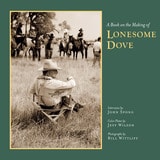
A Book on the Making of Lonesome Dove
By John Spong
University of Texas Press, 2012
Widely acclaimed as the greatest Western ever made, Lonesome Dove has become a true American epic. Larry McMurtry’s Pulitzer Prize–winning novel was a New York Times best seller, with more than 2.5 million copies currently in print. The Lonesome Dove miniseries has drawn millions of viewers and won numerous awards, including seven Emmys.
A Book on the Making of Lonesome Dove takes you on a fascinating behind-the-scenes journey into the creation of the book, the miniseries, and the world of Lonesome Dove. Writer John Spong talks to forty of the key people involved, including author Larry McMurtry; actors Robert Duvall, Tommy Lee Jones, Anjelica Huston, Diane Lane, Danny Glover, Ricky Schroder, D. B. Sweeney, Frederic Forrest, and Chris Cooper; executive producer and screenwriter Bill Wittliff; executive producer Suzanne de Passe; and director Simon Wincer. They and a host of others tell lively stories about McMurtry’s writing of the epic novel and the process of turning it into the miniseries Lonesome Dove. Accompanying their recollections are photographs of iconic props, costumes, set designs, and shooting scripts. Rounding out the book are continuity Polaroids used during filming and photographs taken on the set by Bill Wittliff, which place you behind the scenes in the middle of the action.
Designed as a companion for A Book of Photographs from Lonesome Dove, Wittliff’s magnificent fine art volume, A Book on the Making of Lonesome Dove is a must-have for every fan of this American epic.
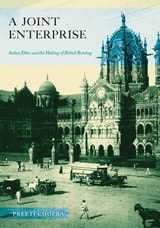
A Joint Enterprise
Indian Elites and the Making of British BombayPreeti Chopra
University of Minnesota Press, 2010
Chopra shows how the European and Indian engineers, architects, and artists worked with each other to design a city—its infrastructure, architecture, public sculpture—that was literally constructed by Indian laborers and craftsmen. Beyond the built environment, Indian philanthropists entered into partnerships with the colonial regime to found and finance institutions for the general public. Too often thought to be the product of the singular vision of a founding colonial regime, British Bombay is revealed by Chopra as an expression of native traditions meshing in complex ways with European ideas of urban planning and progress.
The result, she argues, was the creation of a new shared landscape for Bombay’s citizens that ensured that neither the colonial government nor the native elite could entirely control the city’s future.
A Mandarin and the Making of Public Policy
ReflectionsTong Dow Ngiam
National University of Singapore Press, 2001
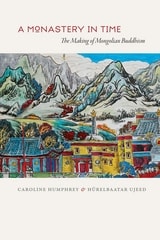
A Monastery in Time
The Making of Mongolian BuddhismCaroline Humphrey and Hurelbaatar Ujeed
University of Chicago Press, 2013
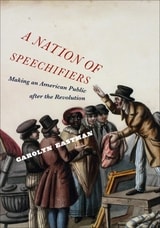
A Nation of Speechifiers
Making an American Public after the RevolutionCarolyn Eastman
University of Chicago Press, 2009
In the decades after the American Revolution, inhabitants of the United States began to shape a new national identity. Telling the story of this messy yet formative process, Carolyn Eastman argues that ordinary men and women gave meaning to American nationhood and national belonging by first learning to imagine themselves as members of a shared public.
She reveals that the creation of this American public—which only gradually developed nationalistic qualities—took place as men and women engaged with oratory and print media not only as readers and listeners but also as writers and speakers. Eastman paints vibrant portraits of the arenas where this engagement played out, from the schools that instructed children in elocution to the debating societies, newspapers, and presses through which different groups jostled to define themselves—sometimes against each other. Demonstrating the previously unrecognized extent to which nonelites participated in the formation of our ideas about politics, manners, and gender and race relations, A Nation of Speechifiers provides an unparalleled genealogy of early American identity.
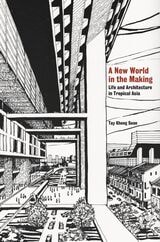
A New World in the Making
Life and Architecture in Tropical AsiaTay Kheng Soon
National University of Singapore Press, 2023
According to architect Tay Kheng Soon, the time has come to change and build a new world. The feeling has impelled him to write this book, bringing together memoir and writings on identity, landscape and belonging, and on architecture and urbanism. Born in British-ruled Singapore, Soon was deeply engaged in the debates about building a new world that attended the end of colonialism. His focus, but far from his only concern, was Singapore's built environment—and its spiritual one—since the early 1960s. A New World in the Making is a must-read reflection on tropical Asia, on architecture and urbanism, and on looking ahead to the always urgent task of building a new world.
A Poet's Craft
A Comprehensive Guide to Making and Sharing Your PoetryAnnie Finch
University of Michigan Press, 2012
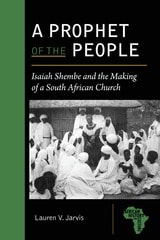
A Prophet of the People
Isaiah Shembe and the Making of a South African ChurchLauren V. Jarvis
Michigan State University Press, 2024
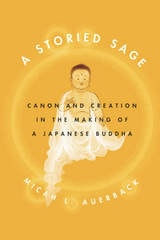
A Storied Sage
Canon and Creation in the Making of a Japanese BuddhaMicah L. Auerback
University of Chicago Press, 2016
Micah L. Auerback follows the changing fortune of the Buddha through the novel uses for the Buddha’s story in high and low culture alike, often outside of the confines of the Buddhist establishment. Auerback argues for the Buddha’s continuing relevance during Japan’s early modern period and links the later Buddhist tradition in Japan to its roots on the Asian continent. Additionally, he examines the afterlife of the Buddha in hagiographic literature, demonstrating that the late Japanese Buddha, far from fading into a ghost of his former self, instead underwent an important reincarnation. Challenging many established assumptions about Buddhism and its evolution in Japan, A Storied Sage is a vital contribution to the larger discussion of religion and secularization in modernity.
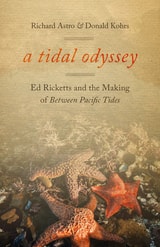
A Tidal Odyssey
Ed Ricketts and the Making of Between Pacific TidesRichard Astro
Oregon State University Press, 2021
In A Tidal Odyssey, literary scholar Richard Astro and archivist Donald Kohrs explore how Between Pacific Tides came to be, covering both the writing process and the long journey to publication. They tell three interwoven stories: the development of ecology as a valuable new approach to the study of marine life in the intertidal zone; a case study of how new and dynamic science is published and reaches a larger audience; and the intellectual development of Ed Ricketts.
Not only a scientist but also an expert in music, philosophy, history, and literature, Ricketts and his work impacted a broad range of writers and scholars. A number of these intellectual figures appear in A Tidal Odyssey, including Ricketts’s co-author, Jack Calvin, and illustrator, Ritch Lovejoy; mythologist Joseph Campbell; novelist Henry Miller; composer John Cage; and of course John Steinbeck. The authors have drawn extensively from Ricketts’s archive, including previously unpublished letters, memoranda, notebooks, and photographs.
A Tidal Odyssey is for anyone interested in the world of Ed Ricketts as well as marine biology, intertidal ecology, and how ecological studies underpin our understanding of the impact of environmental change on the well-being of our planet.
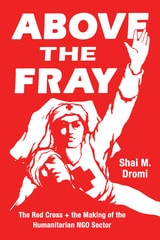
Above the Fray
The Red Cross and the Making of the Humanitarian NGO SectorShai M. Dromi
University of Chicago Press, 2020
Drawing on archival research, Dromi traces the genesis of the Red Cross to a Calvinist movement working in mid-nineteenth-century Geneva. He shows how global humanitarian policies emerged from the Red Cross founding members’ faith that an international volunteer program not beholden to the state was the only ethical way to provide relief to victims of armed conflict. By illustrating how Calvinism shaped the humanitarian field, Dromi argues for the key role belief systems play in establishing social fields and institutions. Ultimately, Dromi shows the immeasurable social good that NGOs have achieved, but also points to their limitations and suggests that alternative models of humanitarian relief need to be considered.
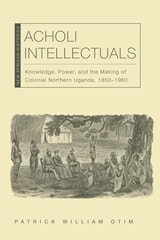
Acholi Intellectuals
Knowledge, Power, and the Making of Colonial Northern Uganda, 1850–1960Patrick William Otim
Ohio University Press, 2024
Across Canons
Language, Latin American Immigrant Literature, and the Making of Latinx NarrativesThania Muñoz D.
University of Arizona Press, 2026
Author Thania Muñoz D. looks at immigrant experiences impacted by a prism of social and political factors, including free trade agreements, drug trafficking, political violence, massive foreign debt, and economic dependency. The author examines why these writers refuse to identify as immigrants and reject stereotypical portrayals. Throughout, Muñoz D. makes the case for a new field within Latinx literature: Latin American immigrant writing in Spanish. She explains why this type of literary work is critical across Latin American, Latinx, and U.S. literature.
This book highlights the benefits of comparative, interdisciplinary interpretations that allow readers and scholars to grapple with the realities of a multilingual Latin American–origin literary present and future of the United States.
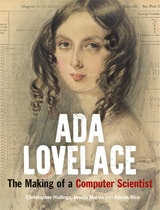
Ada Lovelace
The Making of a Computer ScientistChristopher Hollings, Ursula Martin and Adrian Rice
Bodleian Library Publishing, 2018
Although it was an unusual pursuit for women at the time, Ada Lovelace studied science and mathematics from a young age. This book uses previously unpublished archival material to explore her precocious childhood—from her curiosity about the science of rainbows to her design for a steam-powered flying horse—as well as her ambitious young adulthood. Active in Victorian London’s social and scientific elite alongside Mary Somerville, Michael Faraday, and Charles Dickens, Ada Lovelace became fascinated by the computing machines of Charles Babbage, whose ambitious, unbuilt invention known as the “Analytical Engine” inspired Lovelace to devise a table of mathematical formulae which many now refer to as the “first program.”
Ada Lovelace died at just thirty-six, but her work strikes a chord to this day, offering clear explanations of the principles of computing, and exploring ideas about computer music and artificial intelligence that have been realized in modern digital computers. Featuring detailed illustrations of the “first program” alongside mathematical models, correspondence, and contemporary images, this book shows how Ada Lovelace, with astonishing prescience, first investigated the key mathematical questions behind the principles of modern computing.
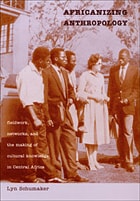
Africanizing Anthropology
Fieldwork, Networks, and the Making of Cultural Knowledge in Central AfricaLyn Schumaker
Duke University Press, 2001
Schumaker shows how local conditions and local ideas about culture and history, as well as previous experience of outsiders’ interest, shape local people’s responses to anthropological fieldwork and help them, in turn, to influence the construction of knowledge about their societies and lives. Bringing to the fore a wide range of actors—missionaries, administrators, settlers, the families of anthropologists—Schumaker emphasizes the daily practices of researchers, demonstrating how these are as centrally implicated in the making of anthropological knowlege as the discipline’s methods. Selecting a prominent group of anthropologists—The Manchester School—she reveals how they achieved the advances in theory and method that made them famous in the 1950s and 1960s.
This book makes important contributions to anthropology, African history, and the history of science.
After Independence
Making and Protecting the Nation in Postcolonial and Postcommunist StatesLowell W. Barrington, Ed.
University of Michigan Press, 2006
"Where do nationalists go once they get what they want? We know rather little about how nationalist movements transform themselves into the governments of new states, or how they can become opponents of new regimes that, in their view, have not taken the self-determination drive far enough. This stellar collection contributes not only to comparative theorizing on nationalist movements, but also deepens our understanding of the contentious politics of nationalism's ultimate product--new countries."
--Charles King, Chair of the Faculty and Ion Ratiu Associate Professor, Georgetown University School of Foreign Service
"This well-integrated volume analyzes two important variants of nationalism-postcolonial and postcommunist-in a sober, lucid way and will benefit students and scholars alike."
--Zvi Gitelman, University of Michigan
Lowell W. Barrington is Associate Professor of Political Science, Marquette University.
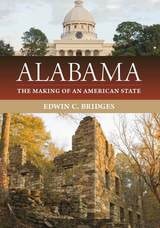
Alabama
The Making of an American StateEdwin C. Bridges
University of Alabama Press, 2016
The story of Alabama—where history shaped a state and a nation.
Alabama: The Making of an American State is itself a watershed event in the long and storied history of the state of Alabama. Here, presented for the first time ever in a single, magnificently illustrated volume, Edwin C. Bridges conveys the magisterial sweep of Alabama’s rich, difficult, and remarkable history with verve, eloquence, and an unblinking eye.
From Alabama’s earliest fossil records to its settlement by Native Americans and later by European settlers and African slaves, from its territorial birth pangs and statehood through the upheavals of the Civil War and the civil rights movement, Bridges makes evident in clear, direct storytelling the unique social, political, economic, and cultural forces that have indelibly shaped this historically rich and unique American region.
Illustrated lavishly with maps, archival photographs, and archaeological artifacts, as well as art works, portraiture, and specimens of Alabama craftsmanship—many never before published—Alabama: The Making of an American State makes evident as rarely seen before Alabama’s most significant struggles, conflicts, achievements, and developments.
Drawn from decades of research and the deep archival holdings of the Alabama Department of Archives and History, this volume will be the definitive resource for decades to come for anyone seeking a broad understanding of Alabama’s evolving legacy.
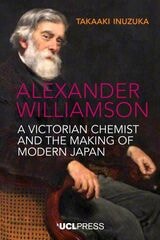
Alexander Williamson
A Victorian Chemist and the Making of Modern JapanTakaaki Inuzuka
University College London, 2021
Alexander Williamson was a leading scientist and professor of chemistry at University College London in the late nineteenth century. He taught and cared for visiting Japanese students, assisting them with their goal of modernizing Japan. This short, accessible biography explores his contribution to nineteenth-century science, as well as his lasting impact on Japanese society. In 1863 five students from the Chōshū clan, with a desperate desire to learn from the West, made their way to England. They were put in the care of Williamson and his wife. Their mission was to learn about cutting-edge Western technology, science, economics, and politics. When they returned home, they rapidly became leading figures in Japanese life. The remarkable story of the part Williamson and University College London played in the modernization of Japan is little known today. This biography will promote a deeper understanding of Williamson’s scientific innovations and his legacy for Anglo-Japanese relations.

American Bloodlands
Race and the Making of the Plasma EconomyKelsey Johnson
Duke University Press, 2027
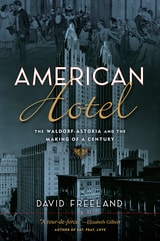
American Hotel
The Waldorf-Astoria and the Making of a CenturyDavid Freeland
Rutgers University Press, 2021
American Hotel takes us behind the glittering image to reveal the full extent of the Waldorf’s contribution toward shaping twentieth-century life and culture. Historian David Freeland examines the Waldorf from the opening of its first location in 1893 through its rise to a place of influence on the local, national, and international stage. Along the way, he explores how the hotel’s mission to provide hospitality to a diverse range of guests was put to the test by events such as Prohibition, the anticommunist Red Scare, and civil rights struggles.
Alongside famous guests like Frank Sinatra, Martin Luther King, Richard Nixon, and Eleanor Roosevelt, readers will meet the lesser-known men and women who made the Waldorf a leader in the hotel industry and a key setting for international events. American Hotel chronicles how institutions such as the Waldorf-Astoria played an essential role in New York’s growth as a world capital.
Amusement, Inc.
Disneyland’s Corporate Apparatus and the Making of the Theme ParkRoland Betancourt
Duke University Press, 2027

An Alternative Path
The Making and Remaking of Hahnemann Medical College and HospitalNaomi Rogers
Rutgers University Press, 1998
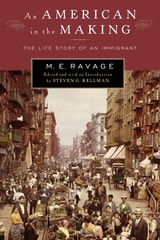
An American in the Making
The Life Story of an ImmigrantKellman, Steven G
Rutgers University Press, 2009
Steven G. Kellman brings Ravage's story to life again in this new edition, providing a brief biography and introduction that place the memoir within historical and literary contexts. An American in the Making contributes to a broader understanding of the global notion of "America" and remains timely, especially in an era when massive immigration, now from Latin America and Asia, challenges ideas of national identity.

An Efficient Womanhood
Women and the Making of the Universal Negro Improvement AssociationNatanya Duncan
University of Illinois Press, 2023
Founded in 1914 by Amy Ashwood and Marcus Garvey, the Universal Negro Improvement Association and African Communities League (commonly called the UNIA) grew into one of the largest social justice organizations of the twentieth century. Natanya Duncan’s collective biography explores women’s role in building the UNIA and how Ashwood’s strategy of efficient womanhood equipped them to confront political and social issues--even when it meant defying gender norms. Efficient womanhood took a three-tiered approach that asked UNIA women to seek equitable partners, take on roles as mentors, and connect resources and people to their communities and Black people at large. Strong believers in the necessity of their presence and voices, UNIA women developed leadership skills within and beyond the organization and used these skills in service to their communities.
Enlightening and in-depth, An Efficient Womanhood tells the story of the women who shaped a framework for leadership and engagement that remains a blueprint for activists today.

An Evangelical Adrift
The Making of John Henry Newman's TheologyGeertjan Zuijdwegt
Catholic University of America Press, 2022
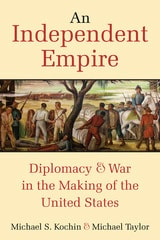
An Independent Empire
Diplomacy & War in the Making of the United StatesMichael S. Kochin and Michael Taylor
University of Michigan Press, 2020
Foreign policies and diplomatic missions, combined with military action, were the driving forces behind the growth of the early United States. In an era when the Old and New Worlds were subject to British, French, and Spanish imperial ambitions, the new republic had limited diplomatic presence and minimal public credit. It was vulnerable to hostile forces in every direction. The United States could not have survived, grown, or flourished without the adoption of prescient foreign policies, or without skillful diplomatic operations.
An Independent Empire shows how foreign policy and diplomacy constitute a truly national story, necessary for understanding the history of the United States. In this lively and well-written book, episodes in American history—such as the writing and ratification of the Constitution, Henry Clay’s advocacy of an American System, Pinckney’s Treaty with Spain, and the visionary but absurd Congress of Panama—are recast as elemental aspects of United States foreign and security policy.
An Independent Empire tells the stories of the people who defined the early history of America’s international relationships. Throughout the book are brief, entertaining vignettes of often-overlooked intellectuals, spies, diplomats, and statesmen whose actions and decisions shaped the first fifty years of the United States. More than a dozen bespoke maps illustrate that the growth of the early United States was as much a geographical as a political or military phenomenon.
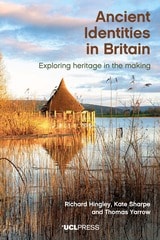
Ancient Identities in Britain
Exploring Heritage in the MakingRichard Hingley, Kate Sharpe, and Tom Yarrow
University College London, 2025
Ancient Identities in Britain explores the relevance of Iron Age and Roman heritage in modern-day Britain. Shedding new light on the continued social significance of these ancient histories, it discusses how they are presented in the form of ancient monuments, museums, reenactments, living history exhibits, community projects, and other heritage venues across England, Scotland, and Wales. The book is not only interested in the continued resonance of ancient myths and material culture, but also the very actions, ideas, and material conditions through which antiquity becomes heritage in the present—and how present values shape the way antiquity is displayed and consumed.
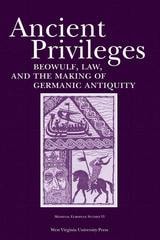
Ancient Privileges
Beowulf, Law, and the Making of Germanic AntiquitySTEFAN JURASINSKI
West Virginia University Press, 2006
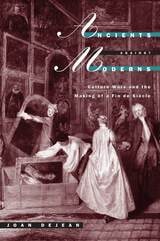
Ancients against Moderns
Culture Wars and the Making of a Fin de SiecleJoan DeJean
University of Chicago Press, 1996
DeJean brilliantly reassesses our current culture wars from the perspective of that earlier fin de siècle (the first to think of itself as such), and rereads the seventeenth-century Quarrel from the vantage of our own warring "ancients" and "moderns." In so doing, DeJean shows that a fin de siècle taking place in the shadow of culture wars can be more a source of constructive cultural revolution than of apocalyptic gloom and doom. Just as the first fin de siècle's battle of the books served as the spark that set off the Enlightenment, introducing radically new sexual and social politics that laid the groundwork for modernity, so can our current culture wars result in radical, liberating changes—if we take an active stand against our own "ancients" who seek to stifle such reforms.
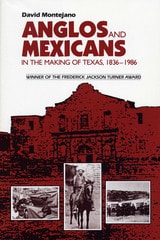
Anglos and Mexicans in the Making of Texas, 1836-1986
By David Montejano
University of Texas Press, 1987
Winner, Frederick Jackson Turner Award, Organization Of American Historians, 1988
American Historical Association, Pacific Branch Book Award, 1989
Texas Institute of Letters Friends Of The Dallas Public Library Award, 1987
Texas Historical Commission T. R. Fehrenbach Award, Best Ethnic, Minority, And Women's History Publication, 1987

Anna Livia Plurabelle
The Making of a ChapterFred Higginson
University of Minnesota Press, 1960

Archie Green
The Making of a Working-Class HeroSean Burns
University of Illinois Press, 2011
Archiving Heaven and Earth
The Historian's Office and the Making of MormonismRobin Scott Jensen
University of Illinois Press, 2027
Robin Scott Jensen explores the Church Historian’s Office against the backdrop of how writing and archiving what was written shaped the growth, faith, and identity of the nineteenth-century Latter Day Saint movement. As Jensen shows, records simultaneously created and preserved history. Journal keeping and letter writing stood alongside official documents as an essential means for Saints to understand their mission and place in American society. Over time, the Church Historian’s Office evolved into a powerful institution that guided memory and authority by deciding what to collect, copy, or destroy. Jensen tells the stories of the forgotten archivists, many of them women, who built the Church Historian’s Office, while revealing the choices and conflicts that led to Native and other voices being marginalized or erased.
Detailed and candid, Archiving Heaven and Earth provides a rare look at a foundational organization.
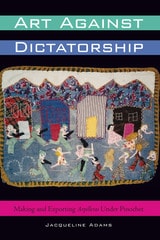
Art Against Dictatorship
Making and Exporting Arpilleras Under PinochetBy Jacqueline Adams
University of Texas Press, 2013
Art can be a powerful avenue of resistance to oppressive governments. During the dictatorship of Augusto Pinochet in Chile, some of the country’s least powerful citizens—impoverished women living in Santiago’s shantytowns—spotlighted the government’s failings and use of violence by creating and selling arpilleras, appliquéd pictures in cloth that portrayed the unemployment, poverty, and repression that they endured, their work to make ends meet, and their varied forms of protest. Smuggled out of Chile by human rights organizations, the arpilleras raised international awareness of the Pinochet regime’s abuses while providing income for the arpillera makers and creating a network of solidarity between the people of Chile and sympathizers throughout the world.
Using the Chilean arpilleras as a case study, this book explores how dissident art can be produced under dictatorship, when freedom of expression is absent and repression rife, and the consequences of its production for the resistance and for the artists. Taking a sociological approach based on interviews, participant observation, archival research, and analysis of a visual database, Jacqueline Adams examines the emergence of the arpilleras and then traces their journey from the workshops and homes in which they were made, to the human rights organizations that exported them, and on to sellers and buyers abroad, as well as in Chile. She then presents the perspectives of the arpillera makers and human rights organization staff, who discuss how the arpilleras strengthened the resistance and empowered the women who made them.
Asia First
China and the Making of Modern American ConservatismJoyce Mao
University of Chicago Press, 2015
Mao explores the deep resonance American conservatives felt with the defeat of Chiang Kai-Shek and his exile to Taiwan, which they lamented as the loss of China to communism and the corrosion of traditional values. In response, they fomented aggressive anti-communist positions that urged greater action in the Pacific, a policy known as “Asia First.” While this policy would do nothing to oust the communists from China, it was powerfully effective at home. Asia First provided American conservatives a set of ideals—American sovereignty, selective military intervention, strident anti-communism, and the promotion of a technological defense state—that would bring them into the global era with the positions that are now their hallmark.
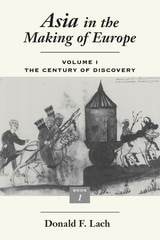
Asia in the Making of Europe, Volume I
The Century of Discovery. Book 1.Donald F. Lach
University of Chicago Press, 1994
Volume I: The Century of Discovery brings together "everything that a European could know of India, Southeast Asia, China, and Japan, from printed books, missionary reports, traders' accounts and maps" (The New York Review of Books). Volume II: A Century of Wonder examines the influence of that vast new body of information about Asia on the arts, institutions, literatures, and ideas of sixteenth-century Europe.
Asia in the Making of Europe, Volume I
The Century of Discovery. Book 2.Donald F. Lach
University of Chicago Press, 1994
Volume I: The Century of Discovery brings together "everything that a European could know of India, Southeast Asia, China, and Japan, from printed books, missionary reports, traders' accounts and maps" (The New York Review of Books). Volume II: A Century of Wonder examines the influence of that vast new body of information about Asia on the arts, institutions, literatures, and ideas of sixteenth-century Europe.
Asia in the Making of Europe, Volume II
A Century of Wonder. Book 1: The Visual ArtsDonald F. Lach
University of Chicago Press, 1970
The rise to world dominance of the Western nations in modern times and the rapid industrial growth of the West, which outpaced the East in technical and military achievements, have led to a historical eclipse of the ancient and brilliant cultures of Asia.
Historican Donald F. Lach, in his influential scholarly work, Asia in the Making of Europe, points out that an eclipse is never permanent, that this one was never total, and that there was a period in early modern times when Asia and Europe were close rivals in brilliance and mutual influence.
Asia in the Making of Europe, Volume II
A Century of Wonder. Book 2: The Literary ArtsDonald F. Lach
University of Chicago Press, 1994
Volume I: The Century of Discovery brings together "everything that a European could know of India, Southeast Asia, China, and Japan, from printed books, missionary reports, traders' accounts and maps" (The New York Review of Books). Volume II: A Century of Wonder examines the influence of that vast new body of information about Asia on the arts, institutions, literatures, and ideas of sixteenth-century Europe.
Asia in the Making of Europe, Volume II
A Century of Wonder. Book 3: The Scholarly DisciplinesDonald F. Lach
University of Chicago Press, 1994
Volume I: The Century of Discovery brings together "everything that a European could know of India, Southeast Asia, China, and Japan, from printed books, missionary reports, traders' accounts and maps" (The New York Review of Books). Volume II: A Century of Wonder examines the influence of that vast new body of information about Asia on the arts, institutions, literatures, and ideas of sixteenth-century Europe.
Asia in the Making of Europe, Volume III
A Century of Advance. Book 2, South AsiaDonald F. Lach and Edwin J. Van Kley
University of Chicago Press, 1993
In Volume III: A Century of Advance, the authors have researched seventeenth-century European writings on Asia in an effort to understand how contemporaries saw Asian societies and peoples.
Asia in the Making of Europe, Volume III
A Century of Advance. Book 1: Trade, Missions, LiteratureDonald F. Lach and Edwin J. Van Kley
University of Chicago Press, 1993
In Volume III: A Century of Advance, the authors have researched seventeenth-century European writings on Asia in an effort to understand how contemporaries saw Asian societies and peoples.
Asia in the Making of Europe, Volume III
A Century of Advance. Book 3: Southeast AsiaDonald F. Lach and Edwin J. Van Kley
University of Chicago Press, 1993
In Volume III: A Century of Advance, the authors have researched seventeenth-century European writings on Asia in an effort to understand how contemporaries saw Asian societies and peoples.
Asia in the Making of Europe, Volume III
A Century of Advance. Book 4: East AsiaDonald F. Lach and Edwin J. Van Kley
University of Chicago Press, 1993
In Volume III: A Century of Advance, the authors have researched seventeenth-century European writings on Asia in an effort to understand how contemporaries saw Asian societies and peoples.

Asia in the Making of Europe, Volume III
A Century of Advance. Books 1-4Donald F. Lach and Edwin J. Van Kley
University of Chicago Press, 1993
In Volume III: A Century of Advance, the authors have researched seventeenth-century European writings on Asia in an effort to understand how contemporaries saw Asian societies and peoples.