Results by title
3 books match the query 'Manhattan Project (U.S.)'
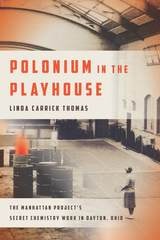
Polonium in the Playhouse
The Manhattan Project's Secret Chemistry Work in Dayton, OhioLinda Carrick Thomas
The Ohio State University Press, 2017
At the height of the race to build an atomic bomb, an indoor tennis court in one of the Midwest’s most affluent residential neighborhoods became a secret Manhattan Project laboratory. Polonium in the Playhouse: The Manhattan Project's Secret Chemistry Work in Dayton, Ohio presents the intriguing story of how this most unlikely site in Dayton, Ohio, became one of the most classified portions of the Manhattan Project.
Seized by the War Department in 1944 for the bomb project, the Runnymede Playhouse was transformed into a polonium processing facility, providing a critical radioactive ingredient for the bomb initiator—the mechanism that triggered a chain reaction. With the help of a Soviet spy working undercover at the site, it was also key to the Soviet Union’s atomic bomb program.
The work was directed by industrial chemist Charles Allen Thomas who had been chosen by J. Robert Oppenheimer and General Leslie Groves to coordinate Manhattan Project chemistry and metallurgy. As one of the nation’s first science administrators, Thomas was responsible for choreographing the plutonium work at Los Alamos and the Project’s key laboratories. The elegant glass-roofed building belonged to his wife’s family.
Weaving Manhattan Project history with the life and work of the scientist, industrial leader and singing-showman Thomas, Polonium in the Playhouse offers a fascinating look at the vast and complicated program that changed world history and introduces the men and women who raced against time to build the initiator for the bomb.
[more]
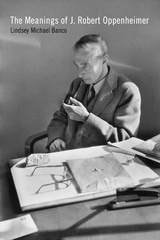
The Meanings of J. Robert Oppenheimer
Lindsey Michael Banco
University of Iowa Press, 2016
He called the first atomic bomb “technically sweet,” yet as he watched its brilliant light explode over the New Mexico desert in 1945 in advance of the black horrors of Hiroshima and Nagasaki, he also thought of the line from the Hindu epic The Bhagavad Gita: “I am become Death, the destroyer of worlds.” Physicist J. Robert Oppenheimer, the scientific director of the Manhattan Project, the single most recognizable face of the atomic bomb, and a man whose name has become almost synonymous with Cold War American nuclear science, was and still is a conflicted, controversial figure who has come to represent an equally ambivalent technology.
The Meanings of J. Robert Oppenheimer examines how he has been represented over the past seven decades in biographies, histories, fiction, comics, photographs, film, television, documentaries, theater, and museums. Lindsey Michael Banco gathers an unprecedented group of cultural texts and seeks to understand the multiple meanings Oppenheimer has held in American popular culture since 1945. He traces the ways these representations of Oppenheimer have influenced public understanding of the atomic bomb, technology, physics, the figure of the scientist, the role of science in war, and even what it means to pursue knowledge of the world around us. Questioning and unpacking both how and why Oppenheimer is depicted as he is across time and genre, this book is broad in scope, profound in detail, and offers unique insights into the rise of nuclear culture and how we think about the relationship between history, imagination, science, and nuclear weapons today.
The Meanings of J. Robert Oppenheimer examines how he has been represented over the past seven decades in biographies, histories, fiction, comics, photographs, film, television, documentaries, theater, and museums. Lindsey Michael Banco gathers an unprecedented group of cultural texts and seeks to understand the multiple meanings Oppenheimer has held in American popular culture since 1945. He traces the ways these representations of Oppenheimer have influenced public understanding of the atomic bomb, technology, physics, the figure of the scientist, the role of science in war, and even what it means to pursue knowledge of the world around us. Questioning and unpacking both how and why Oppenheimer is depicted as he is across time and genre, this book is broad in scope, profound in detail, and offers unique insights into the rise of nuclear culture and how we think about the relationship between history, imagination, science, and nuclear weapons today.
[more]
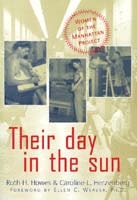
Their Day In The Sun
Ruth Howes
Temple University Press, 1999
The public perception of the making of the atomic bomb is yet an image of the dramatic efforts of a few brilliant male scientists. However, the Manhattan Project was not just the work of a few and it was not just in Los Alamos. It was, in fact, a sprawling research and industrial enterprise that spanned the country from Hanford in Washington State to Oak Ridge in Tennessee, and the Met labs in Illinois.
The Manhattan Project also included women in every capacity. During World War II the manpower shortages opened the laboratory doors to women and they embraced the opportunity to demonstrate that they, too, could do "creative science." Although women participated in all aspects of the Manhattan Project, their contributions are either omitted or only mentioned briefly in most histories of the project. It is this hidden story that is presented in Their Day in the Sun through interviews, written records, and photographs of the women who were physicists, chemists, mathematicians, biologists, and technicians in the labs.
Authors Ruth H. Howes and Caroline L. Herzenberg have uncovered accounts of the scientific problems the women helped solve as well as the opportunities and discrimination they faced. Their Day in the Sun describes their abrupt recruitment for the war effort and includes anecdotes about everyday life in these clandestine improvised communities. A chapter about what happened to the women after the war and about their attitudes now, so many years later, toward the work they did on the bomb is included.
[more]