Results by title
314 books match the query 'African' and 47 start with a
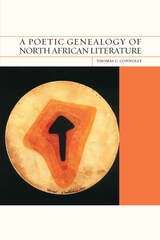
A Poetic Genealogy of North African Literature
Thomas C. Connolly
Northwestern University Press, 2025
Engaging the poetic to expand our imagination of Maghrebi literature in French
Poetry, as the Moroccan writer Abdelkébir Khatibi describes it, is a form of dissymmetry that exposes readers to the unexpected, and to the possibility of a transformative encounter with the text. Drawing on literary, philosophical, theoretical, and theological texts in multiple languages and scripts, as well as on the visual arts, Thomas C. Connolly delves into the poetic works of Khatibi and six other major Maghrebi authors—Jean Amrouche, Tahar Djaout, Nabile Farès, Mohammed Khaïr-Eddine, Abdelwahab Meddeb, and Jean Sénac—as well as the French poet Arthur Rimbaud, to think anew about the origins and legacy of Francophone poetry in the Maghreb. Instead of turning away from the poetic when it becomes indecipherable, A Poetic Genealogy of North African Literature engages poetic texts on their own terms, allowing them to dictate the search for meaning, thereby expanding our understanding of what Maghrebi literature in French was, is, and might become.
A Short History of Chinua Achebe’s Things Fall Apart
Terri Ochiagha
Ohio University Press, 2018
The publication of Chinua Achebe’s Things Fall Apart (1958) is heralded as the inaugural moment of modern African fiction, and the book remains the most widely read African novel of all time. Translated into dozens of languages, it has sold more than twelve million copies and has become a canonical reading in schools the world over. While Things Fall Apart is neither the first African novel to be published in the West nor necessarily the most critically valued, its iconic status has surpassed even that of its author.
Until now—in the sixtieth anniversary year of its publication—there has not been an updated history that moves beyond the book’s commonly discussed contexts and themes. In the accessible and concise A Short History of Chinua Achebe’s Things Fall Apart, Terri Ochiagha provides that history, asking new questions and bringing to wider attention unfamiliar but crucial elements of the Things Fall Apart story. These include new insights into questions of canonicity and into literary, historiographical, and precolonial aesthetic influences. She also assesses adaptations and appropriations not just in films but in theater, hip-hop, and popular literary genres such as Onitsha Market Literature.
Absinthe
World Literature in Translation: Volume 26: Vibrate! Resounding the Frequencies of Africana in TranslationFrieda Ekotto
Michigan Publishing Services, 2020
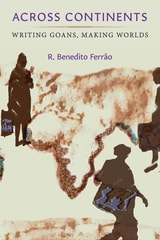
Across Continents
Writing Goans, Making WorldsR. Benedito Ferrão
University of Michigan Press, 2026
Across Continents employs Goan literary subjectivity as epistemology to critique a specific limitation of postcolonial thought, one that does not account for the situations or afterlife of Portuguese colonialism. Employing various novels, R. Benedito Ferrão considers the relationship between Portuguese and British colonialisms through the displacement of Goan characters betwixt Asia, Africa, Europe, and North America. The experiences of these figures in dealing with the processes of nation, statecraft, and political intrigue at various historical junctures offer a comparative understanding of the tumultuous conditions of postcoloniality in the making of marginalized subjectivity across continents.
In examining the mobility and diversity of Goan experiences as represented in works by Salman Rushdie, M. G. Vassanji, Roger King, and Margaret Mascarenhas, this book calls into question limits of citizenship, nationality, and notions of belonging. Ferrão centers seemingly minor figures to exemplify the effects of colonial and postcolonial changes that connect diverse geopolities.
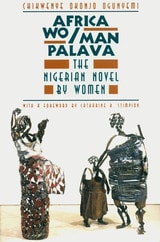
Africa Wo/Man Palava
The Nigerian Novel by WomenChikwenye Okonjo Ogunyemi
University of Chicago Press, 1995
Ogunyemi uses the novels to trace a Nigerian women's literary tradition that reflects an ideology centered on children and community. Of prime importance is the paradoxical Mammywata figure, the independent, childless mother, who serves as a basis for the new woman in these novels. Ogunyemi tracks this figure through many permutations, from matriarch to exile to woman writer, her multiple personalities reflecting competing loyalties—to self and other, children and nation. Such fragmented personalities characterize the postcolonial condition in their writing. Mapping geographies of pain and endurance, the work opens a space for addressing the palava between different groups of people. Valuable as the first sustained critical study of a substantial but little known body of literature, this book also counters the shortcomings of prevailing "masculinist" theories of black literature in a powerful narrative of the Nigerian world.
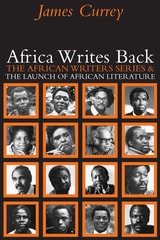
Africa Writes Back
The African Writers Series and the Launch of African LiteratureJames Currey
Ohio University Press, 2008
June 17, 2008, is the fiftieth anniversary of the publication of Chinua Achebe’s Things Fall Apart by Heinemann. This publication provided the impetus for the foundation of the African Writers Series in 1962 with Chinua Achebe as the editorial adviser.
Africa Writes Back: The African Writers Series and the Launch of African Literature captures the energy of literary publishing in a new and undefined field. Portraits of the leading characters and the many consultants and readers providing reports and advice to new and established writers make Africa Writes Back a stand-out book. James Currey’s voice and insights are an added bonus.
CONTENTS
Publishing and selling the African Writers Series
The African Writers Series Portfolio & George Hallett’s covers
Main dates for the African Writers Series
INTRODUCTION: The establishment of African Literature
Publishing Chinua Achebe
1. WRITERS FROM WEST AFRICA
Nigeria: The country where so much started
Negritude from Senegal to Cameroun
Magic & realism from Ghana, The Gambia & Sierra Leone
2. WRITERS FROM EASTERN AFRICA
Towards the oral & the popular in Kenya, Uganda & Tanzania
Publishing Ngugi
3. WRITERS FROM THE HORN & NORTH-EASTERN AFRICA
Emperors in Ethiopia
Publishing Nuruddin Farah
Arab authors in Egypt & Sudan
4. WRITERS FROM SOUTH AFRICA
Resistance in South Africa
Publishing Alex la Guma
Publishing Dennis Brutus
Publishing Bessie Head
Publishing Masizi Kunene
5. WRITERS FROM SOUTHERN AFRICAN
Guns & Guerrillas in Mozambique &Angola
Zambia Shall be Free
Death & detention in Malawi
The struggle to become Zimbabwe
Publishing Dambudzo Marechera
CONCLUSION: Is there still a role for the African Writers Series?
Africa in the World’s Time
Rewriting the Past Beyond Colonial NarrativesMamadou Diouf
Seagull Books, 2025
Mamadou Diouf unearths the intellectual and cultural traditions that have long defined Africa, proving that history was never just written about Africa, but also by it.
For too long, Africa has been framed as an afterthought in world history—a continent written into the margins of time. In Africa in the World’s Time, renowned historian Mamadou Diouf dismantles these colonial narratives and reclaims Africa’s rightful place at the center of global historical thought. Moving beyond Western frameworks, Diouf examines the continent’s intellectual traditions and demonstrates how African artists and historians have shaped and reshaped how we understand the past.
Tracing central debates from the independence era to today, Diouf examines figures like Cheikh Anta Diop and Samir Amin, as well as the vital role of literature and film in contesting predominant histories. He challenges the linear, Eurocentric timelines that have long governed historical discourse, and puts forward a vision of Africa as a force that has always been influencing and reimagining the world.
African Art Reframed
Reflections and Dialogues on Museum CultureBennetta Jules-Rosette and J. R. Osborn; Foreword by Simon Njami
University of Illinois Press, 2020
The authors take a three-pronged approach. Part One ranges from curiosity cabinets to virtual websites to offer a history of ethnographic and art museums and look at their organization and methods of reaching out to the public. In the second part, the authors examine museums as ecosystems and communities within communities, and they use semiotic methods to analyze images, signs, and symbols drawn from the experiences of curators and artists. The third part introduces innovative strategies for displaying, disseminating, and reclaiming African art. The authors also propose how to reinterpret the art inside and outside the museum and show ways of remixing the results.
Drawing on extensive conversations with curators, collectors, and artists, African Art Reframed is an essential guide to building new exchanges and connections in the dynamic worlds of African and global art.
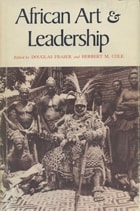
African Art and Leadership
Edited by Douglas Fraser and Herbert M. Cole
University of Wisconsin Press, 1972
African Filmmaking
Five FormationsKenneth W. Harrow
Michigan State University Press, 2017

African Hustler Narratives
E-Fraud Economy and Postmillennial CapitalismDaniel Chukwuemeka
University of Michigan Press, 2027
Across contemporary African literature, hustlers appear as online scammers, sex workers, undocumented migrants, and others who pursue self-advancement through unconventional or compromising means. African Hustler Narratives asks what these figures reveal when we look beyond the familiar discourse of morality or criminality. Daniel Chukwuemeka argues that the hustler’s pursuit of self-advancement through improvised means constitutes a response to structural exclusion from global capitalism, which a purely moral or criminal framing misses entirely.
Moving from earlier forms of hustling to the digital world of e-fraud, Chukwuemeka shows how African writers use these morally complicated figures to explore economic inequality and the difficult choices that arise when the neoliberal promise of opportunity collides with the realities of systemic exclusion. Chukwuemeka also extends the hustler motif to those who tell and study these stories. Though their work differs from the e-scammer’s, African writers and critics negotiate Global North publishing and academic valuation systems that reproduce the disparities they interrogate, making the e-scammer their doppelgänger.
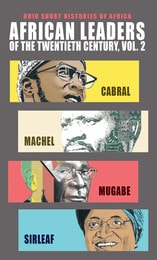
African Leaders of the Twentieth Century, Volume 2
Cabral, Machel, Mugabe, SirleafAllen F. Isaacman
Ohio University Press, 2022
This omnibus edition brings together concise and up-to-date biographies of Amílcar Cabral, Samora Machel, Robert Mugabe, and Ellen Johnson Sirleaf. African Leaders of the Twentieth Century, Volume 2 complements courses in history and political science and is an informative collection for general readers.
Amílcar Cabral: A Nationalist and Pan-Africanist Revolutionary, by Peter Karibe Mendy
Amílcar Cabral’s charismatic and visionary leadership, his pan-Africanist solidarity and internationalist commitment to “every just cause in the world,” remain relevant to contemporary struggles for emancipation and self-determination. This concise biography is an ideal introduction to his life and legacy.
Mozambique’s Samora Machel: A Life Cut Short, by Allen F. Isaacman and Barbara S. Isaacman
From his anti-colonial military leadership to the presidency of independent Mozambique, Samora Machel held a reputation as a revolutionary hero to the oppressed. Although killed in a 1987 plane crash, for many Mozambicans his memory lives on as a beacon of hope for the future.
Robert Mugabe, by Sue Onslow and Martin Plaut
For some, Zimbabwe’s Robert Mugabe was a liberation hero who confronted white rule and oversaw the radical redistribution of land. For others, he was a murderous dictator who drove his country to poverty. This concise biography reveals the complexity of the man who led Zimbabwe for its first decades of independence.
Ellen Johnson Sirleaf, by Pamela Scully
Nobel Peace Prize–winner and two-time Liberian president Ellen Johnson Sirleaf speaks to many of the key themes of the twenty-first century. Among these are the growing power of women in the arenas of international politics and human rights; the ravaging civil wars of the post–Cold War era in which sexual violence is used as a weapon; and the challenges of transitional justice in building postconflict societies.

African Literature in the Twentieth Century
O.R. Dathorne
University of Minnesota Press, 1976
African Literature in the Twentieth Century was first published in 1976. Minnesota Archive Editions uses digital technology to make long-unavailable books once again accessible, and are published unaltered from the original University of Minnesota Press editions.
This paperback makes available the major part of Professor Dathorne's The Black Mind.It concentrates on the writings of Africans in various African and European languages and provides insight, both broad and deep, into the Black intellect. Professor Dathorne examines the literature of Africans as spoken or written in their local languages and in French, Portuguese, and English. This extensive survey and interpretation gives the reader a remarkable pathway to an understanding of the Black imagination and its relevance to thought and creativity throughout the world.
The author himself lived in Africa for ten years, and his view is not that of an outsider, since it is as a Black man that he speaks about Black people. Throughout the book, a major theme is the demonstration that, despite slavery and colonialism, Africans remained very close to their own cultures. Professor Dathorne shows that African writers may be, like some Afro-American writers, "marginal men," but that they are Black men and it is as Black men that they feel the nostalgia of their past and the corrosive influences of their present.
O. R. Dathorne is a member of the Department of Black Studies and of the Department of English at Ohio State University. He has taught at universities in Nigeria and Sierra Leone and served as a UNESCO adviser in Sierra Leone. He also has taught at Ohio State University, Howard University, and the University of Wisconsin and lectured at Yale, Federal City College, Michigan State, and other universities in and out of the United States. He is the author of two novels and editor of a number of anthologies of Black literature, and has written widely in journals on his subject.

African Luxury
Aesthetics and PoliticsEdited by Mehita Iqani and Simidele Dosekun
Intellect Books, 2019
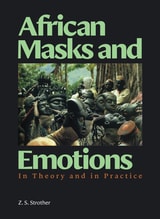
African Masks and Emotions
In Theory and in PracticeZ. S. Strother
J. Paul Getty Trust, The, 0
In this groundbreaking book, Z. S. Strother, inspired by dialogues with African masquerade patrons and performers, disputes assumptions that masks universally hide, reveal, or transform.
In Western European languages, the word mask exerts a powerful presence as a figure of speech. To masquerade is to pretend to be someone or something one is not. By extension, unmasking is a heroic metaphor for exposing a hidden truth. In this volume, art historian Z. S. Strother counters that narrative, using African case studies to offer an alternative vision of masquerading. She explores the aesthetic emotions aroused by masks, or more precisely, by “dances of masks”: joy, wonder, awe, fear, and the release of laughing out loud. She also investigates the uncanny—a sensation of “delicious shiveriness” triggered when familiar spaces and individuals become strange and changeable. Inspired by Strother’s studies in DR Congo, African Masks and Emotions takes a comparative perspective and moves emotion from the periphery to the center of analysis.
Reflecting Getty's commitment to open content, African Masks and Emotions is available for free download in ePub and PDF formats at: https://www.getty.edu/publications-reports/item/2F27A4. This paperback edition is available for sale for readers who wish to have a bound reference copy.
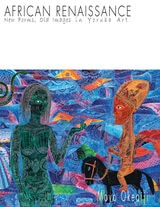
African Renaissance
New Forms, Old Images in Yoruba ArtM Okediji
University Press of Colorado, 2002
African Renaissance: New Forms, Old Images in Yoruba Art describes, analyzes, and interprets the historical and cultural contexts of an African art renaissance using the twentieth- and twenty-first-century transformation of ancient Yoruba artistic heritage. Juxtaposing ancient and contemporary Yoruba art, Moyo Okediji defines this art history through the lens of colonialism, an experience that served to both destroy ancient art traditions and revive Yoruba art in the twentieth century.
With vivid reproductions of paintings, prints, and drawings, Okediji describes how Yoruba art has replenished and redefined itself. Okediji groups the text into several broadly overlapping periods that intricately detail the journey of Yoruba art and artists: first through oppression by European colonialism, then the attainment of Nigeria’s independence and the new nation’s subsequent military coup, and ending with present-day native Yoruban artists fleeing their homeland.

African Royal Court Art
Michèle Coquet
University of Chicago Press, 1998
More than ornamentation, royal objects embodied the strength and status of African rulers. The gold-plated stools of the Ashanti, the delicately carved ivory bracelets of the Edo-these objects were meant not simply to adorn but to affirm and enhance the power and prestige of the wearer. Unlike the abstract style frequently seen in African ritual art, realism became manifest in courtly arts. Realism directly linked the symbolic value of the object-a portrait or relief-with the physical person of the king. The contours of the monarch's face, his political and military exploits rendered on palace walls, became visual histories, the work of art in essence corroborating the ruler's sovereign might.
Richly illustrated and wonderfully detailed, Coquet's influential volume offers both a splendid visual presentation and an authoritative analysis of African royal arts.
"[This] beautiful and exciting book emphasizes the skillful court art of the Benin, Dahomey, and the Kongo. A very interesting and unusual approach to the art of the continent that has been too easily situated 'outside of history.'"—Le Figaro
African Tales
Compiled by Harold Scheub
University of Wisconsin Press, 2005
African Theatre for Development
Edited by Kamal Salhi
Intellect Books, 1998
• reveals the dynamic position of the arts and culture in post-independent countries as well as changes in influences and audiences,
• shows African theatre to be about aesthetics and rituals, the sociological and the political, the anthropological and the historical,
• examines theatre's role as a performing art throughout the continent, representing ethnic identities and defining intercultural relationships,
• investigates African theatre's capacity to combine contemporary cultural issues into the whole artistic fabric of performing arts, and
• considers the variety of voices, forms and practices through which contemporary African intellectual circles are negotiating the forces of tradition and modernity.
The book provides an opportunity to discover contemporary material from experts, critics and artists from across the world. The contributions are in a language and style that allow them to be read either as aids to formal study or as elements of discussion to interest the general reader.
African Video Movies and Global Desires
A Ghanaian HistoryCarmela Garritano
Ohio University Press, 2013
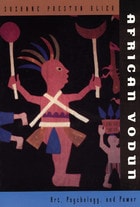
African Vodun
Art, Psychology, and PowerSuzanne Preston Blier
University of Chicago Press, 1994
In this first major study of its kind, Suzanne Preston Blier examines the artworks of the contemporary vodun cultures of southern Benin and Togo in West Africa as well as the related voudou traditions of Haiti, New Orleans, and historic Salem, Massachusetts. Blier employs a variety of theoretically sophisticated psychological, anthropological, and art historical approaches to explore the contrasts inherent in the vodun arts—commoners versus royalty, popular versus elite, "low" art versus "high." She examines the relation between art and the slave trade, the psychological dynamics of artistic expression, the significance of the body in sculptural expression, and indigenous perceptions of the psyche.
Throughout, Blier pushes African art history to a new height of cultural awareness that recognizes the complexity of traditional African societies as it acknowledges the role of social power in shaping aesthetics and meaning generally. This book will be of critical importance not only to those concerned with African, African American, and Caribbean art, but also to anthropologists, African diaspora scholars, students of comparative religion and comparative psychology, and anyone fascinated by the traditions of voudou and vodun.
"An extraordinary tour de force."—Choice
"Extraordinarily detailed....Blier's examination of the entire, often mysterious history of vodun is...in a word, definitive."—Booklist
"A serious study that concentrates on the hidden power of objects and the meaning behind that potency is long overdue. Welcome Susan Blier's African Vodun....Certainly a must for...those concerned with the psychology of art."—Janet L. Stanley, Art Documentation
"[Blier] is usually sensitive to the need to resist imposing Western artistic values and academic methodologies inappropriately upon such art. But she offers the reader a gift even more precious; she offers rare insights into how various art forms—sculpture and home architecture in particular—yield meanings for the African users of such art.—Norman Weinstein, Boston Book Review
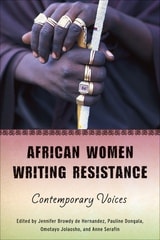
African Women Writing Resistance
An Anthology of Contemporary VoicesJennifer Browdy de Hernandez
University of Wisconsin Press, 2010
Contributors include internationally recognized authors and activists such as Wangari Maathai and Nawal El Saadawi, as well as a host of vibrant new voices from all over the African continent and from the African diaspora. Interdisciplinary in scope, this collection provides an excellent introduction to contemporary African women’s literature and highlights social issues that are particular to Africa but are also of worldwide concern. It is an essential reference for students of African studies, world literature, anthropology, cultural studies, postcolonial studies, and women’s studies.
Outstanding Book, selected by the Public Library Association
Best Books for High Schools, Best Books for Special Interests, and Best Books for Professional Use, selected by the American Association of School Libraries
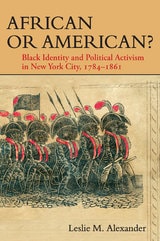
African or American?
Black Identity and Political Activism in New York City, 1784-1861Leslie M. ALexander
University of Illinois Press, 2012
During the early national and antebellum eras, black leaders in New York City confronted the tenuous nature of Northern emancipation. Despite the hope of freedom, black New Yorkers faced a series of sociopolitical issues including the persistence of Southern slavery, the threat of forced removal, racial violence, and the denial of American citizenship. Even efforts to create community space within the urban landscape, such as the African Burial Ground and Seneca Village, were eventually demolished to make way for the city's rapid development. In this illuminating history, Leslie M. Alexander chronicles the growth and development of black activism in New York from the formation of the first black organization, the African Society, in 1784 to the eve of the Civil War in 1861. In this critical period, black activists sought to formulate an effective response to their unequal freedom. Examining black newspapers, speeches, and organizational records, this study documents the creation of mutual relief, religious, and political associations, which black men and women infused with African cultural traditions and values.
As Alexander reveals, conflicts over early black political strategy foreshadowed critical ideological struggles that would bedevil the black leadership for generations to come. Initially, black leaders advocated racial uplift through a sense of communalism and connection to their African heritage. Yet by the antebellum era, black activists struggled to reconcile their African identity with a growing desire to gain American citizenship. Ultimately, this battle resulted in competing agendas; while some leaders argued that the black community should dedicate themselves to moral improvement and American citizenship, others began to consider emigrating to Africa or Haiti. In the end, the black leadership resolved to assert an American identity and to expand their mission for full equality and citizenship in the United States. This decision marked a crucial turning point in black political strategy, for it signaled a new phase in the quest for racial advancement and fostered the creation of a nascent Black Nationalism.
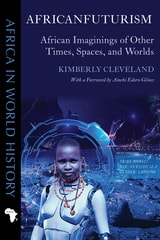
Africanfuturism
African Imaginings of Other Times, Spaces, and WorldsKimberly Cleveland
Ohio University Press, 2024
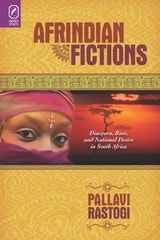
Afrindian Fictions
Diaspora, Race, and National Desire in South AfricaPallavi Rastogi
The Ohio State University Press, 2008
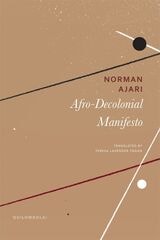
Afro-Decolonial Manifesto
Norman Ajari
Seagull Books, 2025
Offering a compelling call to arms while challenging the pervasive grip of colonialism on the Black psyche, this manifesto charts a course toward a future defined by autonomy, dignity, and radical liberation.
Delving into the historical currents of resistance—from Negritude to Black nationalism to pan-Africanism—this manifesto unapologetically confronts the insidious nature of modern colonialism. In a world where the very presence of the Black body incites fear and insecurity among white supremacists, Afro-Decolonial Manifesto exposes the fallacy of equating Black existence with reverse colonialism. It challenges the prevailing narratives of gratitude and guilt, asserting the right of the Black diaspora to reclaim its autonomy and dignity, and also examines the effectiveness of movements like Black Lives Matter, advocating for a renewed Black internationalism rooted in Africa’s unity and autonomy.
In a stirring call to arms, Afro-Decolonial Manifesto heralds a new era of resistance, where reparation becomes not just a demand for restitution, but a catalyst for radical change. This volume emboldens Black people to reclaim their narrative, their agency, and their future. It is a testament to the enduring spirit of liberation and the indomitable resilience of Black lives.

Afrofuturism, Volume 20
Alondra Nelson
Duke University Press, 0
The collection includes a reflection on the ideologies of race created by cultural critics in their analyses of change wrought by the information age; an interview with Nalo Hopkinson, the award-winning novelist and author of speculative fiction novels Midnight Robber and Brown Girl in the Ring, who fuses futuristic thinking with Caribbean traditions; an essay on how contemporary R&B music presents African American reflections on the technologies of everyday life; and an article examining early interventions by the black community to carve out a distinct niche in cyberspace.
Contributors. Ron Eglash, Anna Everett, Tana Hargest, Nalo Hopkinson, Tracie Morris, Alondra Nelson, Kalí Tal, Fatimah Tuggar, Alexander G. Weheliye
Alondra Nelson is a Ph.D. candidate in the American Studies Program at New York University and is the Ann Plato Fellow at Trinity College. She will begin teaching in the African American Studies and Sociology Departments at Yale University in the fall of 2002.
Contributors. Ron Eglash, Anna Everett, Tana Hargest, Nalo Hopkinson, Alondra Nelson, Tracie Morris, Kali Tal, Fatimah Tuggar, Alexander G. Weheliye
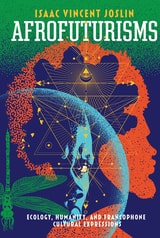
Afrofuturisms
Ecology, Humanity, and Francophone Cultural ExpressionsIsaac Vincent Joslin
Ohio University Press, 2023
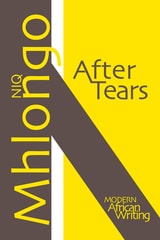
After Tears
Niq Mhlongo
Ohio University Press, 2011
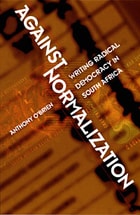
Against Normalization
Writing Radical Democracy in South AfricaAnthony O'Brien
Duke University Press, 2001
O’Brien brings together an unusual array of contemporary South African writing: cultural theory and debate, worker poetry, black and white feminist writing, Black Consciousness drama, the letters of exiled writers, and postapartheid fiction and film. Paying subtle attention to well-known figures like Nadine Gordimer, Bessie Head, and Njabulo Ndebele, but also foregrounding less-studied writers like Ingrid de Kok, Nise Malange, Maishe Maponya, and the Zimbabwean Dambudzo Marechera, he reveals in their work the construction of a political aesthetic more radically democratic than the current normalization of nationalism, ballot-box democracy, and liberal humanism in culture could imagine. Juxtaposing his readings of these writers with the theoretical traditions of postcolonial thinkers about race, gender, and nation like Paul Gilroy, bell hooks, and Gayatri Spivak, and with others such as Samuel Beckett and Vaclav Havel, O’Brien adopts a uniquely comparatist and internationalist approach to understanding South African writing and its relationship to the cultural settlement after apartheid.
With its appeal to specialists in South African fiction, poetry, history, and politics, to other Africanists, and to those in the fields of colonial, postcolonial, race, and gender studies, Against Normalization will make a significant intervention in the debates about cultural production in the postcolonial areas of global capitalism.

Against!
Rebellious Daughters in Black Immigrant Fiction in the United StatesAsha Jeffers
The Ohio State University Press, 2025
Against! is the first book-length study of Afro-Caribbean and African immigrant and second-generation writing in the United States. In it, Asha Jeffers evaluates the relationship between Blackness and immigranthood in the US as depicted through the recurring theme of rebellious Black immigrant daughters. Considering the work of Paule Marshall, Edwidge Danticat, Chimamanda Ngozi Adichie, and Taiye Selasi, Jeffers untangles how rebellion is informed by race, gender, ethnicity, and migration status.
Immigrant and second-generation writers mobilize often complicated familial relationships to comment on a variety of political, social, and psychic contexts. Jeffers argues that rather than categorizing Black migrants as either immediately fully integrated into an African American experience or seeing them as another category altogether that is unbound by race, Marshall, Danticat, Adichie, and Selasi identify the unstable position of Black migrants within the American racial landscape. By highlighting the diverse ways Black migrants and their children negotiate this position amid the dual demands of the respectability politics imposed on African Americans and the model-minority myth imposed on immigrants, Jeffers reveals the unsteady nature of US racial categories.
Agency in African History
Lauren V. Jarvis, Rachel M. Petrocelli, and Wallace Teska
Ohio University Press, 2027
Agency in African History is the first edited volume of African history to offer sustained engagement with the idea of agency. Agency is ubiquitous and invisible, contested and yet foundational to the field. These contradictory qualities contribute to the polarization of the term and a stalemate in debates surrounding its use. This volume proposes a way forward by breaking agency down into parts, disaggregating the terms and concepts often associated with agency, and reckoning with historians’ uses and misuses of the term. The book explores how agency has shaped the field of African history and the historical discipline more broadly. Tracing the concept back to the contributions of Black abolitionists and intellectuals in the eighteenth century, the volume challenges popular genealogies of agency in Western academe. Simultaneously, it suggests productive future possibilities for the framework.
The volume contributes to lively debates on the concept of agency in adjoining fields. Recent works in cultural theory, including Naminata Diabate’s Naked Agency (Duke University Press, 2020) and Olúf?´mi Táíwò’s Against Decolonisation (Hurst, 2022), have reinvigorated discussions within African studies about the applicability of agency. In the broader historical discipline, special issues of the Journal of Social History and the American Historical Review (both 2023) have centered on the problems and promises of agency as a historiographical framework, mostly from a Euro-American perspective. This volume makes an urgent intervention in these important conversations, arguing that historians of Africa must both adapt to new scholarly insights and contribute their unique perspectives from a field typically ignored in the formulation of world-historical concepts.
Agency in African History is addressed to historians of Africa and to a broader interdisciplinary audience interested in agency. This interdisciplinary audience includes scholars of African studies—cultural theorists, political scientists, anthropologists, and others—as well as historians of world regions beyond Africa. Individual contributions cover the seventeenth century to the present day and range in subject matter from histories of decolonization and international relations to the Atlantic slave trade, art history, urban studies, sports studies, and cultural theory.
Contributors
Mathew Ayodele
Felicitas Becker
Emily S. Burrill
Robin P. Chapdelaine
Kate Cowcher
Naminata Diabate
Walter Hawthorne
Lauren V. Jarvis
Rachel M. Petrocelli
Ian Read
Jodie Yuzhou Sun
Wallace Teska
Chepchirchir Tirop
Albert Camus, Jean Sénac, or The Rebel Son
Hamid Nacer-Khodja
Michigan State University Press, 2019
All Politics Are God’s Politics
Moroccan Islamism and the Sacralization of DemocracyAhmed Khanani
Rutgers University Press, 2021
Amazigh Politics in the Wake of the Arab Spring
Bruce Maddy-Weitzman
University of Texas Press, 2022
On television, the Arab Spring took place in Cairo, Tunis, and the city-states of the Persian Gulf. Yet the drama of 2010, and the decade of subsequent activism, extended beyond the cities—indeed, beyond Arabs. Bruce Maddy-Weitzman brings to light the sustained post–Arab Spring political movement of North Africa’s Amazigh people.
The Amazigh movement did not begin with the Arab Spring, but it has changed significantly since then. Amazigh Politics in the Wake of the Arab Spring details the increasingly material goals of Amazigh activism, as protest has shifted from the arena of ethnocultural recognition to that of legal and socioeconomic equality. Amazigh communities responded to the struggles for freedom around them by pressing territorial and constitutional claims while rejecting official discrimination and neglect. Arab activists, steeped in postcolonial nationalism and protective of their hegemonic position, largely refused their support, yet flailing regimes were forced to respond to sharpening Amazigh demands or else jeopardize their threadbare legitimacy. Today the Amazigh question looms larger than ever, as North African governments find they can no longer ignore the movement’s interests.
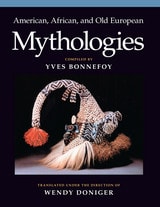
American, African, and Old European Mythologies
Edited by Yves Bonnefoy
University of Chicago Press, 1993
Almost all of Mythologies, originally published as a two-volume cloth set, is now available in four paperback volumes. These volumes reproduce the articles, introductory essays, and illustrations as they appeared in the full Mythologies set, and each includes a new Preface by Wendy Doniger.
This volume gathers eighty articles on mythologies from around the world. A section on the Americas and the South Pacific covers myths of native Americans, from the Inuit to the Mesoamericans, about such topics as the cosmos, fire, and the creation of the world. Essays on African mythology range from the 266 basic signs of West Africa to themes such as twins, the placenta, and masks. The final section, covering Celtic, Norse, and Slavic traditions opens with an overview of the Indo-Europeans and concludes with an essay on the religion and myths of Armenia.
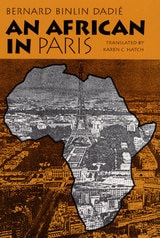
An African in Paris
Bernard Binlin Dadié; Translated by Karen C. Hatch
University of Illinois Press, 1994
In 1959, when Un Negre a Paris first appeared, the French still held West Africa under colonial rule. Dadié's subtle parodies draw on intimate knowledge obtained over decades spent observing the colonizers abroad and now, suddenly, on their own home terrain. His remarks on Parisian living conditions, wordplay, manners, and and morals are entertaining and poignant, charming yet profound.
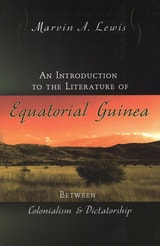
An Introduction to the Literature of Equatorial Guinea
Between Colonialism and DictatorshipMarvin A. Lewis
University of Missouri Press, 2007
Spain’s only former colony in sub-Saharan Africa, Equatorial Guinea is home to a literature of transition—songs of freedom in which authors reflect on their identity within the context of recent colonialism and dictatorship.
An Introduction to the Literature of Equatorial Guinea is the first book-length critical study of this literature, a multigenre analysis encompassing fifty years of poetry, drama, essays, and prose fiction. Both resident and exiled authors offer insights into the impact of colonialism and dictatorship under Spanish rule and consider the fruits of “independence” under the regimes of Francisco Macías Nguema and Teodoro Obiang Nguema. Examining these works from the perspective of postcolonial theory, Marvin A. Lewis shows how writings from Equatorial Guinea depict the clash of traditional and European cultures and reflect a dictatorship that produced poverty, misery, and oppression. He assesses with particular care the impact of the Macías reafricanization process and its manifestations in literature.
In showing how the views of the nation correspond and diverge in works of writers such as Maria Nsue Angue, Donato Ndongo-Bidyogo, and Juan Tomás Ávila Laurel, Lewis brings to light artists who articulate their concerns in Spanish but are African in their souls. In analyzing the works of both renowned and emerging writers, he marks the themes that contribute to the formation of national identity: Hispanic heritage, the myth of Bantu unity, “bonding in adversity” during the Nguema regime, and the Equatoguinean diaspora.
Lewis provides an accessible introduction to the work of central writers in a new area of literary study and includes the most exhaustive and up-to-date bibliography available on the subject. His is a groundbreaking work that broadens our understanding of African literature and will be the bedrock for future studies of this Hispanic corner of Africa.
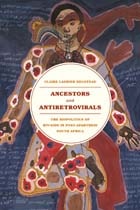
Ancestors and Antiretrovirals
The Biopolitics of HIV/AIDS in Post-Apartheid South AfricaClaire Laurier Decoteau
University of Chicago Press, 2013
In Ancestors and Antiretrovirals, Claire Laurier Decoteau backs up Tutu’s assertion with powerful arguments about how this came to pass. Decoteau traces the historical shifts in health policy after apartheid and describes their effects, detailing, in particular, the changing relationship between biomedical and indigenous health care, both at the national and the local level. Decoteau tells this story from the perspective of those living with and dying from AIDS in Johannesburg’s squatter camps. At the same time, she exposes the complex and often contradictory ways that the South African government has failed to balance the demands of neoliberal capital with the considerable health needs of its population.
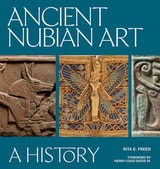
Ancient Nubian Art
A HistoryGates
J. Paul Getty Trust, The, 0
Lushly illustrated with stunning artifacts, this volume is the first comprehensive and accessible publication to explore the art, architecture, and material culture of ancient Nubia.
Kings and queens of Nubia reigned over one of the largest empires in the ancient world and had contacts extending north to Greece and Rome, south to sub-Saharan Africa, east to the Red Sea, and west across much of the Sahel. Even a quick look at Nubia’s artifacts reveals the incredible creativity of its artists, architects, craftspeople, and thinkers. Despite their significance, the achievements of ancient Nubia are little known to the public and are often viewed as a subculture, a derivative offshoot of Egypt, Nubia’s northern neighbor. Nothing could be further from the truth. During its over eight-thousand-year lifespan (beginning around 8000 BCE), Nubia indelibly shaped the art and architecture of the ancient world, an influence still felt today.
Ancient Nubian Art is the first comprehensive and accessible treatment of Nubian artistic culture and showcases its vast range—from ceramics, sculptures, and jewelry to tombs, temples, and palaces. Rita E. Freed, curator emerita at the Museum of Fine Arts, Boston, which has the largest collection of Nubian artifacts outside the Nile Valley, contextualizes the development of Nubian art against a vivid backdrop of kingship, power, worship, identity, gender, technology, and internationalism. Her text is accompanied by a foreword by Henry Louis Gates Jr. and sidebars by expert voices from the field.
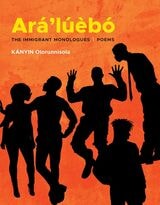
Ará’lúèbó
The Immigrant MonologuesKÁNYIN Olorunnisola
Acre Books, 2026
The Yoruba word Ará’lúèbó (/ah-rah-loo-ay-bow/), as the book tells us, means “an endearing term for a native who has gone abroad, and/or is returning” or “a person who becomes a foreigner everywhere they go.”
In his debut poetry collection, KÁNYIN Olorunnisola showcases the expansiveness of the immigrant experience through the form of the choreopoem, a non-Western style of poetry that incorporates elements of music and theater. The collection tells a multitude of stories through five people (Odunsi, beja, Levi, Sekina, and Ismaila), who, though fictional, represent the emotional truths of the lived experience of an African residing in the United States. As Ismaila says early on, “we r five fly kids hyphenated by time & / geography.”
Mixing Yoruba, Nigerian Pidgin, and English, Ará’lúèbó: The Immigrant Monologues is a blend of linguistic influences, with debts to visual art and rap music. At the center of its expression is formal experimentation; poems are structured like movie screenplays, diary entries, flowcharts, pie charts, and dictionary entries. The book encompasses a broad span of American, African, and other world history, even as it is strongly rooted in the contemporary, with references to Lauryn Hill, Kendrick Lamar, and other Black creatives. Ultimately, the book asks who is allowed to belong and paints a portrait of what it means to be American and from elsewhere.
As French as Everyone Else?
A Survey of French Citizens of Maghrebin, African, and Turkish OriginAuthored by Sylvain Brouard and Vincent Tiberj
Temple University Press, 2011
France is often depicted as the model of assimilationist or republican integration in the international literature on immigration. However, rarely have surveys drilled down to provide individual responses from a double representative sample. In As French as Everyone Else?, Sylvain Brouard and Vincent Tiberj provide a comprehensive assessment of the state of integration in France and challenge the usual crisis of integration by systematically comparing the "new French" immigrants, as well as their children and grandchildren born in France, with a sample of the French general population.
The authors' survey considers a wide range of topics, including religious affiliation and religiosity, political attitudes and political efficacy, value systems (including gender roles, work ethics, and anti-Semitism), patterns of integration, multiple identities and national belongings, and affirmative action. As the authors show, despite existing differences, immigrants of Maghrebin, African, and Turkish origin share a wide scope of commonality with other French citizens.
As Long As Trees Take Root in the Earth
and Other PoemsAlain Mabanckou
Seagull Books, 2025
These compelling poems by novelist and essayist Alain Mabanckou conjure nostalgia for an African childhood where the fauna, flora, sounds, and smells evoke snapshots of a life forever gone. Mabanckou’s poetry is frank and forthright, urging his compatriots to no longer be held hostage by the civil wars and political upheavals that have ravaged their country and to embrace a new era of self-determination where the village roosters can sing again.
These music-infused texts, beautifully translated by Nancy Naomi Carlson and supported by a grant from the National Endowment for the Arts, appear together in English for the first time. In these pages, Mabanckou pays tribute to his beloved mother, as well as to the regenerative power of nature, especially of trees, whose roots are a metaphor for the poet’s roots, anchored in the red earth of his birthplace. Mabanckou’s yearning for the land of his ancestors is even more poignant because he has been declared persona non grata in his homeland, now called Congo-Brazzaville, due to his biting criticism of the country’s regime. Despite these barriers, his poetry exudes hope that nature’s resilience will lead humankind on the path to redemption and reconciliation.
At Penpoint
African Literatures, Postcolonial Studies, and the Cold WarMonica Popescu
Duke University Press, 2020
Atlas's Bones
The African Foundations of EuropeD. Vance Smith
University of Chicago Press, 2025
Virgil. Chaucer. Petrarch. These names resonate with many as cornerstones of European culture. Yet, in Atlas’s Bones, D. Vance Smith reveals that much of what is claimed as European culture up to the Middle Ages—its great themes in literature, its sources in political thought, its religious beliefs—originated in the writings of African thinkers like Augustine, Fulgentius, and Martianus Capella, or Europeans who thought extensively about Africa. In fact, a third of Virgil’s Aeneid takes place in Africa. Francis Petrarch believed his most important achievement was his epic Africa; while Geoffrey Chaucer wrote repeatedly about the figures of Scipio Africanus, actually two different men who defeated and destroyed Carthage.
Smith tells the story of how Europe created a false “medieval” version of Africa to acquire resources and power during the era of imperialism and colonialism. The first half of the book, “Reading Africa,” traces Egypt’s, Libya’s, and Carthage’s influence on classical and medieval thinking about Africa, highlighting often ignored literary and legendary traditions, for example, that Alexander the Great named himself the son of an African god. The second part, “Writing Africa,” focuses on how the different cultures of the two great African cities—Carthage and Alexandria—shaped modern literary criticism and political theology and examines the cross-influences of modern anthropology, medieval studies, and colonial law.
Atlas’s Bones firmly re-establishes the significance of Africa in European intellectual history. It will be essential reading for anyone seeking to understand how much of Africa informs our artistic and cultural world.
Authentically African
Arts and the Transnational Politics of Congolese CultureSarah Van Beurden
Ohio University Press, 2015
Together, the Royal Museum for Central Africa in Tervuren, Belgium, and the Institut des Musées Nationaux du Zaire (IMNZ) in the Congo have defined and marketed Congolese art and culture. In Authentically African, Sarah Van Beurden traces the relationship between the possession, definition, and display of art and the construction of cultural authenticity and political legitimacy from the late colonial until the postcolonial era. Her study of the interconnected histories of these two institutions is the first history of an art museum in Africa, and the only work of its kind in English.
Drawing on Flemish-language sources other scholars have been unable to access, Van Beurden illuminates the politics of museum collections, showing how the IMNZ became a showpiece in Mobutu’s effort to revive “authentic” African culture. She reconstructs debates between Belgian and Congolese museum professionals, revealing how the dynamics of decolonization played out in the fields of the museum and international heritage conservation. Finally, she casts light on the art market, showing how the traveling displays put on by the IMNZ helped intensify collectors’ interest and generate an international market for Congolese art.
The book contributes to the fields of history, art history, museum studies, and anthropology and challenges existing narratives of Congo’s decolonization. It tells a new history of decolonization as a struggle over cultural categories, the possession of cultural heritage, and the right to define and represent cultural identities.
Autochthonomies
Transnationalism, Testimony, and Transmission in the African DiasporaMyriam J. A. Chancy
University of Illinois Press, 2020
A bold challenge to established scholarship, Autochthonomies ranges from Africa to Europe and the Americas to provide powerful new tools for charting the transnational interactions between African cultural producers and sites.