Results by title

46 books match the query 'Manitoba'

cover of A Bibliography of Northern Manitoba

A Bibliography of Northern Manitoba

Richard A. Enns

University of Manitoba Press, 1991

[more]
cover of A Guide to the Study of Manitoba Local History

A Guide to the Study of Manitoba Local History

Gerald Friesen

University of Manitoba Press, 1981

[more]
cover of Archeological investigations in the Grand Rapids, Manitoba, Reservoir 1961-1962

Archeological investigations in the Grand Rapids, Manitoba, Reservoir 1961-1962

William J. Mayer-Oakes

University of Manitoba Press, 1970

[more]
cover of Authorized Heritage: Place, Memory, and Historic Sites in Prairie Canada

Authorized Heritage

Place, Memory, and Historic Sites in Prairie Canada

Robert Coutts

University of Manitoba Press, 2021

[more]
cover of Communal Solidarity: Immigration, Settlement, and Social Welfare in Winnipeg's Jewish Community, 1882–1930

Communal Solidarity

Immigration, Settlement, and Social Welfare in Winnipeg's Jewish Community, 1882–1930

Arthur Ross

University of Manitoba Press, 2019
[more]
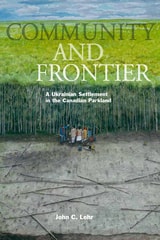
cover of Community and Frontier: A Ukrainian Settlement in the Canadian Parkland

Community and Frontier

A Ukrainian Settlement in the Canadian Parkland

John C. Lehr

University of Manitoba Press, 2011
A social and economic history of one of the oldest Ukrainian settlements in Western Canada. Established in 1896, the Stuartburn colony was one of the earliest Ukrainian settlements in western Canada. Based on an analysis of government records, pioneer memoirs, and the Ukrainian and English language press, Community and Frontier is a detailed examination of the social, economic, and geographical challenges of this unique ethnic community. It reveals a complex web of inter-ethnic and colonial relationships that created a community that was a far cry from the homogeneous ethnic block settlement feared by the opponents of eastern European immigration. Instead, ethnic relationships and attitudes transplanted from Europe affected the development of trade within the colony, while Ukrainian religious factionalism and the predatory colonial attitudes of mainstream Canadian churches fractured the community and for decades contributed to social dysfunction.
[more]
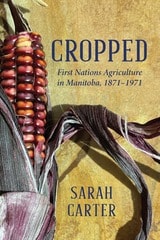
cover of Cropped: First Nations Agriculture in Manitoba, 1871–1971

Cropped

First Nations Agriculture in Manitoba, 1871–1971

Sarah Carter

University of Manitoba Press, 2026

[more]
cover of Curling Capital: Winnipeg and the Roarin' Game, 1876 to 1988

Curling Capital

Winnipeg and the Roarin' Game, 1876 to 1988

Morris Mott

University of Manitoba Press, 1989
[more]
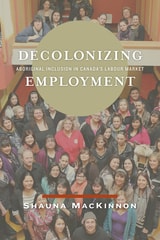
cover of Decolonizing Employment: Aboriginal Inclusion in Canada's Labour Market

Decolonizing Employment

Aboriginal Inclusion in Canada's Labour Market

Shauna MacKinnon

University of Manitoba Press, 2015
[more]
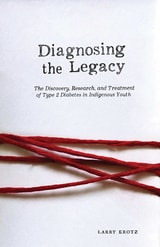
cover of Diagnosing the Legacy: The Discovery, Research, and Treatment of Type 2 Diabetes in Indigenous Youth

Diagnosing the Legacy

The Discovery, Research, and Treatment of Type 2 Diabetes in Indigenous Youth

Larry Krotz

University of Manitoba Press, 2018

[more]
cover of Establishing Shots: An Oral History of the Winnipeg Film Group

Establishing Shots

An Oral History of the Winnipeg Film Group

Kevin Nikkel

University of Manitoba Press, 2023
[more]
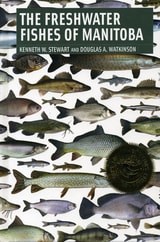
cover of Freshwater Fishes of Manitoba

Freshwater Fishes of Manitoba

Kenneth Stewart

University of Manitoba Press, 2004

Manitoba's ninety-three species of fish give the province the third most diverse fish population in Canada. The provinceís variety of geological features, with its major lakes, rivers, tributaries, and watersheds, is due in large part to its history as the basin for Glacial Lake Agassiz. This, combined with its access to the waters of Hudson Bay and large American river systems, has provided habitat for a wide diversity of freshwater fish. Species from lampreys to goldeye, catfish to perch, bigmouth bass to slimy sculpin swim in waters from arctic rivers in the north to Red River tributaries and down to the Mississippi in the south.Freshwater Fishes of Manitoba is a comprehensive, user-friendly guide. Each species is accurately depicted in detailed colour photographs and accompanying map, with descriptions of physical characteristics, spawning and feeding habits, distribution, habitat, ecological role, and economic importance. The guide also includes an extensive glossary, keys to identifying the families, species, and subspecies, and information on documentation and preservation of specimens. Freshwater Fishes of Manitoba is not only the definitive guide to these fishes of Manitoba, it is also accessible and reliable for a range of users from general fishers to professional fish biologists.
[more]
cover of Imagined Homes: Soviet German Immigrants in Two Cities

Imagined Homes

Soviet German Immigrants in Two Cities

Hans Werner

University of Manitoba Press, 2007

Imagined Homes: Soviet German Immigrants in Two Cities is a study of the social and cultural integration of two migrations of German speakers from Eastern Europe and the Soviet Union to Winnipeg, Canada in the late 1940s, and Bielefeld, Germany in the 1970s. Employing a cross-national comparative framework, Hans Werner reveals that the imagined trajectory of immigrant lives influenced the process of integration into a new urban environment. Winnipeg’s migrants chose a receiving society where they knew they would again be a minority group in a foreign country, while Bielefeld’s newcomers believed they were “going home” and were unprepared for the conflict between their imagined homeland and the realities of post-war Germany. Werner also shows that differences in the way the two receiving societies perceived immigrants, and the degree to which secularization and the sexual and media revolutions influenced these perceptions in the two cities, were crucially important in the immigrant experience.
[more]
cover of In Our Backyard: Keeyask and the Legacy of Hydroelectric Development

In Our Backyard

Keeyask and the Legacy of Hydroelectric Development

Aimée Craft

University of Manitoba Press, 2022

[more]
cover of Keep True: A Life in Politics

Keep True

A Life in Politics

Howard Pawley

University of Manitoba Press, 2011

Howard Pawley, former Premier of Manitoba (1981-88) led the province during one of the most turbulent periods in its history. Elected at the outset of a serious national recession, his government successfully implemented social democtatic policies that ran counter to the neo-conservative trends that dominated the period, including job creation, labour reform, and human rights legislation. But his greatest challenge was over French-language rights, an explosive two-year debate that left the province badly divided and embroiled in the complicated maneuvering between the national government and Quebec serparatists. The political and public fallout from the French-language issue echoed through Manitoba's subsequent negotiations with the federal government over a bid for a lucrative CF-18 fighter jet contract, through the implementation of the Free Trade Agreement, and again during the stormy Meech Lake Accord debates. In Keep True: A Life in Politics Pawley takes us into the inner workings of his government during this controversial period. He gives us a vivid play-by-play of the events, acknowledging what went right and what went wrong, while putting it all into a contemporary context. Along the way, he offers insight on campaign management, choosing a cabinet, appointing public servants, and leading by consensus, while describing how the principles of Canadian agrarian socialism shaped his political vision.
[more]
cover of Letters from a Young Emigrant in Manitoba

Letters from a Young Emigrant in Manitoba

Ronald A. Wells

University of Manitoba Press, 1981
[more]
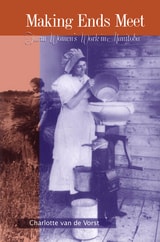
cover of Making Ends Meet: Farm Women's Work in Manitoba

Making Ends Meet

Farm Women's Work in Manitoba

Charlotte van de Vorst

University of Manitoba Press, 2002

Based on hundreds of interviews with Manitoba farm men and women, Making Ends Meet reconstructs the common history shared by modern farm women as well as by their mothers and grandmothers. It explores women's changing roles on the farm, from the early days of the Red River settlement to the twentieth-century farm community. The women's own stories reveal their ingenuity and tenacity in "making ends meet" through economies, shared, labour, and generation of new resource income as varied as raising poultry and custom woodworking. These stories prove that the contributions of farm women have been vital in establishing and maintaining the family farm, and are critical to its continued survival.
[more]
cover of Manitoba Medicine: A Brief History

Manitoba Medicine

A Brief History

Ian Carr

University of Manitoba Press, 1999

For many Canadians, the state of our health care and medical system is at the top of the public agenda. By following the growth and development of modern medicine in one Canadian province, Manitoba Medicine provides an insight into where our present medical system came from and how it developed .Beginning with a description of some early Aboriginal healing practices and of the physicians of the Red River Settlement, Manitoba Medicine follows the struggles in the 1870s to establish what would become the first medical college and the first major hospitals in Western Canada. It chronicles the fight for public health in the 1920s, the development of health insurance and medicare after WWII, and medicine's role in fighting the 1950 Winnipeg Flood and the polio epidemic of the late 1950s. Manitoba Medicine also provides vivid accounts of many of the individuals who built Manitoba's medical system, including early educators like Swale Vincent, pioneering women physicians such as Charlotte Ross, important researchers like Bruce Chown, and colourful private practitioners such as Murrough O'Brien.
[more]
cover of Manitoba architecture to 1940: A Bibliography

Manitoba architecture to 1940

A Bibliography

Jill Wade

University of Manitoba Press, 1976

[more]
cover of Monuments to Faith: Ukrainian Churches in Manitoba

Monuments to Faith

Ukrainian Churches in Manitoba

Basil Rotoff

University of Manitoba Press, 1990
Ukrainians first came to Canada a century ago, seeking a new life on the western prairies. They brought with them an ancient and rich cultural tradition, deeply rooted in Christianity. The most visible symbol of this tradition is the Ukrainian church with its distinctive cupolas. As soon as the settlers were established in the new land, they began to reshape their environment by building churches in the styles they remembered from their homeland.In this richly illustrated volume, the authors trace the continuity of tradition in achitecture, art, and community life from Ukraine to the parishes of the Manitoba prairie. In a detailed examination of the exteriors and interiors of forty-nine churches, the book establishes a typology of Ukrainian church designs. Biographies of the architects, master builders, and artists are included, along with a guide to the art and architecture of a Ukrainian church.
[more]
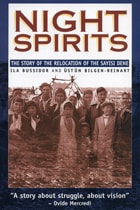
cover of Night Spirits: The Story of the Relocation of the Sayisi Dene

Night Spirits

The Story of the Relocation of the Sayisi Dene

Ila Bussidor

University of Manitoba Press, 1997

For over 1500 years, the Sayisi Dene, 'The Dene from the East', led an independent life, following the caribou herds and having little contact with white society. In 1956, an arbitrary government decision to relocate them catapulted the Sayisi Dene into the 20th century. It replaced their traditional nomadic life of hunting and fishing with a slum settlement on the outskirts of Churchill, Manitoba. Inadequately housed, without jobs, unfamiliar with the language or the culture, their independence and self-determination deteriorated into a tragic cycle of discrimination, poverty, alcoholism and violent death.By the early 1970s, the band realized they had to take their future into their own hands again. After searching for a suitable location, they set up a new community at Tadoule Lake, 250 miles north of Churchill. Today they run their own health, education and community programs. But the scars of the relocation will take years to heal, and Tadoule Lake is grappling with the problems of a people whose ties to the land, and to one another, have been tragically severed.In Night Spirits, the survivors, including those who were children at the time of the move, as well as the few remaining elders, recount their stories. They offer a stark and brutally honest account of the near-destruction of the Sayisi Dene, and their struggle to reclaim their lives. It is a dark story, told in hope.
[more]
cover of North American Icelandic: The Life of a Language

North American Icelandic

The Life of a Language

Birna Arnbjornsdottir

University of Manitoba Press, 2006

North American Icelandic evolved mainly in Icelandic settlements in Manitoba and North Dakota and is the only version of Icelandic that is not spoken in Iceland. But North American Icelandic is a dying language with few left who speak it.North American Icelandic is the only book about the nature and development of this variety of Icelandic. It details the social and linguistic constraints of one specific feature of North American Icelandic phonology undergoing change, namely Flámæli, which is the merger of two sets of front vowels. Although Flámæli was once a part of traditional Icelandic, it was considered too confusing and was systematically eradicated from the language. But in North America, Flámæli use spread unchecked, allowing the rare opportunity of viewing the evolution of a dialect from its birth to its impending demise.
[more]
cover of Planting the Garden: An Annotated Archival Bibliography of the History of Women in Manitoba

Planting the Garden

An Annotated Archival Bibliography of the History of Women in Manitoba

Mary Kinnear

University of Manitoba Press, 1987

[more]
cover of Politics in Manitoba: Parties, Leaders, and Voters

Politics in Manitoba

Parties, Leaders, and Voters

Christopher Adams

University of Manitoba Press, 2008
Politics in Manitoba is the first comprehensive review of the Manitoba party system that combines history and contemporary public opinion data to reveal the political and voter trends that have shaped the province of Manitoba over the past 130 years. The book details the histories of the Progressive Conservatives, the Liberals, and the New Democratic Party from 1870 to 2007. Adams looks in particular at the enduring influence of political geography and political culture, as well as the impact of leadership, campaign strategies, organizational resources, and the media on voter preferences. Adams also presents here for the first time public opinion data based on more than 25,000 interviews with Manitobans, conducted between 1999 and 2007. He analyzes voter age, gender, income, education, and geographic location to determine how Manitobans vote. In the process Adams dispels some commonly held beliefs about party supporters and identifies recurring themes in voter behaviour.
[more]
cover of Power Struggles: Hydro Development and First Nations in Manitoba and Quebec

Power Struggles

Hydro Development and First Nations in Manitoba and Quebec

Thibault Martin

University of Manitoba Press, 2008

Power Struggles: Hydro Development and First Nations in Manitoba and Quebec examines the evolution of new agreements between First Nations and Inuit and the hydro corporations in Quebec and Manitoba, including the Wuskwatim Dam Project, Paix des Braves, and the Great Whale Project. In the 1970s, both provinces signed so-called “modern treaties” with First Nations for the development of large hydro projects in Aboriginal territories. In recent times, however, the two provinces have diverged in their implementation, and public opinion of these agreements has ranged from celebratory to outrage.Power Struggles brings together perspectives on these issues from both scholars and activists. In debating the relative merits and limits of these agreements, they raise a crucial question: Is Canada on the eve of a new relationship with First Nations, or do the same colonial attitudes that have long characterized Canadian-Aboriginal relations still prevail?
[more]
cover of Returning to Ceremony: Spirituality in Manitoba Métis Communities

Returning to Ceremony

Spirituality in Manitoba Métis Communities

Chantal Fiola

University of Manitoba Press, 2021
[more]
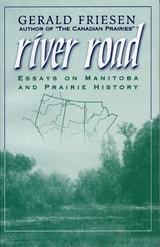
cover of River Road: Essays on Manitoba and Prairie History

River Road

Essays on Manitoba and Prairie History

Gerald Friesen

University of Manitoba Press, 1996

The prairies are a focal point for momentous events in Canadian history, a place where two visions of Canada have often clashed: Louis Riel, the Manitoba School Question, French language rights, the 1919 Winnipeg General Strike, and the dramatic collapse of the Meech Lake Accord when MLA Elijah Harper voted “No.”Gerald Friesen believes that it is the responsibility of the historian to “tell local stories in terms and concepts that make plain their intrinsic value and worth, that explain the relationship between the past and the present.” For local experiences to have any relevant meaning, they must be put into the context of the wider world.These essays were written for the general reader and the academic historian. They include previously published works (many of them revised and updated) from a wide variety of sources, and new pieces written specifically for River Road, examining aspects of prairie and Manitoba history from many different perspectives. They offer portraits of representatives from different sides of the prairie experience, such as Bob Russell, radical socialist and leader of the 1919 General Strike, and J.H. Riddell, conservative Methodist minister who represented “sane and safe” stewardship in the 1920s and 1930s. They explore the changing relationship between Aboriginal peoples and the “dominant” society, from the prosperous Metis community that flourished along the Red River in the 19th century (and produced Manitoba’s first Metis premier) to the events that led to the Manitoba Aboriginal Justice Inquiry in the 1980s.Other essays consider new viewpoints of the prairie past, using the perspectives of ethnic and cultural history, women’s history, regional history, and labour history to raise questions of interpretation and context. The time frame considered is equally wide-ranging, from the Aboriginal and Red River society to the political arena of current constitutional debates.
[more]
cover of Rooster Town: The History of an Urban Métis Community, 1901–1961

Rooster Town

The History of an Urban Métis Community, 1901–1961

Evelyn Peters

University of Manitoba Press, 2018

[more]
cover of Singing Mennonite: Low German Songs Among the Mennonites

Singing Mennonite

Low German Songs Among the Mennonites

Doreen Helen Klassen

University of Manitoba Press, 1989

[more]
cover of Social Democracy in Manitoba: A History of the CCF/NDP

Social Democracy in Manitoba

A History of the CCF/NDP

Nelson Wiseman

University of Manitoba Press, 1983

In this volume, Nelson Wiseman skilfully describes the history of the New Democratic Party in Manitoba, tracing the roots of the social democratic movement to the years of mass immigration and social unrest that preceded the Winnipeg General Strike in 1919.Drawing extensively on personal interviews, on the private papers and correspondence of party leaders and activists, and on archival materials, Wiseman portrays clearly the party's philosophy and leadership, its organization and inner workings, its electoral support, and its relations with other parties, with labour, and with farmers.
[more]
cover of Structures of Indifference: An Indigenous Life and Death in a Canadian City

Structures of Indifference

An Indigenous Life and Death in a Canadian City

Mary Jane Logan McCallum

University of Manitoba Press, 2018

[more]
cover of The Arctic Small Tool Tradition in Manitoba

The Arctic Small Tool Tradition in Manitoba

Ronald J. Nash

University of Manitoba Press, 1969
[more]
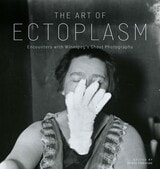
cover of The Art of Ectoplasm: Encounters with Winnipeg's Ghost Photographs

The Art of Ectoplasm

Encounters with Winnipeg's Ghost Photographs

Serena Keshavjee

University of Manitoba Press, 2023

[more]
cover of The Community Apart: A Case Study of a Canadian Indian Reserve Community

The Community Apart

A Case Study of a Canadian Indian Reserve Community

Yngve Georg Lithman

University of Manitoba Press, 1984

[more]
cover of The Constructed Mennonite: History, Memory, and the Second World War

The Constructed Mennonite

History, Memory, and the Second World War

Hans Werner

University of Manitoba Press, 2013
[more]
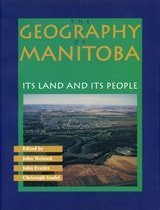
cover of The Geography of Manitoba: Its Land and its People

The Geography of Manitoba

Its Land and its People

John Welsted

University of Manitoba Press, 1996

Manitoba is more than one of Canada's three prairie provinces. Encompassing 649,950 square kilometres, its territory ranges from Canadian Shield to grassland, parkland, and subarctic tundra. Its physical geography has been shaped by ice-age glaciers, while its human geography reflects the influences of its various inhabitants, from the First Nations who began arriving over 9,000 years ago, to its most recent immigrants. This fascinating range of geographical elements has given Manitoba a distinct identity and makes it a unique area for study. Geography of Manitoba is the first comprehensive guide to all aspects of the human and physical geography of this unique province. Representing the work of 47 scholars, and illustrated with over 200 maps, diagrams, and photographs, it is divided into four main sections, covering the major areas of the province's geography: Physical Background; People and Settlements; Resources and Industry; and Recreation.As well as studying historical developments, the contributors to Geography of Manitoba analyse recent political and economic events in the province, including the effect of federal and provincial elections and international trade agreements. They also comment on future prospects for the province, considering areas as diverse as resource management and climatic trends.
[more]
cover of The Iron Rose: The Extraordinary Life of Charlotte Ross, MD

The Iron Rose

The Extraordinary Life of Charlotte Ross, MD

Fred Edge

University of Manitoba Press, 1992
[more]
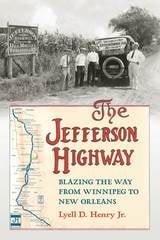
cover of The Jefferson Highway: Blazing the Way from Winnepeg to New Orleans

The Jefferson Highway

Blazing the Way from Winnepeg to New Orleans

Lyell D. Henry Jr.

University of Iowa Press, 2016

Today American motorists can count on being able to drive to virtually any town or city in the continental United States on a hard surface. That was far from being true in the early twentieth century, when the automobile was new and railroads still dominated long-distance travel. Then, the roads confronting would-be motorists were not merely bad, they were abysmal, generally accounted to be the worst of those of all the industrialized nations.

The plight of the rapidly rising numbers of early motorists soon spawned a “good roads” movement that included many efforts to build and pave long-distance, colorfully named auto trails across the length and breadth of the nation. Full of a can-do optimism, these early partisans of motoring sought to link together existing roads and then make them fit for automobile driving—blazing, marking, grading, draining, bridging, and paving them. The most famous of these named highways was the Lincoln Highway between New York City and San Francisco. By early 1916, a proposed counterpart coursing north and south from Winnipeg to New Orleans had also been laid out.

Called the Jefferson Highway, it eventually followed several routes through Minnesota, Iowa, Missouri, Kansas, Oklahoma, Texas, Arkansas, and Louisiana. The Jefferson Highway, the first book on this pioneering road, covers its origin, history, and significance, as well as its eventual fading from most memories following the replacement of names by numbers on long-distance highways after 1926. Saluting one of the most important of the early named highways on the occasion of its 100th anniversary, historian Lyell D. Henry Jr. contributes to the growing literature on the earliest days of road-building and long-distance motoring in the United States. For readers who might also want to drive the original route of the Jefferson Highway, three chapters trace that route through Iowa, pointing out many vintage features of the roadside along the way. The perfect book for a summer road trip! 
[more]
cover of The Keystone Province: Politics and Governance in Manitoba

The Keystone Province

Politics and Governance in Manitoba

Kelly Saunders

University of Manitoba Press, 2025

[more]
cover of The Organ in Manitoba: A History of the Instruments, the Builders, and the Players

The Organ in Manitoba

A History of the Instruments, the Builders, and the Players

James B. Hartman

University of Manitoba Press, 1997

Pipe organs were once a central (and sometimes hotly debated) part of Manitoba's cultural life. The Organ in Manitoba portrays that history--the instruments, builders, players and critics--from the date of the earliest known installations to the 1990s, and includes information on musical organizations such as the Royal Canadian College of Organists. It documents over a century of evolution and changes, from concepts of tonal design to styles of musical commentary and tastes, and includes an inventory of installations and specifications for over 100 organs. Well-illustrated with photographs and excerpts from historical reviews and other documents, it will be of interest to musicians, teachers, and music, church, and cultural historians.
[more]
cover of The Patriotic Consensus: Unity, Morale, and the Second World War in Winnipeg

The Patriotic Consensus

Unity, Morale, and the Second World War in Winnipeg

Jody Perrun

University of Manitoba Press, 2014

When the Second World War broke out, Winnipeg was Canada’s fourth-largest city, home to strong class and ethnic divisions, and marked by a vibrant tradition of political protest. Citizens demonstrated their support for the war effort through their wide commitment to initiatives such as Victory Loan campaigns or calls for voluntary community service. But given Winnipeg’s diversity, was the Second World War a unifying event for Winnipeg residents? In The Patriotic Consensus, Jody Perrun explores the wartime experience of ordinary Winnipeggers through their responses to recruiting, the treatment of minorities, and the adjustments made necessary by family separation.
[more]
cover of The University of Manitoba: An Illustrated History

The University of Manitoba

An Illustrated History

J.M. Bumsted

University of Manitoba Press, 2001
Established in 1877, just seven years after the founding of the province itself, the University of Manitoba has grown to become an international centre of research and study. It is the birthplace of discoveries such as the cure for Rh disease of newborns and the development of Canola, and its alumni include Marshal McLuhan, Margaret Laurence, Monty Hall, Israel Asper and Ovide Mercredi.Historian J.M. Bumsted looks at how the university was forged out of the assembly of several, small, denominational colleges, and how it survived and even thrived during challenges such as the 1932 defalcation and the 1950 Manitoba flood. He gives special attention to student life at the university, tracing the changes, from Freshie initiations in the 1920s and student musicals in the 1950s to the activism of the 1960s and 1970s.The University of Manitoba: An Illustrated History is an entertaining and lively social history of an institution whose development has reflected the changes of society at large.
[more]
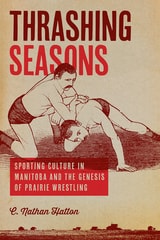
cover of Thrashing Seasons: Sporting Culture in Manitoba and the Genesis of Prairie Wrestling

Thrashing Seasons

Sporting Culture in Manitoba and the Genesis of Prairie Wrestling

C. Nathan Hatton

University of Manitoba Press, 2016
[more]
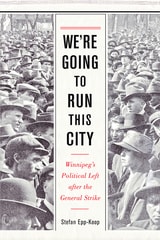
cover of We're Going to Run This City: Winnipeg's Political Left after the General Strike

We're Going to Run This City

Winnipeg's Political Left after the General Strike

Stefan Epp-Koop

University of Manitoba Press, 2015

[more]
cover of Winnipeg Beach: Leisure and Courtship in a Resort Town, 1900-1967

Winnipeg Beach

Leisure and Courtship in a Resort Town, 1900-1967

Dale Barbour

University of Manitoba Press, 2011

During the first half of the twentieth century, Winnipeg Beach proudly marketed itself as the Coney Island of the West. Located just north of Manitoba's bustling capital, it drew 40,000 visitors a day and served as an important intersection between classes, ethnic communities, and perhaps most importantly, between genders. In Winnipeg Beach, Dale Barbour takes us into the heart of this turn-of-the-century resort area and introduces us to some of the people who worked, played and lived in the resort. Through photographs, interviews, and newspaper clippings he presents a lively history of this resort area and its surprising role in the evolution of local courtship and dating practices, from the commoditization of the courting experience by the Canadian Pacific Railway's "Moonlight Specials," through the development of an elaborate amusement area that encouraged public dating, and to its eventual demise amid the moral panic over sexual behaviour during the 1950s and '60s.
[more]
cover of Winnipeg Modern: Architecture, 1945 to 1975

Winnipeg Modern

Architecture, 1945 to 1975

Serena Keshavjee

University of Manitoba Press, 2006

[more]