Results by title
23 books match the query 'Manufacturing'

A Management Guide to Logistics Engineering
K. Beal
The Institution of Engineering and Technology, 1989
Adaptive Manufacturing for SMEs
Digital retrofitting, predictive maintenance, and servitisation strategiesJelena Milisavljevic-Syed
The Institution of Engineering and Technology, 2026

Composites Assembly for High Performance Fastener-less Structures
Hamed Yazdani Nezhad
The Institution of Engineering and Technology, 2022

Creating Smart and Safe Manufacturing Environments
The role of innovation and safety managementWai Yie Leong
The Institution of Engineering and Technology, 2025
Developing a Make or Buy Strategy for Manufacturing Business
David Probert
The Institution of Engineering and Technology, 1997

ESG Innovation for Sustainable Manufacturing Technology
Applications, designs and standardsWai Yie Leong
The Institution of Engineering and Technology, 2024
Free Speech and Koch Money
Manufacturing a Campus Culture WarRalph Wilson
Pluto Press, 2021
In recent years hundreds of high-profile ‘free speech’ incidents have rocked US college campuses. Milo Yiannopoulos, Ben Shapiro, Ann Coulter and other right-wing speakers have faced considerable protest, with many being disinvited from speaking. These incidents are widely circulated as examples of the academy’s intolerance towards conservative views.
But this response is not the spontaneous outrage of the liberal colleges. There is a darker element manufacturing the crisis, funded by political operatives, and designed to achieve specific political outcomes. If you follow the money, at the heart of the issue lies the infamous and ultra-libertarian Koch donor network.
Grooming extremist celebrities, funding media platforms that promote these controversies, developing legal organzations to sue universities and corrupting legislators, the influence of the Koch network runs deep. We need to abandon the ‘campus free speech’ narrative and instead follow the money if we ever want to root out this dangerous network from our universities.

Global Pharmaceuticals
Ethics, Markets, PracticesAdriana Petryna, Andrew Lakoff, and Arthur Kleinman, eds.
Duke University Press, 2006
Whether considering how American drug companies seek to create a market for antidepressants in Japan, how Brazil has created a model HIV/AIDS prevention and treatment program, or how the urban poor in Delhi understand and access healthcare, these essays illuminate the roles of corporations, governments, NGOs, and individuals in relation to global pharmaceuticals. Some essays show how individual and communal identities are affected by the marketing and availability of medications. Among these are an exploration of how the pharmaceutical industry shapes popular and expert understandings of mental illness in North America and Great Britain. There is also an examination of the agonizing choices facing Ugandan families trying to finance AIDS treatment. Several essays explore the inner workings of the emerging international pharmaceutical regime. One looks at the expanding quest for clinical research subjects; another at the entwining of science and business interests in the Argentine market for psychotropic medications. By bringing the moral calculations involved in the production and distribution of pharmaceuticals into stark relief, this collection charts urgent new territory for social scientific research.
Contributors. Kalman Applbaum, João Biehl, Ranendra K. Das, Veena Das, David Healy, Arthur Kleinman, Betty Kyaddondo, Andrew Lakoff, Anne Lovell, Lotte Meinert, Adriana Petryna, Michael A. Whyte, Susan Reynolds Whyte

Going for Gold
The History of Newmont Mining CorporationJack H. Morris
University of Alabama Press, 2016
Jack H. Morris asserts that Newmont is the link between early gold mining and today’s technology-driven industry. We learn how the company’s founder and several early leaders grew up in gold camps and how, in 1917, the company helped finance South Africa’s largest gold company and later owned famous gold mines in California and Colorado. In the 1960s the company developed the process to capture “invisible gold” from small distributions of the metal in large quantities of rock, thereby opening up the rich gold field at Carlin, Nevada.
Modern gold mining has all the excitement and historic significance of the metal’s colorful past. Instead of panning for ready nuggets, today’s corporate miners must face heavy odds by extracting value from ores containing as little as one-hundredth of an ounce per ton. In often-remote locations, where the capital cost of a new mine can top $2 billion, 250-ton trucks crawl from half mile deep pits and ascend, beetle-like, loaded with ore for extraction of the minute quantities of gold locked inside.
Morris had unique access to company records and the cooperation of more than 80 executives and employees of the firm, but the company exercised no control over content. The author tells a story of discovery and scientific breakthrough; strong-willed, flamboyant leaders like founder Boyce Thompson; corporate raiders such as T. Boone Pickens and Jimmy Goldsmith; shakedowns by the Indonesian government and monumental battles with the French over the richest mine in Peru; and learning to operate in the present environmental regulatory climate. This is a fascinating story of the metal that has ignited passions for centuries and now sells for over $1,000 an ounce.

Human-Robot Collaboration
Unlocking the potential for industrial applicationsZoe Doulgeri
The Institution of Engineering and Technology, 2023

Industry 5.0
Design, standards, techniques and applications for manufacturingWai Yie Leong
The Institution of Engineering and Technology, 2025
Industry 6.0
Frameworks and pathways to intelligent and sustainable future manufacturingWai Yie Leong
The Institution of Engineering and Technology, 2026
Iron and Steel
A Driving Guide to the Birmingham Area Industrial HeritageJames R. Bennett and Karen R. Utz
University of Alabama Press, 2010
This guidebook of historic iron-production sites is designed to give the reader a factual and illuminating look at the people and events that shaped Birmingham into one of America’s leading steel centers. Iron & Steel is heavily illustrated with both color and historical black-and-white photographs. It can be used while visiting parks or read as a coherent volume before or after a visit.
The book contains chapters devoted to the larger preserved sites open to the public, such as Sloss Furnaces National Historic Landmark and Tannehill Ironworks Historical State Park. It also highlights lesser-known, yet still accessible, sites such as Blocton Coke Ovens Park. The work provides easy-to-follow maps for every site as well as driving directions to the more remote locations, giving visitors easy access to all the notable iron and steel sites in Jefferson, Shelby, Tuscaloosa, and Bibb counties. Each chapter also includes a variety of historical information, with accompanying photographs, in order to present the reader with a detailed and comprehensive account of the Birmingham Iron and Steel District.
Featured sites include: Tannehill Ironworks Historical State Park; Shelby Ironworks Park; Billy Gould Coke Ovens Park; Brierfield Ironworks Historical State Park; Oxmoor Furnace Site; Irondale Furnace Park; Helena Rolling Mill Site; Red Mountain Park, Iron Ore Mines; Lewisburg Coke Ovens Park; Sloss Furnaces National Historic Landmark; Ruffner Mountain Nature Center; Blocton Coke Ovens Park; and Vulcan Park and Museum.
Management Guide to Condition Monitoring in Manufacture
A. Davies
The Institution of Engineering and Technology, 1990
Manufacturing Independence
Industrial Innovation in the American RevolutionRobert F. Smith
Westholme Publishing, 2021
Benjamin Franklin was serious when he suggested the colonists arm themselves with the longbow. The American colonies were not logistically prepared for the revolution and this became painfully obvious in war’s first years. Trade networks were destroyed, inflation undermined the economy, and American artisans could not produce or repair enough weapons to keep the Continental Army in the field. The Continental Congress responded to this crisis by mobilizing the nation’s manufacturing sector for war. With information obtained from Europe through both commercial exchange and French military networks, Congress became familiar with the latest manufacturing techniques and processes of the nascent European industrial revolution. They therefore initiated an innovative program of munitions manufacturing under the Department of the Commissary General of Military Stores. The department gathered craftsmen and workers into three national arsenals where they were trained for the large-scale production of weapons. The department also engaged private manufacturers, providing them with materials and worker training, and instituting a program of inspecting their finished products.
As historian Robert F. Smith relates in Manufacturing Independence: Industrial Innovation in the American Revolution, the colonies were able to provide their military with the arms it needed to fight, survive, and outlast the enemy—supplying weapons for the victory at Saratoga, rearming their armies in the South on three different occasions, and providing munitions to sustain the siege at Yorktown. But this manufacturing system not only successfully supported the Continental Army, it also demonstrated new production ideas to the nation. Through this system, the government went on to promote domestic manufacturing after the war, becoming a model for how the nation could produce goods for its own needs. The War for Independence was not just a political revolution, it was an integral part of the Industrial Revolution in America.
Manufacturing the Enemy
The Media War Against CubaKeith Bolender
Pluto Press, 2019

Manufacturing the News
By Mark Fishman
University of Texas Press, 1980
There is little argument that mass media news projects a particular point of view. The question is how that bias is formed. Most media critics look to the attitudes of reporters and editors, the covert news policy of a publisher, or the outside pressures of politicians and advertisers. Manufacturing the News takes a different tack. Mark Fishman’s research shows how the routine methods of gathering news, rather than any hidden manipulators, determine the ideological character of the product.
News organizations cover the world mainly through “beats,” which tend to route reporters exclusively through governmental agencies and corporate bureaucracies in their search for news. Crime, for instance, is covered through the police and court bureaucracies; local politics through the meetings of the city council, county commissioners, and other official agencies. Reporters under daily deadlines come to depend upon these organizations for the predictable, steady flow of raw news material they provide.
It is part of the function of such bureaucracies to transform complex happenings into procedurally defined “cases.” Thus the information they produce for newsworkers represents their own bureaucratic reality. Occurrences which are not part of some bureaucratic phase are simply ignored. Journalists participate in this system by publicizing bureaucratic reality as hard fact, while accounts from other sources are treated as unconfirmed reports which cannot be published without time-consuming investigation.
Were journalists to employ different methods of news gathering, Fishman concludes, a different reality would emerge in the news—one that might challenge the legitimacy of prevailing political structures. But, under the traditional system, news reports will continue to support the interests of the status quo independently of the attitudes and intentions of reporters, editors, and news sources.
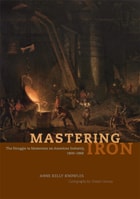
Mastering Iron
The Struggle to Modernize an American Industry, 1800-1868Anne Kelly Knowles
University of Chicago Press, 2012
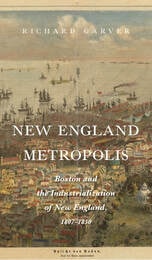
New England Metropolis
Boston and the Industrialization of New England, 1807–1850Richard Garver
University of Massachusetts Press, 2026
At the outset of the nineteenth century, Boston was at its zenith as a maritime city even as New England was in decline. Many struggling farmers abandoned the area for more promising opportunities to the west. Yet by 1850, New England had been transformed into one of the most industrialized regions in the world. Former agricultural villages had become specialized manufacturing towns producing consumer goods for sale, and Boston merchant capitalists had established textile complexes that produced fabrics in huge quantities. Although Boston had been superseded by New York as a trading center, it thrived not only as a financial market but as an exchange hub in which these hinterland manufacturers acquired raw materials, capital, sales services, and transportation. With Boston at its metropolitan center, New England was transformed into an industrial geography that was unique nationally and internationally.
New England Metropolis demonstrates that, in contrast to the course of industrialization in other regions of the country, New England’s transformation was driven by entrepreneurs in hundreds of rural villages and towns and by and Boston merchant capitalists who recruited underemployed agricultural household members to produce consumer goods for sale beyond the region, including in the slave economies of the South and the Caribbean. As Boston merchants adapted commercial, financial and transportation infrastructure they had developed to serve overseas trade to the needs of the region's manufacturers, industrialization halted New England’s decline and, by 1850, had propelled it to prosperity.

Optimal Design Exploiting 3D Printing and Metamaterials
Paolo Di Barba
The Institution of Engineering and Technology, 2022

Processing and Manufacturing of Electrodes for Lithium-Ion Batteries
Jianlin Li
The Institution of Engineering and Technology, 2023
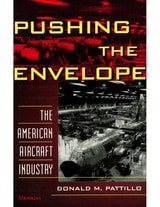
Pushing the Envelope
The American Aircraft IndustryDonald M. Pattillo
University of Michigan Press, 2001
The Development of a Strategy for Integrated Manufacturing Systems
Norman A. Schofield
The Institution of Engineering and Technology, 1990