Results by title
20 books match the query 'Map'
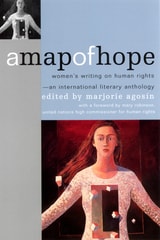
A Map of Hope
Women's Writing on Human Rights—An International Literary AnthologyAgosín, Marjorie
Rutgers University Press, 1999
The first international anthology to explore women’s human rights from a literary perspective.
More than half a century after the United Nations Declaration of Human Rights, women throughout the world still struggle for social and political justice. Many fight back with the only tools of resistance they possess—words. A Map of Hope presents a collection of 77 extraordinary literary works documenting the ways women writers have spoken out about human rights issues.
Writers young and old, known and unknown, explore the dimensions of terror, the unspeakable atrocities of war, and the possibilities of resistance and refusal against all odds. Their poems, essays, memoirs, and brief histories examine issues that affect the condition of women in war, prison camps, exile, and as victims of domestic and political violence.
A Map of Hope presents diverse women writers who have created a literature of global consciousness and justice. Their works give a face, an image, and a human dimension to the dehumanization of human rights violations. The collection allows readers to hear voices that have decided to make a difference. It goes beyond geography and ethnic groups; writers from around the globe are united by the universal dimensions of horror and deprivation, as well as the unique common struggle for justice and solidarity.
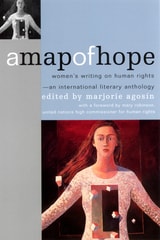
A Map of Hope
Women's Writing on Human Rights—An International Literary AnthologyAgosín, Marjorie
Rutgers University Press, 1999
The first international anthology to explore women’s human rights from a literary perspective.
More than half a century after the United Nations Declaration of Human Rights, women throughout the world still struggle for social and political justice. Many fight back with the only tools of resistance they possess—words. A Map of Hope presents a collection of 77 extraordinary literary works documenting the ways women writers have spoken out about human rights issues.
Writers young and old, known and unknown, explore the dimensions of terror, the unspeakable atrocities of war, and the possibilities of resistance and refusal against all odds. Their poems, essays, memoirs, and brief histories examine issues that affect the condition of women in war, prison camps, exile, and as victims of domestic and political violence.
A Map of Hope presents diverse women writers who have created a literature of global consciousness and justice. Their works give a face, an image, and a human dimension to the dehumanization of human rights violations. The collection allows readers to hear voices that have decided to make a difference. It goes beyond geography and ethnic groups; writers from around the globe are united by the universal dimensions of horror and deprivation, as well as the unique common struggle for justice and solidarity.
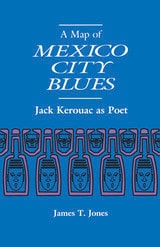
A Map of Mexico City Blues
Jack Kerouac as PoetJames T. Jones
Southern Illinois University Press, 1992
In this pioneering critical study of Jack Kerouac’s book-length poem, Mexico City Blues—apoetic parallel to the writer’s fictional saga, the Duluoz Legend—James T. Jones uses a rich and flexible neoformalist approach to argue his case for the importance of Kerouac’s rarely studied poem.
After a brief summary of Kerouac’s poetic career, Jones embarks on a thorough reading of Mexico City Blues from several different perspectives: he first focuses on Kerouac’s use of autobiography in the poem and then discusses how Kerouac’s various trips to Mexico, his conversion to Buddhism, his theory of spontaneous poetics, and his attraction to blues and jazz influenced the theme, structure, and sound of Mexico City Blues.
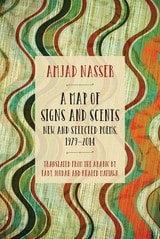
A Map of Signs and Scents
New and Selected Poems, 1979–2014Amjad Nasser / Translated from the Arabic by Fady Joudah and Khaled Mattawa
Northwestern University Press, 2016
Featuring poems from earlier collections of Amjad Nasser’s work and many newer uncollected poems never made available in English, A Map of Signs and Scents introduces the work of an important Arabic poet to a broader contemporary Anglophone readership. This special annotation edition helps readers view the multifaceted contexts within which Nasser has created his award-winning poems.
A Map of the Night
David Wagoner
University of Illinois Press, 2008
After the Map
Cartography, Navigation, and the Transformation of Territory in the Twentieth CenturyWilliam Rankin
University of Chicago Press, 2016
In After the Map, William Rankin argues that although this shift did not render traditional maps obsolete, it did radically change our experience of geographic knowledge, from the God’s-eye view of the map to the embedded subjectivity of GPS. Likewise, older concerns with geographic truth and objectivity have been upstaged by a new emphasis on simplicity, reliability, and convenience. After the Map shows how this change in geographic perspective is ultimately a transformation of the nature of territory, both social and political.
Air Apparent
How Meteorologists Learned to Map, Predict, and Dramatize WeatherMark Monmonier
University of Chicago Press, 1999
"Clever title, rewarding book. Monmonier . . . offers here a basic course in meteorology, which he presents gracefully by means of a history of weather maps." —Scientific American
"Mark Monmonier is onto a winner with Air Apparent. . . . It is good, accessible science and excellent history. . . . Read it." —Fred Pearce, New Scientist
"[Air Apparent] is a superb first reading for any backyard novice of weather . . . but even the veteran forecaster or researcher will find it engaging and, in some cases, enlightening." —Joe Venuti, Bulletin of the American Meteorological Society
"Monmonier is solid enough in his discussion of geographic and meteorological information to satisfy the experienced weather watcher. But even if this information were not presented in such a lively and engaging manner, it would still hook most any reader who checks the weather map every morning or who sits happily entranced through a full cycle of forecasts on the Weather Channel."—Michael Kennedy, Boston Globe
All Over the Map
True Heroes of Texas MusicMichael Corcoran
University of North Texas Press, 2017

All Over the Map
True Heroes of Texas MusicBy Michael Corcoran
University of Texas Press, 2005
From country and blues to rap and punk, Texas music is all over the map, figuratively and literally. Texas musicians have pioneered new musical genres, instruments, and playing styles, proving themselves to be daring innovators who often call the tune for musicians around the country and even abroad. To introduce some of these trailblazing Texas musicians to a wider audience and pay tribute to their accomplishments, Michael Corcoran profiles thirty-two of them in All Over the Map: True Heroes of Texas Music.
Corcoran covers musicians who work in a wide range of musical genres, including blues, gospel, country, rap, indie rock, pop, Cajun, Tejano, conjunto, funk, honky-tonk, rockabilly, rhythm and blues, and Western swing. His focus is on underappreciated artists, pioneers who haven't fully received their due. He also includes well-known musicians who've been underrated, such as Stevie Ray Vaughan and Selena, and invites us to take a closer look at the unique talents of these artists. Corcoran's profiles come from articles he wrote for the Dallas Morning News, Austin American-Statesman, Houston Press, and other publications, which have been expanded and updated for this volume. His musical detective work even uncovers a case of mistaken identity (Washington Phillips) and corrects much misinformation on Blind Willie Johnson and Arizona Dranes. Corcoran closes the book with lively pieces on the Austin music scene and its most famous, if no longer extant, clubs, as well as his personal lists of the forty greatest Texas songs of all time and the twenty-five essential CDs for Texas music fans.
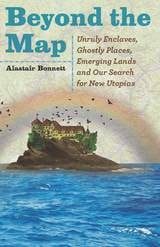
Beyond the Map
Unruly Enclaves, Ghostly Places, Emerging Lands and Our Search for New UtopiasAlastair Bonnett
University of Chicago Press, 2018
In Beyond the Map, Bonnett presents stories of the world’s most extraordinary spaces—many unmarked on any official map—all of which challenge our assumptions about what we know—or think we know—about our world. As cultural, religious and political boundaries ebb and flow with each passing day, traditional maps unravel and fragment. With the same adventurous spirit he effused in the acclaimed Unruly Places, Bonnett takes us to thirty-nine incredible spots around the globe to explore these changing boundaries and stimulate our geographical imagination. Some are tied to disruptive contemporary political turbulence, such as the rise of ISIL, Russia’s incursions into Ukraine and the Brexit vote in the United Kingdom. Others explore the secret places not shown on Google Earth or reflect fast-changing landscapes.
Beyond the Map journeys out into a world of mysterious, daunting and magical spaces. It is a world of hidden cultures and ghostly memories, of uncountable new islands and curious stabs at paradise. From the phantom tunnels of the Tokyo subway to a stunning movie-set re-creation of 1950s-era Moscow; from the caliphate of the Islamic State to virtual cybertopias—this book serves as an imaginative guide to the farthest fringes of geography.
Cold Comfort
Life at the Top of the MapBarton Sutter
University of Minnesota Press, 2000
A whimsical look at the pleasures and challenges of living in the far north-now in paperback!
A whimsical look at the pleasures and challenges of living in the far north-now in paperback!
"Sutter knows Duluth and the hinterlands to the North the way Garrison Keillor knows Lake Wobegon and the prairies. With a nimble wit and a roving eye for detail, Sutter goes beneath the veneer of the North Country to expose its attraction, its quirks, and its characters. There isn’t a clinker in the collection, and even if you’ve lived your entire life in Duluth or the North Country, you’ll see your home place with new insight after reading Cold Comfort." Duluth News-Tribune"Mostly whimsical, sometimes meditative, but most often warmhearted, these essays explore Lake Superior, its neighboring rivers and streams, duck hunting, cross-country skiing, bridges, cider-pressing parties, and camping out in the family car. Sutter’s prose is clean, straightforward, and sometimes mirthful." Chicago New City "An oddly brilliant and lovely little book. . . . Resonant, evocative, and splendidly written." Jim HarrisonTemperatures that dive to forty degrees below zero are only part of life in northern Minnesota, according to award-winning writer Barton Sutter. Cold Comfort is his temperamental tribute to the city of Duluth, Minnesota, where bears wander the streets and canoe racks are standard equipment. Winner of a 1998 Northeast Minnesota Book AwardWinner of a 1998 Minnesota Book Award for Creative Nonfiction
Decolonizing the Map
Cartography from Colony to NationEdited by James R. Akerman
University of Chicago Press, 2017
These essays, originally delivered as the 2010 Kenneth Nebenzahl, Jr., Lectures in the History of Cartography at the Newberry Library, encompass more than two centuries and three continents—Latin America, Africa, and Asia. Ranging from the late eighteenth century through the mid-twentieth, contributors study topics from mapping and national identity in late colonial Mexico to the enduring complications created by the partition of British India and the racialized organization of space in apartheid and post-apartheid South Africa. A vital contribution to studies of both colonization and cartography, Decolonizing the Map is the first book to systematically and comprehensively examine the engagement of mapping in the long—and clearly unfinished—parallel processes of decolonization and nation building in the modern world.
Fathering the Map
New and Selected Later PoemsRobert Pack
University of Chicago Press, 1993
A selection from his last five books, along with a collection of new poems, Fathering the Map takes us from the personal reflections distilled in the lyrics of Waking to My Name (1980) to the worldly reckonings of Inheritance (1992) and back again. In the dramatic monologues of Faces in a Single Tree (1984), in the narrative of a wayward life from womb to double ending in Clayfield Rejoices, Clayfield Laments (1987), in a cosmic tour conducted by the physicist Heinz Pagels with Before It Vanishes (1990), Pack has fashioned poems of intimate experience, scientific meditations, philosophical wonder, poems that breathe the knowledge of man and woman, young and old, artist and human animal.
Pack's work has won the acclaim of writers, critics, and readers from Robert Penn Warren to Cynthia Ozick to Stephen Jay Gould, who comments that the "precious contacts of science and poetry are now sadly rare, but Bob Pack revitalizes the ancient union with incisive poems that sing with lyricism or bite with insight—but always seem to add wisdom to the scientist's epigram."
"The poet improves his style and spirit as he extends his reach," Howard Nemerov has written, and in his new work Pack reaches back to some of his earliest memories, and so forward to a personal mythology that circles from the primal instant to the present ecological crisis. "Robert Pack's poetry is deeply rooted in his won family life," Richard Wilbur has remarked, "and yet his imagination has always included us all."
And Cynthia Ozick has said of Pack's poetry: "We rejoice as we read."

Finding the Right Place on the Map
Central and Eastern European Media Change in a Global PerspectiveEdited by Karol Jakubowicz and Miklós Sükösd
Intellect Books, 2008
Homeless In Paradise
A Map of the TerrainRobert Rosenthal
Temple University Press, 1993
In the Memory of the Map
A Cartographic MemoirChristopher Norment
University of Iowa Press, 2012
Maps may have been the stuff of his dreams, but they sometimes drew him away from places where he should have remained firmly rooted. In the Memory of the Map explores the complex relationship among maps, memory, and experience—what might be called a “cartographical psychology” or “cartographical history.” Interweaving a personal narrative structured around a variety of maps, with stories about maps as told by scholars, poets, and fiction writers, this book provides a dazzlingly rich personal and intellectual account of what many of us take for granted.
A dialog between desire and the maps of his life, an exploration of the pleasures, utilitarian purposes, benefits, and character of maps, this rich and powerful personal narrative is the matrix in which Norment embeds an exploration of how maps function in all our lives. Page by page, readers will confront the aesthetics, mystery, function, power, and shortcomings of maps, causing them to reconsider the role that maps play in their lives.
New Lines
Critical GIS and the Trouble of the MapMatthew W. Wilson
University of Minnesota Press, 2017
New Lines takes the pulse of a society increasingly drawn to the power of the digital map, examining the conceptual and technical developments of the field of geographic information science as this work is refracted through a pervasive digital culture. Matthew W. Wilson draws together archival research on the birth of the digital map with a reconsideration of the critical turn in mapping and cartographic thought.
Seeking to bridge a foundational divide within the discipline of geography—between cultural and human geographers and practitioners of Geographic Information Systems (GIS)—Wilson suggests that GIS practitioners may operate within a critical vacuum and may not fully contend with their placement within broader networks, the politics of mapping, the rise of the digital humanities, the activist possibilities of appropriating GIS technologies, and more.
Employing the concept of the drawn and traced line, Wilson treads the theoretical terrain of Deleuze, Guattari, and Gunnar Olsson while grounding their thoughts with the hybrid impulse of the more-than-human thought of Donna Haraway. What results is a series of interventions—fractures in the lines directing everyday life—that provide the reader with an opportunity to consider the renewed urgency of forceful geographic representation. These five fractures are criticality, digitality, movement, attention, and quantification. New Lines examines their traces to find their potential and their necessity in the face of our frenetic digital life.
Shredding the Map
Imagined Geographies of Revolutionary Russia, 1914-1922Edith W. Clowes
Amherst College Press, 2024
An innovative, digitally-aided study of Russia’s “imagined geography” during the early decades of the twentieth century, Shredding the Map uncovers vying emotional patterns and responses to Russian ideas of place, some familiar and some quite new. The book includes new visualizations that connect otherwise invisible networks of shared place, feeling, and perception among dozens of writers in order to trace patterns of geospatial identity. A scholarly companion to the “Mapping Imagined Geographies of Revolutionary Russia” website and database, this book offers an innovative analysis of place and identity beyond the centers of power, enhancing our perceptions of Russia and encouraging debate about the possibilities for digital humanities and literary analysis.
The Creature in the Map
A Journey to El DoradoCharles Nicholl
University of Chicago Press, 1997
"Walter Raleigh . . . was one of those Elizabethan all-rounders who still seem staggeringly larger than life. . . . Mr. Nicholl's cogent reconstruction of the journey uses Raleigh's own account, 'The Discoverie of Guiana'—part truth, part advertising, part rhapsody—and much well-found ancillary material."—Anthony Bailey, New York Times
"Like The Reckoning, his brilliant account of the murder of Christopher Marlowe, Nicholl's new book might be called an exercise in historical conjuring. The Creature in the Map is an effort not only to analyse but also to call into presence the lived experience of the voyage Raleigh undertook in 1595 to the Orinoco Delta in what is now Venezuela."—Stephen Greenblatt, Times Literary Supplement
"Charles Nicholl belongs to an elite company, that of historians who know how to make research into arcane matters and distant times as engrossing as In Cold Blood or All the President's Men."—Michael Dirda, Washington Post

Trajectories
Crossing the Map of PoetryCarolyne Wright
University of Michigan Press, 2027
In Trajectories, poet, translator, human rights advocate, and world traveler Carolyne Wright maps her poetic path in the crossing of cultural, linguistic, and national boundaries. From her origins in Seattle and the Pacific Northwest through Latin America (Chile, Brazil) and South Asia (India, Bangladesh) through languages spoken in these regions (Spanish, Portuguese, and Bengali), Wright recalls and relives the poetic trajectory as well as the seeming tangents that one poet’s relatively uncommon life has taken. She pays tribute to poetic mentors of the “Northwest School,” to Bengali and Chilean women poets, to the poetry and music of Brazil, and to poets such as Elizabeth Bishop, Ted Hughes, and Sylvia Plath.
Throughout her essays and interviews and across a wide range of literary interests, Wright explores connections between family and national history, intersections of personal and public spheres, and the poetics of the era in which she moves. She connects lyricism to social engagement, witnessing contemporary and historical issues while remaining committed to the heightened, musical language of lyric poetry. Both personal and political, a compelling story and a work of criticism, Trajectories seeks essential insights into poetry as a path of discovery across the cartography of the human heart. Wright offers these experiences and insights as a map for readers who wish to share the journey.