Results by title

5 books match the query 'Maroons'
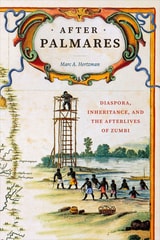
cover of After Palmares: Diaspora, Inheritance, and the Afterlives of Zumbi

After Palmares

Diaspora, Inheritance, and the Afterlives of Zumbi

Marc A. Hertzman

Duke University Press, 2024
In After Palmares, Marc A. Hertzman tells the rise, fall, and afterlives of Palmares, one of history’s largest and longest-lasting maroon societies. Forged during the seventeenth century by formerly enslaved Africans in what would become northeast Brazil, Palmares stood for a century, withstanding sustained attacks from two European powers. In 1695, colonial forces assassinated its most famous leader, Zumbi. Hertzman examines the remarkable ways that Palmares and its inhabitants lived on after Zumbi’s death, creating vivid portraits of those whose lives and voices scholars have often assumed are inaccessible. With an innovative approach to African languages, and paying close attention to place as well as African and diasporic spiritual beliefs, Hertzman reshapes our understanding of Palmares and Zumbi and advances a new framework for studying fugitive slave communities and marronage in the African diaspora.
[more]
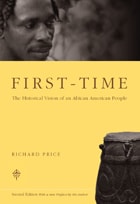
cover of First-Time: The Historical Vision of an African American People

First-Time

The Historical Vision of an African American People

Richard Price

University of Chicago Press, 2002

A classic of historical anthropology, First-Time traces the shape of historical thought among peoples who had previously been denied any history at all. The top half of each page presents a direct transcript of oral histories told by living Saramakas about their eighteenth-century ancestors, "Maroons" who had escaped slavery and settled in the rain forests of Suriname. Below these transcripts, Richard Price provides commentaries placing the Saramaka accounts into broader social, intellectual, and historical contexts.

First-Time's unique style of presentation preserves the integrity of both its oral and documentary sources, uniting them in a profound meditation on the roles of history and memory. This second edition includes a new preface by the author, discussing First-Time's impact and recounting the continuing struggles of the Saramaka people.
[more]
cover of Freedom as Marronage

Freedom as Marronage

Neil Roberts

University of Chicago Press, 2015

What is the opposite of freedom? In Freedom as Marronage, Neil Roberts answers this question with definitive force: slavery, and from there he unveils powerful new insights on the human condition as it has been understood between these poles. Crucial to his investigation is the concept of marronage—a form of slave escape that was an important aspect of Caribbean and Latin American slave systems. Examining this overlooked phenomenon—one of action from slavery and toward freedom—he deepens our understanding of freedom itself and the origin of our political ideals.
           
Roberts examines the liminal and transitional space of slave escape in order to develop a theory of freedom as marronage, which contends that freedom is fundamentally located within this space—that it is a form of perpetual flight. He engages a stunning variety of writers, including Hannah Arendt, W. E. B. Du Bois, Angela Davis, Frederick Douglass, Samuel Taylor Coleridge, and the Rastafari, among others, to develop a compelling lens through which to interpret the quandaries of slavery, freedom, and politics that still confront us today. The result is a sophisticated, interdisciplinary work that unsettles the ways we think about freedom by always casting it in the light of its critical opposite.  
[more]
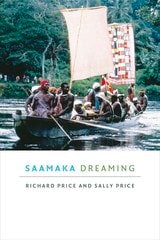
cover of Saamaka Dreaming

Saamaka Dreaming

Richard Price and Sally Price

Duke University Press, 2017
When Richard and Sally Price stepped out of the canoe to begin their fieldwork with the Saamaka Maroons of Suriname in 1966, they were met with a mixture of curiosity, suspicion, ambivalence, hostility, and fascination. With their gradual acceptance into the community they undertook the work that would shape their careers and influence the study of African American societies throughout the hemisphere for decades to come. In Saamaka Dreaming they look back on the experience, reflecting on a discipline and a society that are considerably different today. Drawing on thousands of pages of field notes, as well as recordings, file cards, photos, and sketches, the Prices retell and comment on the most intensive fieldwork of their careers, evoke the joys and hardships of building relationships and trust, and outline their personal adaptation to this unfamiliar universe. The book is at once a moving human story, a portrait of a remarkable society, and a thought-provoking revelation about the development of anthropology over the past half-century.
[more]
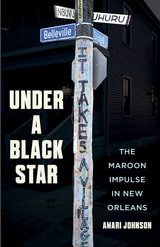
cover of Under a Black Star: The Maroon Impulse in New Orleans

Under a Black Star

The Maroon Impulse in New Orleans

Amari Johnson

University of Minnesota Press, 2025

Uncovering the spirit of freedom and self-determination in New Orleans

In Under a Black Star, Amari Johnson explores what he defines as the “maroon impulse” among the BlackStar Community in the Algiers neighborhood of New Orleans. This community sought autonomy for Black people facing systemic marginalization through denied employment, insufficient education, and a housing crisis following Hurricane Katrina, establishing initiatives such as Kamali Academy, a homeschool collective, and BlackStar Books and Caffé, a bookstore and gathering place. Instead of appealing to the city, they built the community they desired by employing legacies of marronage: disengagement, flight, and reengagement.

An active participant in the physical and ideological development of these autonomous spaces, Johnson provides nuanced insights into the community’s work toward liberation and self-determination. Demonstrating that marronage is a cultural tradition throughout the African Diaspora, he focuses on the transtemporal maroon process to show how it is central to the pursuit of autonomy, community, and freedom.

From the swamps of southeastern Louisiana, across urban obstacles, and into BlackStar’s creative spaces, Johnson’s path leads him to ask: How did the New Orleans community mobilize the tradition of marronage to create autonomous spaces amid gentrification? What forms might the maroon impulse take in the twenty-first century? This dynamic ethnographic memoir ultimately illuminates marronage as a potent form of liberatory potential, offering strategies for similar communities across the country and around the world.

[more]