Results by title
3 books match the query 'Masculinity in music'
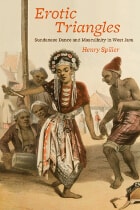
Erotic Triangles
Sundanese Dance and Masculinity in West JavaHenry Spiller
University of Chicago Press, 2010
In West Java, Indonesia, all it takes is a woman’s voice and a drum beat to make a man get up and dance. Every day, men there—be they students, pedicab drivers, civil servants, or businessmen—breach ordinary standards of decorum and succumb to the rhythm at village ceremonies, weddings, political rallies, and nightclubs. The music the men dance to varies from traditional gong ensembles to the contemporary pop known as dangdut, but they consistently dance with great enthusiasm. In Erotic Triangles, Henry Spiller draws on decades of ethnographic research to explore the reasons behind this phenomenon, arguing that Sundanese men use dance to explore and enact contradictions in their gender identities.
Framing the three crucial elements of Sundanese dance—the female entertainer, the drumming, and men’s sense of freedom—as a triangle, Spiller connects them to a range of other theoretical perspectives, drawing on thinkers from Eve Kosofsky Sedgwick, Lévi-Strauss, and Freud to Euclid. By granting men permission to literally perform their masculinity, Spiller ultimately concludes, dance provides a crucial space for both reinforcing and resisting orthodox gender ideologies.

Replaying Marc Anthony
Sonic, Political, and Cultural ResonancesFrances R. Aparicio
The Ohio State University Press, 2025
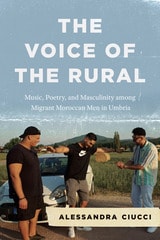
The Voice of the Rural
Music, Poetry, and Masculinity among Migrant Moroccan Men in UmbriaAlessandra Ciucci
University of Chicago Press, 2022
Umbria is known to most Americans for its picturesque rolling hills and medieval villages, but to the many migrant Moroccan men who travel there, Umbria is better known for the tobacco fields, construction sites, small industries, and the outdoor weekly markets where they work. Marginalized and far from their homes, these men turn to Moroccan traditions of music and poetry that evoke the countryside they have left— l-‘arubiya, or the rural. In this book, Alessandra Ciucci takes us inside the lives of Moroccan workers, unpacking the way they share a particular musical style of the rural to create a sense of home and belonging in a foreign and inhospitable nation. Along the way, she uncovers how this culture of belonging is not just the product of the struggles of migration, but also tied to the reclamation of a noble and virtuous masculine identity that is inaccessible to Moroccan migrants in Italy.
The Voice of the Rural allows us to understand the contemporary experiences of migrant Moroccan men by examining their imagined relationship to the rural through sound, shedding new light on the urgent issues of migration and belonging.