Results by title
29 books match the query 'Towards'

Activist Film Festivals
Towards a Political SubjectEdited by Sonia Tascón and Tyson Wils
Intellect Books, 2016
This book breaks new ground by bringing scholars from a range of disciplines together with industry professionals to explore the concept of festivals as spaces through an activist lens, as spaces where the sociopolitical identities of communities and individuals are confronted and shaped. Tracing the growth of activist and human rights-focused films from the 1970s to the present, and using case studies from San Francisco, Brazil, Bristol, and elsewhere, the book addresses such contentious topics as whether activist films can achieve humanitarian aims or simply offer “cinema of suffering.” Ultimately, the contributors attack the question of just how effective festivals are at producing politically engaged spectators?

China's Global Strategy
Towards a Multipolar WorldJenny Clegg
Pluto Press, 2009
China is fast emerging as a powerful player on the world stage. This book takes a closer look at the country's stance on a range of global issues, arguing that its multipolar diplomacy offers a concrete strategy to constrain the US pursuit of unipolar primacy.
Many people assume that China will follow an imperialistic strategy and therefore be in direct conflict with the American empire in a quest for world domination. Jenny Clegg shows that China is in fact taking a multilateral approach, offering real assistance to developing countries and helping to build the institutions required to run a multipolar world. Without glossing over China's own internal difficulties, the book argues that its international consensus-building strategy could lead to a more peaceful and equitable world.
This book offers a refreshing perspective on China that will be of great value to those interested in the big political questions of how to tackle war and imperialism, globalisation and development as well as to undergraduate students of politics, economics and international relations.
Foucault and Law
Towards a Sociology of Law As GovernanceAlan Hunt and Gary Wickham
Pluto Press, 1994
Ghostbodies
Towards a New Theory of InvalidismMaia Dolphin-Krute
Intellect Books, 2017
Language of Tomorrow
Towards a Transcultural Visual Communication System in a Posthuman ConditionHaytham Nawar
Intellect Books, 2020
Language of Tomorrow is a comprehensive guide to the history, evolution, and current forms of pictographic communication, charting its course from ancient Egyptian writing systems to modern-day emojis. The book is a culmination of research combining visual communication, semiotic theory, cultural studies, linguistics, artificial intelligence, and new media.
Haytham Nawar presents a cohesive and comprehensive historical framework—covering pictographic, logographic, and ideographic writing systems and scripts—through which we can discuss the future of communication. In his analysis, he explores the possibility of developing a standardized universal pictographic communication system that fosters mutual understanding and bridges diverse cultures. Weaving practice and theory across disciplines and bringing together language, culture, art, and design, Language of Tomorrow aims to locate the direction for the research and development of a transcultural visual communication system for the posthuman era.
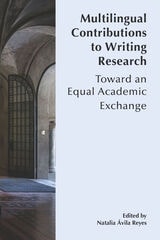
Multilingual Contributions to Writing Research
Towards an Equal Academic Exchangeedited by Natalia Ávila Reyes
University Press of Colorado, 2022
This edited collection offers chapters based on presentations at the Second Latin American Association of Writing Studies in Higher Education and Professional Contexts International Congress (II ALES) held in Santiago, Chile, in 2018. Together, the contributors to the collection—drawn from nine countries and writing in three languages—highlight the many perspectives, resources, and traditions that enrich and expand international conversations about writing, writing instruction, and writing research. The multiple locations from which the chapters in this collection emerge contribute significantly to the situated findings and concerns they address, with the authors of each chapter considering the social, lingual, and institutional contexts shaping their work. Drawing on both robust traditions and cutting-edge research, this collection makes a distinctive contribution to discussions of writing in and beyond Latin America.
This book is also available as an open access ebook through the WAC Clearinghouse.
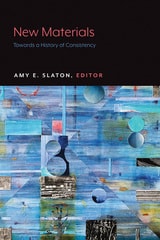
New Materials
Towards a History of ConsistencyAmy E. Slaton
Lever Press, 2020
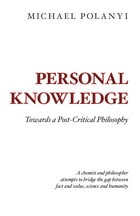
Personal Knowledge
Towards a Post-Critical PhilosophyMichael Polanyi
University of Chicago Press, 1974
The tendency to make knowledge impersonal in our culture has split fact from value, science from humanity. Polanyi wishes to substitute for the objective, impersonal ideal of scientific detachment an alternative ideal which gives attention to the personal involvement of the knower in all acts of understanding. His book should help to restore science to its rightful place in an integrated culture, as part of the whole person's continuing endeavor to make sense of the totality of his experience. In honor of this work and his The Study of Man Polanyi was presented with the Lecomte de Noüy Award for 1959.
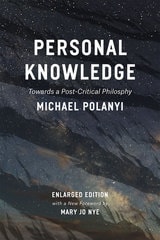
Personal Knowledge
Towards a Post-Critical PhilosophyMichael Polanyi
University of Chicago Press, 2015
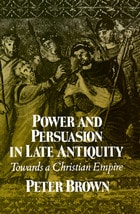
Power & Persuasion Late Antiquity
Towards A Christian EmpirePeter Brown
University of Wisconsin Press, 1992

Roy Pascal and Georg Lukács
Towards a Re-Evaluation of the History of Marxist Literary Criticism in Britain?Helmut Peitsch
University of London Press, 2018
Society and Nature
Towards a Green Social TheoryPeter Dickens
Temple University Press, 1992
Softimage
Towards a New Theory of the Digital ImageIngrid Hoelzl and Remi Marie
Intellect Books, 2015
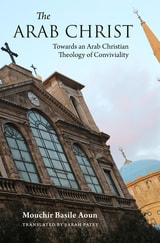
The Arab Christ
Towards an Arab Christian Theology of ConvivialityMouchir Basile Aoun
Gingko, 2022
This work explores the Christian faith in the current intercultural context of Arab societies. It argues that Arab Christianity seeks to express the Christian faith through openness to Muslim otherness, existential conviviality, and fraternal solidarity. In order to safeguard not only the physical existence of these communities but also and above all the relevance and richness of their message of life, the theological reflection presented here takes on a three-part task. First, it faithfully describes the sociopolitical and sociocultural reality of the historical integration of Arab Christian communities. Second, it reinterprets the content of the Christ event with reference to the challenge of Muslim otherness. And finally, it offers a path for conversion that involves a form not only of evangelical practice, designed to foster bonds of fraternal solidarity between the inhabitants of the Arab world but also of shared spiritual quest for moral and political commitment.
The Unrealizable
Towards a Politics of OntologyGiorgio Agamben
Seagull Books, 2024
We are so used to distinguishing between the possible and the real, between essence and existence that we do not realize that these distinctions, which seem so obvious to us, are the result of a long and laborious process that has led to the splitting of being—the “matter” of thought—into two fragments that are both conflicting and intimately intertwined.
This book argues that the ontological-political machine of the West is based on the splitting of this “matter,” without which neither science nor politics would be possible. Without the partition of reality into essence and existence and into possibility and actuality, neither scientific knowledge nor the ability to control human action—which characterizes the historical power of the West—would have been possible.
If we could not suspend the exclusive concentration of our attention on what immediately exists (as animals seem to do), to think and define its essence, Western science and technology would not have experienced the advances that characterize them. And if the dimension of possibility disappeared entirely, neither plans nor projects would be thinkable, and human actions could be neither directed nor controlled. The incomparable power of the West has one of its essential presuppositions in this ontological machine.
Towards a Christian Philosophy
Joseph Owens
Catholic University of America Press, 2018
Towards a Cognitive Mode in Global Finance?
The Governance of a Knowledge-Based Financial SystemEdited by Torsten Strulik and Helmut Willke
Campus Verlag, 2007
Towards a Future for BRICS+
Edited by Heiwai Tang and Brian Wong Yue Shun
Hong Kong University Press, 2025
As the BRICS bloc expands beyond its original five members to include Egypt, Ethiopia, Iran, Indonesia, and the UAE—with Saudi Arabia invited to join—the influence of BRICS+ in global trade and geopolitics is growing. The question remains: what does this shifting balance of power mean for the world?
Towards a Future for BRICS+, edited by Heiwai Tang and Brian Wong, brings together leading scholars to assess the past, present, and future of this evolving coalition. With rigorous, evidence-based analysis, this work outlines the economic and political complementarities between BRICS+ nations while also addressing internal tensions and the broader implications for the Global South.
As questions linger over the viability of BRICS+ as a counterweight to the G7, this book is a valuable reference for policymakers and scholars seeking to understand the emerging global order.
Towards a Gay Communism
Elements of a Homosexual CritiqueMario Mieli
Pluto Press, 2018
First published in Italian in 1977, Mario Mieli's groundbreaking book is an early landmark of revolutionary queer theory - now available for the first time in a complete and unabridged English translation.
Among the most important works ever to address the relationship between homosexuality, homophobia and capitalism, Mieli's essay continues to pose a radical challenge to today's dominant queer theory and politics.
With extraordinary prescience, Mieli exposes the efficiency with which capitalism co-opts 'perversions' which are then 'sold both wholesale and retail'. In his view the liberation of homosexual desire requires the emancipation of sexuality from both patriarchal sex roles and capital.
Drawing heavily upon Marx and psychoanalysis to arrive at a dazzlingly original vision, Towards a Gay Communism is a hitherto neglected classic that will be essential reading for all who seek to understand the true meaning of sexual liberation under capitalism today.
Towards a Global Core Value System in Doctoral Education
Edited by Maresi Nerad, David Bogle, Ulrike Kohl, Conor O’Carroll, Christian Peters, and Beate Scholz
University College London, 2022
This book provides an evaluation of changes and reforms in doctoral education since 2000. Recent decades have seen an explosion in doctoral education worldwide, and the increased potential for diverse employment has generated greater interest. Recognizing the diversity of academic cultures and institutional systems worldwide, the book advocates for a core value system to overcome inequalities in access to doctoral education. The chapters focus on the structures and quality assurance models of doctoral education, supervision, and funding from an institutional and comparative perspective. The book examines capacity building in the era of globalization, global labor market developments for doctoral graduates, and the ethical challenges and political contestations that may manifest in the process of pursuing a PhD.
Towards a New Ethnohistory
Community-Engaged Scholarship among the People of the RiverKeith Thor Carlson
University of Manitoba Press, 2018
Towards a New Malaysia?
The 2018 Election and Its AftermathMeredith L. Weiss and Faizal S. Hazis
National University of Singapore Press, 2020
After the election, many Malaysians were optimistic about the possibility of a more representative, accountable, participatory, and equitable polity, but Meredith L. Weiss and Faisal S. Hazis do not see GE14 as a clear harbinger of full-on liberalization. While the political aftermath of the election continues to play out, the authors provide a clarion call for deeper, more critical, more comparative research on Malaysia’s politics. They upend commonly held beliefs about Malaysian politics and bring forward lesser-known theories, and they suggest agendas for empirically interesting, theoretically relevant further research. They also point to the broader insights Malaysia’s experience provides for the study of elections and political change in one-party dominant states around the world.
Towards a New Universalism
Boris Groys
University of Minnesota Press, 2026
A dynamic contemporary examination of universalism
Gathering a selection of essays by influential theorist Boris Groys, Towards a New Universalism articulates his sustained engagement with the problem of universality under contemporary conditions shaped by globalization, institutional fragmentation, and digital mediation. Rather than defending classical universalism or abandoning it in favor of cultural particularism, Groys approaches universality as something produced within shared historical, institutional, and technological frameworks.
These essays address topics spanning from identity politics to migration, museums, media, and artificial intelligence, examining how universal claims make their way into social and cultural contexts. Distinct from recent philosophical treatments of universalism, Towards a New Universalism situates the question within aesthetics, media theory, and institutional critique, offering an indispensable collection for anyone interested in the intersections of politics and art.
Distributed for e-flux.
Towards a Praxis-based Media and Journalism Research
Edited by Leon Barkho
Intellect Books, 2017
Towards a Romanian Silicon Valley?
Local Development in Post-Socialist EuropeEnikö Baga
Campus Verlag, 2007
Towards a Sustainable Information Society
Deconstructing WSISEdited by Nico Carpentier and Jan Servaes
Intellect Books, 1995
With the two-phased World Summit on the Information Society (WSIS), the United Nations attempted to stimulate the development of such tools.
Simultaneously, the WSIS is a large-scale experiment in multistakeholderism. The objective was to create a more balanced decision-making process that would allow the voices of civil society and business actors to be heard in international politics.
This book aims to evaluate the potentialities of both the Information Society, and the WSIS in supporting and constructing more democratic, just and developed societies. It is the second book arising from the intellectual work of European Consortium for Communications Research members.

Towards an Aesthetics of Production
Sebastian Egenhofer
Diaphanes, 2017
After laying out his argument for a new aesthetics of production in introductory chapters that discuss the work of Spinoza, Nietzsche, and Bergson, as well as Heidegger and Kant, Egenhofer applies this theoretical framework to case studies on Michael Asher, Marcel Duchamp, Thomas Hirschhorn, and Piet Mondrian. An aesthetics of production does not, he argues, imply a nostalgia for the artisanal or for a work of art’s singularity, but a way to bring together elements of critical materialism with a thorough reevaluation of the modern art and abstraction.
Towards the Ethics of Form in Fiction
Narratives of Cultural RemissionLeona Toker
The Ohio State University Press, 2010
Toker is especially interested in cultural remissions such as the carnivalesque—that is, the inverting of standard cultural hierarchies or the blurring of boundaries between normally separated social groups, actors and audiences, self and other. She argues that cultural remissions have the potential not simply to provide a break from the determinacies of our quotidian existence but also to return us to that existence with some alteration of our perceptions, beliefs, and values. Toker contends that the ethical consequences of reading fiction result from features of its aesthetics, particularly what she calls, following the semiotician Louis Hjemslev, “the form of the content”—the patterns arising from the artistic deployment of narrative details. In addition to addressing the carnivalesque discourse of Bakhtin as well as the theory of oppositionality developed by de Certeau and Chambers, she puts theory into practice through detailed analyses of canonical texts by Fielding, Sterne, Austen, Hawthorne, Dickens, Conrad, Joyce, and other writers.
Transforming Early Childhood in England
Towards a Democratic EducationEdited by Claire Cameron and Peter Moss
University College London, 2020
Transforming Early Childhood in England offers a critical analysis of the current system and proposes change based on a universal right to education. The book calls for revisions built on democratic principles, where all learning by all children is visible and recognized, educators are trusted and respected, and outcomes-driven targets are replaced. Combining criticism and hope, and drawing on inspiring research, the book is essential reading for students, educators, practitioners, parents, academics, and policymakers.