Results by title
2 books match the query 'Mass media and theater'
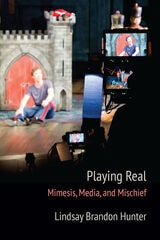
Playing Real
Mimesis, Media, and MischiefLindsay Brandon Hunter
Northwestern University Press, 2021
Playing Real: Mimesis, Media, and Mischief explores the integration and interaction of mimetic theatricality and representational media in twentieth- and twenty‑first-century performance. It brings together carefully chosen sites of performance—including live broadcasts of theatrical productions, reality television, and alternate-reality gaming—in which mediatization and mimesis compete and collude to represent the real to audiences. Lindsay Brandon Hunter reads such performances as forcing confrontation between notions of authenticity, sincerity, and spontaneity and their various others: the fake, the feigned, the staged, or the rehearsed.
Each site examined in Playing Real purports to show audiences something real—real theater, real housewives, real alternative scenarios—which is simultaneously visible as overtly constructed, adulterated by artifice and artificiality. The integration of mediatization and theatricality in these performances, Hunter argues, exploits the proclivities of both to conjure the real even as they risk corrupting the perception of authenticity by imbricating it with artifice and overt manipulation.
Although the performances analyzed obscure boundaries separating actual from virtual, genuine from artificial, and truth from fiction, Hunter rejects the notion that these productions imperil the “real.” She insists on uncertainty as a fertile site for productive and pleasurable mischief—including relationships to realness and authenticity among both audience and participants.
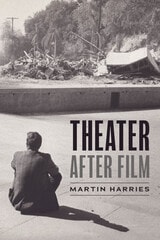
Theater after Film
Martin Harries
University of Chicago Press, 2025
In Theater after Film, Martin Harries argues that after 1945, as cinema became omnipresent in popular culture, theater had to respond to cinema’s hegemony. Theater couldn’t break that hegemony, but it could provide a zone of contestation. Theater made film’s domination of the cultural field visible through hyperbole, refusal, and other strategies, thereby unsettling its power. Postwar theatrical experiment, Harries shows, often channeled and represented film’s mass cultural force, while knowing that it could never possess that force. Throughout the book, Harries brings critical theory into contact with theories of performance. Although Theater after Film treats the theatrical work of many figures, its central focus falls on Tennessee Williams, Samuel Beckett, and Adrienne Kennedy. Discussions of these dramatists consider their ways of addressing spectators, the politics of race between film and theater, and the place of the theatrical apparatus. Readings of these central figures in twentieth-century theater exemplify the book’s historical engagement with the media surround that drama confronted. This confrontation, Harries shows, was central to the development of some of the most continually compelling postwar drama.