Results by title
9 books match the query 'Masters'
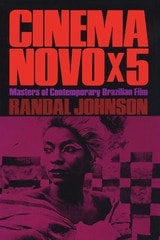
Cinema Novo x 5
Masters of Contemporary Brazilian FilmBy Randal Johnson
University of Texas Press, 1984
With such stunning films as Dona Flor and Her Two Husbands, Bye Bye Brazil, and Pixote, Brazilian cinema achieved both critical acclaim and popular recognition in the 1970s and 1980s, becoming the premier cinema of Latin America and one of the largest film producers in the western world. But the success of Brazilian film at home and abroad came after many years of struggle by filmmakers determined to create a strong film industry in Brazil. At the forefront of this struggle were the filmmakers of Cinema Novo, the internationally acclaimed movement whose flowering in the 1960s marked the birth of modern Brazilian film.
Cinema Novo x 5 places the success of Brazilian cinema in perspective by examining the films of the five leaders of this groundbreaking movement—Andrade, Diegues, Guerra, Rocha, and dos Santos. By exploring the individuality of these masters of contemporary Brazilian film, Randal Johnson reveals the astonishing stylistic and thematic diversity of Cinema Novo. His emphasis is on the films themselves, as well as their makers’ distinctive cinematic vision and views of what cinema should be and is. At the same time, he provides a wealth of valuable background information to enhance readers’ understanding of the historical, cultural, and economic context in which Cinema Novo was born and flourished.
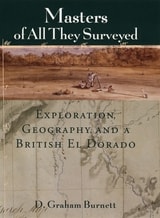
Masters of All They Surveyed
Exploration, Geography, and a British El DoradoD. Graham Burnett
University of Chicago Press, 2000
In answering these questions, D. Graham Burnett brings to light the work of several such explorers, particularly Sir Robert H. Schomburgk, the man who claimed to be the first to reach the site of Ralegh's El Dorado. Commissioned by the Royal Geographical Society and later by the British Crown, Schomburgk explored and mapped regions in modern Brazil, Venezuela, and Guyana, always in close contact with Amerindian communities. Drawing heavily on the maps, reports, and letters that Schomburgk sent back to England, and especially on the luxuriant images of survey landmarks in his Twelve Views in the Interior of Guiana (reproduced in color in this book), Burnett shows how a vast network of traverse surveys, illustrations, and travel narratives not only laid out the official boundaries of British Guiana but also marked out a symbolic landscape that fired the British imperial imagination.
Engagingly written and beautifully illustrated, Masters of All They Surveyed will interest anyone who wants to understand the histories of colonialism and science.
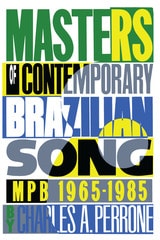
Masters of Contemporary Brazilian Song
MPB, 1965-1985By Charles A. Perrone
University of Texas Press, 1993
Masters of Contemporary Brazilian Song is a critical study of MPB (música popular brasileira), a term that refers to varieties of urban popular music of the 1960s and 1970s, incorporating samba, Bossa Nova, and new materials.

Masters of Their Own Destiny
Asians in the First World WarEdited by Claire Thi Liên Tran
National University of Singapore Press, 2026
An intervention in World War I historiography that foregrounds personal accounts of the conflict from its non-European participants and witnesses.
Accounts of World War I tend to focus on Europe, the epicenter of this conflict, and find in its battlefields the later death of empires, spreading revolution, and eventual decolonization. However, the war was also global, drawing in people from all over the world while rapidly circulating ideas and innovations far beyond Europe.
Almost two million non-Europeans participated in the war as soldiers, workers, and professionals, including Asians in particular. They could be found in the battlefields of France, behind the lines in munitions factories and military hospitals, in the frozen construction sites of the Murmansk Railway, and in Mesopotamia’s burning deserts. The voices of these volunteers and conscripts are rarely heard; the war’s narratives are mainly European. And yet, here and there, lone voices pierce the silence.
In a compelling intervention in World War I historiography, Masters of Their Own Destiny offers a history from below, demonstrating how rare personal accounts may illuminate broader historical forces. Alongside the story of Nguyen Xuan Mai, a Vietnamese military doctor whose pursuit of professional recognition ended in disillusionment with colonial promises, this study draws on a wealth of material like Indian soldiers’ letters, Vietnamese workers’ censored correspondence, and records of Chinese laborers who witnessed revolution in Russia. It gives voice to hitherto ignored wartime experiences that later transformed the expectations of millions of colonial subjects and seeded the anticolonial movements that followed.
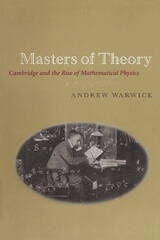
Masters of Theory
Cambridge and the Rise of Mathematical PhysicsAndrew Warwick
University of Chicago Press, 2003
When Isaac Newton published the Principia three centuries ago, only a few scholars were capable of understanding his conceptually demanding work. Yet this esoteric knowledge quickly became accessible in the nineteenth and early twentieth centuries when Britain produced many leading mathematical physicists. In this book, Andrew Warwick shows how the education of these "masters of theory" led them to transform our understanding of everything from the flight of a boomerang to the structure of the universe.
Warwick focuses on Cambridge University, where many of the best physicists trained. He begins by tracing the dramatic changes in undergraduate education there since the eighteenth century, especially the gradual emergence of the private tutor as the most important teacher of mathematics. Next he explores the material culture of mathematics instruction, showing how the humble pen and paper so crucial to this study transformed everything from classroom teaching to final examinations. Balancing their intense intellectual work with strenuous physical exercise, the students themselves—known as the "Wranglers"—helped foster the competitive spirit that drove them in the classroom and informed the Victorian ideal of a manly student. Finally, by investigating several historical "cases," such as the reception of Albert Einstein's special and general theories of relativity, Warwick shows how the production, transmission, and reception of new knowledge was profoundly shaped by the skills taught to Cambridge undergraduates.
Drawing on a wealth of new archival evidence and illustrations, Masters of Theory examines the origins of a cultural tradition within which the complex world of theoretical physics was made commonplace.
Masters of Uncertainty
Weather Forecasters and the Quest for Ground TruthPhaedra Daipha
University of Chicago Press, 2015
In Masters of Uncertainty, Phaedra Daipha develops a new conceptual framework for the process of decision making, after spending years immersed in the life of a northeastern office of the National Weather Service. Arguing that predicting the weather will always be more craft than science, Daipha shows how forecasters have made a virtue of the unpredictability of the weather. Impressive data infrastructures and powerful computer models are still only a substitute for the real thing outside, and so forecasters also enlist improvisational collage techniques and an omnivorous appetite for information to create a locally meaningful forecast on their computer screens. Intent on capturing decision making in action, Daipha takes the reader through engrossing firsthand accounts of several forecasting episodes (hits and misses) and offers a rare fly-on-the-wall insight into the process and challenges of producing meteorological predictions come rain or come shine. Combining rich detail with lucid argument, Masters of Uncertainty advances a theory of decision making that foregrounds the pragmatic and situated nature of expert cognition and casts into new light how we make decisions in the digital age.
Masters of the Sabar
Wolof Griot Percussionists of SenegalPatricia Tang
Temple University Press, 2006
Speculators And Slaves
Masters, Traders, And Slaves In The Old SouthMichael Tadman
University of Wisconsin Press, 1996
The Voice of the Masters
Writing and Authority in Modern Latin American LiteratureBy Roberto González Echevarría
University of Texas Press, 1985
By one of the most original and learned critical voices in Hispanic studies— a timely and ambitious study of authority as theme and authority as authorial strategy in modern Latin American literature.
An ideology is implicit in modern Latin American literature, argues Roberto González Echevarría, through which both the literature itself and criticism of it define what Latin American literature is and how it ought to be read. In the works themselves this ideology is constantly subjected to a radical critique, and that critique renders the ideology productive and in a sense is what constitutes the work. In literary criticism, however, too frequently the ideology merely serves as support for an authoritative discourse that seriously misrepresents Latin American literature.
In The Voice of the Masters, González Echevarría attempts to uncover the workings of modern Latin American literature by creating a dialogue of texts, a dynamic whole whose parts are seven illuminating essays on seminal texts in the tradition. As he says, "To have written a sustained, expository book ... would have led me to make the same kind of critical error that I attribute to most criticism of Latin American literature.... I would have naively assumed an authoritative voice while attempting a critique of precisely that critical gesture."
Instead, major works by Barnet, Cabrera Infante, Carpentier, Cortázar, Fuentes, Gallegos, García Márquez, Roa Bastos, and Rodó are the object of a set of independent deconstructive (and reconstructive) readings. Writing in the tradition of Derrida and de Man, González Echevarría brings to these readings both the penetrative brilliance of the French master and a profound understanding of historical and cultural context. His insightful annotation of Cabrera Infante's "Meta-End," the full text of which is presented at the close of the study, clearly demonstrates these qualities and exemplifies his particular approach to the text.