Results by title
12 books match the query 'Materials'

Choreographies
Tracing the Materials of an Ephemeral Art FormJacky Lansley
Intellect Books, 2017
Choreographies is both autobiography and archive—documenting production through rehearsal and performance photographs, illustrations, scores, process notes, reviews, audience feedback, and interviews with both dancers and choreographers. Covering the author’s practice from 1975 to 2017, the book delves into an important period of change in contemporary British dance—exploring British New Dance, postmodern dance, and experimental dance outside of a canonical US context. A critically engaged reflection that focuses on artistic process over finished product, Choreographies is a much-needed resource in the fields of dance and choreographic art making.

Electromagnetic Mixing Formulas and Applications
Ari Sihvola
The Institution of Engineering and Technology, 1999
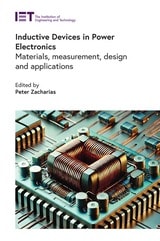
Inductive Devices in Power Electronics
Materials, measurement, design and applicationsPeter Zacharias
The Institution of Engineering and Technology, 2025

Materials & Techniques in the Decorative Arts
An Illustrated DictionaryEdited by Lucy Trench
University of Chicago Press, 2000
Compiled by a team of experts, each with an intimate knowledge of his or her subject, the entries are written in clear, accessible language and supplemented by numerous photographs and drawings. Each core material (glass, ceramics, textiles, paper, plastics, leather, metal, stone, wood, and paint) is covered from its raw state through any processing or preparation to various craft stages and finally, to any surface finishing.
Traditionally, the kind of information found in these pages has been passed on from craftsman to craftsman or confined to highly specialized books, and even common terms are often misunderstood. This dictionary makes the subject accessible to all—from art and architectural historians, curators, collectors, restoration specialists, artists, and museum staff to decorators, aficionados, and those who enjoy watching Antiques Roadshow. In short, this book is for all those who are intrigued by the materials and techniques used to create the beautiful objects that surround us.
Materials and Expertise in Early Modern Europe
Between Market and LaboratoryEdited by Ursula Klein and E. C. Spary
University of Chicago Press, 2010
It is often assumed that natural philosophy was the forerunner of early modern natural sciences. But where did these sciences’ systematic observation and experimentation get their starts? In Materials and Expertise in Early Modern Europe, the laboratories, workshops, and marketplaces emerge as arenas where hands-on experience united with higher learning. In an age when chemistry, mineralogy, geology, and botany intersected with mining, metallurgy, pharmacy, and gardening, materials were objects that crossed disciplines.
Here, the contributors tell the stories of metals, clay, gunpowder, pigments, and foods, and thereby demonstrate the innovative practices of technical experts, the development of the consumer market, and the formation of the observational and experimental sciences in the early modern period. Materials and Expertise in Early Modern Europe showcases a broad variety of forms of knowledge, from ineffable bodily skills and technical competence to articulated know-how and connoisseurship, from methods of measuring, data gathering, and classification to analytical and theoretical knowledge. By exploring the hybrid expertise involved in the making, consumption, and promotion of various materials, and the fluid boundaries they traversed, the book offers an original perspective on important issues in the history of science, medicine, and technology.
Materials of the Mind
Phrenology, Race, and the Global History of Science, 1815-1920James Poskett
University of Chicago Press, 2019
Phrenology was the most popular mental science of the Victorian age. From American senators to Indian social reformers, this new mental science found supporters around the globe. Materials of the Mind tells the story of how phrenology changed the world—and how the world changed phrenology.
This is a story of skulls from the Arctic, plaster casts from Haiti, books from Bengal, and letters from the Pacific. Drawing on far-flung museum and archival collections, and addressing sources in six different languages, Materials of the Mind is an impressively innovative account of science in the nineteenth century as part of global history. It shows how the circulation of material culture underpinned the emergence of a new materialist philosophy of the mind, while also demonstrating how a global approach to history can help us reassess issues such as race, technology, and politics today.
New Materials
Towards a History of ConsistencyAmy E. Slaton
Lever Press, 2020
Organic Sensors
Materials and applicationsEduardo Garcia-Breijo
The Institution of Engineering and Technology, 2017
Shaman, Priest, Practice, Belief
Materials of Ritual and Religion in Eastern North AmericaEdited by Stephen B. Carmody and Casey R. Barrier
University of Alabama Press, 2020
Archaeologists today are interpreting Native American religion and ritual in the distant past in more sophisticated ways, considering new understandings of the ways that Native Americans themselves experienced them. Shaman, Priest, Practice, Belief: Materials of Ritual and Religion in Eastern North America broadly considers Native American religion and ritual in eastern North America and focuses on practices that altered and used a vast array of material items as well as how physical spaces were shaped by religious practices.
Unbound to a single theoretical perspective of religion, contributors approach ritual and religion in diverse ways. Importantly, they focus on how people in the past practiced religion by altering and using a vast array of material items, from smoking pipes, ceremonial vessels, carved figurines, and iconographic images, to sacred bundles, hallucinogenic plants, revered animals, and ritual architecture. Contributors also show how physical spaces were shaped by religious practice, and how rock art, monuments, soils and special substances, and even land- and cityscapes were part of the active material worlds of religious agents.
Case studies, arranged chronologically, cover time periods ranging from the Paleoindian period (13,000–7900 BC) to the late Mississippian and into the protohistoric/contact periods. The geographical scope is much of the greater southeastern and southern Midwestern culture areas of the Eastern Woodlands, from the Central and Lower Mississippi River Valleys to the Ohio Hopewell region, and from the greater Ohio River Valley down through the Deep South and across to the Carolinas.
Contributors
Sarah E. Baires / Melissa R. Baltus / Casey R. Barrier / James F. Bates / Sierra M. Bow / James A. Brown / Stephen B. Carmody / Meagan E. Dennison / Aaron Deter-Wolf / David H. Dye / Bretton T. Giles / Cameron Gokee / Kandace D. Hollenbach / Thomas A. Jennings / Megan C. Kassabaum / John E. Kelly / Ashley A. Peles / Tanya M. Peres / Charlotte D. Pevny / Connie M. Randall / Jan F. Simek / Ashley M. Smallwood / Renee B. Walker / Alice P. Wright
Silicide Technology for Integrated Circuits
Lih J. Chen
The Institution of Engineering and Technology, 2004
Strained Silicon Heterostructures
Materials and devicesC.K. Maiti
The Institution of Engineering and Technology, 2001
Thrifty Science
Making the Most of Materials in the History of ExperimentSimon Werrett
University of Chicago Press, 2018
Thrifty Science explores this distinctive culture of experiment and demonstrates how the values of the household helped to shape an array of experimental inquiries, ranging from esoteric investigations of glowworms and sour beer to famous experiments such as Benjamin Franklin’s use of a kite to show lightning was electrical and Isaac Newton’s investigations of color using prisms. Tracing the diverse ways that men and women put their material possessions into the service of experiment, Werrett offers a history of practices of recycling and repurposing that are often assumed to be more recent in origin. This thriving domestic culture of inquiry was eclipsed by new forms of experimental culture in the nineteenth century, however, culminating in the resource-hungry science of the twentieth. Could thrifty science be making a comeback today, as scientists grapple with the need to make their research more environmentally sustainable?