Results by title
14 books match the query 'Materials Science'
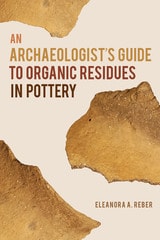
An Archaeologist's Guide to Organic Residues in Pottery
Eleanora A. Reber
University of Alabama Press, 2022
Unlock the chemical secrets of ancient pottery in this guide for mastering organic residue pottery analysis.
Pottery analysis is a crucial component of excavating an archaeological site. Organic residues in pottery are made up of chemicals that absorb into pots over their lifetime. These residues can reveal what people ate, whether different types of vessels were used for different cooking or foodstuffs preparation, and whether “elite” vessels were in use.
Organic residue analysis is a technical specialty that blends an unusual type of instrumental organic chemistry and archaeology. Because it is considered an obscure technique, archaeologists of all degrees of experience tend to struggle with how to apply the technology to archaeological questions and how to sample effectively in the field to answer these questions.
Eleanora A. Reber’s An Archaeologist’s Guide to Organic Residues in Pottery is a user-friendly resource for all archaeologists. Composed of case studies gleaned from Reber’s more than twenty years of archaeological research, this guide covers the range of residues encountered in the field and explains the methods and application of organic residue analysis.
Reber illustrates the useful aspects of residue analysis, such as compound-specific isotope analysis for the identification of traces of maize and marine resources, conifer resins, and the psychoactive alkaloid biomarkers caffeine and nicotine. Special attention is paid to sampling and construction of meaning as well as research questions to help field archaeologists integrate residue analysis seamlessly into their projects
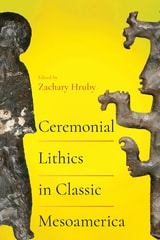
Ceremonial Lithics in Classic Mesoamerica
Zachary Hruby
University Press of Colorado, 2025
Ceremonial Lithics in Classic Mesoamerica explores how and why ceremonial lithic artifacts were made in ancient Mesoamerica’s Classic period, focusing on their implications for economic and sociopolitical organization. Technological analyses of unique examples are interpreted to understand the processes of lithic production and how chipped stone was ritualized across Mesoamerica.
Investigations of ritualized lithics also draw on iconography, epigraphy, and ethnohistory to understand the meaning of these objects, including the so-called eccentric flints and obsidians of the Maya area and Central Mexico, massive debitage deposits in tomb contexts, and the use of utilitarian objects in ceremonial contexts. In the cases of the largest and most elaborate artifacts (e.g., the effigy flints of Copan, Honduras and the obsidian serpents of Teotihuacan), authors examine what the basic production processes may have been, while cases of blade and debitage deposits focus on how the objects were produced within their social context, in what sequence, and why they may have been chosen for ritual deposition.
Ceremonial Lithics in Classic Mesoamerica is the first book to address from a pan-Mesoamerican perspective how and why these objects were made. While obsidian and flint carried their own respective symbolic meanings, the final form of an artifact and the process of its production also contributed to its identification. Hence, this volume is an essential step toward understanding the ancient meanings imbued in these material objects.
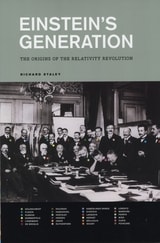
Einstein's Generation
The Origins of the Relativity RevolutionRichard Staley
University of Chicago Press, 2009
Why do we celebrate Einstein’s era above all other epochs in the history of physics? Much of the history of physics at the beginning of the twentieth century has been written with a sharp focus on a few key figures and a handful of notable events. Einstein’s Generation offers a distinctive new approach to the origins of modern physics by exploring both the material culture that stimulated relativity and the reaction of Einstein’s colleagues to his pioneering work.
Richard Staley weaves together the diverse strands of experimental and theoretical physics, commercial instrument making, and the sociology of physics around 1900 to present the collective efforts of a group whose work helped set the stage for Einstein’s revolutionary theories and the transition from classical to modern physics that followed. Collecting papers, talks, catalogues, conferences, and correspondence, Staley juxtaposes scientists’ views of relativity at the time to modern accounts of its history. Einstein’s Generation tells the story of a group of individuals which produced some of the most significant advances of the twentieth century; and challenges our celebration of Einstein’s era above all others.

Electrical Degradation and Breakdown in Polymers
L.A. Dissado
The Institution of Engineering and Technology, 1992
Electrical Steels for Rotating Machines
Philip Beckley
The Institution of Engineering and Technology, 2002
Electromagnetics and Experimental Measurements of the Skin Effect
Malcom Stuart Raven
The Institution of Engineering and Technology, 2025
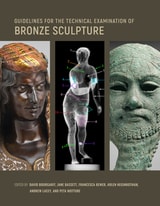
Guidelines for the Technical Examination of Bronze Sculpture
David Bourgarit
J. Paul Getty Trust, The, 2023
Since the fourth millennium BCE, bronze has been the preferred medium for some of the most prestigious and sacred works of art. But only through interdisciplinary research can the fabrication of these extraordinary objects be properly investigated, interpreted, and documented. This innovative publication bridges the expertise of myriad art-technological specialists to create a new framework for advancing the understanding of bronze sculpture.
Essential reading for curators, conservators, scientists, archaeologists, sculptors, metallurgists, founders, dealers, collectors, and anyone interested in the life cycle of a bronze, this volume explains how to identify the evidence of process steps, metals used, casting defects, and surface work and alterations before moving on to address analytical techniques ranging from visual exams to imaging, material analyses, and dating. The guidelines are accompanied by detailed illustrations, including videos, charts, and animations; a robust vocabulary, ensuring precision across English, German, French, Italian, and Chinese; a diverse selection of case studies; and a comprehensive bibliography.
The free online edition of this open-access publication is available at getty.edu/publications/bronze-guidelines/ and includes videos and zoomable illustrations. Also available are free PDF and EPUB downloads of the book.
High Speed Data Converters
Ahmed M.A. Ali
The Institution of Engineering and Technology, 2016
Metamaterials and Metasurfaces
Foundations, trends and applicationsSubal Kar
The Institution of Engineering and Technology, 2025
Motion-Induced Eddy Current Techniques for Non-Destructive Testing and Evaluation
Hartmut Brauer
The Institution of Engineering and Technology, 2019
Organic Sensors
Materials and applicationsEduardo Garcia-Breijo
The Institution of Engineering and Technology, 2017
Self-Healing Materials
From fundamental concepts to advanced space and electronics applicationsBrahim Aïssa
The Institution of Engineering and Technology, 2019
SiC Power Devices and Applications
Li Ran
The Institution of Engineering and Technology, 2026
Strained Silicon Heterostructures
Materials and devicesC.K. Maiti
The Institution of Engineering and Technology, 2001