Results by title
34 books match the query 'Measurement'
A Handbook for EMC Testing and Measurement
David Morgan
The Institution of Engineering and Technology, 1994
Challenges of Globalization in the Measurement of National Accounts
Edited by Nadim Ahmad, Brent R. Moulton, J. David Richardson, and Peter van de Ven
University of Chicago Press, 2023
An essential collection at the intersection of globalization, production supply chains, corporate finance regulation, and economic measurement.
The substantial increase in the complexity of global supply chains and other production arrangements over the past three decades has challenged some traditional measures of national income account aggregates and raised the potential for distortions in conventional calculations of GDP and productivity. This volume examines a variety of multinational business activities and assesses their impact on economic measurement. Several chapters consider how global supply chains complicate the interpretation of traditional trade statistics and how new measurement techniques can provide information about global production arrangements. Other chapters examine the role of intangible capital in global production, including the output of factoryless goods producers and the problems of measuring R&D in a globalized world. The studies in this volume also explore potential ways to enhance the quality of the national accounts by improving data collection and analysis and by updating the standards for measurement.
Electromagnetic Field Standards and Exposure Systems
Eugeniusz Grudzinski
The Institution of Engineering and Technology, 2014
Electromagnetic Measurements in the Near Field
Pawel Bienkowski
The Institution of Engineering and Technology, 2012
Evaluation Of Joint Motion
Methods of Measurement and RecordingDortha Esch
University of Minnesota Press, 1974
Field Techniques for Sea-Ice Research
Edited by Hajo Eicken and Maya Salganek
University of Alaska Press, 2009
As much as one-tenth of the world’s oceans are covered with sea ice, or frozen ocean water, at some point during the annual cycle. Sea ice thus plays an important, often defining, role in the natural environment and the global climate system. This book is a global look at the changes in sea ice and the tools and techniques used to measure and record those changes. The first comprehensive research done on sea-ice field techniques, this volume will be indispensable for the study of northern sea ice and a must-have for scientists in the field of climate change research.
Gravity's Shadow
The Search for Gravitational WavesHarry Collins
University of Chicago Press, 2004
Gravitational wave detection involves recording the collisions, explosions, and trembling of stars and black holes by evaluating the smallest changes ever measured. Because gravitational waves are so faint, their detection will come not in an exuberant moment of discovery but through a chain of inference; for forty years, scientists have debated whether there is anything to detect and whether it has yet been detected. Sociologist Harry Collins has been tracking the progress of this research since 1972, interviewing key scientists and delineating the social process of the science of gravitational waves.
Engagingly written and authoritatively comprehensive, Gravity's Shadow explores the people, institutions, and government organizations involved in the detection of gravitational waves. This sociological history will prove essential not only to sociologists and historians of science but to scientists themselves.
Harnessing Farms and Forests in the Low-Carbon Economy
How to Create, Measure, and Verify Greenhouse Gas OffsetsNicholas Institute for Environmental Policy Solutions and Zach Willey and Bill Chameides, editors, eds.
Duke University Press, 2007
This guide is the first comprehensive technical publication providing direction to landowners for sequestering carbon and information for traders and others who will need to verify the sequestration. It will provide invaluable direction to farmers, foresters, land managers, consultants, brokers, investors, regulators, and others interested in creating consistent, credible greenhouse gas offsets as a tradable commodity in the United States.
The guide contains a non-technical section detailing methodologies for scoping of the costs and benefits of a proposed project, quantifying offsets of various sorts under a range of situations and conditions, and verifying and registering the offsets. The technical section provides specific information for quantifying, verifying, and regulating offsets from agricultural and forestry practices.
Visit the Nicholas Institute for Environmental Policy Solutions website for audio from the press conference announcing the book.
Read the press release announcing the book.
Higher-Order Techniques in Computational Electromagnetics
Roberto D. Graglia
The Institution of Engineering and Technology, 2016
Improving the Measurement of Consumer Expenditures
Edited by Christopher D. Carroll, Thomas F. Crossley, and John Sabelhaus
University of Chicago Press, 2015
Improving the Measurement of Consumer Expenditures begins with a comprehensive review of current methodologies for collecting consumer expenditure data. Subsequent chapters highlight the range of different objectives that expenditure surveys may satisfy, compare the data available from consumer expenditure surveys with that available from other sources, and describe how the United States’s current survey practices compare with those in other nations.
International Economic Transactions
Issues in Measurement and Empirical ResearchEdited by Peter Hooper and J. David Richardson
University of Chicago Press, 1991
Questioning the quality of current data and analytical procedures, this ambitious volume proposes innovative research designs and methods for data enhancement, and offers new data on trade prices and service transactions for future studies. Leading researchers address the measurement of international trade flows and prices, including the debate over measurement of computer prices and national productivity; compare international levels of manufacturing output; and assess the extent to which the United States has fallen into debt to the rest of the world.
Measurement of Nontariff Barriers
Alan V. Deardorff and Robert M. Stern, Editors
University of Michigan Press, 1998
Measuring Economic Sustainability and Progress
Edited by Dale W. Jorgenson, J. Steven Landefeld, and Paul Schreyer
University of Chicago Press, 2014
The latest in the NBER’s influential Studies in Income and Wealth series, which has played a key role in the development of national account statistics in the United States and other nations, this volume explores collaborative solutions between academics, policy researchers, and official statisticians to some of today’s most important economic measurement challenges. Contributors to this volume extend past research on the integration and extension of national accounts to establish an even more comprehensive understanding of the distribution of economic growth and its impact on well-being, including health, human capital, and the environment. The research contributions assess, among other topics, specific conceptual and empirical proposals for extending national accounts.
Measuring and Accounting for Innovation in the Twenty-First Century
Edited by Carol Corrado, Jonathan Haskel, Javier Miranda, and Daniel Sichel
University of Chicago Press, 2021
Measuring and Modeling Health Care Costs
Edited by Ana Aizcorbe, Colin Baker, Ernst R. Berndt, and David M. Cutler
University of Chicago Press, 2018
The research in Measuring and Modeling Health Care Costs seeks to connect our knowledge of expenditures with what we are able to measure of results, probing questions of methodology, changes in the pharmaceutical industry, and the shifting landscape of physician practice. The research in this volume investigates, for example, obesity’s effect on health care spending, the effect of generic pharmaceutical releases on the market, and the disparity between disease-based and population-based spending measures. This vast and varied volume applies a range of economic tools to the analysis of health care and health outcomes.
Practical and descriptive, this new volume in the Studies in Income and Wealth series is full of insights relevant to health policy students and specialists alike.
Motion Vision
Design of compact motion sensing solutions for navigation of autonomous systemsJ. Kolodko
The Institution of Engineering and Technology, 2005
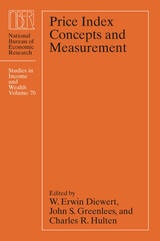
Price Index Concepts and Measurement
Edited by W. Erwin Diewert, John Greenlees, and Charles R. Hulten
University of Chicago Press, 2009
Although inflation is much feared for its negative effects on the economy, how to measure it is a matter of considerable debate that has important implications for interest rates, monetary supply, and investment and spending decisions. Underlying many of these issues is the concept of the Cost-of-Living Index (COLI) and its controversial role as the methodological foundation for the Consumer Price Index (CPI).
Price Index Concepts and Measurements brings together leading experts to address the many questions involved in conceptualizing and measuring inflation. They evaluate the accuracy of COLI, a Cost-of-Goods Index, and a variety of other methodological frameworks as the bases for consumer price construction.

Radio Frequency and Microwave Power Measurement
Alan E. Fantom
The Institution of Engineering and Technology, 1990
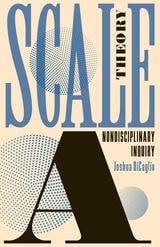
Scale Theory
A Nondisciplinary InquiryJoshua DiCaglio
University of Minnesota Press, 2021
A pioneering call for a new understanding of scale across the humanities
How is it possible that you are—simultaneously—cells, atoms, a body, quarks, a component in an ecological network, a moment in the thermodynamic dispersal of the sun, and an element in the gravitational whirl of galaxies? In this way, we routinely transform reality into things already outside of direct human experience, things we hardly comprehend even as we speak of DNA, climate effects, toxic molecules, and viruses. How do we find ourselves with these disorienting layers of scale? Enter Scale Theory, which provides a foundational theory of scale that explains how scale works, the parameters of scalar thinking, and how scale refigures reality—that teaches us how to think in terms of scale, no matter where our interests may lie.
Joshua DiCaglio takes us on a fascinating journey through six thought experiments that provide clarifying yet provocative definitions for scale and new ways of thinking about classic concepts ranging from unity to identity. Because our worldviews and philosophies are largely built on nonscalar experience, he then takes us slowly through the ways scale challenges and reconfigures objects, subjects, and relations.
Scale Theory is, in a sense, nondisciplinary—weaving together a dizzying array of sciences (from nanoscience to ecology) with discussions from the humanities (from philosophy to rhetoric). In the process, a curious pattern emerges: attempts to face the significance of scale inevitably enter terrain closer to mysticism than science. Rather than dismiss this connection, DiCaglio examines the reasons for it, redefining mysticism in terms of scale and integrating contemplative philosophies into the discussion. The result is a powerful account of the implications and challenges of scale, attuned to the way scale transforms both reality and ourselves.

Sea Level
A HistoryWilko Graf von Hardenberg
University of Chicago Press, 2024
News reports warn of rising sea levels spurred by climate change. Waters inch ever higher, disrupting delicate ecosystems and threatening island and coastal communities. The baseline for these measurements—sea level—may seem unremarkable, a long-familiar zero point for altitude. But as Wilko Graf von Hardenberg reveals, the history of defining and measuring sea level is intertwined with national ambitions, commercial concerns, and shifting relationships between people and the ocean.
Sea Level provides a detailed and innovative account of how mean sea level was first defined, how it became the prime reference point for surveying and cartography, and how it emerged as a powerful mark of humanity’s impact on the earth. With Hardenberg as our guide, we traverse the muddy spaces of Venice and Amsterdam, the coasts of the Baltic Sea, the Panama and Suez canals, and the Himalayan foothills. Born out of Enlightenment studies of physics and quantification, sea level became key to state-sponsored public works, colonial expansion, Cold War development of satellite technologies, and recognizing the climate crisis. Mean sea level, Hardenberg reveals, is not a natural occurrence—it has always been contingent, the product of people, places, politics, and evolving technologies. As global warming transforms the globe, Hardenberg reminds us that a holistic understanding of the ocean and its changes requires a multiplicity of reference points.
A fascinating story that revises our assumptions about land and ocean alike, Sea Level calls for a more nuanced understanding of this baseline, one that allows for new methods and interpretations as we navigate an era of unstable seas.

Systems with Small Dissipation
V. B. Braginsky, V. P. Mitrofanov, and V. I. Panov
University of Chicago Press, 1985
This book, first published in Russian in 1981 and updated with new data for this English edition, is a treatise on the sources of dissipation and other defects in mechanical and electromagnetic oscillators and on practical techniques for minimizing such defects. Written by a team of researchers from Moscow State University who are leading experts in the field, the book is a virtual encyclopedia of theoretical formulas, experimental techniques, and practical lore derived from twenty-five years of experience. Intended for the experimenter who wishes to construct near-perfect instrumentation, the book provides information on everything from the role of phonon-phonon scattering as a fundamental source of dissipation to the effectiveness of a thin film of pork fat in reducing the friction between a support wire and a mechanically oscillating sapphire crystal.
The researchers that V. B. Braginsky has led since the mid-1960s are best known in the West for their contributions to the technology of gravitational-wave detection, their experimental search for quarks, their test of the equivalency principle, and their invention of new experimental techniques for high-precision measurement, including "quantum nondemolition movements." Here, for the first time, they provide a thorough overview of the practical knowledge and experimental methods that have earned them a worldwide reputation for ingenuity, talent, and successful technique.
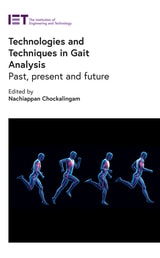
Technologies and Techniques in Gait Analysis
Past, present and futureNachiappan Chockalingam
The Institution of Engineering and Technology, 2022
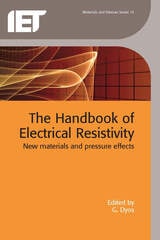
The Handbook of Electrical Resistivity
New materials and pressure effectsGordon Dyos
The Institution of Engineering and Technology, 2012

The Institutional Revolution
Measurement and the Economic Emergence of the Modern WorldDouglas W. Allen
University of Chicago Press, 2011
Few events in the history of humanity rival the Industrial Revolution. Following its onset in eighteenth-century Britain, sweeping changes in agriculture, manufacturing, transportation, and technology began to gain unstoppable momentum throughout Europe, North America, and eventually much of the world—with profound effects on socioeconomic and cultural conditions.
The Making of Measure and the Promise of Sameness
Emanuele Lugli
University of Chicago Press, 2019
Measurement is all around us—from the circumference of a pizza to the square footage of an apartment, from the length of a newborn baby to the number of miles between neighboring towns. Whether inches or miles, centimeters or kilometers, measures of distance stand at the very foundation of everything we do, so much so that we take them for granted. Yet, this has not always been the case.
This book reaches back to medieval Italy to speak of a time when measurements were displayed in the open, showing how such a deceptively simple innovation triggered a chain of cultural transformations whose consequences are visible today on a global scale. Drawing from literary works and frescoes, architectural surveys, and legal compilations, Emanuele Lugli offers a history of material practices widely overlooked by historians. He argues that the public display of measurements in Italy’s newly formed city republics not only laid the foundation for now centuries-old practices of making, but also helped to legitimize local governments and shore up church power, buttressing fantasies of exactitude and certainty that linger to this day.
This ambitious, truly interdisciplinary book explains how measurements, rather than being mere descriptors of the real, themselves work as powerful molds of ideas, affecting our notions of what we consider similar, accurate, and truthful.
The Measure of Economies
Measuring Productivity in an Age of Technological ChangeEdited by Marshall B. Reinsdorf and Louise Sheiner
University of Chicago Press, 2024
Innovative new approaches for improving GDP measurement to better gauge economic productivity.
Official measures of gross domestic product (GDP) indicate that productivity growth has declined in the United States over the last two decades. This has led to calls for policy changes from pro-business tax reform to stronger antitrust measures. But are our twentieth-century economic methods actually measuring our twenty-first-century productivity?
The Measure of Economies offers a synthesis of the state of knowledge in productivity measurement at a time when many question the accuracy and scope of GDP. With chapters authored by leading economic experts on topics such as the digital economy, health care, and the environment, it highlights the inadequacies of current practices and discusses cutting-edge alternatives.
Pragmatic and forward-facing, The Measure of Economies is an essential resource not only for social scientists, but also for policymakers and business leaders seeking to understand the complexities of economic growth in a time of rapidly evolving technology.
The Measurement of Capital
Edited by Dan Usher
University of Chicago Press, 1980
The Measurement of Durable Goods Prices
Robert J. Gordon
University of Chicago Press, 1990
Robert J. Gordon has written the first full-scale work to treat the extent of quality changes over the entire range of durable goods, from autos to aircraft, computers to compressors, from televisions to tractors. He combines and extends existing methods of measurement, drawing data from industry sources, Consumer Reports, and the venerable Sears catalog.
Beyond his important finding that the American economy is more sound than officially recognized, Gordon provides a wealth of anecdotes tracing the postwar history of technological progress. Bolstering his argument that improved quality must be accurately measured, Gordon notes, for example, that today's mid-range personal computers outperform the multimillion-dollar mainframes of the 1970s. This remarkable book will be essential reading for economists and those in the business community.
The Measurement of Labor Cost
Edited by Jack E. Triplett
University of Chicago Press, 1983
An introductory essay by the editor provides a useful guide to current thought in the analysis of labor cost. Other papers give new insights into problems encountered in accounting for the nonwage elements of labor compensation, the effect of pensions and other benefits, and the wage-measurement questions raised by incomes policies. In addition, there is a wealth of valuable new data on labor costs in the United States.
Labor economists, statisticians, econometric modelers, and advisers to government and industry will welcome this up-to-date and comprehensive treatment of the costs of production.

The Measurement of Meaning
Charles E. Osgood, George J. Suci, and Percy H. Tannenbaum
University of Illinois Press, 1957
deal with the nature and theory of meaning and present a new, objective
method for its measurement which they call the semantic differential.
This instrument is not a specific test, but rather a general technique of
measurement that can be adapted to a wide variety of problems in such areas
as clinical psychology, social psychology, linguistics, mass communications,
esthetics, and political science. The core of the book is the authors' description,
application, and evaluation of this important tool and its far-reaching
implications for empirical research.
The Measurement of Modernism
A Study of Values in Brazil and MexicoBy Joseph A. Kahl
University of Texas Press, 1968
One of the most interesting questions that can be raised about the twentieth century world concerns the degree to which industrialization created a common culture for all peoples. Reported here are the results of an empirical investigation designed to produce instruments to measure those personal values that have been central variables in the theory of modernization of societies.
The purpose of Joseph Kahl’s research is primarily methodological: to advance the description and measurement of those value orientations used by men to organize their occupational careers. It seeks to delineate and measure a set of values that represents a “modern” view of work and life.
The working laboratory was Brazil and Mexico, two countries undergoing rapid industrialization. More than six hundred men in Brazil and more than seven hundred in Mexico responded to questionnaires. In addition, over twenty-five men in each country were asked to sit beside a tape recorder and talk freely of their worldviews. The respondents were divided between inhabitants of the cities of Rio de Janeiro and Mexico City and those who lived in provincial towns of fewer than ten thousand inhabitants. The samples included manual and nonmanual employees.
The results showed that the main variable predicting whether or not a man would tend toward modernism was his social-class position. Middle-class men were much more modern in outlook than working-class men. Residence in a metropolis rather than in a small town also increased modernism, though to a lesser extent. Differences between Brazil and Mexico (and, indeed, the United States) were found to be surprisingly small, of considerably less weight than position in the social structure in predicting value orientations.
The author addresses himself primarily to sociologists and their students who are themselves studying aspects of socio-economic development. His findings, however, cannot fail to be of interest and benefit to social scientists of various disciplines and to all who are concerned with the process of development—planners at the national and local levels, demographers, and businesspeople.
The Measurement of Saving, Investment, and Wealth
Edited by Robert E. Lipsey and Helen Stone Tice
University of Chicago Press, 1989
Contributors to this volume investigate ways to improve aggregate and sectoral saving and investment estimates and analyze microdata from recent household wealth surveys. They provide analyses of National Income and Product Account (NIPA) and Flow-of-Funds measures and of saving and survey-based wealth estimates. Conceptual and methodological questions are discussed regarding long-term trends in the U.S. wealth inequality, age-wealth profiles, pensions and wealth distribution, and biases in inferences about life-cycle changes in saving and wealth. Some new assessments are offered for investment in human and nonhuman capital, the government contribution to national wealth, NIPA personal and corporate saving, and banking imputation.

The Measurement of Urban Home Environment
Validation and Standardization of the Minnesota Home Status IndexAlice Leahy
University of Minnesota Press, 1936
Ultrawideband Radar Measurements
Analysis and processingL.Y. Astanin
The Institution of Engineering and Technology, 1997