Results by title
26 books match the query 'Media & the Law'
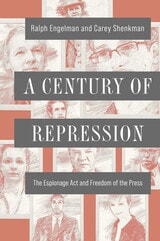
A Century of Repression
The Espionage Act and Freedom of the PressRalph Engelman and Carey Shenkman
University of Illinois Press, 2022
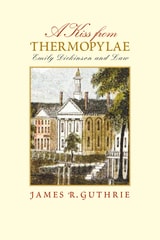
A Kiss from Thermopylae
Emily Dickinson and LawJames R. Guthrie
University of Massachusetts Press, 2015
Yet Dickinson was also capable of criticizing, even satirizing, law and lawyers. Her poetic personae inhabit various legal roles including those of jurymen, judges, and attorneys, and some poems simulate courtroom contests pitting the rights of individuals against the power of the state. She was keenly interested in legal matters pertaining to women, such as breach of promise, dower, and trusts. With her tone ranging from subservient to domineering, from reverential to ridiculing, Dickinson's writings reflect an abiding concern with philosophic and political principles underpinning the law, as well as an identification with the plight of individuals who dared confront authority.
A Kiss from Thermopylae reveals a new dimension of Dickinson's writing and thinking, one indicating that she was thoroughly familiar with the legal community's idiomatic language, actively engaged with contemporary political and ethical questions, and skilled at deploying a poetic register ranging from high romanticism to low humor.
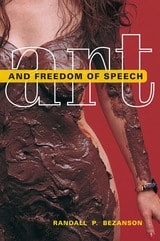
Art and Freedom of Speech
Randall P. Bezanson
University of Illinois Press, 2009
This book analyzes the broad range of Supreme Court cases that concern the protection of art and free speech under the First Amendment. Finding that debates about free expression (whether in speech or art) swirl around sex and cultural blasphemy, Randall P. Bezanson tracks and interprets the Court's decisions on film, nude dancing, music, painting, and other visual expressions.
Showing how the Court has dealt with judgments of art, quality, meaning, and how to distinguish types of speech and expression, Bezanson explores issues as diverse as homosexuality in the Boy Scouts, gay and lesbian parade floats, 2 Live Crew's alleged copyright infringement, National Endowment for the Arts grants and diversity, dangerous art, and screenings of the film Carnal Knowledge. In considering the transformative meaning of art, the importance of community judgments, and the definition of speech in Court rulings, Bezanson focuses on the fundamental questions underlying the discussion of art as protected free speech: What are the boundaries of art? What are the limits on the government's role as supporter and "patron" of the arts? And what role, if any, may core social values of decency, respect, and equality play in limiting the production or distribution of art?
Accessibly written and evocatively argued, Art and Freedom of Speech explores these questions and concludes with the argument that, for legal purposes, art should be absolutely free under the First Amendment--in fact, even more free than other forms of speech.
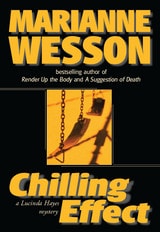
Chilling Effect
A Lucinda Hayes MysteryMarianne Wesson
University Press of Colorado, 2004
When attorney Lucinda Hayes reluctantly agrees to represent the mother of a brutally slain child, she must convince the court that the makers of a pornographic film are liable for the murder. As the case unfolds, Lucinda calls upon all her personal strength and legal talent, facing down her own ghosts as well as the powerful entertainment industry's star lawyers.
In Chilling Effect, Wesson affirms the power of free speech to inspire the best and the worst human behavior and explores the tension between freedom and accountability
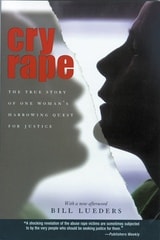
Cry Rape
The True Story of One Woman's Harrowing Quest for JusticeBill Lueders
University of Wisconsin Press, 2007
Other books have dealt with how police and prosecutors bend and break the law in their zeal to prevail. This one focuses instead on how the gravest injustice can be committed with the best of intentions, and how one woman’s bravery and persistence finally triumphed.
Democracy, Inc.
The Press and Law in the Corporate Rationalization of the Public SphereDavid S. Allen
University of Illinois Press, 2005
Allen utilizes historical, philosophical, sociological, and legal sources to trace America's gradual embrace of corporate values. He argues that such values, including winning, efficiency, and profitability actually limit democratic involvement by devaluing discursive principles, creating an informed yet inactive public. Through an examination of professionalization in both the press and the law, corporate free speech rights, and free speech as property, Democracy, Inc. demonstrates that today's democracy is more about trying to control and manage citizens than giving them the freedom to participate. Allen not only calls on institutions to reform the way they understand and promote citizenship but also asks citizens to adopt a new ethic of public discourse that values understanding rather than winning.
Engines of Anxiety
Academic Rankings, Reputation, and Accountabilityespeland
Russell Sage Foundation, 2016
Students and the public routinely consult various published college rankings to assess the quality of colleges and universities and easily compare different schools. However, many institutions have responded to the rankings in ways that benefit neither the schools nor their students. In Engines of Anxiety, sociologists Wendy Espeland and Michael Sauder delve deep into the mechanisms of law school rankings, which have become a top priority within legal education. Based on a wealth of observational data and over 200 in-depth interviews with law students, university deans, and other administrators, they show how the scramble for high rankings has affected the missions and practices of many law schools.
Engines of Anxiety tracks how rankings, such as those published annually by the U.S. News & World Report, permeate every aspect of legal education, beginning with the admissions process. The authors find that prospective law students not only rely heavily on such rankings to evaluate school quality, but also internalize rankings as expressions of their own abilities and flaws. For example, they often view rejections from “first-tier” schools as a sign of personal failure. The rankings also affect the decisions of admissions officers, who try to balance admitting diverse classes with preserving the school’s ranking, which is dependent on factors such as the median LSAT score of the entering class. Espeland and Sauder find that law schools face pressure to admit applicants with high test scores over lower-scoring candidates who possess other favorable credentials.
Engines of Anxiety also reveals how rankings have influenced law schools’ career service departments. Because graduates’ job placements play a major role in the rankings, many institutions have shifted their career-services resources toward tracking placements, and away from counseling and network-building. In turn, law firms regularly use school rankings to recruit and screen job candidates, perpetuating a cycle in which highly ranked schools enjoy increasing prestige. As a result, the rankings create and reinforce a rigid hierarchy that penalizes lower-tier schools that do not conform to the restrictive standards used in the rankings. The authors show that as law schools compete to improve their rankings, their programs become more homogenized and less accessible to non-traditional students.
The ranking system is considered a valuable resource for learning about more than 200 law schools. Yet, Engines of Anxiety shows that the drive to increase a school’s rankings has negative consequences for students, educators, and administrators and has implications for all educational programs that are quantified in similar ways.
Errors, Lies, and Libel
Peter E. Kane. Foreword by Elmer Gertz
Southern Illinois University Press, 1992
Peter E. Kane takes a critical look at the development of the present law through a discussion of seventeen landmark libel cases.
One of the many points Kane clarifies is the important distinction between an error and a lie when judging whether someone is guilty of libel. For example, in the series of events that led to Goldwater vs. Ginzburg, Ralph Ginzburg, publisher of fact magazine, compiled and printed in fact a montage of quotes he had collected from psychiatrists about Barry Goldwater. It took five years of legal sparring for the courts to conclude that Ginzburg had deliberately published a malicious and irresponsible document and to rule in favor of Goldwater. Kane closes with a discussion of current thinking on possible libel reform.
Game Faces
Sport Celebrity and the Laws of ReputationSarah K. Fields
University of Illinois Press, 2016
How Machines Came to Speak
Media Technologies and Freedom of SpeechJennifer Petersen
Duke University Press, 2022
Imagining Legality
Where Law Meets Popular CultureAustin Sarat
University of Alabama Press, 2011
Imagining Legality argues that images of law suggested by television and film are as numerous as they are various, and that they give rise to a potent and pervasive imaginative life of the law. The media’s projections of the legal system remind us not only of the way law lives in our imagination but also of the contingencies of our own legal and social arrangements.
Contributors to Imagining Legality are less interested in the accuracy of the portrayals of law in film and television than in exploring the conditions of law’s representation, circulation, and consumption in those media. In the same way that legal scholars have taken on the disciplinary perspectives of history, economics, sociology, anthropology, and psychology in relation to the law, these writers bring historical, sociological, and cultural analysis, as well as legal theory, to aid in the understanding of law and popular culture.
In Sullivan's Shadow
The Use and Abuse of Libel Law during the Long Civil Rights StruggleAimee Edmondson
University of Massachusetts Press, 2019
Drawing on archival research and scholarship in journalism, legal history, and African American studies, Edmondson offers a new narrative of brave activists, bold journalists and publishers, and hardheaded southern officials. These little-known courtroom dramas at the intersection of race, libel, and journalism go beyond the activism of the 1960s and span much of the country's history, beginning with lawsuits filed against abolitionist William Lloyd Garrison and concluding with a suit spawned by the 1988 film Mississippi Burning.
Law and Order
Images, Meanings, MythsValverde, Mariana
Rutgers University Press, 2006
But with television courtrooms appearing more like the studio of The Jerry Springer Show than institutions of justice, and with weekly dramas seamlessly blending cutting-edge forensic science with exaggerated fictions, it calls to question: just what is it about these shows that has the public so captivated? And, what effects do the images of crime and order presented through the media have on society's view of the actual legal and criminal justice systems?
In Law and Order: Images, Meanings, Myths, Mariana Valverde draws on examples from film, television, and newspapers to examine these questions and to demonstrate how popular culture is creating an unrealistic view of crime and crime control. Valverde argues that understanding the impact of media representations of courtrooms, police departments, prisons, and the people who populate them is essential to comprehending the reality of criminal justice.
Introducing a wealth of resources in social and cultural studies along with suggestions for classroom discussions and assignments, this book pushes the field of criminology in new and exciting theoretical directions. It is essential reading for students and scholars of criminal justice and law.
Legal Stories
Narrative-Based Property Development in the Modern Copyright EraGregory Steirer
University of Michigan Press, 2024
Steirer’s expansive view of intellectual property law encompasses not only statutes and judicial opinions, but also the everyday practices and productions of authors, editors, fans, and other legal laypersons. The result is a history of the law as improvisatory and accident-prone, taking place as often outside the courtroom as inside, and shaped as much by laypersons as lawyers. Through the examination of influential legal disputes involving early properties such as Dashiell Hammett’s Sam Spade, H. P. Lovecraft’s Cthulhu Mythos, and Robert E. Howard’s Conan the Barbarian, Steirer provides a ground’s eye view of how copyright law has operated and evolved in practice.
Lowering the Bar
Lawyer Jokes and Legal CultureMarc Galanter
University of Wisconsin Press, 2006
Media Freedom and Pluralism
Media Policy Challenges in the Enlarged EuropeBeata Klimkiewicz
Central European University Press, 2010

Media Pluralism and Online News
The Consequences of Automated Curation for SocietyTim Dwyer and Derek Wilding
Intellect Books, 2023
In the transition to a media landscape increasingly dominated by broadband internet distribution and the dominance of US-centric new media behemoths Google, Facebook, Apple, Amazon, and Netflix, Media Pluralism and Online News investigates measures that can be taken to reduce this ongoing march of concentration and the attenuation of media voices. The authors argue that there is an urgent need for revitalized thinking for a media policy agenda to deal with the trend of concentrated media power, which is an ongoing global risk to public interest journalism. Securing the public interest in a vibrant and sustainable news media sector will require that merger decisions assess whether there is a reduction in diversity, calling for a new public interest test and a more expansive policy focus than in the past.
More Speech, Not Less
Communications Law in the Information AgeMark Sableman. Foreword by Paul Simon
Southern Illinois University Press, 1997
On a daily basis we are confronted with "more speech, not less"—more news reports, more television channels, more publications, more electronic communications. Communications laws have expanded in response to the proliferation of communications, and these laws affect everyone.
Communications lawyer Mark Sableman uses recent case studies, practical examples, and plain language to describe and analyze the broad spectrum of modern communications laws and policies. In these essays, Sableman helps communications professionals as well as informed citizens understand the law.
The constitutional foundation for the information age is settled: radical solutions on either side have been rejected. Neither First Amendment absolutism nor untrammeled content-based censorship will rule in America. But within the remaining middle area, many key policy choices are being made by courts and policy makers. Intricate webs of legal do’s and don’ts, practical pitfalls, and effective safe harbors are being developed across the broad spectrum of communications law.
In this guide to existing law, developing trends, and critical policy determinations, Sableman discusses privacy, Internet communications and policy, censorship, libel and slander, copyright and intellectual property, advertising, broadcasting, and journalistic confidentiality. Through actual cases and practical examples, he examines and explains both the existing rules for communications professionals and the developing policies that deserve the attention and scrutiny of informed citizens. Sableman approaches these subjects as a practicing lawyer experienced in both business and media communications.
The phrase "more speech, not less" describes not only the growing cacophony of the information age, but also one approach to legal policy—Justice Louis D. Brandeis’s preference for "more speech, not enforced silence" in all but the most extreme situations. Drawing from his strong advocacy of free speech, Sableman hopes to stimulate informed debate among all who are concerned about the power of information and the magic of words and images.

Murder, Courts, and the Press
Issues in Free Press/Fair TrialPeter E. Kane. Foreword by Franklyn S. Haiman
Southern Illinois University Press, 1992
When murder is the crime, the clash in the courts is likely to be between two constitutionally enshrined rights—freedom of speech and the right to a fair trial.
Peter E. Kane shows what happened in seven famous court cases when First Amendment rights (concerning freedom of speech) conflicted with Sixth Amendment rights (concerning fair trial). He reports the circumstances of each crime, the court proceedings, and the conduct of the press in the trials of Sam Sheppard, Charles Manson and his followers, John Paul Stevenson, Claus von Bülow, and Arthur Shawcross and the cases involving the Kellie family and the Wayne Clapp murders. Kane’s narrative and analytical approach illuminates legal principles and shows the roles of actual human beings underlying the abstractions of court opinions.
In this revised and expanded edition, Kane considers two new topics stemming from recent court cases: cameras in the courtroom and a code of ethics for crime reporting. Kane explores the issue of cameras through the famous Claus von Bülow retrial, which featured live television broadcasts; regarding a journalistic code, Kane examines the massive pretrial reporting of the serial murders of Arthur Shawcross. Kane notes that sensational crime stories serve the interests of many people: the public wants to read them; journalists want to write them because they can make a reporter’s fortune and reputation; and editors and publishers want to sell papers. The sensational crime story serves everyone’s purpose except that of the accused.
In addition to exploring journalistic ethics and the proper procedures for trial judges in guaranteeing a fair trial, these cases also provide an introduction to the operation of the courts in criminal justice. "The trial court is the arena in which the conflicts between a free press and a fair trial are played out," Kane writes. "This play is described here as are the subsequent evaluations of that play by the appellate courts. Thus the legal process is considered from its beginning with the original crime to the final resolution of the case in the United States Supreme Court."
Obscenity and the Limits of Liberalism
Edited by Loren Glass and Charles Francis Williams
The Ohio State University Press, 2011
Over the course of the nineteenth century in both Europe and the United States, the state usurped the traditional authority of the church in regulating sexual expression and behavior. In the same century philosophers of classical liberalism identified that state function as a threat to individual liberty. Since then, liberalism has provided the framework for debates over obscenity around the globe.
Pressing the Police and Policing the Press
The History and Law of the U.S. Press-Police RelationshipScott Memmel
University of Missouri Press, 2024
What transpired during this troubled time cast a bright light on the contemporary relationship between the press and police in the United States. The relationship between these two fundamental institutions is, however, a long and complicated one, dating back to colonial British North America. In the mid-19th century, (1830s–1850s) both the press and the police began to take their modern forms, and since then have continued to develop, routinely interacting with each other as journalists and police officers often found themselves responding to the same crimes and events. At times, members of both institutions managed to co-exist or even cooperate and made efforts to help one another, while at other times they butted heads to the point of conflict, the professional boundaries between journalists and police officers seemingly blurred.
As both the press and the police have fallen under deep scrutiny in more modern times, the present moment marks what is, perhaps, an opportune time to focus on the political, economic, social, and technological problems they face. In “Pressing the Police and Policing the Press,” Scott Memmel offers the first book-length study of the history and legal landscape of the press-police relationship. Each chapter focuses on interactions between the press and the police during a particular era, introducing relevant societal context and how both institutions evolved and responded to that context. Memmel concludes his study with recommendations on how, going forward, the press and the police might work together to tackle some of the similar issues they face and better serve the public.
Regulating Digital Media in Africa
Politics, Law and GovernanceEdited by Vincent Obia, Sulayman Bah, Yemisi Akinbobola, and Oliver Carter
Intellect Books, 2026
As one of the few books focused exclusively on the governance of new media across the African continent, Regulating Digital Media in Africa offers a timely and critical engagement with the legal and policy frameworks shaping broadcasting, social media, and the broader digital ecosystem. Drawing on in-depth case studies from African scholars who cover a wide range of African countries and political systems and interviews with professionals involved in shaping or contesting regulatory outcomes, the book reveals key trends, contradictions, and policy dilemmas in new media regulation. It highlights how governments are responding to challenges such as internet shutdowns, online harms, data governance, and digital legislation.
This book provides a strong conceptual and empirical foundation for scholars, policymakers, and practitioners interested in digital governance in Africa. With its Global South perspective, it offers valuable contributions to broader debates on media regulation, sovereignty, and internet governance.
Speech Rights in America
The First Amendment, Democracy, and the MediaLaura Stein
University of Illinois Press, 2005
The First Amendment is the principle guarantor of speech rights in the United States. But the Supreme Court's interpretations of it often privilege the interests of media owners over those of the broader citizenry.
Laura Stein argues that such rulings alienate citizens from their rights, corrupt the essential workings of democracy, and prevent the First Amendment from performing its critical role as a protector of free speech. Drawing on the best of the liberal democratic tradition, Stein demonstrates that there is a significant gap between First Amendment law and the speech rights necessary to democratic communication, and proposes an alternative set of principles to guide future judicial, legislative, and cultural policy on old and new media.
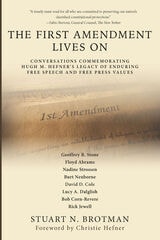
The First Amendment Lives On
Conversations Commemorating Hugh M. Hefner's Legacy of Enduring Free Speech and Free Press ValuesStuart N. Brotman
University of Missouri Press, 2022
Hugh M. Hefner’s legacy of enduring free speech and free press values is embodied in the Hugh M. Hefner First Amendment Awards, established in 1979, which honor leading First Amendment scholars and advocates. Hefner also had a lifelong interest in film censorship issues and supported teaching about them at the University of Southern California for 20 years. His deep commitment to these values was confirmed when the author was granted unrestricted access to over 3,000 personal scrapbooks, which Hefner had kept in order to track free speech and press issues during his lifetime.
The format of the book is an homage to the in-depth conversational interviews Hefner pioneered as the editor and publisher of Playboy magazine. Stuart Brotman conducted in-person conversations with eight persons who in their lifetimes have come to represent a “greatest generation” of free speech and free press scholars and advocates. Notably, these conversations include:
Geoffrey R. Stone
Floyd Abrams
Nadine Strossen
Burt Neuborne
David D. Cole
Lucy A. Dalglish
Bob Corn-Revere
Rick Jewell
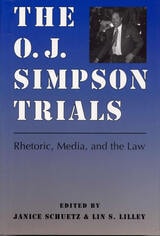
The O. J. Simpson Trials
Rhetoric, Media, and the LawEdited by Janice Schuetz and Lin S. Lilley
Southern Illinois University Press, 1999
The O. J. Simpson case captured the attention of the public like no other event in media history, and the Simpson criminal trial is arguably the most notable example of the media's ability to transform litigation. This collection of original essays provides a critical analysis of the Simpson criminal and civil trials. Edited by communications professor Janice Schuetz and professional trial consultant Lin S. Lilley, the book focuses on telelitigation, the media's transformation of sensational trials, with celebrity defendants and victims, into telemediated forms.
The contributors—Ann Burnett, Patricia M. Ganer, Ann M. Gill, Diane Furno-Lamude, Lin S. Lilley, and Janice Schuetz—describe media spectacles, analyze the opening statements of trial attorneys in both cases, investigate the testimony of Mark Fuhrman in the criminal trial and O. J. Simpson in the civil trial, analyze the summations of trial attorneys in both cases, look at the processes of jury decision making, and identify the unique legal and social outcomes of the trials.
The discussions focus on five "hot button" legal issues sparked by the Simpson trials: the perceived unfairness of the jury system; unprecedented calls for jury reform in both civil and criminal arenas; the fairness issues of jury nullification, wherein a jury disregards the law in a criminal case in favor of leniency; wealth and the question of "buying" justice; and ethical questions about the ways the Simpson trials were conducted, in particular the ways in which Simpson attorney Johnnie Cochran and the "Dream Team" repeatedly nudged and occasionally crossed the ethical line.
Trial Films on Trial
Law, Justice, and Popular CultureEdited by Austin Sarat, Jessica Silbey, and Martha Merrill Umphrey
University of Alabama Press, 2019
Historically, the emergence of the trial film genre coincided with the development of motion pictures. In fact, one of the very first feature-length films, Falsely Accused!, released in 1908, was a courtroom drama. Since then, this niche genre has produced such critically acclaimed films as Twelve Angry Men, To Kill a Mockingbird, and Anatomy of a Murder. The popularity and success of these films can be attributed to the fundamental similarities of filmic narratives and trial proceedings. Both seek to construct a “reality” through storytelling and representation and in so doing persuade the audience or jury to believe what they see.
Trial Films on Trial: Law, Justice, and Popular Culture is the first book to focus exclusively on the special significance of trial films for both film and legal studies. The contributors to this volume offer a contemporary approach to the trial film genre. Despite the fact that the medium of film is one of the most pervasive means by which many citizens receive come to know the justice system, these trial films are rarely analyzed and critiqued. The chapters cover a variety of topics, such as how and why film audiences adopt the role of the jury, the narrative and visual conventions employed by directors, and the ways mid-to-late-twentieth-century trial films offered insights into the events of that period.