Results by title
237 books match the query 'Medicine' and 18 start with a
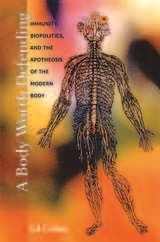
A Body Worth Defending
Immunity, Biopolitics, and the Apotheosis of the Modern BodyEd Cohen
Duke University Press, 2009
Inspired by Michel Foucault’s writings about biopolitics and biopower, Cohen traces the migration of immunity from politics and law into the domains of medicine and science. Offering a genealogy of the concept, he illuminates a complex of thinking about modern bodies that percolates through European political, legal, philosophical, economic, governmental, scientific, and medical discourses from the mid-seventeenth century through the twentieth. He shows that by the late nineteenth century, “the body” literally incarnates modern notions of personhood. In this lively cultural rumination, Cohen argues that by embracing the idea of immunity-as-defense so exclusively, biomedicine naturalizes the individual as the privileged focus for identifying and treating illness, thereby devaluing or obscuring approaches to healing situated within communities or collectives.
A Catechism for Health Care
Insights from Catholic Teaching on Human Life, Medical Ethics, and Love of NeighborStephen Napier
Catholic University of America Press, 2024
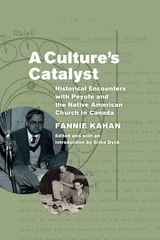
A Culture's Catalyst
Historical Encounters with Peyote and the Native American Church in CanadaFannie Kahan
University of Manitoba Press, 2016
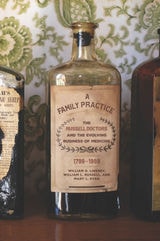
A Family Practice
The Russell Doctors and the Evolving Business of Medicine, 1799-1989William D. Lindsey
University of Arkansas Press, 2020
The authors take a wide-ranging look at the meaning of intergenerational vocations and the role of family, the economy, and social issues on the evolution of medical education and practice in the United States.
A Guide to Performing Systematic Reviews of Health and Disease
Kurinchi Gurusamy
University College London, 2025
Systematic reviews are the foundation of evidence-based healthcare, shaping treatment decisions and public health policies. A Guide to Performing Systematic Reviews of Health and Disease is a practical, step-by-step resource designed to help students and health professionals conduct high-quality reviews with confidence, even without extensive statistical training. This guide walks readers through the entire review process using free, open-source software. Each chapter features clear learning objectives and integrated videos to support hands-on learning.
Written by leading expert Kurinchi Gurusamy, this book simplifies complex research methodologies, making systematic reviews more accessible to a broad audience. Whether you are a novice researcher or a healthcare professional seeking to refine your evidence-based practice, this guide provides the essential tools to critically synthesize medical research. With an emphasis on clarity and real-world application, A Guide to Performing Systematic Reviews of Health and Disease is an indispensable resource for anyone looking to contribute to the ever-evolving landscape of healthcare research.
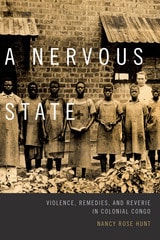
A Nervous State
Violence, Remedies, and Reverie in Colonial CongoNancy Rose Hunt
Duke University Press, 2016

A Right to Health
Medicine, Marginality, and Health Care Reform in Northeastern BrazilBy Jessica Scott Jerome
University of Texas Press, 2015
In 1988, a new health care system, the Sistema Único de Saúde (Unified Health Care System or SUS) was formally established in Brazil. The system was intended, among other goals, to provide universal access to health care services and to redefine health as a citizen’s right and a duty of the state. A Right to Health explores how these goals have unfolded within an urban peripheral community located on the edges of the northeastern city of Fortaleza. Focusing on the decade 1998–2008 and the impact of health care reforms on one low-income neighborhood, Jessica Jerome documents the tensions that arose between the ideals of the reforms and their entanglement with pervasive socioeconomic inequality, neoliberal economic policy, and generational tension with the community.
Using ethnographic and historical research, the book traces the history of political activism in the community, showing that, since the community’s formation in the early 1930s, residents have consistently fought for health care services. In so doing, Jerome develops a multilayered portrait of urban peripheral life and suggests that the notion of health care as a right of each citizen plays a major role not only in the way in which health care is allocated, but, perhaps more importantly, in how health care is understood and experienced.

A State of Health
New Jersey's Medical HeritageReeds, Karen
Rutgers University Press, 2002
Did you know that New Jersey spearheaded the discovery of antibiotics? Or that the Garden State had the first state hospital serving the mentally ill and the first community rescue squad? And did you know that close to a million people around the world can walk again, thanks to the New Jersey Knee?
New Jersey is a small state that has played a big role in the history of medicine. Adrenalin, streptomycin, pure milk, tranquilizers, malaria control, cortisone, vitamins, revelations of radium's dangers—New Jersey’s impressive contributions to American health have been on display in a major traveling exhibition, “A State of Health: New Jersey’s Medical Heritage.” By 2002, more than twelve sites throughout New Jersey and Philadelphia will have hosted this display.
This catalogue to the exhibition celebrates more than four centuries of New Jersey medicine through original essays and 150-plus striking illustrations of artifacts, manuscripts, books, photographs, works of art, and postcards. Taking subjects of perennial interest—epidemics, children’s health, public health, hospitals, and biomedical research—curator Karen Reeds explores the state’s rich medical heritage and its uniqueplace as the heart of the world’s pharmaceutical industry.
Engagingly written and handsomely produced, A State of Health: New Jersey’s
Medical Heritage is at once a lasting resource for students, teachers, and historians and the perfect gift to your favorite healthcare professional or local history buff.

ALA Guide To Medical & Health Science
American Library Association, 2011

Affirmative Action in Medicine
Improving Health Care for EveryoneJames L. Curtis, M.D.
University of Michigan Press, 2003
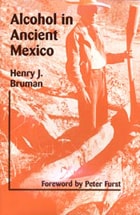
Alcohol in Ancient Mexico
Henry Bruman
University of Utah Press, 2000
Alcohol in Ancient Mexico reconstructs the variety and extent of distillation traditions in the ancient cultures of Mexico, describing in detail the various plants and processes used to make such beverages, their prevalence, and their significance for local culture.
The art of distillation arrived in Mexico with the Spaniards in the sixteenth century. However, well before that time, native skills and available resources had contributed to a well-developed tradition of intoxicating beverages, many of which are still produced and consumed.
In the 1930’s Henry Bruman visited various Mexican and Central American Indian tribes to reconstruct the variety and extent of these ancient traditions. He discerned five distinct areas defined by the culturally most significant beverages, all superimposed over the great mescal wine region. Within these five areas he noted wine made from cactus, cactus fruit, cornstalks, and mesquite pods; beer from sprouted maize; and fermented sap from pulque agaves.
Outside the mescal region he observed widespread consumption in the Yucatan of a wine made from fermented honey and balché bark, plus lesser-known beverages in other regions. He also observed the frequent inclusion in the fermentation process of alkaloid-bearing ingredients such as peyote and tobacco, plants whose roots or bark contain saponins—which act as cardiac poisons—and even poisons from certain toads.
Alcohol in Ancient Mexico also considers the relative absence of alcoholic drink in the southwestern United States, the introduction of sills following the Spanish conquest, and possible sources for the introduction of coconut wine.
Previously unpublished, the research presented here retains its relevance today, and the photographs offer a fascinating glimpse at a traditional world that has now almost vanished.
American Indian Medicine Ways
Spiritual Power, Prophets, and HealingEdited by Clifford E. Trafzer
University of Arizona Press, 2017
This groundbreaking collection provides fascinating stories of wisdom, spiritual power, and forces within tribal communities that have influenced the past and may influence the future. Through discussions of omens, prophecies, war, peace, ceremony, ritual, and cultural items such as masks, prayer sticks, sweat lodges, and peyote, this volume offers examples of the ways in which Native American beliefs in spirits have been and remain a fundamental aspect of history and culture. Drawing from written and oral sources, the book offers readers a greater understanding of creation narratives, oral histories, and songs that speak of healers, spirits, and power from tribes across the North American continent.
American Indian medicine ways and spiritual power remain vital today. With the help of spirits, people can heal the sick, protect communities from natural disasters, and mediate power of many kinds between the spiritual and corporeal worlds. As the contributors to this volume illustrate, healers are the connective cloth between the ancient past and the present, and their influence is significant for future generations.
CONTRIBUTORS
R. David Edmunds
Joseph B. Herring
Benjamin Jenkins
Troy R. Johnson
Michelle Lorimer
L. G. Moses
Richard D. Scheuerman
Al Logan Slagle
Clifford E. Trafzer

An American Obsession
Science, Medicine, and Homosexuality in Modern SocietyJennifer Terry
University of Chicago Press, 1999
Terry's overarching argument is compelling: that homosexuality served as a marker of the "abnormal" against which malleable, tenuous, and often contradictory concepts of the "normal" were defined. One of the few histories to take into consideration homosexuality in both women and men, Terry's work also stands out in its refusal to erase the agency of people classified as abnormal. She documents the myriad ways that gays, lesbians, and other sexual minorities have coauthored, resisted, and transformed the most powerful and authoritative modern truths about sex. Proposing this history as a "useable past," An American Obsession is an indispensable contribution to the study of American cultural history.
Ancestors and Antiretrovirals
The Biopolitics of HIV/AIDS in Post-Apartheid South AfricaClaire Laurier Decoteau
University of Chicago Press, 2013
In Ancestors and Antiretrovirals, Claire Laurier Decoteau backs up Tutu’s assertion with powerful arguments about how this came to pass. Decoteau traces the historical shifts in health policy after apartheid and describes their effects, detailing, in particular, the changing relationship between biomedical and indigenous health care, both at the national and the local level. Decoteau tells this story from the perspective of those living with and dying from AIDS in Johannesburg’s squatter camps. At the same time, she exposes the complex and often contradictory ways that the South African government has failed to balance the demands of neoliberal capital with the considerable health needs of its population.
Another Magic Mountain
Kibong'oto Hospital and African Tuberculosis, 1920–2000Christoph Gradmann
Ohio University Press, 2025
Kibong’oto Hospital, opened in 1926, is an East African tuberculosis treatment center located on the slopes of Mount Kilimanjaro. Its history is crucial to understanding tuberculosis in Tanzania and, more broadly, in Africa. With the hospital as a point of departure, Christoph Gradmann presents a history of this disease that engages with local and regional contexts rather than with international elite science and health policies.
The book addresses key questions about the African experience with tuberculosis:
- What did it mean to do clinical science on tuberculosis in colonial and postcolonial contexts?
- Along which trajectories did medical practice and research evolve in a place where international advances in medical science were sometimes heard of only faintly and where resources could be scarce?
- How did a large hospital with several hundred beds dedicated to the treatment of just one condition figure in the development of national and regional health systems?
- How did Kibong’oto Hospital, a pride of colonial health governance, transition after Tanzania gained independence?
- How did treating and researching tuberculosis change throughout the twentieth century in an African hospital dedicated to that condition?
- How did research at the hospital contribute to tuberculosis-control strategies on national and international levels?
The book is based on the hospital’s unique archive: its surviving library of thousands of case summaries. Since 1926, this library has documented an enormous number of patient lives, staff careers, diagnoses, treatments, clinical trials, and much more. For today’s readers, the library provides insight into a history of clinical medicine in Africa, for which very few comparable archives exist. Gradmann supplements this site-specific research with material from national and international archives, as well as interviews with former staff involved in that history. The book’s four chapters offer perspectives on colonial epidemiological research in the interwar years; on late colonial healthcare development plans and the arrival of modern drug therapies; on the role of a national tuberculosis hospital in a newly independent country; and on the history of tuberculosis control in an age of economic crisis, HIV, and emergent global health-treatment programs. Finally, Gradmann discusses what the history of a large hospital can add to today’s tuberculosis research, control policy, and historiography.
Anthony Cerami
A Life in Translational MedicineConrad Keating
Rutgers University Press, 2021

Appetite and Its Discontents
Science, Medicine, and the Urge to Eat, 1750-1950Elizabeth A. Williams
University of Chicago Press, 2020
Williams charts the history of inquiry into appetite between 1750 and 1950, as scientific and medical concepts of appetite shifted alongside developments in physiology, natural history, psychology, and ethology. She shows how, in the eighteenth century, trust in appetite was undermined when researchers who investigated ingestion and digestion began claiming that science alone could say which ways of eating were healthy and which were not. She goes on to trace nineteenth- and twentieth-century conflicts over the nature of appetite between mechanists and vitalists, experimentalists and bedside physicians, and localists and holists, illuminating struggles that have never been resolved. By exploring the core disciplines in investigations in appetite and eating, Williams reframes the way we think about food, nutrition, and the nature of health itself..

Appetites
Food and Sex in Post-Socialist ChinaJudith Farquhar
Duke University Press, 2002
From eating well in improving economic times to memories of the late 1950s famine, from the flavors of traditional Chinese medicine to modernity’s private sexual passions, this book argues that embodiment in all its forms must be invented and sustained in public reflections about personal and national life. As much at home in science studies and social theory as in the details of life in Beijing, this account uses anthropology, cultural studies, and literary criticism to read contemporary Chinese life in a materialist and reflexive mode. For both Maoist and market reform periods, this is a story of high culture in appetites, desire in collective life, and politics in the body and its dispositions.