Results by title
12 books match the query 'Medievalism'

Creole Medievalism
Colonial France and Joseph Bédier’s Middle AgesMichelle R. Warren
University of Minnesota Press, 2010
In Creole Medievalism, Michelle Warren demonstrates that Bédier's relationship to this multicultural and economically peripheral colony motivates his nationalism in complex ways. Simultaneously proud of his French heritage and nostalgic for the island, Bédier defends French sovereignty based on an ambivalent resistance to his creole culture. Warren shows that in the early twentieth century, influential intellectuals from Réunion helped define the new genre of the "colonial novel," adopting a pro-colonial spirit that shaped both medieval and Francophone studies. Probing the work of a once famous but little understood cultural figure, Creole Medievalism illustrates how postcolonial France and Réunion continue to grapple with histories too varied to meet expectations of national unity.
Drama, Play, and Game
English Festive Culture in the Medieval and Early Modern PeriodLawrence M. Clopper
University of Chicago Press, 2001
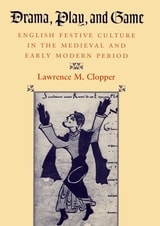
Drama, Play, and Game demonstrates that the theatrum repudiated by medieval clerics was not "theater" as we understand the term today. Clopper contends that critics have misrepresented Western stage history because they have assumed that theatrum designates a place where drama is performed. While theatrum was thought of as a site of spectacle during the Middle Ages, the term was more closely connected with immodest behavior and lurid forms of festive culture. Clerics were not opposed to liturgical representations in churches, but they strove ardently to suppress May games, ludi, festivals, and liturgical parodies. Medieval drama, then, stemmed from a more vernacular tradition than previously acknowledged-one developed by England's laity outside the boundaries of clerical rule.
Geographies of Philological Knowledge
Postcoloniality and the Transatlantic National EpicNadia R. Altschul
University of Chicago Press, 2012
Making the Past Present
David Jones, the Middle Ages and ModernismPaul Robichaud
Catholic University of America Press, 2007
Medieval Identity Machines
Jeffrey J. Cohen
University of Minnesota Press, 2003
A provocative new approach to medieval culture
In Medieval Identity Machines, Jeffrey J. Cohen examines the messiness, permeability, and perversity of medieval bodies, arguing that human identity always exceeds the limits of the flesh. Combining critical theory with a rigorous reading of medieval texts, Cohen asks if the category “human” isn’t too small to contain the multiplicity of identities. As such, this book is the first to argue for a “posthuman” Middle Ages and to make extensive use of the philosophical writings of Gilles Deleuze to rethink the medieval.
Among the topics that Cohen covers are the passionate bond between men and horses in chivalric training; the interrelation of demons, celibacy, and colonialism in an Anglo-Saxon saint’s life; Lancelot’s masochism as envisioned by Chrétien de Troyes; the voice of thunder echoing from Margery Kempe; and the fantasies that sustained some dominant conceptions of race. This tour of identity—in all its fragility and diffusion—illustrates the centrality of the Middle Ages to theory as it enhances our understanding of self, embodiment, and temporality in the medieval world.
Medievalism, Popular Culture and Politics in Metal Music
The Case of Hispanic Epic ThemesAmaranta Saguar García
Intellect Books, 2026
Challenging the common view of metal music as just a form of Western pop culture, this innovative book draws attention to medievalizing epicism, a distinctive strand within metal that evokes the medieval and the epic in both aesthetics and sensibility. While often shaped by fantasy literature, cinema, and more recently, video games, this fascination with the medieval has deeper roots in nationalist ideologies. Through a rich exploration of Spain and Portugal’s transitions after their period of authoritarian rule, this book reveals how medievalizing epicism plays a key role in shaping nationalist and ethnocentric discourses, fascist narratives, and official efforts to foster patriotic sentiment, and how metal bands confront these origins.
Drawing on an impressive breadth of scholarship and a deep knowledge of metal music culture, Amaranta Saguar García skillfully weaves together diverse reference points without losing focus or clarity. This book invites both scholars and music fans to reflect more broadly on how metal music imagines and reuses medieval heritage.
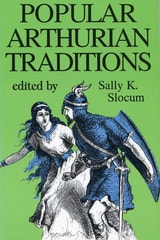
Popular Arthurian Traditions
Sally K. Slocum
University of Wisconsin Press, 1992
Silent Medievalisms
Reimagining the Middle Ages During Film’s Foundational EraEdited by Tison Pugh and Angela Jane Weisl
The Ohio State University Press, 2026
Contributors:
Kimberly Ball, Elizabeth Coggeshall, John Haines, Kevin J. Harty, Valerie B. Johnson, Tison Pugh, Sabina Rahman, Carol L. Robinson, Robert Squillace, Alexandra Sterling-Hellenbrand, Alfred Thomas, Laura E. Wangerin, Angela Jane Weisl
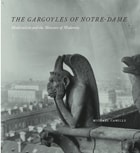
The Gargoyles of Notre-Dame
Medievalism and the Monsters of ModernityMichael Camille
University of Chicago Press, 2009
Michael Camille begins his long-awaited study by recounting architect Eugène Viollet-le-Duc’s ambitious restoration of the structure from 1843 to 1864, when the gargoyles were designed, sculpted by the little-known Victor Pyanet, and installed. These gargoyles, Camille contends, were not mere avatars of the Middle Ages, but rather fresh creations—symbolizing an imagined past—whose modernity lay precisely in their nostalgia. He goes on to map the critical reception and many-layered afterlives of these chimeras, notably in the works of such artists and writers as Charles Méryon, Victor Hugo, and photographer Henri Le Secq. Tracing their eventual evolution into icons of high kitsch, Camille ultimately locates the gargoyles’ place in the twentieth-century imagination, exploring interpretations by everyone from Winslow Homer to the Walt Disney Company.
Lavishly illustrated with more than three hundred images of its monumental yet whimsical subjects, The Gargoyles of Notre-Dame is a must-read for historians of art and architecture and anyone whose imagination has been sparked by the lovable monsters gazing out over Paris from one of the world’s most renowned vantage points.
The Premodern Condition
Medievalism and the Making of TheoryBruce Holsinger
University of Chicago Press, 2005
Holsinger shows that the preoccupation with medieval cultures and practices among Bataille, Derrida, Lacan, Barthes, Bourdieu, and their cohorts was so wide ranging that it merits recognition as one of the most significant epiphenomena of postwar French thought. Not simply an object of nostalgic longing or an occasional source of literary exempla, the medieval epoch was continually mined by these thinkers for specific philosophical vocabularies, social formations, and systems of thought.
To supplement its master thesis, The Premodern Condition also contains original essays by Bataille and Bourdieu—translated here for the first time into English—that testify in various ways to the strange persistence of medievalisms in French postwar avant-garde writings. What results is an important and original work that will be a touchstone for specialists in medieval studies and critical theory alike.
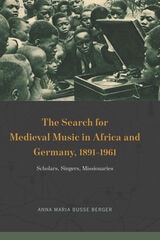
The Search for Medieval Music in Africa and Germany, 1891-1961
Scholars, Singers, MissionariesAnna Maria Busse Berger
University of Chicago Press, 2020
The book unfolds in three parts. Busse Berger starts with the origins of comparative musicology circa 1900, when early proponents used ideas from comparative linguistics to test whether parallels could be drawn between nonwestern and medieval European music. She then turns to youth movements of the era—the Wandervogel, Jugendmusikbewegung, and Singbewegung—whose focus on joint music making influenced many musicologists. Finally, she considers case studies of Protestant and Catholic mission societies in what is now Tanzania, where missionaries—many of them musicologists and former youth-group members—extended the discipline via ethnographic research and a focus on local music and communities. In highlighting these long-overlooked transnational connections and the role of global music in early musicology, Busse Berger shapes a fresh conception of music scholarship during a pivotal part of the twentieth century.
The Shock of Medievalism
Kathleen Biddick
Duke University Press, 1998
Biddick describes how the discipline of medieval studies was defined by a process of isolation and exclusion—a process that not only ignored significant political and cultural issues of the nineteenth century but also removed the period from the forces of history itself. Wanting to separate themselves from popular studies of medieval culture, and valuing their own studies as scientific, nineteenth-century academics created an exclusive discipline whose structure is consistently practiced today, despite the denials of most contemporary medieval scholars. Biddick supports her argument by discussing the unavowed melancholy that medieval Christians felt for Jews and by revealing the unintentional irony of nineteenth-century medievalists’ fabrication of sentimental objects of longing (such as the “gothic peasant”). The subsequent historical distortions of this century-old sentimentality, the relevance of worker dislocation during the industrial revolution, and other topics lead to a conclusion in which Biddick considers the impact of an array of factors on current medieval studies.
Simultaneously displacing disciplinary stereotypes and altering an angle of historical inquiry, The Shock of Medievalism challenges accepted thinking even as it produces a new direction for medieval studies. This book will provoke scholars in this field and appeal to readers who are interested in how historicizing processes can affect the development of academic disciplines.