Results by title
4 books match the query 'Metaphor in literature'
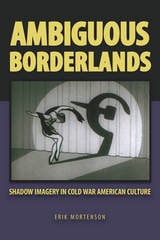
Ambiguous Borderlands
Shadow Imagery in Cold War American CultureErik Mortenson
Southern Illinois University Press, 2016
After contextualizing the postwar use of shadow imagery in the wake of the atomic bomb, Ambiguous Borderlands looks at shadows in print works, detailing the reemergence of the pulp fiction crime fighter the Shadow in the late-1950s writings of Sylvia Plath, Amiri Baraka, and Jack Kerouac. Using Freudian and Jungian conceptions of the unconscious, Mortenson then discusses Kerouac’s and Allen Ginsberg’s shared dream of a “shrouded stranger” and how it shaped their Beat aesthetic. Turning to the visual, Mortenson examines the dehumanizing effect of shadow imagery in the Cold War photography of Robert Frank, William Klein, and Ralph Eugene Meatyard. Mortenson concludes with an investigation of the use of chiaroscuro in 1950s film noir and the popular television series The Twilight Zone, further detailing how the complexities of Cold War society were mirrored across these media in the ubiquitous imagery of light and dark.
From comics to movies, Beats to bombs, Ambiguous Borderlands provides a novel understanding of the Cold War cultural context through its analysis of the image of the shadow in midcentury media. Its interdisciplinary approach, ambitious subject matter, and diverse theoretical framing make it essential reading for anyone interested in American literary and popular culture during the fifties and sixties.
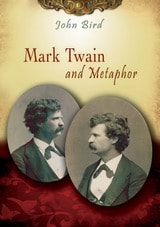
Mark Twain and Metaphor
John Bird
University of Missouri Press, 2007
Metaphor theory, observes John Bird, is like Mark Twain: both seem simple upon first introduction. Now, in the most complete study to date of Twain’s use of figurative language, a veteran Twain scholar tackles the core of his writing and explores it with theoretical approaches that have rarely been applied to Twain, providing new insights into how he imagined his world—and the singular ways in which he expressed himself.
From “The Jumping Frog” to the late dream narratives, Bird considers Twain’s metaphoric construction over his complete career and especially sheds new light on his central texts: Roughing It; The Adventures of Tom Sawyer; Adventures of Huckleberry Finn; A Connecticut Yankee in King Arthur’s Court; Pudd’nhead Wilson; and No. 44,The Mysterious Stranger. He reconsiders “Old Times on the Mississippi” as the most purely metaphorical of Twain’s writings, goes on to look at how Twain used metaphor and talked about it in a variety of works and genres, and even argues that Clemens’s pseudonym is not so much an alter ego as a metaphorized self.
By offering insight into how Twain handled figurative language during the composing process, Bird reveals not only hidden facets of his artistry but also new aspects of works that we think we know well—including some entirely new ideas regarding Huck Finn that draw on the recent discovery of the first half of the manuscript. In addition to dealing with issues currently central to Twain studies, such as race and gender, he also links metaphor to humor and dream theory to further illuminate topics central to his work.
More than a study of Twain’s language, the book delves into the psychological aspects of metaphor to reveal the writer’s attitudes and thoughts, showing how using metaphor as a guide to Twain reveals much about his composition process. Applying the insights of metaphor theorists such as Roman Jakobson and Colin M. Turbayne, Bird offers readers not only new insights into Twain but also an introduction to this interdisciplinary field.
In lively prose, Mark Twain and Metaphor provides a vital way to read Twain’s entire corpus, allowing readers to better appreciate his style, humor, and obsession with dreams. It opens new ground and makes old ground fresh again, offering ways to see and resee this essential American writer.
Notes on Vermin
Caroline Hovanec
University of Michigan Press, 2025
Notes on Vermin is an atlas of the literary vermin that appear in modern and contemporary literature, from Franz Kafka’s gigantic insect to Richard Wright’s city rats to Namwali Serpell’s storytelling mosquitoes. As parasites, trespassers, and collectives, vermin animals prove useful to writers who seek to represent life in the margins of power. Drawing on psychoanalysis, cultural studies, eco-Marxism, and biopolitics, this book explores four uses for literary vermin: as figures for the repressed thought, the uncommitted fugitive, the freeloading parasite, and the surplus life. In a series of short, accessible, interlinked essays, Notes on Vermin explores what animal pests can show us about our cultures, our environments, and ourselves.
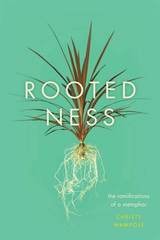
Rootedness
The Ramifications of a MetaphorChristy Wampole
University of Chicago Press, 2016
Wampole examines both the philosophical implications of this metaphor and its political evolution. From the root as home to the root as genealogical origin to the root as the past itself, rootedness has survived in part through its ability to subsume other compelling metaphors, such as the foundation, the source, and the seed. With a focus on this concept’s history in France and Germany, Wampole traces its influence in diverse areas such as the search for the mystical origins of words, land worship, and nationalist rhetoric, including the disturbing portrayal of the Jews as an unrooted, and thus unrighteous, people. Exploring the works of Martin Heidegger, Simone Weil, Jean-Paul Sartre, Paul Celan, and many more, Rootedness is a groundbreaking study of a figure of speech that has had wide-reaching—and at times dire—political and social consequences.