Results by title
6 books match the query 'Methods & Materials'
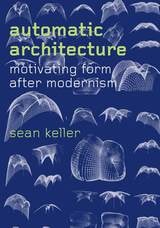
Automatic Architecture
Motivating Form after ModernismSean Keller
University of Chicago Press, 2017
The quixotic attempts to formulate such design processes extended modernist principles and tried to draw architecture closer to mathematics and the sciences. By focusing on design methods, and by examining evidence at a range of scales—from institutions to individual buildings—Automatic Architecture offers an alternative to narratives of this period that have presented postmodernism as a question of style, as the methods and techniques traced here have been more deeply consequential than the many stylistic shifts of the past half century. Sean Keller closes the book with an analysis of the contemporary condition, suggesting future paths for architectural practice that work through, but also beyond, the merely automatic.
Building Materials and Technology in Hong Kong, Expanded Second Edition
Wah Sang Wong, Wing Yan, Alice Chan, Chui Chi, Rosman Wai, Yee Chun, Tris Kee, Kam Lung, Franky Choi, Jingxuan, and Lila Xie
Hong Kong University Press, 2026
This book is a thorough documentation of tectonics in the Hong Kong construction industry. It looks at how buildings have been designed and built in a high-density city in a subtropical climate. Written in both Chinese and English, it covers almost all aspects of building materials and technology in Hong Kong with a succinct sequence that follows the construction process of a building project. The case studies in Chapter 3 brings together 16 local projects, which embrace a wide range of building types: from single-storey buildings to high-rise towers, from private development to public institutional construction, from office to residence, and provide invaluable information on the application of building materials and technology.
While it is intended primarily for students in architecture, surveying, and construction, Building Materials and Technology in Hong Kong is an indispensable reference for professionals and practitioners who are dealing with building design and construction. Those with a general interest in building construction will also find this highly illustrated book an interesting and engaging read.
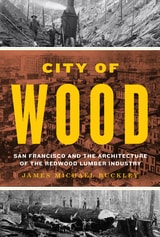
City of Wood
San Francisco and the Architecture of the Redwood Lumber IndustryJames Michael Buckley
University of Texas Press, 2024
2025 John Brinckerhoff Jackson Prize, Association of American Geographers
2025 Abbott Lowell Cummings Award
2025 John Brinckerhoff Jackson Prize, UVA Center for Cultural Landscapes
2026 Hagley Prize in Business History, Hagley Museum and Library
2025 Honorable Mention, PROSE Award, Association of American Publishers (AAP)
California’s 1849 gold rush triggered creation of the “instant city” of San Francisco as a base to exploit the rich natural resources of the American West. City of Wood examines how capitalists and workers logged the state’s vast redwood forests to create the financial capital and construction materials needed to build the regional metropolis of San Francisco. Architectural historian James Michael Buckley investigates the remote forest and its urban core as two poles of a regional “city.” This city consisted of a far-reaching network of spaces, produced as company owners and workers arrayed men and machines to extract resources and create human commodities from the region’s rich natural environment.
Combining labor, urban, industrial, and social history, City of Wood employs a variety of sources—including contemporary newspaper articles, novels, and photographs—to explore the architectural landscape of lumber, from backwoods logging camps and company towns in the woods to busy lumber docks and the homes of workers and owners in San Francisco. By imagining the redwood lumber industry as a single community spread across multiple sites—a “City of Wood”—Buckley demonstrates how capitalist resource extraction links different places along the production value chain. The result is a paradigm shift in architectural history that focuses not just on the evolution of individual building design across time, but also on economic connections that link the center and periphery across space.
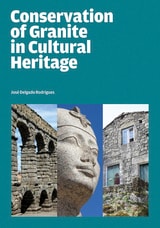
Conservation of Granite in Cultural Heritage
José Delgado Rodrigues
J. Paul Getty Trust, The, 2025
The field of stone conservation has long needed a holistic perspective that embraces the needs of conservation professionals and provides scientific support to enable them to better analyze preservation issues and implement efficient, long-lasting treatments. Conservation of Granite in Cultural Heritage offers such a perspective by bridging scholarly research on the available literature related to granite decay and best practices from conservators working in the field and laboratory.
First offering an overview of granitic rocks and their natural weathering, this volume then outlines the issues that arise when removing granite from quarries and incorporating it into what eventually becomes built heritage. Case studies are presented alongside guidelines for assessing conservation problems. This book will serve as a fundamental manual for students, conservation scientists, conservators, and restorers alike.
Sociology and Architectural Design
John Zeisel
Russell Sage Foundation, 1975
Why Architecture Matters
Lessons from ChicagoBlair Kamin
University of Chicago Press, 2001