Results by title
5 books match the query 'Midcentury America'
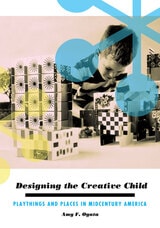
Designing the Creative Child
Playthings and Places in Midcentury AmericaAmy F. Ogata
University of Minnesota Press, 2013
The postwar American stereotypes of suburban sameness, traditional gender roles, and educational conservatism have masked an alternate self-image tailor-made for the Cold War. The creative child, an idealized future citizen, was the darling of baby boom parents, psychologists, marketers, and designers who saw in the next generation promise that appeared to answer the most pressing worries of the age.
Designing the Creative Child reveals how a postwar cult of childhood creativity developed and continues to this day. Exploring how the idea of children as imaginative and naturally creative was constructed, disseminated, and consumed in the United States after World War II, Amy F. Ogata argues that educational toys, playgrounds, small middle-class houses, new schools, and children’s museums were designed to cultivate imagination in a growing cohort of baby boom children. Enthusiasm for encouraging creativity in children countered Cold War fears of failing competitiveness and the postwar critique of social conformity, making creativity an emblem of national revitalization.
Ogata describes how a historically rooted belief in children’s capacity for independent thinking was transformed from an elite concern of the interwar years to a fully consumable and aspirational ideal that persists today. From building blocks to Gumby, playhouses to Playskool trains, Creative Playthings to the Eames House of Cards, Crayola fingerpaint to children’s museums, material goods and spaces shaped a popular understanding of creativity, and Designing the Creative Child demonstrates how this notion has been woven into the fabric of American culture.
Dissonant Voices
Race, Jazz, and Innovative Poetics in Midcentury AmericaJoseph Pizza
University of Iowa Press, 2023
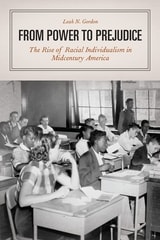
From Power to Prejudice
The Rise of Racial Individualism in Midcentury AmericaLeah N. Gordon
University of Chicago Press, 2015
To answer these questions, From Power to Prejudice examines American academia—both black and white—in the 1940s and ’50s. Gordon presents four competing visions of “the race problem” and documents how an individualistic paradigm, which presented white attitudes as the source of racial injustice, gained traction. A number of factors, Gordon shows, explain racial individualism’s postwar influence: individuals were easier to measure than social forces; psychology was well funded; studying political economy was difficult amid McCarthyism; and individualism was useful in legal attacks on segregation. Highlighting vigorous midcentury debate over the meanings of racial justice and equality, From Power to Prejudice reveals how one particular vision of social justice won out among many contenders.
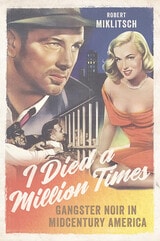
I Died a Million Times
Gangster Noir in Midcentury AmericaRobert Miklitsch
University of Illinois Press, 2020
With the Senate's organized crime hearings and the brighter-than-bright myth of the American Dream as a backdrop, Miklitsch examines the style and history, and the production and cultural politics, of classic pictures from The Big Heat and The Asphalt Jungle to lesser-known gems like 711 Ocean Drive and post-Fifties movies like Ocean’s Eleven. Miklitsch pays particular attention to trademark leitmotifs including the individual versus the collective, the family as a locus of dissension and rapport, the real-world roots of the heist picture, and the syndicate as an octopus with its tentacles deep into law enforcement, corporate America, and government. If the memes of gangster noir remain prototypically dark, the look of the films becomes lighter and flatter, reflecting the influence of television and the realization that, under the cover of respectability, crime had moved from the underworld into the mainstream of contemporary everyday life.
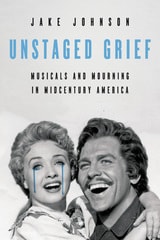
Unstaged Grief
Musicals and Mourning in Midcentury AmericaJake Johnson
University of Illinois Press, 2025
Often dismissed as escapism, screen musicals of the 1960s in fact tapped into unspoken sadness about an America that was slipping away. Jake Johnson delves into film and television musicals of the era to examine their place in networks of grieving in America, for America, and about America.
The Golden Age of musical theater ended just as Elisabeth Kübler-Ross’s On Death and Dying debuted, and Johnson uses Kübler-Ross’s five stages to frame the intertwining of musicals and grief. He analyzes films like Seven Brides for Seven Brothers and State Fair alongside paintings, poetry, and other images and texts to reveal how the musical theater engine built in the first half of the century broke down just as a new language emerged to describe the melancholy felt by people facing the end of the world they had known.
Nuanced and original, Unstaged Grief plumbs the grief, loss, and hope behind the Technicolor spectacle and rousing showstoppers.