Results by title
9 books match the query 'Middle Atlantic States'
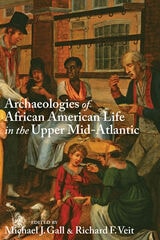
Archaeologies of African American Life in the Upper Mid-Atlantic
Edited by Michael J. Gall and Richard F. Veit
University of Alabama Press, 2017
A 2018 CHOICE OUTSTANDING ACADEMIC TITLE
New scholarship provides insights into the archaeology and cultural history of African American life from a collection of sites in the Mid-Atlantic
This groundbreaking volume explores the archaeology of African American life and cultures in the Upper Mid-Atlantic region, using sites dating from the eighteenth through the twentieth centuries. Sites in Delaware, Pennsylvania, New Jersey, and New York are all examined, highlighting the potential for historical archaeology to illuminate the often overlooked contributions and experiences of the region’s free and enslaved African American settlers.
Archaeologies of African American Life in the Upper Mid-Atlantic brings together cutting-edge scholarship from both emerging and established scholars. Analyzing the research through sophisticated theoretical lenses and employing up-to-date methodologies, the essays reveal the diverse ways in which African Americans reacted to and resisted the challenges posed by life in a borderland between the North and South through the transition from slavery to freedom. In addition to extensive archival research, contributors synthesize the material finds of archaeological work in slave quarter sites, tenant farms, communities, and graveyards.
Editors Michael J. Gall and Richard F. Veit have gathered new and nuanced perspectives on the important role free and enslaved African Americans played in the region’s cultural history. This collection provides scholars of the Mid-Atlantic and Northeast regions, African American studies, material culture studies, religious studies, slavery, the African diaspora, and historical archaeologists with a well-balanced array of rural archaeological sites that represent cultural traditions and developments among African Americans in the region. Collectively, these sites illustrate African Americans’ formation of fluid cultural and racial identities, communities, religious traditions, and modes of navigating complex cultural landscapes in the region under harsh and disenfranchising circumstances.

Becoming Alcoholic
Alcoholics Anonymous and the Reality of AlcoholismDavid R. Rudy. Foreword by Norman K. Denzin
Southern Illinois University Press, 1986
Affiliation with Alcoholics Anonymous parallels religious conversion, according to David R. Rudy in this timely study of the most famous self-help organization in the world.
Drinkers who commit themselves to Alcoholics Anonymous embrace the radically different life-style, the altered world of the convert.
To understand this conversion and, more important, to get a grip on the even deeper mystery of alcoholism itself, Rudy sought to answer these three questions: What processes are involved in becoming alcoholic? How does the alcoholic affiliate with, and become committed to, A. A.’s belief system? What is the relationship between the world of A. A. members and that constructed by alcohologists?
Rudy establishes the history and structure of A. A. and examines the organization’s relationship to dominant sociological models, theories, and definitions of alcoholism.

Celebrity Chefs of New Jersey
Their Stories, Recipes, and SecretsTeresa Politano
Rutgers University Press, 2010
Not so long ago, perhaps even just at the turn of this century, it was easy to lament the lack of sophisticated food in New Jersey. Oh sure, a few restaurants always sparkled, but, for the most part, New Jerseyans looked across at the bright lights of the big city, wistfully yearning for a table in glamorous Manhattan. Now, however, the most sought- after tables are right here and we have the best seats in the house, made even sweeter perhaps because they're our own little secret. We can dine frequently and dine well, with a smug sense that if only New Yorkers knew, they'd be looking across the river wishing they were us.
In Celebrity Chefs of New Jersey, Teresa Politano profiles Craig Shelton, the chef who crystallized New Jersey's place in culinary history with his legendary Ryland Inn, along with other chefs, telling their personal stories of both creativity and survival. Some of these men and women rose from humble or difficult childhoods to fame in the food world. Others were not only talented but lucky enough to be in the right place at the right time. Their stories are arranged into three categories: legends, stars, and chefs to watch, and then topped off with a sweet surprise finish. Politano includes photographs, cooking secrets, and some of their sought-after signature recipes that are sophisticated but manageable for the skilled home chef.
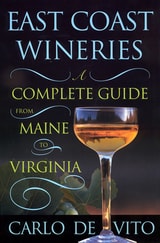
East Coast Wineries
A Complete Guide from Maine to VirginiaDe Vito, Carlo
Rutgers University Press, 2003
Look out Napa Valley. From Maine to Virginia, a surprising number of vintners are producing impressive wines worthy of a celebratory toast. Or two.
Once thought to be a region dominated by quaint farm wines, the eastern U.S. now boasts a number of highly coveted wines. Pinot Noirs and Merlots, Rieslings and Gewürztraminers are being bottled all along the Atlantic, so even the most discriminating wine drinker can find something to please the palate.
Here is the only comprehensive, up-to-date directory to nearly 300 wineries across New England and the mid-Atlantic. Wineries in thirteen states are covered: Connecticut, Delaware, Maine, Maryland, Massachusetts, New Hampshire, New Jersey, New York, Pennsylvania, Rhode Island, Vermont, Virginia, and West Virginia.
Invaluable as both a buying and touring guide, East Coast Wineries offers insights into the winemaking world and puts the reviews of the experts at your fingertips. Features include:
A short history of the winery
A listing of wines offered by that winery, plus recommended buys
Reviews by wine experts from major newspapers, magazines, and journals
Directions and hours of operation
A listing of annual wine festivals and other special events
Whether you’re a wine connoisseur or a beginner, East Coast Wineries is the book to read. Cheers!
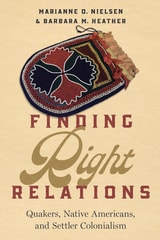
Finding Right Relations
Quakers, Native Americans, and Settler ColonialismMarianne O. Nielsen and Barbara M. Heather
University of Arizona Press, 2022
Centering on the relationship between Quaker colonists and the Lenape people, Finding Right Relations explores the contradictory position of the Quakers as both egalitarian, pacifist people, and as settler colonists. This book explores major challenges to Quaker beliefs and resulting relations with American Indians from the mid-seventeenth century to the late nineteenth century. It shows how the Quakers not only failed to prevent settler colonial violence against American Indians but also perpetuated it. It provides historical examples such as the French and Indian War, the massacre of the Conestoga Indians, and the American Indian boarding schools to explore the power of colonialism to corrupt even those colonists with a belief system rooted in social justice.
While this truth rubs against Quaker identity as pacifists and socially conscious, justice-minded people, the authors address how facing these truths provide ways forward for achieving restitution for the harms of the past. This book offers a path to truth telling that is essential to the healing process.

Handbook of the Linguistic Atlas of the Middle and South Atlantic States
William A. Kretzschmar Jr., Virginia G. McDavid, Theodore K. Lerud, and Ellen Johnson
University of Chicago Press, 1993
This handbook is an essential guide to the LAMSAS project, laying out its history and describing its scope and methodology. In addition, the handbook reveals biographical information about the informants and social histories of the communities in which they lived, including primary settlement areas of the original colonies. Dialectologists will rely on it for understanding the LAMSAS, and historians will find it valuable for its original historical research.
Since much of the LAMSAS questionnaire concerns rural terms, the data collected from the interviews can pinpoint such language differences as those between areas of plantation and small-farm agriculture. For example, LAMSAS reveals that two waves of settlement through the Appalachians created two distinct speech types. Settlers coming into Georgia and other parts of the Upper South through the Shenandoah Valley and on to the western side of the mountain range had a Pennsylvania-influenced dialect, and were typically small farmers. Those who settled the Deep South in the rich lowlands and plateaus tended to be plantation farmers from Virginia and the Carolinas who retained the vocabulary and speech patterns of coastal areas.
With these revealing findings, the LAMSAS represents a benchmark study of the English language, and this handbook is an indispensable guide to its riches.
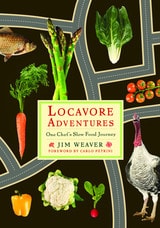
Locavore Adventures
One Chef's Slow Food JourneyWeaver, Jim
Rutgers University Press, 2012
America’s fast food culture reflects not only what we eat—foods that are processed and packaged for convenience—but also how we eat—munching as we multitask and not really tasting the super-sized meals we ingest. But in recent years, a more thoughtful philosophy about food has emerged. Developed in Italy, where fresh ingredients and artisanal techniques are prized, the Slow Food movement has rapidly gained a following in North America. The skeptics among us might wonder if it is possible truly to enjoy a Slow Food lifestyle—one based around local, seasonal ingredients—in our fast-paced world.
In Locavore Adventures, acclaimed New Jersey chef and restaurateur Jim Weaver shares his personal story of how he came to solve this problem—building a local slow food culture that is ecologically responsible and also yields delicious results. Weaver tells of his odyssey founding the Central New Jersey chapter of Slow Food, connecting local farmers, food producers, and chefs with the public to forge communities that value the region’s unique bounty. More than forty recipes throughout the book, from Hot Smoked Brook Trout with Asparagus Puree and Pickled Cippollini Onions to Zuppa di Mozzarella, will inspire readers to be creative in their own kitchens. Locavore Adventures is a thoughtful memoir about growing a sustainable food culture and a guide to slowing down, savoring locally grown food, and celebrating life.

Reformed America
The Middle and Southern States 1783-1837Fred J. Hood
University of Alabama Press, 1980
The success of the Reformed of the middle and southern states at shaping a distinctly American ideology of the relationship of religion and government was truly amazing. Unlike their New England counterparts, many of whom continued to enjoy some sort of establishment well into the nineteenth century, these Reformed entered the national experience with a backlog of experience in religious diversity and practical disestablishment, and even, in the South, as religious dissenters. They would have preferred a religious establishment that would have essentially recognized the validity of their understanding of Christianity. It was perhaps their own rigidity that caused them to fail in that attempt, especially in Virginia. But for such a rigid people, and they were rigid, they demonstrated a remarkable flexibility. When it became apparent that the American legal settlement would be one in which the state disengaged from the support of religion, the Reformed of the middle and southern states welcomed it and declared it to be the solution that would be most conducive to the spread and ultimate domination of Reformed Christianity. Unlike twentieth-century liberals, the Reformed interpreted disestablishment as the legal and official recognition of the twin Reformation doctrines of the priesthood of all believers and the absolute and unquestioned authority of the Christian Scriptures. And, to a very large degree, it was their definition, rather than the thinking of Jefferson and Madison, that captured the imagination of the American people and became the dominant popular opinion in the land.
But perhaps of even greater significance, the Reformed of the middle and southern states forged an ideology that ultimately based American national prosperity on national adherence to Reformed Christianity. Under the tutelage of John Witherspoon and Samuel Stanhope Smith, the Reformed captured the Enlightenment and brought it into the service of Reformed Christianity, altering traditional Calvinism in the process. Witherspoon and Smith, declaring that the truth of the law of nations could be devised by observation and reason alone, propounded a doctrine of natural law and political science that substantially reinforced the Calvinistic doctrine of providence in an era of skepticism and enlightenment. All history, they argued, proved beyond any reasonable doubt that those nations that adhered to the moral principles taught by Christianity had prospered and those that had taken a contrary route had fallen into ruin. The Reformed preachers of whatever denomination picked up this message and proclaimed it throughout the land. The United States, if it were to prosper, was required to be a Christian nation.
Wide Branches, Deep Roots
How Appalachian Wisdom Can Help in the Fight for a Sustainable FutureJessica M Jones
West Virginia University Press, 2026
To be Appalachian is to define oneself in terms of a place. Where we’re from plays a tremendous role in who we are, through storytelling about our homeplaces and the people who have loved them. However, what goes largely unaddressed is how this love of place can contribute to sustainability within the region, which has notoriously faced on-going environmental threats from extraction industries. The reality is that our relationship with the environment is thorny and intertwined with our identities, histories, and economic realities. The authors in the collection get down among the thorns to explore what sustainability means in Appalachia and how we can utilize the power of traditional folkways to achieve it.
This collection of over thirty pieces explores the connections between Appalachia’s stories, traditions, and modern events and the pathway to regional sustainability. The contributors — writers and scholars — examine how our definitions of sustainability have been formed, the power of education to encourage or inhibit it, and what moves are being made toward efficacy in the future. They also offer specific actions readers can take to better understand and build sustainability where they live.
Contributors: Greg Bealer, Luc Biscan-White, David Blackmore, Aysha Bodenhamer, Ivy Brashear, Matthew Calloway, Nicole Drewitz-Crockett, Christina Fisanick, Deborah Fleming, Amanda V. Garner, Karie Gunter-Seymour, Richard Hague, Amanda E. Hayes, Lockie Hunter, Jessica M. Jones, Kristen LeFevers, Sarah Long, Meghan Moore-Hubbard, Barbara Marie Minney, Jessica Radicic, Elizabeth Emmerth Rexroad, Barbara Sabol, Larry Smith, Patrice Stank, Taylor Nasim Stone, Paul Thomas, Elizabeth Tussey, and Betsy Weems.