Results by title
36 books match the query 'Militarism'
American War Stories
Brenda M. Boyle
Rutgers University Press, 2021
At War
The Military and American Culture in the Twentieth Century and BeyondKieran, David
Rutgers University Press, 2018
At War offers short, accessible essays addressing the central issues in the new military history—ranging from diplomacy and the history of imperialism to the environmental issues that war raises and the ways that war shapes and is shaped by discourses of identity, to questions of who serves in the U.S. military and why and how U.S. wars have been represented in the media and in popular culture.

Bodies at War
Genealogies of Militarism in Chicana Literature and CultureBelinda Linn Rincón
University of Arizona Press, 2017
Bodies at War examines the rise of neoliberal militarism from the early 1970s to the present and its transformation of political, economic, and social relations. It charts neoliberal militarism’s impact on democratic practices, economic policies, notions of citizenship, race relations, and gender norms by focusing on how these changes affect the Chicana/o community and, more specifically, on how it shapes and is shaped by Chicana bodies. The book raises important questions about the cultural legacies of war and the gendering of violence—topics that reach across multiple disciplinary fields of inquiry, including cultural and media studies. It draws attention to the relationship between war and society, to neoliberal militarism’s destructive social impact, and to the future of Latina soldiering. Through Chicana art, activism, and writing, Rincón offers a visionary foundation for an antiwar feminist politic.
Courage, Resistance, and Women in Ciudad Juárez
Challenges to MilitarizationBy Kathleen Staudt and Zulma Y. Méndez
University of Texas Press, 2015
Ciudad Juárez has recently become infamous for its murder rate, which topped 3,000 in 2010 as competing drug cartels grew increasingly violent and the military responded with violence as well. Despite the atmosphere of intimidation by troops, police, and organized criminals, women have led the way in civil society activism, spurring the Juárez Resistance and forging powerful alliances with anti-militarization activists.
An in-depth examination of la Resistencia Juarense, Courage, Resistance, and Women in Ciudad Juárez draws on ethnographic research to analyze the resistance’s focus on violence against women, as well as its clash with the war against drugs championed by Mexican President Felipe Calderón with the support of the United States. Through grounded insights, the authors trace the transformation of hidden discourses into public discourses that openly challenge the militarized border regimes. The authors also explore the advocacy carried on by social media, faith-based organizations, and peace-and-justice activist Javier Sicilia while Calderón faced U.S. political schisms over the role of border trade in this global manufacturing site.
Bringing to light on-the-ground strategies as well as current theories from the fields of sociology, political anthropology, and human rights, this illuminating study is particularly significant because of its emphasis on the role of women in local and transnational attempts to extinguish a hot zone. As they overcome intimidation to become game-changing activists, the figures featured in Courage, Resistance, and Women in Ciudad Juárez offer the possibility of peace and justice in the wake of seemingly irreconcilable conflict.
Demilitarization in the Contemporary World
Edited by Peter N. Stearns
University of Illinois Press, 2013
In nine insightful chapters, this volume's contributors outline each nation's demilitarization choices and how they were made. They investigate factors such as military defeat, border security risks, economic pressures, and the development of strong peace cultures among citizenry. Also at center stage is the influence of the United States, which fills a paradoxical role as both an enabler of demilitarization and a leader in steadily accelerating militarization.
Bookended by Peter N. Stearns' thought-provoking historical introduction and forward-looking conclusion, the chapters in this volume explore what true demilitarization means and how it impacts a society at all levels, military and civilian, political and private. The examples chosen reveal that successful demilitarization must go beyond mere troop demobilization or arms reduction to generate significant political and even psychological shifts in the culture at large. Exemplifying the political difficulties of demilitarization in both its failures and successes, Demilitarization in the Contemporary World provides a possible roadmap for future policies and practices.
Democracy, Militarism, and Nationalism in Argentina, 1930–1966
An InterpretationBy Marvin Goldwert
University of Texas Press, 1972
Until 1930, Argentina was one of the great hopes for stable democracy in Latin America. Argentines themselves believed in the destiny of their nation to become the leading Latin American country in wealth, power, and culture. But the revolution of 1930 unleashed the scourges of modern militarism and chronic instability in the land. Between 1930 and 1966, the Argentine armed forces, or factions of the armed forces, overthrew the government five times.
For several decades, militarism was the central problem in Argentine political life. In this study, Marvin Goldwert interprets the rise, growth, and development of militarism in Argentina from 1930 to 1966. The tortuous course of Argentine militarism is explained through an integrating hypothesis. The army is viewed as a “power factor,” torn by a permanent dichotomy of values, which rendered it incapable of bringing modernization to Argentina. Caught between conflicting drives for social order and modernization, the army was an ambivalent force for change. First frustrated by incompetent politicians (1916–1943), the army was later driven by Colonel Juan D. Perón into an uneasy alliance with labor (1943–1955). Peronism initially represented the means by which army officers could have their cake—nationalistic modernization—and still eat it in peace, with the masses organized in captive unions tied to an authoritarian state.
After 1955, when Perón was overthrown, a deeply divided army struggled to contain the remnants of its own dictatorial creation. In 1966, the army, dedicated to staunch anti-Peronism, again seized the state and revived the dream of reconciling social order and modernization through military rule.
Although militarism has been a central problem in Argentine political life, it is also the fever that suggests deeper maladies in the body politic. Marvin Goldwert seeks to relate developments in the military to the larger political, social, and economic developments in Argentine history. The army and its factions are viewed as integral parts of the whole political spectrum during the period under study.
Exceptional State
Contemporary U.S. Culture and the New ImperialismAshley Dawson and Malini Johar Schueller, eds.
Duke University Press, 2007
The contributors address a range of topics, paying particular attention to the dynamics of gender and race. Their essays include a surprising reading of the ostensibly liberal movies Wag the Dog and Three Kings, an exploration of the rhetoric surrounding the plan to remake the military into a high-tech force less dependent on human bodies, a look at the significance of the popular Left Behind series of novels, and an interpretation of the Abu Ghraib prison photos. They scrutinize the national narrative created to justify the US invasions of Afghanistan and Iraq, the ways that women in those countries have responded to the invasions, the contradictions underlying calls for US humanitarian interventions, and the role of Africa in the US imperial imagination. The volume concludes on a hopeful note, with a look at an emerging anti-imperialist public sphere.
Contributors. Omar Dahbour, Ashley Dawson, Cynthia Enloe, Melani McAlister, Christian Parenti, Donald E. Pease, John Carlos Rowe, Malini Johar Schueller, Harilaos Stecopoulos
For Might and Right
Cold War Defense Spending and the Remaking of American DemocracyMichael Brenes
University of Massachusetts Press, 2020
How did the global Cold War influence American politics at home? For Might and Right traces the story of how Cold War defense spending remade participatory politics, producing a powerful and dynamic political coalition that reached across party lines. This “Cold War coalition” favored massive defense spending over social welfare programs, bringing together a diverse array of actors from across the nation, including defense workers, community boosters, military contractors, current and retired members of the armed services, activists, and politicians. Faced with neoliberal austerity and uncertainty surrounding America's foreign policy after the 1960s, increased military spending became a bipartisan solution to create jobs and stimulate economic growth, even in the absence of national security threats.
Using a rich array of archival sources, Michael Brenes draws important connections between economic inequality and American militarism that enhance our understanding of the Cold War's continued impact on American democracy and the resilience of the military-industrial complex, up to the age of Donald Trump.

Forced Marches
Soldiers and Military Caciques in Modern MexicoEdited by Ben Fallaw and Terry Rugeley
University of Arizona Press, 2012
When Mexico first became a nation, its military and militias were two of the country’s few major institutions besides the Catholic Church. The army and local provincial militias functioned both as political pillars, providing institutional stability of a crude sort, and as springboards for the ambitions of individual officers. Military service provided upward social mobility, and it taught a variety of useful skills, such as mathematics and bookkeeping.
In the postcolonial era, however, militia units devoured state budgets, spending most of the national revenue and encouraging locales to incur debts to support them. Men with rifles provided the principal means for maintaining law and order, but they also constituted a breeding-ground for rowdiness and discontent. As these chapters make clear, understanding the history of state-making in Mexico requires coming to terms with its military past.
From Disarmament to Rearmament
The Reversal of US Policy toward West Germany, 1946–1955Sheldon A. Goldberg
Ohio University Press, 2017
At the end of World War II, the Allies were unanimous in their determination to disarm the former aggressor Germany. As the Cold War intensified, however, the decision whether to reverse that policy and to rearm West Germany as a bulwark against the Soviet threat led to disagreements both within the US government and among members of the nascent NATO alliance. The US military took the practical view that a substantial number of German troops would be required to deter any potential Soviet assault. The State Department, on the other hand, initially advocated an alternative strategy of strengthening European institutions but eventually came around to the military’s position that an armed West Germany was preferable to a weak state on the dividing line between the Western democracies and the Soviet satellite states.
Sheldon A. Goldberg traces the military, diplomatic, and political threads of postwar policy toward West Germany and provides insights into the inner workings of alliance building and the roles of bureaucrats and military officers as well as those of diplomats and statesmen. He draws on previously unexamined primary sources to construct a cogent account of the political and diplomatic negotiations that led to West Germany’s accession to NATO and the shaping of European order for the next forty years.
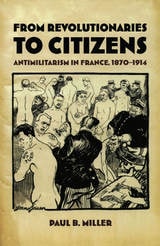
From Revolutionaries to Citizens
Antimilitarism in France, 1870–1914Paul B. Miller
Duke University Press, 2002
Although more general accounts of the Left’s “failure” to halt international war in August 1914 focus on its lack of unity or the decline of trade unionism, Miller contends that these explanations barely scratch the surface when it comes to interpreting the Left’s overwhelming acceptance of the war. By embedding his cultural analysis of antimilitarist propaganda into the larger political and diplomatic history of prewar Europe, he reveals the Left’s seemingly sudden transformation “from revolutionaries to citizens” as less a failure of resolve than a confession of commonality with the broader ideals of republican France. Examining sources ranging from police files and court records to German and British foreign office memos, Miller emphasizes the success of antimilitarism as a rallying cry against social and political inequities on behalf of ordinary citizens. Despite their keen awareness of the bloodletting that awaited Europe, he claims, antimilitarists ultimately accepted the war with Germany for the same reason they had pursued their own struggle within France: to address injustices and defend the rights of citizens in a democratic society.
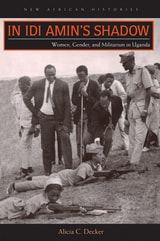
In Idi Amin’s Shadow
Women, Gender, and Militarism in UgandaAlicia C. Decker
Ohio University Press, 2014
Finalist for the 2015 Aidoo-Snyder Prize
In Idi Amin’s Shadow is a rich social history examining Ugandan women’s complex and sometimes paradoxical relationship to Amin’s military state. Based on more than one hundred interviews with women who survived the regime, as well as a wide range of primary sources, this book reveals how the violence of Amin’s militarism resulted in both opportunities and challenges for women. Some assumed positions of political power or became successful entrepreneurs, while others endured sexual assault or experienced the trauma of watching their brothers, husbands, or sons “disappeared” by the state’s security forces. In Idi Amin’s Shadow considers the crucial ways that gender informed and was informed by the ideology and practice of militarism in this period. By exploring this relationship, Alicia C. Decker offers a nuanced interpretation of Amin’s Uganda and the lives of the women who experienced and survived its violence.
Each chapter begins with the story of one woman whose experience illuminates some larger theme of the book. In this way, it becomes clear that the politics of military rule were highly relevant to women and gender relations, just as the politics of gender were central to militarism. By drawing upon critical security studies, feminist studies, and violence studies, Decker demonstrates that Amin’s dictatorship was far more complex and his rule much more strategic than most observers have ever imagined.
Insurgent Aesthetics
Security and the Queer Life of the Forever WarRonak K. Kapadia
Duke University Press, 2019
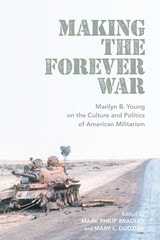
Making the Forever War
Marilyn B. Young on the Culture and Politics of American MilitarismMary L. Dudziak
University of Massachusetts Press, 2021
Making the Forever War brings Young's articles and essays on American war together for the first time, including never before published works. Moving from the first years of the Cold War to Korea, Vietnam, and more recent "forever" wars in Iraq and Afghanistan, Young reveals the ways in which war became ever-present, yet more covert and abstract, particularly as aerial bombings and faceless drone strikes have attained greater strategic value. For Young, U.S. empire persisted because of, not despite, the inattention of most Americans. The collection concludes with an afterword by prominent military historian Andrew Bacevich.
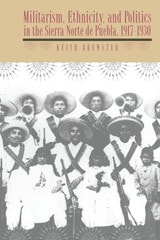
Militarism, Ethnicity, and Politics in the Sierra Norte de Puebla, 1917-1930
Keith Brewster
University of Arizona Press, 2003
Gabriel Barrios Cabrera, leader of the Brigada Serrana, rose from rural obscurity in the tiny village of Cuacuila to a position of unprecedented military strength during the Revolution, and throughout the 1920s he and his brother Demetrio came to enjoy the confidence of the nation's presidents. This work provides an in-depth look at how a local political boss held on to power. Keith Brewster reveals how the story of the Sierra is inextricably linked to that of the Barrios Cabrera family, and he investigates the ways in which this interconnection developed.
Brewster argues that Barrios owed his long prominence to his sensitivity to the region's culture, but also shows that the extent of his power was exaggerated by both contemporaries and historians. Barrios was able to develop a working relationship with the federal government by endorsing its objectives and convincing them of his own indispensability, but his authority depended on the weakness of the federal government and on infighting within the Puebla state government; once both governments stabilized, Barrios quickly lost his grip on power.
Masterfully blending archival sources and oral history, Brewster captures life in the Sierra during the 1920s and examines the decision-making processes that determined how communities responded to new pressures, such as requests for soldiers or support for development projects. He shows that subaltern groups were able to shape and even resist state reforms, mustering evidence that the Sierra's indigenous communities drove hard bargains over issues affecting their everyday lives. Although many communities used Barrios as an intermediary, Brewster reveals that they did not universally accept his legitimacy but simply used his connections to pursue their own local agendas.
Brewster depicts the Sierra de Puebla of the 1920s as a scene of shifting balances of power where political, economic, social, and ethnic factors combined to produce the temporary ascendancy of different interest groups beyond and within the region. His study forces us to question assumptions about how power was exercised at the local and regional levels in postrevolutionary Mexico and will be of lasting interest to all concerned with the dynamics of caciquismo and the evolution of the Mexican political system.
Militarism, Imperialism, and Racial Accommodation
An Analysis and Interpretation of the Early Writings of Robert E. ParkStanford Lyman
University of Arkansas Press, 1992
1993 Mid-South Sociological Association Book Award
Robert E. Park has long been recognized as one of the most influential thinkers in early American sociology, yet virtually all of his works appearing before 1913 were published in popular magazines and were dismissed as nonsociological muckraking. In Militarism, Imperialism, and Racial Accommodation: An Analysis and Interpretation of the Early Writings of Robert E. Park, Stanford M. Lyman examines and reprints many of these little-known works, including Park’s essays on German military organization, his exposés of the atrocities committed by Belgium’s Leopold II in the Congo State, his studies of the black community in Winston-Salem, North Carolina, and of Booker T. Washington’s agricultural education program at Tuskegee, Alabama.
Lyman shows clearly that Park’s essays, written outside the academy, formulated a far more complex perspective on modern modes of evil than any proposed by his contemporaries, thereby influencing sociological debates for decades to come. By writing his essays on topical subjects and by publishing them for a public audience, Park dramatized his profound belief that the struggle to achieve racial accommodation and to establish a true and lasting democracy is a concern for all.
Militarization
A ReaderRoberto J. González, Hugh Gusterson, and Gustaaf Houtman, editors
Duke University Press, 2019
In collaboration with Catherine Besteman, Andrew Bickford, Catherine Lutz, Katherine T. McCaffrey, Austin Miller, David H. Price, David Vine

Militarized Currents
Toward a Decolonized Future in Asia and the PacificSetsu Shigematsu
University of Minnesota Press, 2010
Militarized Modernity and Gendered Citizenship in South Korea
Seungsook Moon
Duke University Press, 2005
Moon situates militarized modernity in the historical context of colonialism and nationalism in the twentieth century. She follows the course of militarized modernity in South Korea from its development in the early 1960s through its peak in the 1970s and its decline after rule by military dictatorship ceased in 1987. She highlights the crucial role of the Cold War in South Korea’s militarization and the continuities in the disciplinary tactics used by the Japanese colonial rulers and the postcolonial military regimes. Moon reveals how, in the years since 1987, various social movements—particularly the women’s and labor movements—began the still-ongoing process of revitalizing South Korean civil society and forging citizenship as a new form of membership in the democratizing nation.
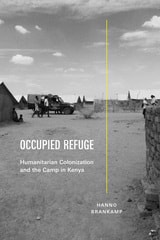
Occupied Refuge
Humanitarian Colonization and the Camp in KenyaHanno Brankamp
Duke University Press, 2026
On The Man Question
Gender and Civic Virtue in AmericaMark E. Kann
Temple University Press, 1991
Focusing on Seventeenth-Century English political philosophy and Nineteenth-Century American culture, Mark Kann challenges the widely-held view that American political institutions are grounded in the primacy of individualism. Liberal thinkers have long been concerned that men are too passionate and selfish to exercise individual rights without causing social chaos. Kann demonstrates how a desperate search to answer the man question began to revolutionize gender relations He examines "the other liberal tradition in America" which downplays the value of individualism, elevates the ongoing significance of an "engendered civic virtue," and incorporates classical republicanism into the fabric of modern political discourse.
The author traces the cultural conditioning of the white middle class that produced the ideal of self-sacrificing wives whose lives were devoted to creating a haven for their husbands and a school of virtue for their sons. Upon leaving home, these young men were to be schooled in manliness in the military in order to be capable of assuming positions of power as they were vacated by their fathers’ generation. Thus, in the norms of fatherhood, fraternity, womanhood, and militarism, the male’s individualism was conditioned with a strong dose of civic virtue.

Post-Military Society
Militarism, Demilitarization and War at the End of the Twentieth CenturyMartin Shaw
Temple University Press, 1991
With the collapse of the Cold War following the Eastern European revolutions and the ongoing democratization of the Soviet republics, optimism about peace has transformed the international political climate. Incidents such as the Gulf War, however, have tempered this optimism and cast doubts on the prospects for demilitarization. In this book, Martin Shaw examines some of the developments that lie behind the recent momentous changes and argues that, despite the Gulf War and other regional wars, militarism is in decisive retreat.
Writing from a broadly sociological perspective, Shaw examines the roles of war and military institutions in human society and the ways in which preoccupation with war has affected domestic, regional, and international politics in the twentieth century. In doing so, he asks: When does the post-war era end? How have nuclear weapons altered the perception of war by society? What is the relationship between industrialism and militarism?
The author contends that, despite the militarism of some Third World countries, societies in the advanced industrial world (especially in Europe) have been undergoing a profound demilitarization. These societies have become politically insulated from war preparation, have recognized the effect of social movements on inter-state relations, and are experiencing a "revolution of rising expectations."
Offering evidence of "post-military citizenship," Shaw describes the increasing resistance to military conscription throughout the Western world, the replacement of blind obedience with demand for accountability in Eastern bloc countries, and the simultaneous rise of nationalism and communitarianism among common market members. And, in light of the collapse of Stalinist militarism in Europe and the USSR, Shaw suggests some of the changes that face Soviet society.
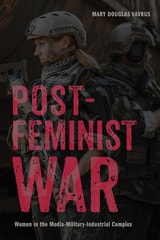
Postfeminist War
Women in the Media-Military-Industrial ComplexMary Douglas Vavrus
Rutgers University Press, 2019
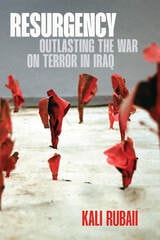
Resurgency
Outlasting the War on Terror in IraqKali Rubaii
Duke University Press, 2026
In Resurgency, Kali Rubaii offers detailed ethnographic insight into how decades of war have affected everyday life in Iraq. Drawing on fieldwork in Anbar province and Iraqi Kurdistan in 2014–15 and 2021–24, Rubaii foregrounds the practices of displaced people who stubbornly outlast their occupiers, returning to homes that feel estranging, repairing war-damaged land, and surviving into futures to which they have been disinvited. Following Anbari farmers in their struggle to counter the social and environmental fallout from toxic military waste, depleted ecosystems, and transformed political economies, Resurgency expands the temporal and descriptive categories of what war is—and what resistance looks like. By asking what actions and dispositions make sense when conditions of survival are diminished, and when today may be better than tomorrow, Rubaii offers new methods and insights to those concerned about the possibilities of life amid environmental devastation, mass displacement, and the slow violence of the forever wars.
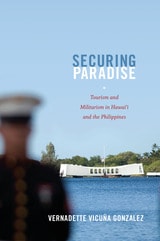
Securing Paradise
Tourism and Militarism in Hawai'i and the PhilippinesVernadette Vicuña Gonzalez
Duke University Press, 2013
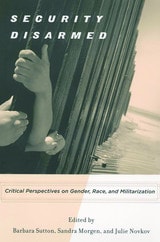
Security Disarmed
Critical Perspectives on Gender, Race, and MilitarizationMorgen, Sandra
Rutgers University Press, 2008
In Security Disarmed, scholars, policy planners, and activists come together to think critically about the human cost of violence and viable alternatives to armed conflict. Arranged in four parts--alternative paradigms of security, cross-national militarization, militarism in the United States, and pedagogical and cultural concerns--the book critically challenges militarization and voices an alternative encompassing vision of human security by analyzing the relationships among gender, race, and militarization. This collection of essays evaluates and resists the worldwide crisis of militarizationùincluding but going beyond American military engagements in the twenty-first century.
Service Economies
Militarism, Sex Work, and Migrant Labor in South KoreaJin-kyung Lee
University of Minnesota Press, 2010
Making surprising and revelatory connections, Jin-kyung Lee analyzes South Korean military labor in the Vietnam War, domestic female sex workers, South Korean prostitution for U.S. troops, and immigrant/migrant labor from Asia in contemporary South Korea. Foregrounding gender, sexuality, and race, Lee reimagines the South Korean economic "miracle" as a global and regional articulation of industrial, military, and sexual proletarianization.
Lee not only addresses these under-studied labors individually but also integrates and unites them to reveal an alternative narrative of a changing South Korean working class whose heterogeneity is manifested in its objectification. Delving into literary and popular cultural sources as well as sociological work, Lee locates South Korean development in its military and economic interactions with the United States and other Asian nation-states, offering a unique perspective on how these practices have shaped and impacted U.S.-South Korea relations.
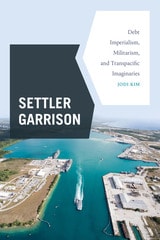
Settler Garrison
Debt Imperialism, Militarism, and Transpacific ImaginariesJodi Kim
Duke University Press, 2022
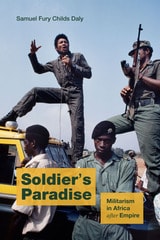
Soldier's Paradise
Militarism in Africa after EmpireSamuel Fury Childs Daly
Duke University Press, 2024

The Education of an Anti-Imperialist
Robert La Follette and U.S. ExpansionRichard Drake
University of Wisconsin Press, 2013
“An excellent book. . . . As Drake fully documents, La Follette's warnings about [World War I] profiteers and the lust for power were fully justified. Then as now, the American people were lied to by the government and media and manipulated into the stink and blood of war."—Mark Taylor, The Daily Call
“Scholars will . . . value the insights into La Follette's foreign policy education.”—The Historian

The Militant South, 1800-1861
John Hope Franklin
University of Illinois Press, 2002
Franklin asserts that the South was dominated by militant white men who resorted to violence in the face of social, personal, or political conflict. Fueled by their defense of slavery and a persistent desire to keep the North out of their affairs, Southerners adopted a vicious bellicosity that intensified as war drew nearer.
Drawing from Southern newspapers, government archives, memoirs, letters, and firsthand accounts, Franklin masterfully details the sources and consequences of antebellum aggression in the South. First published in 1956, this classic volume is an enduring and impeccably researched contribution to Southern history. This paperback edition features a new preface in which the author discusses controversial responses to the book.

The Occupied Clinic
Militarism and Care in KashmirSaiba Varma
Duke University Press, 2020
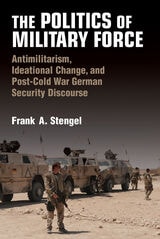
The Politics of Military Force
Antimilitarism, Ideational Change, and Post-Cold War German Security DiscourseFrank A. Stengel
University of Michigan Press, 2020
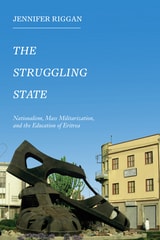
The Struggling State
Nationalism, Mass Militarization, and the Education of EritreaJennifer Riggan
Temple University Press, 2016
In her provocative ethnography, The Struggling State, Jennifer Riggan examines the contradictions of state power as simultaneously oppressive to and enacted by teachers. Riggan, who conducted participant observation with teachers in and out of schools, explores the tenuous hyphen between nation and state under lived conditions of everyday authoritarianism.
The Struggling State shows how the hopes of Eritrean teachers and students for the future of their nation have turned to a hopelessness in which they cannot imagine a future at all.
The Wars We Inherit
Military Life, Gender Violence, and MemoryAuthored by Lori E. Amy
Temple University Press, 2010
By combining personal memoir and critical analysis, Lori Amy links the violence we live in our homes to the violence that structures our larger culture. The Wars We Inherit brings insights from memory and trauma studies to the story of violence in the author’s own family.
In this brave, fascinating and compelling book, Amyconcerns herself with the violence associated with the military, and how this institution of public, cultural violence, with its hypermasculinity, pervades society with physical, verbal, emotional and sexual aggression. She uses her war-veteran father to represent the chaotic and dehumanizing impact of war to show how violence is experienced and remembered.
Amy provides examples that support the relationship between military structures and domestic violence, or how the sexual violence that permeates her family prompts debates about the nature of trauma and memory. In addition, Amy employs feminist psychoanalytic theory, cultural and trauma studies, and narrative theory, to explain how torture in Abu Ghraib is on a direct continuum with the ordinary violence inherent in our current systems of gender and nation.
Placing individual experience in cultural context, Amy argues that “if we can begin, in our own lives, to transform the destructive ways that we have been shaped by violence, then we might begin to transform the cultural conditions that breed violence.”
Women and Their Warlords
Domesticating Militarism in Modern ChinaKate Merkel-Hess
University of Chicago Press, 2024
In Women and Their Warlords, historian Kate Merkel-Hess examines the lives and personalities of the female relatives of the military rulers who governed regions of China from 1916 to 1949. Posing for candid photographs and sitting for interviews, these women did not merely advance male rulers’ agendas. They advocated for social and political changes, gave voice to feminist ideas, and shaped how the public perceived them. As the first publicly political partners in modern China, the wives and concubines of Republican-era warlords changed how people viewed elite women’s engagement in politics. Drawing on popular media sources, including magazine profiles and gossip column items, Merkel-Hess draws unexpected connections between militarism, domestic life, and state power in this insightful new account of gender and authority in twentieth-century China.