Results by title
8 books match the query 'Military chaplains'
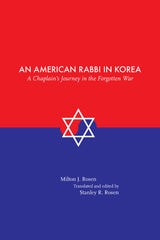
An American Rabbi in Korea
A Chaplain's Journey in the Forgotten WarMilton J. Rosen, translated and edited by Stanley R. Rosen
University of Alabama Press, 2004
During the height of the Korean conflict, 1950–51, Orthodox Jewish chaplain Milton J. Rosen wrote 19 feature-length articles for Der Morgen Zhornal, a Yiddish daily in New York, documenting his wartime experiences as well as those of the servicemen under his care. An American Rabbi in Korea is an English translation of Rosen's important articles prepared by his son and annotated with background about Rosen's military service, a general introduction to the war and conflict on the Korean peninsula, and numerous maps and photographs.
Rosen was among those nearly caught in the Chinese entrapment of American and Allied forces in North Korea in late 1950, and some of his most poignant writing details the trying circumstances that faced both soldiers and civilians during that time. As chaplain, Rosen was able to offer a unique account of the American Jewish experience on the frontlines and in the United States military while also describing the impact of the American presence on Korean citizens and their culture. His interest in Korean attitudes toward Jews is also a significant theme within these articles. The sum is a readable account of war and its turmoil from an astute and compassionate observer.
Frenchman, Chaplain, Rebel
The Civil War Letters of Pere Louis-Hippoltye Gache, 10th Louisiana InfantryPere Louis-Hippolyte Gache, S.J.
University of Alabama Press, 2007
The American Civil War through the eyes of a French Jesuit chaplain.
"This book has a tantalizing quality, and it certainly is fresh literature for those who have watched the story of the Civil War unfold. . . . One cannot help but marvel at the research undertaken by Fr. Buckley. These letters of Fr. Gache cover such subjects as the duties of a chaplain, the lack of stimulating conversation in camp, whiskey as medication for diarrhea, the chaplain’s uniform, the oversupply of Catholic chaplains, descriptions of battles—Chancellorsville, Fredericksburg—chaplains as prisoners of war, the possibility of General Lee being chosen as the second president of the Confederacy, making candles for the alter and bleaching wax, procuring sacramental wine, conflicts with Protestant preachers, and the surrender of Richmond. Such subjects allow the personality and character of Hippolyte to stand out. . . . [The book] is interesting reading for all who love and admire the Jesuits. Its wealth of information makes it a must for others whose concern is the Confederate soldier and his God."
—Journal of Southern History
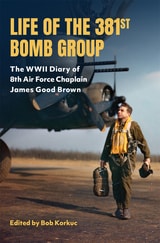
Life of the 381st Bomb Group
The World War II Diary of Eighth Air Force Chaplain James Good BrownBob Korkuc
University of Missouri Press, 2026
While working on his first book, Bob Korkuc became intimately familiar with the 381st Bombardment Group of the Mighty Eighth Air Force and met the group’s chaplain, James Good Brown. Brown kept a diary during his time with the bomb group (1943 to 1945) in which he chronicled the daily experiences of the men.
Years after the war, Brown self-published his diary, which today is hard to find. Through his friendship with Brown, Korkuc gained access to and chose to edit the original docu - ment so that more readers might appreciate this insightful wartime eyewitness account.
Serving in his early forties alongside men twenty years his junior—whom he called the “Mighty Men of the 381st”—Brown took part in morning briefings, shared meals with crews, and anxiously awaited their return from dangerous daylight bombing missions. Flying as a noncombatant, an unnecessary eleventh crewmember, Brown describes his own observations of a Flying Fortress combat mission over Germany. Writing with extraordinary candor, Brown documents the inner workings of a bomb group that flew 297 combat missions over Europe, providing vivid character assessments of his fellow airmen and capturing both their victories and devastating losses.
In addition to judiciously editing Brown’s original diary for readability, Korkuc created a unique appendix, which reveals the fate of every airman who served with Brown. The immediacy of Brown’s narration combined with Korkuc’s meticulous editing make this a promising new resource for scholars and general readers alike.
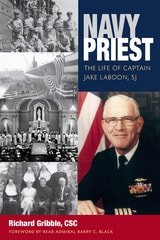
Navy Priest
Richard Gribble
Catholic University of America Press, 2015
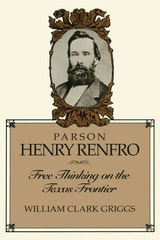
Parson Henry Renfro
Free Thinking on the Texas FrontierBy William C. Griggs
University of Texas Press, 1994
The years following the Texas Revolution held even more turbulent events as diverse droves of pioneers crossed the Sabine and Red Rivers to start new lives in Texas. Early Texas society contended with religious issues, family life in a rugged environment, and the Civil War. This cultural history was clearly reflected in the life of frontier preacher Henry C. Renfro.
Migrating to Texas in 1851, Renfro enrolled in the fledgling Baylor University and became a Baptist preacher. Eventually disillusioned with Baptist orthodoxy, Renfro was disenfranchised on charges of infidelity as he embraced the ideals of the Free Thought Movement, inspired by the writings of men such as Thomas Paine, Spinoza, and Robert Ingersoll.
Renfro's Civil War experience was no less unusual. Serving as both soldier and chaplain, Renfro left a valuable legacy of insight into the conflict, captured in a wealth of correspondence that is in itself significant.
Drawing on a vast body of letters, speeches, sermons, and oral histories that had never before been available, this chronological narrative of "The Parson's" life describes significant changes in Texas from 1850 to 1900, especially the volatile formation and growth of Baptist churches in North Central Texas. William Griggs' study yields numerous new details about the Free Thought Movement and depicts public reaction to sectarian leaders in nineteenth-century Texas.
The author also describes the developing Central Texas region known as the Cross Timbers, including the personal dynamics between a frontier family and its patriarch and encompassing such issues as property conflicts, divorce, and family reconciliation. This work unlocks an enlightening, engaging scene from Texas history.
Sky Pilots
The Yankee Division Chaplains in World War IMichael E. Shay
University of Missouri Press, 2014
The Civil War Diary of Rev. James Sheeran, C.Ss.R.
Patrick J. Hayes
Catholic University of America Press, 2017
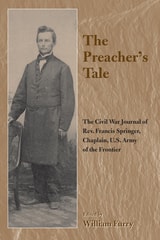
The Preacher's Tale
The Civil War Journal of Rev. Francis Springer, Chaplain, U.S. Army of the FrontierWilliam Furry
University of Arkansas Press, 2001
In the fall of 1861, fifty-one-year-old Rev. Francis Springer enlisted in the Union army. The following spring, Springer, a friend and one-time neighbor to Abraham Lincoln, rode away with the 10th Illinois Cavalry. A witness to the Battle of Prairie Grove (December 1862), Springer was later named post chaplain at Fort Smith, where, in additon to preaching and ministering to the troops, he was placed in charge of refugees—widows, orphans, and contrabands—the displaced victims of virulent guerrilla warfare in Northwest Arkansas. Springer also wrote articles and columns in the Fort Smith New Era under the pseudonym, “Thrifton.” Springer’s honest appraisals of life in the Army of the Frontier make for fascinating reading, and his unique perspective as moralist, educator, and journalist provide new insight into the Civil War and how it was fought in the West. The book includes several never-before published photographs and appendixes which feature accounts of six military executions that Springer participated in as a Union Army chaplain, the hitherto unpublished last letters home of two rebel soldiers condemned and executed at Fort Smith, as well as a eulogy for Abraham Lincoln.
The Preacher’s Tale includes several never before published photographs, and appendixes that contain accounts of six military executions that Springer participated in as a Union Army chaplain, the last letters home of two rebel soldiers condemned and executed at Fort Smith, as well as a eulogy written for Abraham Lincoln.