Results by title
2 books match the query 'Mining districts'
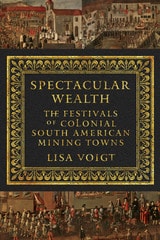
Spectacular Wealth
The Festivals of Colonial South American Mining TownsBy Lisa Voigt
University of Texas Press, 2016
Bridging print culture and performance, Spectacular Wealth draws on eighteenth-century festival accounts to explore how colonial residents of the silver-mining town of Potosí, in the viceroyalty of Peru, and the gold-mining region of Minas Gerais, in Brazil, created rich festive cultures that refuted European allegations of barbarism and greed. In her examination of the festive participation of the towns’ diverse inhabitants, including those whose forced or slave labor produced the colonies’ mineral wealth, Lisa Voigt shows how Amerindians, Afro-descendants, Europeans, and creoles displayed their social capital and cultural practices in spectacular performances.
Tracing the multiple meanings and messages of civic festivals and religious feast days alike, Spectacular Wealth highlights the conflicting agendas at work in the organization, performance, and publication of festivals. Celebrants and writers in mining boomtowns presented themselves as far more than tributaries yielding mineral wealth to the Spanish and Portuguese empires, using festivals to redefine their reputations and to celebrate their cultural, spiritual, and intellectual wealth.
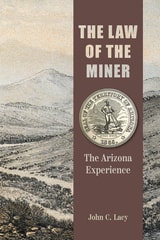
The Law of the Miner
The Arizona ExperienceJohn C. Lacy
University of Nevada Press, 2026
The first adventurers into the New World faced a fundamental legal challenge: how to secure rights to any mineral claims they discovered. Early conquistadors worked under charters that required them to return a portion of their findings to the Spanish crown, but those without such charters had no formal protection—and the crown was slow to clarify individual rights. This uncertainty only grew as miners pushed into the lands that would become the Western United States.
When gold was discovered in California, miners suddenly found themselves operating without any governing laws during the period between the end of the war with Mexico and the establishment of formal U.S. jurisdiction. In response, and without official sanction, they formed self-governing “mining districts,” best understood as mutual protection societies. These districts marked the first organized attempt to define boundaries and create rules for establishing and maintaining mining claims. As the early rushes in California and Nevada subsided, miners carried these practices with them into Arizona and other western territories.
In Arizona, no comprehensive collection of these early regulations has ever existed. The Law of the Mineraddresses this gap by tracing the development of mineral law in early Arizona and presenting the full text of every mining district regulation that could be found. This work serves both the mining industry and historians seeking to identify the individuals involved in creating the districts and to understand these districts’ historical boundaries.