Results by title
16 books match the query 'Self-perception'

A Round of Golf with My Father
The New Psychology of Exploring Your Past to Make Peace with Your PresentDamon, William
Templeton Press, 2021
Viewing our past through the eyes of maturity can reveal insights that our younger selves could not see. Lessons that eluded us become apparent. Encounters that once felt like misfortunes now become understood as valued parts of who we are. We realize what we’ve learned and what we have to teach. And we’re encouraged to chart a future that is rich with purpose.
In A Round of Golf with My Father, William Damon introduces us to the “life review.” This is a process of looking with clarity and curiosity at the paths we’ve traveled, examining our pasts in a frank yet positive manner, and using what we’ve learned to write purposeful next chapters for our lives.
For Damon, that process began by uncovering the mysterious life of his father, whom he never met and never gave much thought to. What he discovered surprised him so greatly that he was moved to reassess the events of his own life, including the choices he made, the relationships he forged, and the career he pursued.
Early in his life, Damon was led to believe that his father had been killed in World War II. But the man survived and went on to live a second life abroad. He married a French ballerina, started a new family, and forged a significant Foreign Service career. He also was an excellent golfer, a bittersweet revelation for Damon, who wishes that his father had been around to teach him the game.
We follow Damon as he struggles to make sense of his father’s contradictions and how his father, even though living a world apart, influenced Damon’s own development in crucial ways. In his life review, Damon uses what he learned about his father to enhance his own newly emerging self-knowledge.
Readers of this book may come away inspired to conduct informal life reviews for themselves. By uncovering and assembling the often overlooked puzzle pieces of their pasts, readers can seek present-day contentment and look with growing optimism to the years ahead.

Anthropology of the Self
The Individual in Cultural PerspectiveBrian Morris
Pluto Press, 1994

Caminos
Memoirs from the Center for Mexican American Studies at the University of Texas at AustinEdited by Zita Arocha
University of Texas Press, 2026
Fourteen writers reflect on the complexities of Mexican American identity in hyphenated America.
At a time when memoir has become an increasingly popular form of self-expression, fourteen writers from diverse backgrounds engaged with one another in a series of writing workshops sponsored by the Center for Mexican American Studies at UT Austin to reflect on their life journeys. They wrestle with issues that shaped them in provocative, evocative, and sometimes humorous short essays. The writers include a lawyer, a civil rights activist, actors, journalists, and professors who write of belonging, national and sexual identity, coping with illness and loss, career challenges, and life-altering events familiar to us all. The contributors write poignantly about losing a parent at an early age; growing up in segregated communities; bravely confronting serious health problems; living in a household with a mentally disturbed family member; the complexity of being “American” as well as “Mexican”; and the professional challenges facing all hyphenated Americans, many of whom are often the first person of color in their workplaces.
Makeover TV
Selfhood, Citizenship, and CelebrityBrenda R. Weber
Duke University Press, 2009
Based on her analysis of more than 2,500 hours of makeover TV, Weber argues that the much-desired After-body speaks to and makes legible broader cultural narratives about selfhood, citizenship, celebrity, and Americanness. Although makeovers are directed at both male and female viewers, their gendered logic requires that feminized subjects submit to the controlling expertise wielded by authorities. The genre does not tolerate ambiguity. Conventional (middle-class, white, ethnically anonymous, heterosexual) femininity is the goal of makeovers for women. When subjects are male, makeovers often compensate for perceived challenges to masculine independence by offering men narrative options for resistance or control. Foregoing a binary model of power and subjugation, Weber provides an account of makeover television that is as appreciative as it is critical. She reveals the makeover show as a rich and complicated text that expresses cultural desires and fears through narratives of selfhood.
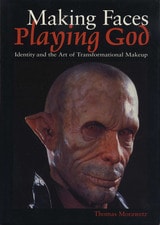
Making Faces, Playing God
Identity and the Art of Transformational MakeupBy Thomas Morawetz
University of Texas Press, 2001
Wearing a mask—putting on another face—embodies a fundamental human fantasy of inhabiting other bodies and experiencing other lives. In this extensively illustrated book, Thomas Morawetz explores how the creation of transformational makeup for theatre, movies, and television fulfills this fantasy of self-transformation and satisfies the human desire to become "the other."
Morawetz begins by discussing the cultural role of fantasies of transformation and what these fantasies reveal about questions of personal identity. He next turns to professional makeup artists and describes their background, training, careers, and especially the techniques they use to create their art. Then, with numerous before-during-and-after photos of transformational makeups from popular and little-known shows and movies, ads, and artist's demos and portfolios, he reveals the art and imagination that go into six kinds of mask-making—representing demons, depicting aliens, inventing disguises, transforming actors into different (older, heavier, disfigured) versions of themselves, and creating historical or mythological characters.
Metamorphosis
Who We Become after Facial ParalysisFaye Linda Wachs
Rutgers University Press, 2023
Public Native America
Tribal Self-Representations in Museums, Powwows, and CasinosLawlor, Mary
Rutgers University Press, 2006
The Native American casino and gaming industry has attracted unprecedented American public attention to life on reservations. Other tribal public venues, such as museums and powwows, have also gained in popularity among non-Native audiences and become sites of education and performance.
In PublicNative America, Mary Lawlor explores the process of tribal self-definition that the communities in her study make available to off-reservation audiences. Focusing on architectural and interior designs as well as performance styles, she reveals how a complex and often surprising cultural dynamic is created when Native Americans create lavish displays for the public’s participation and consumption.
Drawing on postcolonial and cultural studies, Lawlor argues that these venues serve as a stage where indigenous communities play out delicate negotiations—on the one hand retaining traditional beliefs and rituals, while on the other, using what they have learned about U.S. politics, corporate culture, tourism, and public relations to advance their economic positions.
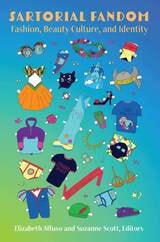
Sartorial Fandom
Fashion, Beauty Culture, and IdentityElizabeth Affuso and Suzanne Scott, Editors
University of Michigan Press, 2023
Sartorial Fandom shines a spotlight on the fashion and beauty cultures that undergird fandoms, considering the retailers, branded products, and fan-made objects that serve as forms of identity expression. This collection is invested in the subcultural and mainstream expression of style and in the spaces where the two intersect. Fan culture is, in many respects, an optimal space to situate a study of style because fandom itself is often situated between the subcultural and the mainstream. Collectively, the chapters in this anthology explore how various axes of lived identity interact with a growing movement to consider fandom as a lifestyle category, ultimately contending that sartorial practices are central to fan expression but also indicative of the primacy of fandom in contemporary taste cultures.
Self-Awareness and Alterity
A Phenomenological InvestigationDan Zahavi
Northwestern University Press, 1999
In the rigorous and highly original Self-Awareness and Alterity, Dan Zahavi provides a sustained argument that phenomenology, especially in its Husserlian version, can contribute something decisive to the analysis of self-awareness. Taking on recent discussions within both analytical philosophy (Shoemaker, Castaneda, Nagel) and contemporary German philosophy (Henrich, Frank, Tugendhat), Zahavi argues that the phenomenological tradition has much more to offer when it comes to the problem of self-awareness than is normally assumed. As a contribution to the current philosophical debate concerning self-awareness, the book presents a comprehensive reconstruction of Husserl's theory of pre-reflective self-awareness, thereby criticizing a number of prevalent interpretations and a systematic discussion of a number of phenomenological insights related to this issue, including analyses of the temporal, intentional, reflexive, bodily, and social nature of the self.

Self-Awareness and Alterity
A Phenomenological InvestigationDan Zahavi
Northwestern University Press, 2020
As a contribution to the current philosophical debate concerning self-awareness, the book presents a comprehensive reconstruction of Husserl’s theory of pre-reflective self-awareness, thereby criticizing a number of prevalent interpretations. In addition, Zahavi also offers a systematic discussion of a number of phenomenological insights related to the issue of self-awareness, including analyses of the temporal, intentional, reflexive, bodily, and social nature of the self.
The new edition of this prize-winning book has been updated and revised, and all quotations have been translated into English. It also contains a new preface in which Zahavi traces the developments of the debates around self-awareness over the last twenty years and situates this book in the context of his subsequent work.
The Comic Self
Toward DispossessionTimothy C. Campbell
University of Minnesota Press, 2023
A provocative and unconventional call to dispossess the self of itself
Challenging the contemporary notion of “self-care” and the Western mania for “self-possession,” The Comic Self deploys philosophical discourse and literary expression to propose an alternate and less toxic model for human aspiration: a comic self. Timothy Campbell and Grant Farred argue that the problem with the “care of the self,” from Foucault onward, is that it reinforces identity, strengthening the relation between I and mine. This assertion of self-possession raises a question vital for understanding how we are to live with each other and ourselves: How can you care for something that is truly not yours?
The answer lies in the unrepresentable comic self. Campbell and Farred range across philosophy, literature, and contemporary comedy—engaging with Socrates, Burke, Hume, Hegel, Marx, Nietzsche, Heidegger, Derrida, Deleuze, and Levinas; Shakespeare, Cervantes, Woolf, Kafka, and Pasolini; and Stephen Colbert, David Chappelle, and the cast of Saturday Night Live. They uncover spaces where the dispossession of self and, with it, the dismantling of the regime of self-care are possible. Arguing that the comic self always keeps a precarious closeness to the tragic self, while opposing the machinations of capital endemic to the logic of self-possession, they provide a powerful and provocative antidote to the tragic self that so dominates the tenor of our times.
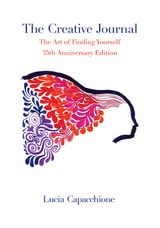
The Creative Journal
The Art of Finding Yourself: 35th Anniversary EditionLucia Capacchione
Ohio University Press, 2015
Originally released in 1980, Lucia Capacchione’s The Creative Journal has become a classic in the fields of art therapy, memoir and creative writing, art journaling, and creativity development. Using more than fifty prompts and vibrantly illustrated examples, Capacchione guides readers through drawing and writing exercises to release feelings, explore dreams, and solve problems creatively. Topics include emotional expression, healing the past, exploring relationships, self-inventory, health, life goals, and more. The Creative Journal introduced the world to Capacchione’s groundbreaking technique of writing with the nondominant hand for brain balancing, finding innate wisdom, and developing creative potential.
This thirty-fifth anniversary edition includes a new introduction and an appendix listing the many venues that have adopted Capacchione’s methods, including public schools, recovery programs, illness support groups, spiritual retreats, and prisons. The Creative Journal has become a mainstay text for college courses in psychology, art therapy, and creative writing. It has proven useful for journal keepers, counselors, and teachers. Through doodles, scribbles, written inner dialogues, and letters, people of all ages have discovered vast inner resources.
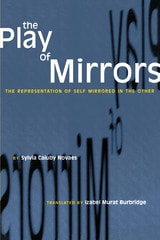
The Play of Mirrors
The Representation of Self Mirrored in the OtherBy Sylvia Caiuby Novaes
University of Texas Press, 1997
Focusing on the Bororo people of west-central Brazil, this book addresses the construction of self-identity through interethnic interaction. By presenting the images the Bororo have of themselves as well as the images of others who have interacted with them, Brazilian anthropologist Sylvia Caiuby Novaes argues convincingly that Bororo self-images are constructed with the aid of a peculiar looking-glass—it is in the images of others that they see themselves.
Incorporating contributions from psychology, psychoanalysis, linguistics, and semiotics, Play of Mirrors focuses on symbols, images, discourse, and meanings rather than solely on the problem of acculturation. It thus reflects the thinking of a new generation of Brazilian anthropologists who have shifted their focus from native communities as isolated entities to an examination of their embeddedness within broader national and international arenas.
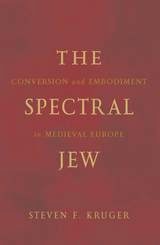
The Spectral Jew
Conversion and Embodiment in Medieval EuropeSteven F. Kruger
University of Minnesota Press, 2006
Looking closely at how medieval Jewish and Christian identities are distinguished from each other, yet intimately intertwined, Kruger demonstrates how Jews were often corporealized in ways that posited them as inferior to Christians—archaic and incapable of change—even as the two mutually shaped each other. But such attempts to differentiate Jews and Christians were inevitably haunted by the knowledge that Christianity had emerged out of Judaism and was, in its own self-understanding, a community of converts.
Examining the points of contact between Christian and Jewish communities, Kruger discloses the profound paradox of the Jew as different in all ways, yet capable of converting to fully Christian status. He draws from central medieval authors and texts such as Peter Damian, Guibert of Nogent, the Barcelona Disputation, and the Hebrew chronicles of the First Crusade, as well as lesser known writings such as the disputations of Ceuta, Majorca, and Tortosa and the immensely popular Dialogues of Peter Alfonsi.
By putting the conversion narrative at the center of this analysis, Kruger exposes it as a disruption of categories rather than a smooth passage and reveals the prominent role Judaism played in the medieval Christian imagination.
Steven F. Kruger is professor of English and medieval studies at Queens College and the Graduate Center, CUNY. He is author of several books and editor with Glenn Burger of Queering the Middle Ages (Minnesota, 2001).
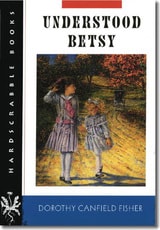
Understood Betsy
Dorothy Canfield Fisher
Brandeis University Press, 1999
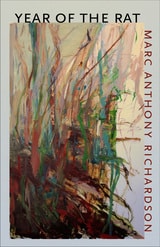
Year of the Rat
Marc Anthony Richardson
University of Alabama Press, 2016
Winner of the FC2 Ronald Sukenick Innovative Fiction Prize
Marc Anthony Richardson's Year of the Rat is a poignant and riveting literary debut narrated in an unabashedly exuberant voice.
In Year of the Rat, an artist returns to the dystopian city of his birth to tend to his invalid mother only to find himself torn apart by memories and longings. Narrated by this nameless figure whose rants, reveries, and Rabelaisian escapades take him on a Dantesque descent into himself, the story follows him and his mother as they share a one-bedroom apartment over the course of a year.
Despite his mother’s precarious health, the lingering memories of a lost love, an incarcerated sibling, a repressed sexuality, and an anarchic inability to support himself, he pursues his dream of becoming an avant-garde artist. His prospects grow dim until a devastating death provides a painful and unforeseeable opportunity. With a voice that is poetic and profane, ethereal and irreverent, cyclical and succinct, he roams from vignette to vignette, creating a polyphonic patchwork quilt of a family portrait.