Results by title
9 books match the query 'Minstrel shows'

Behind the Burnt Cork Mask
Early Blackface Minstrelsy and Antebellum American Popular CultureWilliam J. Mahar
University of Illinois Press, 1999
The songs, dances, jokes, parodies, spoofs, and skits of blackface groups such as the Virginia Minstrels and Buckley's Serenaders became wildly popular in antebellum America. Drawing on an unprecedented archival study of playbills, newspapers, sketches, monologues, and music, William J. Mahar explores the racist practices of minstrel entertainers and considers their performances as troubled representations of ethnicity, class, gender, and culture in the nineteenth century.
Mahar investigates the relationships between blackface comedy and other Western genres and traditions; between the music of minstrel shows and its European sources; and between "popular" and "elite" constructions of culture. Locating minstrel performances within their complex sites of production, Mahar reassesses the historiography of the field.
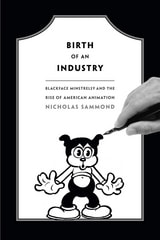
Birth of an Industry
Blackface Minstrelsy and the Rise of American AnimationNicholas Sammond
Duke University Press, 2015
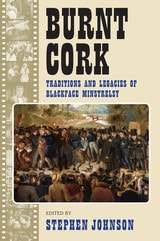
Burnt Cork
Traditions and Legacies of Blackface MinstrelsyStephen Johnson
University of Massachusetts Press, 2012
Beginning in the 1830s and continuing for more than a century, blackface minstrelsy—stage performances that claimed to represent the culture of black Americans—remained arguably the most popular entertainment in North America. A renewed scholarly interest in this contentious form of entertainment has produced studies treating a range of issues: its contradictory depictions of class, race, and gender; its role in the development of racial stereotyping; and its legacy in humor, dance, and music, and in live performance, film, and television. The style and substance of minstrelsy persist in popular music, tap and hip-hop dance, the language of the standup comic, and everyday rituals of contemporary culture. The blackface makeup all but disappeared for a time, though its influence never diminished—and recently, even the makeup has been making a comeback.
This collection of original essays brings together a group of prominent scholars of blackface performance to reflect on this complex and troublesome tradition. Essays consider the early relationship of the blackface performer with American politics and the antislavery movement; the relationship of minstrels to the commonplace compromises of the touring “show” business and to the mechanization of the industrial revolution; the exploration and exploitation of blackface in the mass media, by D. W. Griffith and Spike Lee, in early sound animation, and in reality television; and the recent reappropriation of the form at home and abroad.
In addition to the editor, contributors include Dale Cockrell, Catherine Cole, Louis Chude-Sokei, W. T. Lhamon, Alice Maurice, Nicholas Sammond, and Linda Williams.
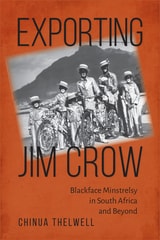
Exporting Jim Crow
Blackface Minstrelsy in South Africa and BeyondChinua Thelwell
University of Massachusetts Press, 2020
Chinua Thelwell brings blackface minstrelsy and performance culture into the discussion of apartheid's nineteenth-century origins and afterlife, employing a broad archive of South African newspapers and magazines, memoirs, minstrel songs and sketches, diaries, and interview transcripts. Exporting Jim Crow highlights blackface minstrelsy's cultural and social impact as it became a dominant form of entertainment, moving from its initial appearances on music hall stages to its troubling twentieth-century resurgence on movie screens and at public events. This carefully researched and highly original study demonstrates that the performance of race in South Africa was inherently political, contributing to racism and shoring up white racial identity.
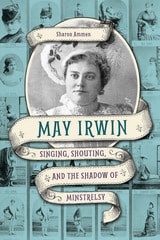
May Irwin
Singing, Shouting, and the Shadow of MinstrelsySharon Ammen
University of Illinois Press, 2017
Sharon Ammen's in-depth study traces Irwin's hurly-burly life. Irwin gained fame when, layering aspects of minstrelsy over ragtime, she popularized a racist "Negro song" genre. Ammen examines this forgotten music, the society it both reflected and entertained, and the ways white and black audiences received Irwin's performances. She also delves into Irwin's hands-on management of her image and career, revealing how Irwin carefully built a public persona as a nurturing housewife whose maternal skills and performing acumen reinforced one another. Irwin's act, soaked in racist song and humor, built a fortune she never relinquished. Yet her career's legacy led to a posthumous obscurity as the nation that once adored her evolved and changed.
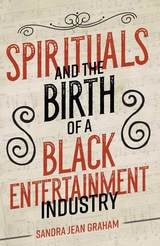
Spirituals and the Birth of a Black Entertainment Industry
Sandra Jean Graham
University of Illinois Press, 2018
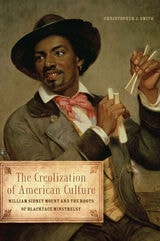
The Creolization of American Culture
William Sidney Mount and the Roots of Blackface MinstrelsyChristopher J. Smith
University of Illinois Press, 2014
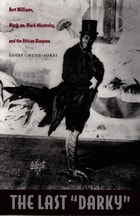
The Last "Darky"
Bert Williams, Black-on-Black Minstrelsy, and the African DiasporaLouis Chude-Sokei
Duke University Press, 2006
Chude-Sokei makes the crucial argument that Williams’s minstrelsy negotiated the place of black immigrants in the cultural hotbed of New York City and was replicated throughout the African diaspora, from the Caribbean to Africa itself. Williams was born in the Bahamas. When performing the “darky,” he was actually masquerading as an African American. This black-on-black minstrelsy thus challenged emergent racial constructions equating “black” with African American and marginalizing the many diasporic blacks in New York. It also dramatized the practice of passing for African American common among non-American blacks in an African American–dominated Harlem. Exploring the thought of figures such as Booker T. Washington, W. E. B. Du Bois, Marcus Garvey, and Claude McKay, Chude-Sokei situates black-on-black minstrelsy at the center of burgeoning modernist discourses of assimilation, separatism, race militancy, carnival, and internationalism. While these discourses were engaged with the question of representing the “Negro” in the context of white racism, through black-on-black minstrelsy they were also deployed against the growing international influence of African American culture and politics in the twentieth century.
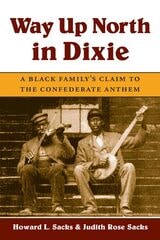
Way Up North in Dixie
A Black Family's Claim to the Confederate AnthemHoward L. Sacks and Judith Rose Sacks
University of Illinois Press, 2003